TLP:CLEAR · Disclosure is not limited.
Russia-Ukraine Front Line: Donetsk Pressure and Strike Continuity
Time window: Last 7 days · Audience: General analyst · Type: Situation report · DTG: 2026-08-31 07:10Z · Overall confidence: LOW
BLUF
Russian forces are likely to sustain pressure towards Slovyansk and Kostyantynivka while very likely continuing high-volume strikes on Kyiv City and Kyiv Oblast. Ukrainian long-range drone attacks are likely to keep disrupting Russian logistics, maritime activity and energy infrastructure, but current reporting does not support a likely decisive breakthrough by Russian forces or Ukrainian forces.
Executive summary
Between 26 and 29 August, reporting described Russian efforts against the northern and southern tips of Ukraine's Fortress Belt in Donetsk Oblast, intensified advances towards Slovyansk, infiltration north of Kostyantynivka and a Ukrainian withdrawal from southeastern positions in that city. The Kremlin's claim that Russian forces captured Kostyantynivka on 5 July conflicts with this reporting. Russia also launched more than 550 drones and loitering munitions, alongside Onyx and Iskander-M missiles from occupied Crimea, during a strike series lasting more than 28 hours, with Kyiv City hit for a third consecutive day. Ukrainian strikes against Russian retail warehouses, Rostov Oblast maritime infrastructure and the Perm oil refinery indicate continuing deep-strike activity. The evidence supports sustained attrition, but territorial-control claims, casualty figures and the strategic effect of Ukrainian strikes remain contested.
Change from previous assessment
Since the 30 August brief, the overall assessment is largely unchanged: Russian forces remain likely to sustain Donetsk ground pressure and very likely to continue high-volume strikes, while Ukrainian long-range attacks remain likely and a decisive breakthrough by either side remains unlikely. This brief adds an explicit judgement on Ukrainian command restructuring and unmanned-system expansion, based on Drapatyi's proposal, the two formations announced by Zelensky and reported Ukrainian drone and unmanned-ground-vehicle output. Confidence remains low overall, and no prior judgement has been retired.
Key judgments
- Russian forces are likely to sustain local offensive pressure in Donetsk Oblast over the next 1-3 months, concentrating on the northern and southern tips of Ukraine's Fortress Belt and approaches to Slovyansk and Kostyantynivka; a decisive Russian capture of Kostyantynivka is unlikely on current reporting. Reporting describes intensified Russian advances towards Slovyansk, infiltration north of Kostyantynivka and a Ukrainian withdrawal from southeastern positions to the eastern bank of the Kryvyi Torets River. The Kremlin's claim that Russian forces captured Kostyantynivka on 5 July conflicts with that reporting, leaving this assessment thinly corroborated. (Confidence: low · ASSESSED)
- I&W: Confirming: independent geolocation places Russian units inside southern or eastern Kostyantynivka, or records Russian control of Stinky and a route towards Slovyansk. (0-14 days)
- I&W: Breaking: Russian forces fail to advance beyond Stinky while Ukrainian forces retain positions in northern and north-western Kostyantynivka. (1-3 months)
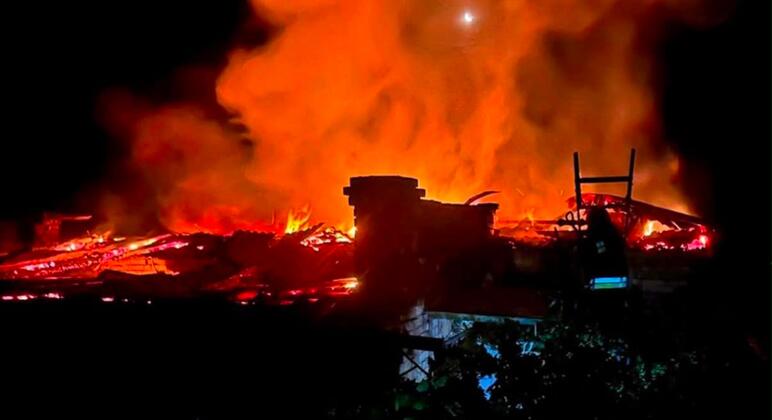
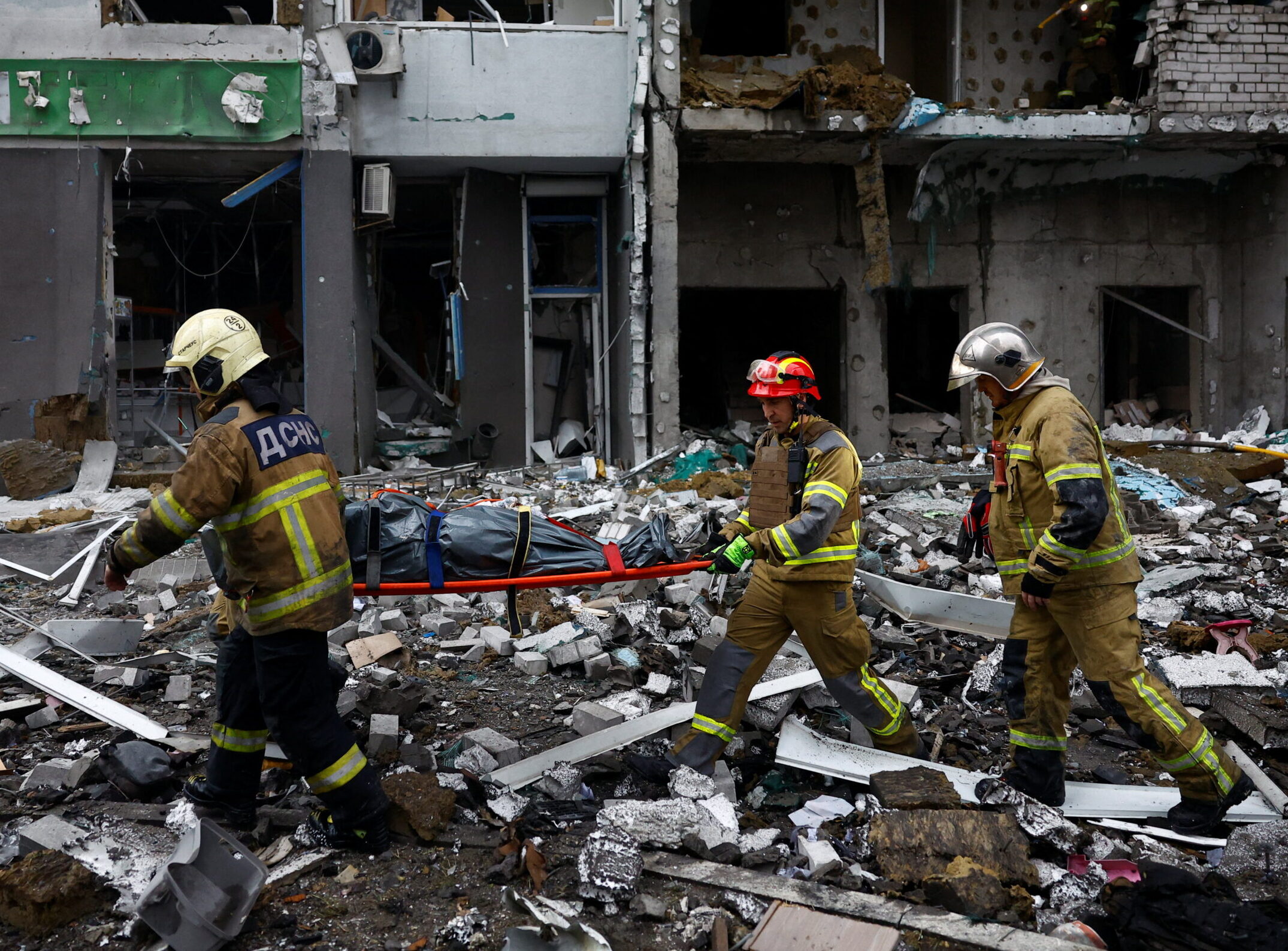
- Russian forces are very likely to continue high-volume combined drone and missile strikes against Kyiv City, Kyiv Oblast and other Ukrainian civilian and military targets over the next 0-14 days. The Ukrainian Air Force reported more than 550 S8000 Banderol, Shahed, Gerbera and Parodiya systems launched on 28 and 29 August, alongside Onyx and Iskander-M missile launches from occupied Crimea. Vitaliy Klitschko reported strikes on Kyiv City for a third consecutive day, while UN and Ukrainian reporting recorded civilian deaths, injuries and damage to residential and humanitarian infrastructure. The Myla strike is well established as a high-impact event, but its target description and exact casualty profile remain contested. (Confidence: high · ASSESSED)
- I&W: Confirming: the Ukrainian Air Force reports another launch of at least 500 drones or loitering munitions, or Kyiv City records a fourth consecutive day of Russian drone strikes. (0-14 days)
- I&W: Breaking: no combined drone or missile strike reaches Kyiv City or Kyiv Oblast for 14 consecutive days, with no further reported casualties or residential damage there. (0-14 days)
- Ukrainian forces are likely to continue long-range drone attacks against Russian logistics, maritime and energy infrastructure over the next 1-3 months, with local disruption very likely but no established strategic effect on Russia's war effort. Ukraine struck Ozon, DNS and Chyzhyk warehouses in Rostov Oblast, Rostov Oblast declared a state of emergency after port operations ceased, and the Perm oil refinery halted operations after damage to key processing units. Reporting of fuel shortages supports a material impact, while the stronger claim that Ukraine caused Russia's worst fuel crisis since the collapse of the Soviet Union rests on low-confidence assessment and remains uncorroborated. (Confidence: medium · ASSESSED)
- I&W: Confirming: Rostov Oblast port operations remain suspended, or new strikes hit Ozon, DNS, Chyzhyk logistics hubs or the Perm oil refinery. (0-14 days)
- I&W: Breaking: the Perm oil refinery resumes operations within two weeks and Rostov Oblast port operations normalise without new strikes on the named facilities. (1-3 months)
- Ukraine is likely to sustain large-scale unmanned-system use and adjust command arrangements in Donetsk Oblast over the next 1-3 months, but a Ukrainian operational breakthrough remains unlikely on current evidence. Ukrainian unmanned ground vehicles reportedly conducted more than 100,000 combat-support missions during the first eight months of 2026, while annual drone output reached approximately seven million. Major General Mykhailo Drapatyi proposed headquarters restructuring for Donetsk Oblast, and Volodymyr Zelensky announced two formations under Brigadier Generals Andriy Biletsky and Denys Prokopenko. Reporting on the new formations and their battlefield effect is limited. (Confidence: medium · ASSESSED)
- I&W: Confirming: Ukraine activates the two formations under Biletsky and Prokopenko, or issues a formal order implementing Drapatyi's Donetsk headquarters restructuring. (1-3 months)
- I&W: Breaking: Ukrainian reporting records no activation of the new formations and no further expansion of unmanned ground-vehicle combat-support activity. (1-3 months)
- Ukrainian civilian and humanitarian infrastructure is likely to face recurring disruption over the next 1-3 months, with Kyiv City, Kyiv Oblast, Dnipro and Donetsk Oblast most exposed. WHO reports more than 3,200 attacks on Ukraine's healthcare system, while 20 humanitarian warehouses, including 13 containing medical supplies, have been attacked in 2026. WHO warehouse attacks in Kyiv and Dnipro affected supplies intended for 225,000 people, and UNICEF reported the destruction of a warehouse in the Kyiv region. The assessment is supported by multilateral reporting, but the forward-looking geographic ranking remains inferential. (Confidence: medium · ASSESSED)
- I&W: Confirming: WHO or UN reports another attack on a humanitarian warehouse in Kyiv City, Kyiv Oblast or Dnipro, or a convoy to Donetsk is delayed or struck. (0-14 days)
- I&W: Breaking: no additional warehouse attacks are recorded in Kyiv, Dnipro or Donetsk while WHO and UN convoys reach hard-to-reach settlements without reported losses. (1-3 months)
Outlook & scenarios
Sustained Russian pressure without an operational breakthrough (65%)
Russian forces maintain attacks against the Fortress Belt and approaches to Slovyansk and Kostyantynivka. Russia continues high-volume strikes against Kyiv City and Kyiv Oblast. Ukrainian forces retain local defensive positions and continue long-range drone attacks against Russian infrastructure.
Russian local gain around Kostyantynivka or Slovyansk (25%)
Russian infiltration north of Kostyantynivka develops into a broader outflanking effort, or Russian forces establish a stronger approach towards Slovyansk. Ukrainian withdrawals expand beyond southeastern Kostyantynivka, producing a local Russian territorial gain without a wider front-line collapse.
Ukrainian disruption offsets Russian ground pressure (30%)
Ukrainian unmanned systems, long-range drones and revised Donetsk command arrangements impose additional costs on Russian logistics, air defence and maritime operations. Russian forces continue attacking, but Ukrainian disruption limits the conversion of pressure into a decisive territorial gain.
High-impact strike and infrastructure cascade (12%)
A further Russian strike on a weapons or ammunition site near a populated area produces casualties and prolonged local disruption, while repeated attacks on energy, transport or logistics facilities trigger temporary state control measures in Russia or wider service interruptions in Ukraine.
Recommendations
- Maintain a 0-14 day watchlist for Slovyansk, Stinky, Kostyantynivka, the Kryvyi Torets River line and both tips of the Fortress Belt. Require independent geolocation or two-source confirmation before accepting Russian territorial-control claims, especially claims concerning Kostyantynivka.
- Separate Russian strike reporting into four measures: launch volume, intercepts, physical damage and casualties. Track Kyiv City, Kyiv Oblast and missile launches from occupied Crimea separately, rather than treating them as one strike series.
- Measure the effect of Ukrainian deep strikes through observable changes at Rostov Oblast ports, Ozon, DNS and Chyzhyk warehouses, and the Perm oil refinery. Treat broader claims about a nationwide Russian fuel crisis as unconfirmed until operational disruption and repair delays are independently documented.
- Track activation of the two formations announced by Zelensky and implementation of Drapatyi's proposed Donetsk headquarters restructuring. Compare these developments with reported Ukrainian unmanned ground-vehicle activity and Russian pressure around Slovyansk and Kostyantynivka.
- Prioritise humanitarian monitoring in Kyiv City, Kyiv Oblast, Dnipro and Donetsk Oblast. Record attacks on WHO and UNICEF facilities, convoy departures and arrivals, warehouse losses, health-facility disruption and verified civilian casualty updates.
Confidence & uncertainty
Overall confidence is low because the battlefield picture relies heavily on open-source think-tank analysis and party-linked Ukrainian or Russian reporting. The Kremlin's claim over Kostyantynivka directly conflicts with reporting of Ukrainian positions and Russian infiltration around the city. Several front-line engagement figures are dated 25 August 2025 in the supplied claim metadata despite this brief's 2026 time window. The Myla target description and casualty reporting also vary. Confidence is higher for the existence of repeated strikes and healthcare disruption because WHO, UN, major media and official reporting provide corroboration, but those sources do not resolve territorial control or establish the strategic effect of Ukrainian deep strikes.
Intelligence gaps
- [EEI 1.1 · PARTIAL] Geotagged UAV/satellite imagery showing abandoned defensive positions or newly occupied settlements. Recommended collection: overhead imagery
- [EEI 1.2 · UNCOVERED] Confirmed movement of frontline ambulance evacuation routes beyond previous coordinates. Recommended collection: SIGINT/medical logistics
- [EEI 2.1 · PARTIAL] Concentration of assault battalions (≥3 mechanized companies) within 15km of contact line. Recommended collection: SIGINT/UAV
- [EEI 2.2 · UNCOVERED] Unusual artillery stockpile buildup at forward depots exceeding 30-day consumption rates. Recommended collection: overhead imagery/logistics
- [EEI 3.1 · UNCOVERED] Bridge structural damage assessments at 5 key Dnieper River crossings via multispectral imaging. Recommended collection: overhead imagery
- [EEI 3.2 · UNCOVERED] Rail traffic volume changes at Kryvyi Rih and Pokrovsk rail hubs compared to 7-day baseline. Recommended collection: commercial freight data
Cited sources
[1] Institute for the Study of War (ISW) · Russian Offensive Campaign Assessment, August 26, 2026 (B) · sha256:6bb168710313 [2] Institute for the Study of War (ISW) · Russian Offensive Campaign Assessment, August 29, 2026 (B) · sha256:abb3fede183d [3] United Nations (UN News) · WHO reports more than 3,200 attacks on Ukraine’s healthcare system since full-scale invasion (A) · sha256:24473abcc473 [4] BBC · At least 37 dead and hundreds evacuated after strike on Kyiv weapons depot (A) · sha256:976947cd7860 [5] Al Jazeera · Russia to seize poorly protected infrastructure amid Ukraine drone attacks (A) · sha256:614568593dfa [6] Atlantic Council · Drone parade showcases Ukraine's remarkable military transformation (C) · sha256:8b58185b4b6d [7] Atlantic Council · Ukrainians are not superheroes with endless powers of resilience (C) · sha256:797080ccc97a
Source content hashes were computed at collection time; the cited text is preserved unmodified for the life of this product.
TLP:CLEAR