TLP:CLEAR · Disclosure is not limited.
Russia-Ukraine Front Line: Energy Strikes, Contested Front-Line Claims and Black Sea Risk
Time window: Last 7 days · Audience: General analyst · Type: Situation report · DTG: 2026-10-13 15:21Z · Overall confidence: MEDIUM
BLUF
Russia very likely sustained intense pressure on Ukraine’s energy system: the UK Government reported 200 attacks in the preceding week, while reporting on 7 October described severe damage at the Tripillya and Kremenchug power plants and emergency power cuts in Kyiv. Current claims do not establish whether the wider front is stabilising or whether an energy truce is in force. Drone attacks on the Chelsea-3 and HS Dignity off Bulgaria add Black Sea risk, but responsibility remains unproven.
Executive summary
The UK Government reported 200 Russian attacks on Ukraine’s energy infrastructure in the past week, alongside 1,450 bombs and 1,600 drones. Separate reporting described damage to the Tripillya Thermal Power Plant and Kremenchug Hydroelectric Power Plant, and emergency power outages in Kyiv. The UK Foreign Secretary backed President Zelenskyy’s call for an energy ceasefire, but current reporting does not establish Russian acceptance or implementation. Front-line reporting presents conflicting indications: claims describe Russian gains in northwestern Dobropillya and the recapture of two villages in Zaporizhzhia Oblast, as well as Ukrainian offensive activity in Sumy Oblast. Separately, two merchant ships were hit by drones off Bulgaria; Bulgarian, Ukrainian and Russian statements differ on responsibility. Reporting on Oleshky describes severe shortages but also two recent Ukrainian drone deliveries of aid.
Change from previous assessment
Since the 13 October morning brief, the energy-ceasefire assessment is reinforced but not resolved: the UK Government has reported 200 attacks in the past week and Ed Miliband has backed Zelenskyy’s call for a ceasefire. New reporting adds damage to the Tripillya and Kremenchug plants and quantified bomb and drone totals. Confidence in a broad front-line stabilisation is lower because Syrskyi’s claim that Russia’s ability to advance is broken sits alongside reports of local Russian gains and Ukrainian offensive activity in Sumy. The earlier two-week outlook for Pokrovsk and Huliaipole is not refreshed because this run contains no new claims on those axes. The Oleshky assessment remains low confidence and is qualified by the reported two recent aid deliveries. The Bulgarian ship attacks add a new Black Sea risk judgment with unresolved attribution.
Key judgments
- Russia very likely sustained a high-tempo strike campaign against Ukraine’s energy system during the reporting week. The UK Government reported 200 attacks on energy infrastructure, 1,450 bombs and 1,600 drones. Reporting on 7 October described serious damage to the Tripillya Thermal Power Plant and Kremenchug Hydroelectric Power Plant, with ten cruise missiles hitting the latter, and emergency power outages in Kyiv. The scale of the weekly totals rests on UK Government reporting, while separate media reporting supports specific strike impacts. (Confidence: medium · REPORTED)
- I&W: A further reported strike damages the Tripillya or Kremenchug plant, or Kyiv authorities announce new emergency power-outage schedules; either would confirm continued pressure on energy infrastructure. (0-14 days)
- I&W: Ukrainian authorities report no energy-infrastructure strikes for 14 consecutive days and Kyiv authorities end emergency outage schedules; this would break the assessment of sustained high-tempo pressure. (0-14 days)
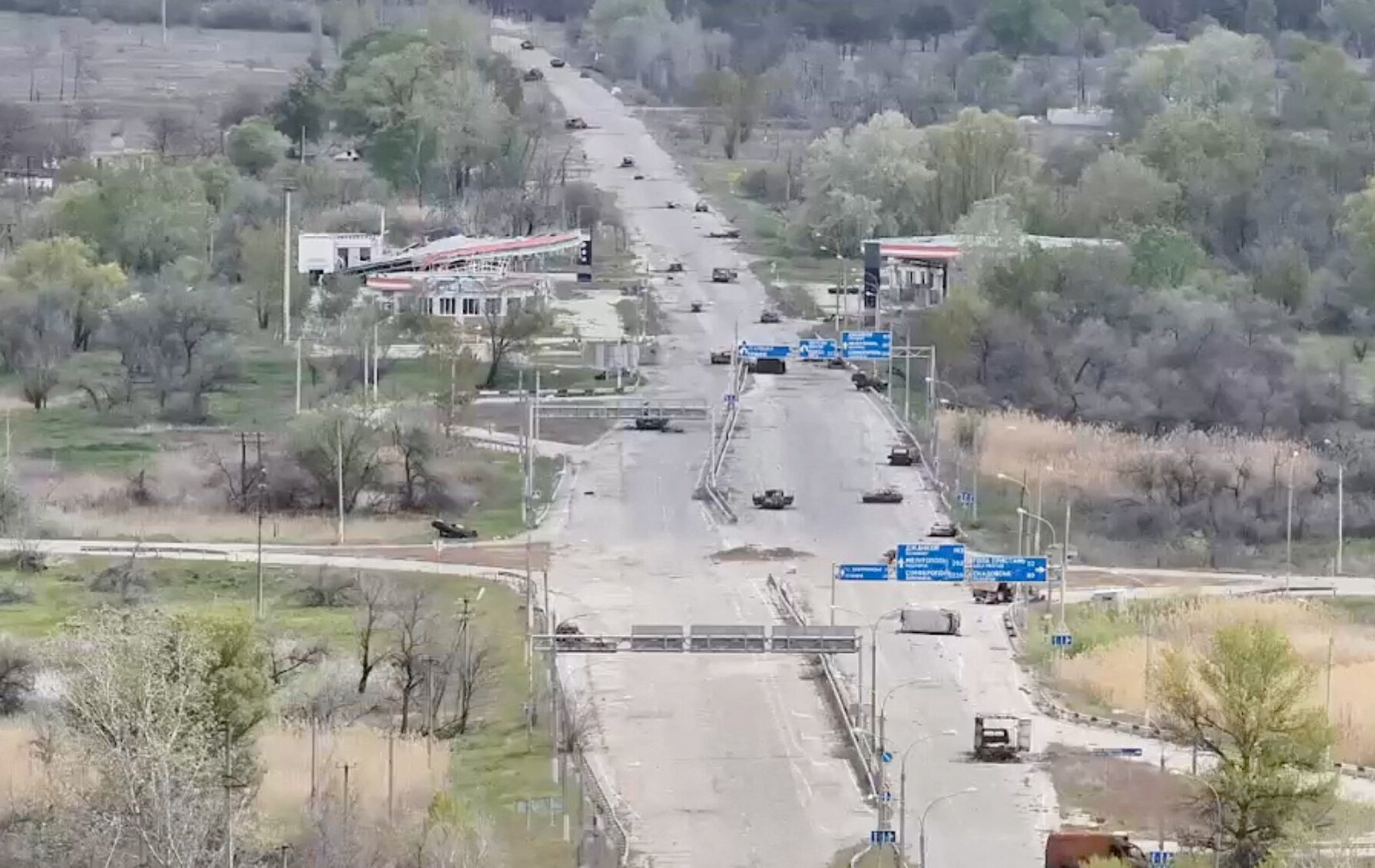
- A theatre-wide front-line stabilisation is unlikely to be established by the current reporting; localized movement is more likely. Reports describe Russian advances in northwestern Dobropillya and the recapture of Lyubitske and Novosoloshyno, while another account describes Ukrainian attacks towards Ivolyanskoye, Pisarevka, Kiyanitsa and Khoten in Sumy Oblast. Syrskyi’s claim that Russia’s ability to advance is broken is complicated by his reported figure of 61 square kilometres taken in the first half of 2026. ISW’s reported net Russian territorial loss in September refers to a different period and does not resolve the current line. The village and urban-area claims are not independently corroborated in the available material, so confidence in the scale and durability of these changes is low. (Confidence: low · ASSESSED)
- I&W: Geolocated imagery or independently corroborated follow-up reporting confirms Russian control of the named sites in northwestern Dobropillya or of Lyubitske and Novosoloshyno; this would confirm localized Russian gains. (0-14 days)
- I&W: Follow-up reporting or geolocated imagery shows Ukrainian forces retaining or retaking those named locations, and no sustained Russian advance across the reported Sumy or Donetsk sectors; this would weaken the reports of Russian gains. (0-14 days)
- An agreed and operating energy ceasefire is unlikely to have been in force by 13 October. UK Foreign Secretary Ed Miliband backed Zelenskyy’s call for an energy ceasefire, while the same UK Government reporting cited 200 Russian attacks on Ukrainian energy infrastructure during the past week. The available claims do not record Russian acceptance or a jointly announced start time, so the attack total alone does not establish whether strikes occurred after any proposed terms. (Confidence: medium · ASSESSED)
- I&W: Kyiv and Moscow publish matching energy-ceasefire terms with a start time and covered infrastructure; this would break the assessment that no operating agreement is established. (0-14 days)
- I&W: Ukrainian authorities report a Russian strike on covered energy infrastructure after an agreed start time; this would confirm that the proposed ceasefire is not being observed. (0-14 days)
- Acute shortages in Oleshky are likely to persist, but the description of almost no recent aid deliveries requires qualification. One account reports months of limited food and medicine, reduced access to heating and electricity, and a population below 2,000. The same reporting describes two Ukrainian drone deliveries of food and medical supplies totalling thousands of kilograms in late September and early October. Detailed conditions and access restrictions rest largely on one account and Ukrainian allegations, so confidence is low. (Confidence: low · ASSESSED)
- I&W: Residents or aid organisations report continued food and medicine shortages in Oleshky, with no independently verified delivery after the two reported drone drops; this would confirm persistent deprivation. (0-14 days)
- I&W: Further deliveries into Oleshky are independently verified and residents report restored access to food and medicine; this would break the assessment that acute shortages are persisting. (0-14 days)
- The drone attacks on the Chelsea-3 and HS Dignity off Bulgaria are very likely to increase Black Sea security concerns, but responsibility is not established in the available reporting. The Chelsea-3 was hit 18 nautical miles from Byala, and all 15 crew were rescued; the HS Dignity sank 17 nautical miles east of Krapets, with six crew rescued and ten missing. Ukrainian Foreign Minister Andrii Sybiha blamed Russia, while Bulgarian Prime Minister Rumen Radev said there was no conclusive evidence against either side, and the Russian ambassador raised the possibility of a third-party provocation. The incidents are reported by major media, but attribution remains contested among interested parties. (Confidence: medium · ASSESSED)
- I&W: Bulgarian authorities publish forensic findings or other verifiable evidence identifying an attacker; this would resolve the present attribution uncertainty. (0-3 months)
- I&W: Another merchant vessel is hit by drones in Bulgaria’s Black Sea exclusive economic zone; this would confirm continuing spillover risk to commercial shipping. (0-30 days)
Outlook & scenarios
Continued energy strikes, no implemented truce (45%)
Russia is likely to continue strikes on Ukrainian energy infrastructure while Kyiv and its partners continue to advocate an energy ceasefire. Further outages in Kyiv or damage to major power facilities would fit this scenario; a jointly announced and observed pause would break it.
Localized front-line movement without a decisive shift (30%)
Russian and Ukrainian forces are likely to continue contesting specific locations, including the reported areas in Dobropillya, Zaporizhzhia Oblast and Sumy Oblast. Follow-up evidence is likely to clarify local control without establishing a theatre-wide Russian advance or a complete halt in Russian offensive activity.
A limited energy pause (20%)
A reciprocal energy ceasefire is unlikely without public agreement from both governments. If matching terms are announced, a short reduction in reported attacks would be more likely than immediate resolution of the wider conflict.
Black Sea shipping incident widens into a diplomatic crisis (5%)
A further attack on a merchant vessel near Bulgaria is very unlikely, but a high-impact wildcard. If another ship is hit or an investigation assigns responsibility, Bulgaria’s response and the competing Russian and Ukrainian accusations are likely to intensify regional diplomatic pressure.
Recommendations
- Maintain a daily strike and outage log that separates official attack totals from independently corroborated damage. Track the Tripillya and Kremenchug plants and Kyiv outage schedules as distinct indicators.
- Do not treat reports of captured buildings or villages as durable territorial control until follow-up reporting or geolocated imagery confirms who holds the named sites in Dobropillya, Lyubitske and Novosoloshyno.
- Track whether Kyiv and Moscow publish reciprocal energy-ceasefire terms, then compare the stated start time with subsequent reports of strikes on covered infrastructure.
- For Oleshky, record each reported aid delivery separately from claims about cumulative deprivation. Seek independent confirmation of delivery size, access and whether residents received food and medicine.
- Separate confirmation of the Bulgarian ship attacks from attribution. Track any Bulgarian investigation findings and subsequent incidents involving merchant vessels near Byala and Krapets.
Confidence & uncertainty
Overall confidence is medium because the reporting includes UK Government statements, BBC reporting and separate media accounts of specific strikes and ship incidents. The weekly attack totals are official figures rather than independent tallies. Front-line claims are not independently corroborated and present conflicting indications; Oleshky conditions rely heavily on one account. Responsibility for the Bulgarian ship attacks remains disputed.
Intelligence gaps
- [EEI 1.1 · PARTIAL] Geotagged UAV/satellite imagery showing abandoned defensive positions or newly occupied settlements. Recommended collection: overhead imagery
- [EEI 1.2 · UNCOVERED] Confirmed movement of frontline ambulance evacuation routes beyond previous coordinates. Recommended collection: SIGINT/medical logistics
- [EEI 2.1 · UNCOVERED] Concentration of assault battalions (≥3 mechanized companies) within 15km of contact line. Recommended collection: SIGINT/UAV
- [EEI 2.2 · UNCOVERED] Unusual artillery stockpile buildup at forward depots exceeding 30-day consumption rates. Recommended collection: overhead imagery/logistics
- [EEI 3.1 · PARTIAL] Bridge structural damage assessments at 5 key Dnieper River crossings via multispectral imaging. Recommended collection: overhead imagery
- [EEI 3.2 · UNCOVERED] Rail traffic volume changes at Kryvyi Rih and Pokrovsk rail hubs compared to 7-day baseline. Recommended collection: commercial freight data
Cited sources
[1] UK Government (gov.uk) · Back Zelenskyy and Ukraine with an energy ceasefire, Foreign Secretary tells European partners (A) · 13 October 2026 · sha256:79fb1dfcdd46 [2] Argumenty i Fakty (aif.ru) · Новости СВО на 8 октября. Киев дрожит и пустеет после ударов ВС РФ (B) · 7 October 2026 · sha256:6ea8786eee2a [3] BBC · Russia's offensive ability is broken, Kyiv's former top general tells BBC (A) · 13 October 2026 · sha256:1ace94613f95 [4] Atlantic Council (UkraineAlert) · Starving Ukrainians must travel ‘road of death’ to flee Russian occupation (D) · 8 October 2026 · sha256:af9099bdc3fa [5] BBC · Bulgarian PM summons Russian ambassador after ship sinks in Black Sea drone attack (A) · 13 October 2026 · sha256:658843bee5d6
Source content hashes were computed at collection time; the cited text is preserved unmodified for the life of this product.
Red cell review: CONCUR
TLP:CLEAR