TLP:CLEAR · Disclosure is not limited.
Russia-Ukraine Front Line: High Combat Tempo and Wider-Range Strikes, 19-26 November 2026
Time window: Last 7 days · Audience: General analyst · Type: Situation report · DTG: 2026-11-26 07:18Z · Overall confidence: HIGH
BLUF
Russian forces maintained pressure on the Pokrovsk and Huliaipole axes, while Ukrainian forces struck targets deep inside Russia and Russian-linked vessels in the Baltic and Mediterranean. The reporting does not establish a major front-line breakthrough, but the 20 November missile incident in south-eastern Poland adds a direct risk of spillover beyond Ukraine.
Executive summary
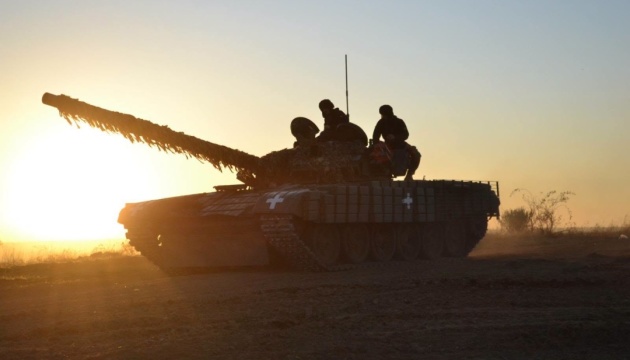
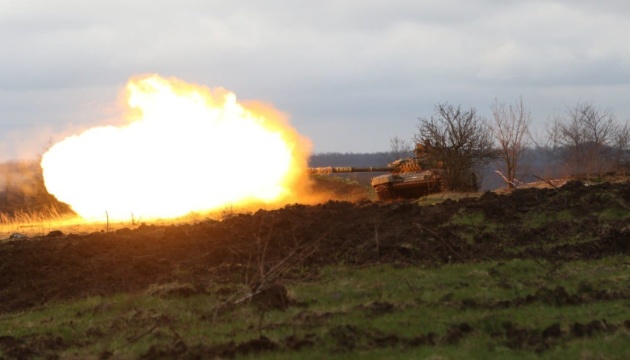
Ukrainian General Staff reporting recorded 161 combat engagements on 23 November and 151 on 25 November, including 18 Russian attacks repelled on the Pokrovsk axis and seven attacks towards Nove Zaporizhzhia and Huliaipilske. Russian ballistic missiles struck Kyiv late on 25 November; reports differ on the buildings hit, and Kyiv’s mayor reported four people injured. Ukraine reported strikes on Savasleyka air base and two Samara-region refineries, as well as attacks on Russian vessels near Finland and in Libyan waters. Damage to some targets and the reported fate of the corvette Merkury remain uncertain. Russia-Ukraine talks remain deadlocked on territory: the Abu Dhabi round produced a prisoner exchange but no breakthrough, and no date for another round was set.
Change from previous assessment
Since the 25 November prior brief, the assessment adds Ukrainian reports of strikes on Savasleyka air base and two Samara-region refineries, reported attacks on Russian vessels in the Gulf of Finland and near Benghazi, and the reported 20 November landing of three Russian cruise missiles in south-eastern Poland. The latest front-line reporting records 151 engagements on 25 November, including 18 Russian attacks repelled on the Pokrovsk axis. The prior assessment that a Russian breakthrough toward Slovyansk or Kramatorsk is unlikely remains unchanged; confidence remains low because current reporting does not provide independently verified front-line mapping. Confidence in the breadth of Ukraine’s long-range strike campaign is higher, but confidence in damage claims and the Merkury outcome remains limited. The Poland incident adds a spillover-risk judgment not included in the prior brief.
Key judgments
- Russian and Ukrainian forces are likely to sustain a high level of ground engagement over the next 1-3 months. Ukrainian General Staff reporting recorded 161 engagements on 23 November and 151 on 25 November, with Russian attacks concentrated in part on the Pokrovsk and Huliaipole axes. These totals are belligerent reporting rather than independently verified counts, so confidence is medium. (Confidence: medium · ASSESSED)
- I&W: Confirm: Ukrainian General Staff daily updates continue to report more than 100 combat engagements, including attacks on the Pokrovsk or Huliaipole axes. (0-14 days)
- I&W: Break: daily engagement totals fall below 50 for seven consecutive days, with no reported Russian attacks on the Pokrovsk or Huliaipole axes. (0-14 days)
- A Russian operational breakthrough on the Pokrovsk or Huliaipole axes is unlikely in the next 1-3 months, but this is a low-confidence assessment. The available reporting describes repeated Russian attacks and Ukrainian claims of repelling 18 attacks on the Pokrovsk axis; it provides no independently verified front-line mapping or confirmed territorial gains for this period. The reports are too limited to rule out local Russian advances. (Confidence: low · ASSESSED)
- I&W: Break: independently geolocated reporting confirms Russian forces have entered and held new positions near Pokrovsk or Huliaipole for several days. (0-30 days)
- I&W: Confirm: Ukrainian reporting continues to describe repelled attacks on these axes, with no independently verified Russian control of additional settlements. (0-30 days)
- Russian attacks on Ukrainian energy infrastructure are likely to continue over the next 1-3 months. The UN assessed that the attacks are more extensive and systematic than a year earlier, and Vladimir Putin ruled out a moratorium on attacks on energy infrastructure. Reporting also described deaths and power outages following Russian strikes between 24 and 25 November. Confidence is medium because the outlook rests on an international assessment, a Russian public statement and reported impacts, while detailed damage figures remain dependent on official accounts. (Confidence: medium · ASSESSED)
- I&W: Confirm: Ukrainian regional or national reporting records new Russian strikes on power lines, substations or energy facilities accompanied by outages. (0-30 days)
- I&W: Break: independently corroborated reporting records a 14-day pause in Russian attacks on Ukrainian energy infrastructure. (0-30 days)
- Ukraine is likely to continue long-range strikes against Russian military and energy-linked assets, while the reported damage from some attacks remains unverified. Ukraine’s General Staff reported five aircraft hit at Savasleyka air base in the Nizhny Novgorod region, and Ukraine reported strikes on two refineries in Samara region. Separate reporting describes attacks on the cargo ship Sparta II in the Gulf of Finland and a Ukrainian claim of responsibility for an attack on the corvette Merkury near Libya; reports conflict over Merkury’s date, location and condition. Confidence is medium for continued strikes, but lower for specific damage and maritime outcomes. (Confidence: medium · ASSESSED)
- I&W: Confirm: Ukraine reports further strikes on named Russian air bases, refineries or vessels, with damage corroborated by imagery or a separate source. (0-30 days)
- I&W: Break: Ukraine announces a halt to long-range strikes, or reporting over the next month records no further attacks on Russian military or energy-linked assets. (0-30 days)
- The reported landing of three Russian cruise missiles in south-eastern Poland raises the risk of further spillover, but it does not establish that Russia deliberately targeted Poland. A direct NATO-Russia military exchange is unlikely in the next 30 days; confidence is low because the available reporting does not establish the missiles’ intended target or a final Polish or NATO assessment. Polish Prime Minister Donald Tusk described the incident as appearing to be an intentional provocation, rather than presenting a confirmed finding of intent. (Confidence: low · ASSESSED)
- I&W: Confirm: Polish and NATO authorities report no further missile or drone impacts on NATO territory and announce no military response to the 20 November incident. (0-30 days)
- I&W: Break: another Russian missile or drone lands in Poland or another NATO member state, or NATO announces a military response linked to the incident. (0-30 days)
Outlook & scenarios
Continued attrition and reciprocal strikes (60%)
The most likely course is continued Russian attacks on the Pokrovsk and Huliaipole axes, alongside Russian strikes on Ukrainian cities and energy infrastructure. Ukraine is likely to sustain long-range attacks on Russian military and energy-linked assets. Neither side secures a decisive operational gain, and damage claims remain contested.
Local Russian gains without a front-wide breakthrough (25%)
Russian forces gain ground at one or more contested positions, especially on the Pokrovsk or Huliaipole axes, while Ukrainian forces continue to repel attacks elsewhere. This would represent local movement, not evidence by itself of a wider breakthrough.
Narrow diplomatic progress, with the territorial deadlock intact (15%)
Russia and Ukraine agree to another prisoner exchange or a further negotiating round, but the territorial dispute remains unresolved. The Abu Dhabi talks produced an exchange without a breakthrough, and the Kremlin reported no date for the next round.
High-impact wildcard: further strike spillover into NATO territory (5%)
A further Russian missile or drone lands in Poland or another NATO member state, prompting a direct military response. This is unlikely, but it would sharply raise the risk of a wider Russia-NATO confrontation.
Recommendations
- Track daily Ukrainian General Staff reporting by named axis, and compare claimed attacks or repelled assaults with independently geolocated evidence before assessing territorial change.
- Keep Russian claims of damage at Savasleyka and Samara refineries separate from independently verified effects. Seek corroboration before using the reported aircraft losses or refinery-processing reduction as firm measures of operational impact.
- Maintain a 30-day watch for new Russian strikes on Ukrainian power lines, substations and energy facilities, and record reported outages separately from physical damage.
- Monitor Polish and NATO statements on the 20 November missile incident. Do not treat Tusk’s comment on possible provocation as a confirmed finding of Russian intent.
- For maritime incidents, distinguish Ukraine’s confirmed responsibility for the Sparta II strike from the disputed reporting on the Merkury’s condition and the exact circumstances of the Benghazi attack.
Confidence & uncertainty
The high headline rating reflects the convergence of multiple reporting streams on the broad pattern: sustained front-line combat, Russian strikes on Ukraine, Ukrainian strikes on Russian assets and a missile incident in Poland. Major media and official reporting corroborate that these events were reported during the period. Confidence is lower on battlefield control, claimed aircraft and infrastructure damage, the outcome of the Merkury incident and the intent behind the Poland missile landing. Several operational details still rely on statements from the parties to the conflict.
Alternative analysis (red cell)
The evidence supports continued fighting around Pokrovsk and Huliaipole, but it does not establish that an operational breakthrough is unlikely. Claim be037180-2ef3-4ee3-a694-612a9caad02d shows sustained Russian pressure, while claims 4e31fbc7-d81f-48f8-861f-617f4089f8dd and 94cc83ed-4667-4b4b-93e7-42624bbedfa1 present competing indications of local movement. Without independently verified territorial data, the more defensible reading is that a breakthrough remains an unresolved possibility rather than a low-probability outcome.
Intelligence gaps
- [EEI 1.1 · PARTIAL] Geotagged UAV/satellite imagery showing abandoned defensive positions or newly occupied settlements. Recommended collection: overhead imagery
- [EEI 1.2 · UNCOVERED] Confirmed movement of frontline ambulance evacuation routes beyond previous coordinates. Recommended collection: SIGINT/medical logistics
- [EEI 2.1 · PARTIAL] Concentration of assault battalions (≥3 mechanized companies) within 15km of contact line. Recommended collection: SIGINT/UAV
- [EEI 2.2 · UNCOVERED] Unusual artillery stockpile buildup at forward depots exceeding 30-day consumption rates. Recommended collection: overhead imagery/logistics
- [EEI 3.1 · UNCOVERED] Bridge structural damage assessments at 5 key Dnieper River crossings via multispectral imaging. Recommended collection: overhead imagery
- [EEI 3.2 · UNCOVERED] Rail traffic volume changes at Kryvyi Rih and Pokrovsk rail hubs compared to 7-day baseline. Recommended collection: commercial freight data
Red cell review: PARTIAL DISSENT
TLP:CLEAR