TLP:CLEAR · Disclosure is not limited.
Russia-Ukraine Front Line: High Engagement, No Confirmed Breakthrough
Time window: Last 7 days · Audience: General analyst · Type: Situation report · DTG: 2026-11-27 07:17Z · Overall confidence: MEDIUM
BLUF
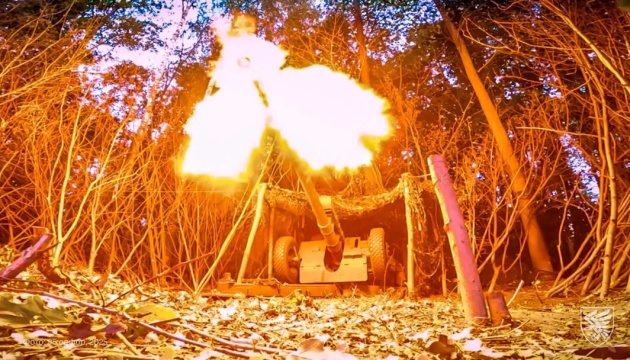
Fighting remains intense, with Ukrainian General Staff reporting the Pokrovsk sector as the busiest on 25 November 2026. A Russian operational breakthrough is unlikely in the next 1-3 months, but confidence is low because available accounts conflict on the pace and direction of territorial change. Russian strikes on Ukraine and Ukrainian strikes on Russian targets are likely to continue; reports of a Ukrainian attack on Russian vessels off Libya remain unresolved.
Executive summary
The Ukrainian General Staff reported 167 front-line engagements on 25 November 2026, including 21 Russian attacks repelled in the Pokrovsk sector, 11 in Lyman, eight in Huliaipole and seven in Kostiantynivka. Another report attributed 131 Russian attempts to break through Ukrainian defences to the same reporting period, leaving the exact daily count uncertain. Russian forces struck Kyiv with ballistic missiles overnight on 26 November, wounding seven people, and President Volodymyr Zelensky warned of another mass strike. Ukraine said its drones hit an oil refinery in Krasnodar, Transneft oil reservoirs in Bashkortostan and Marinovka airfield in Volgograd; damage claims remain unverified in the available reporting. Abu Dhabi talks made no obvious progress, although Jared Kushner said a ceasefire before a peace agreement had been discussed. Ukraine’s claimed attack on the Russian corvette Merkury and freighter Angara off Libya has prompted concern in Italy, but accounts differ on the attack’s location and the ships’ condition.
Change from previous assessment
This update retains the prior assessment that ground engagement is likely to remain high and that a Russian operational breakthrough is unlikely, with low confidence in the breakthrough judgement. The reported 25 November engagement total is now 167, compared with 151 in the prior brief, while another account gives 131 breakthrough attempts; this increases uncertainty about the exact count rather than establishing a rise in fighting. New developments include the 26 November ballistic missile strike on Kyiv, Zelensky’s warning of another mass strike, and further reporting on Ukraine’s claimed strikes against Russian targets. The Abu Dhabi reporting adds detail on ceasefire discussions but no evidence of an agreed pause. Reporting on the Libya vessel attack remains unresolved. No settled prior forecast outcomes were provided, so earlier probabilities have not been scored against outcomes.
Key judgments
- Russian and Ukrainian forces are likely to sustain high ground engagement over the next 1-3 months, with Russian pressure remaining concentrated on the Pokrovsk, Kostiantynivka, Huliaipole and Lyman axes. The Ukrainian General Staff reported 167 engagements on 25 November, including sector-level attack figures. A separate report attributed 131 breakthrough attempts to the same reporting period; these may reflect different counting methods or time windows, so neither figure is a verified independent total. (Confidence: medium · ASSESSED)
- I&W: Two successive weekly Ukrainian General Staff reports record more than 150 engagements per day and identify Pokrovsk, Kostiantynivka or Huliaipole among the busiest sectors. (0-14 days)
- I&W: Three consecutive daily Ukrainian General Staff reports record fewer than 100 engagements and no attacks in the Pokrovsk, Kostiantynivka or Huliaipole sectors. (0-14 days)
- A Russian operational breakthrough on the Pokrovsk or Dobropillia axes is unlikely in the next 1-3 months, but local Russian gains are not ruled out. Reporting describes continued Russian operations near Dobropillia alongside a substantial slowdown in their tempo; it does not provide independently verified front-line mapping that would establish either a breakthrough or a stable line. The accounts differ on battlefield momentum, so this judgement rests on thin evidence. (Confidence: low · ASSESSED)
- I&W: Independent geolocated imagery confirms Russian forces have captured and held Dobropillia or a settlement on the Pokrovsk axis. (0-14 days)
- I&W: Independent front-line assessments show no Russian net advance on the Pokrovsk or Dobropillia axes across successive reporting periods. (1-3 months)
- Russia is likely to continue long-range strikes on Ukrainian cities or infrastructure over the next 30 days. Kyiv Mayor Vitali Klitschko reported that a Russian ballistic missile attack overnight on 26 November wounded seven people and hit a shopping centre and two other buildings. Zelensky warned of a further mass strike, while reporting on the 20 November attack cites more than 400 drones and about 110 missiles, with eight people killed according to Zelensky. The warning and casualty figures rely on Ukrainian statements, while the reported strike pattern is consistent across several accounts. (Confidence: medium · ASSESSED)
- I&W: A further Russian missile or long-range drone strike on Ukrainian territory is confirmed by impact reporting or independently verified launch and interception data. (0-14 days)
- I&W: No Russian long-range strike is confirmed for 30 days, alongside a publicly announced halt to such attacks. (0-30 days)
- A ceasefire agreement in the next 1-3 months is unlikely. The latest Abu Dhabi round made no obvious progress, while Kushner said US negotiators discussed a ceasefire before a peace agreement and that Russian leaders feared a halt without guarantees against renewed conflict. Those public accounts, together with continuing front-line fighting, point to a gap between discussing a ceasefire and agreeing one. The assessment is based on public statements and reporting, not access to negotiating terms. (Confidence: medium · ASSESSED)
- I&W: A published December Abu Dhabi agenda includes agreed ceasefire terms, and both governments announce a start date. (0-14 days)
- I&W: Talks resume without a ceasefire framework while Russian assaults continue on the Pokrovsk or Huliaipole axes. (0-30 days)
- Ukraine has publicly claimed a naval-drone attack on the Russian corvette Merkury and freighter Angara off Libya, but the corvette’s location and condition remain unresolved. Zelensky said Ukraine used seven naval drones to hit the vessels; other reports describe Merkury as docked in eastern Libya and sunk, while another account places the attack near Benghazi. The reports conflict on material details, and some rely on lower-reliability reporting, so the attack’s exact circumstances are low confidence. (Confidence: low · REPORTED)
- I&W: Independent imagery or a Libyan port authority statement establishes where Merkury was when attacked and documents its condition. (0-14 days)
- I&W: A credible port record or verified imagery shows Merkury was intact and was not attacked during the reported period. (0-14 days)
Outlook & scenarios
Continued attritional fighting (55%)
Russian and Ukrainian forces maintain sustained engagement, with Russian attacks continuing around Pokrovsk, Kostiantynivka, Huliaipole and Lyman. Russian long-range strikes on Ukrainian cities or infrastructure continue, while Ukraine carries out further strikes on Russian military or energy-linked targets. This is the baseline outlook for the next 1-3 months.
Local Russian gains without an operational breakthrough (25%)
Russian forces sustain pressure near Dobropillia and the Pokrovsk axis and make local gains, but do not achieve an operational breakthrough. This scenario fits reporting of continued attacks and uneven progress, alongside accounts of a slower Russian advance.
Negotiated pause (15%)
Abu Dhabi talks resume in December and produce a limited ceasefire arrangement. This outcome is unlikely on the current record: the latest round made no obvious progress, and the parties have not announced agreed ceasefire terms.
Maritime spillover wildcard (5%)
A further verified strike on a Russian vessel in Libyan territorial waters triggers a diplomatic crisis and expands the war’s geographic footprint. Italy has warned against the conflict spreading to the Mediterranean, but reporting on the Merkury and Angara attack does not establish whether the vessels were in port or at sea, or whether Merkury sank.
Recommendations
- Reconcile the 167-engagement and 131-breakthrough-attempt figures before using either as a daily trend. Record the reporting window and definition for each count.
- Track Pokrovsk, Kostiantynivka, Huliaipole and Dobropillia separately. Require geolocated evidence before assessing territorial control or calling an operational breakthrough.
- Monitor Ukrainian air-raid alerts, strike-impact reporting and independently verified launch or interception data for the next 30 days. Separate confirmed damage from claims about intended targets.
- Track whether December Abu Dhabi talks receive a published agenda or produce agreed ceasefire terms. Distinguish public discussion of a ceasefire from an announced agreement.
- Seek independent imagery, vessel tracking or Libyan port reporting on Merkury and Angara before assessing the attack’s location, damage or wider implications.
Confidence & uncertainty
Overall confidence is medium because major media reporting and public statements provide corroboration for the occurrence of intense fighting and recent strikes, but key operational details remain uncertain. Front-line counts are Ukrainian General Staff reporting and conflict with a separate 131-attempt figure; the claims do not provide independent mapping sufficient to establish territorial change. The Merkury reports also conflict on location and condition. No key judgement relies only on reporting read in summary.
Alternative analysis (red cell)
Russian activity near Dobropillia is clearly reported as continuing (db1eb126-ceb9-4656-872c-4b6258c60792), while the slowdown assessment is low-confidence and may describe only selected sectors (27230d8d-dbcd-41bd-8b39-5bfcfdc48b5a). The available evidence therefore supports uncertainty about breakthrough risk more strongly than a judgment that a breakthrough is unlikely; renewed local Russian momentum remains a defensible reading.
Intelligence gaps
- [EEI 1.1 · PARTIAL] Geotagged UAV/satellite imagery showing abandoned defensive positions or newly occupied settlements. Recommended collection: overhead imagery
- [EEI 1.2 · UNCOVERED] Confirmed movement of frontline ambulance evacuation routes beyond previous coordinates. Recommended collection: SIGINT/medical logistics
- [EEI 2.1 · PARTIAL] Concentration of assault battalions (≥3 mechanized companies) within 15km of contact line. Recommended collection: SIGINT/UAV
- [EEI 2.2 · UNCOVERED] Unusual artillery stockpile buildup at forward depots exceeding 30-day consumption rates. Recommended collection: overhead imagery/logistics
- [EEI 3.1 · PARTIAL] Bridge structural damage assessments at 5 key Dnieper River crossings via multispectral imaging. Recommended collection: overhead imagery
- [EEI 3.2 · PARTIAL] Rail traffic volume changes at Kryvyi Rih and Pokrovsk rail hubs compared to 7-day baseline. Recommended collection: commercial freight data
Red cell review: PARTIAL DISSENT
TLP:CLEAR