TLP:CLEAR · Disclosure is not limited.
Russia-Ukraine Front Line: High-Tempo Fighting and Long-Range Strikes Continue
Time window: Last 7 days · Audience: General analyst · Type: Situation report · DTG: 2026-09-09 07:09Z · Overall confidence: HIGH
BLUF
Russian forces are very likely to sustain a high-tempo but localised ground offensive over the next 0-14 days, while a decisive operational breakthrough remains unlikely. Russia is very likely to continue drone and missile attacks against Ukraine, and Ukraine is likely to sustain strikes against Russian military and energy targets.
Executive summary
The front line remains attritional. Russian forces recorded repeated attacks in the Pokrovsk, Kostiantynivka, Lyman and Vovchansk directions, but reported operations in northern Kharkiv Oblast produced no advance, and Ukrainian control of Svyatohirsk is now supported by Ukrainian video and acknowledgement from a Kremlin-affiliated milblogger. Russia continues to strike Ukrainian cities, energy infrastructure and humanitarian storage sites. Ukraine is striking Russian military and energy targets, while a jet-powered drone crossed Moldovan and Romanian airspace before crashing in Moldova. US shuttle diplomacy produced meetings in Moscow and Kyiv, but the reporting shows no substantive ceasefire agreement and contains unresolved discrepancies over meeting and ceasefire dates.
Change from previous assessment
Since the 8 September brief, the assessment now has stronger evidence that Ukrainian forces control Svyatohirsk, including a video by Brigadier General Andriy Biletskyi and acknowledgement from a Kremlin-affiliated milblogger. New reporting also quantifies the 7 September ground tempo at 244 combat engagements, adds clearer pressure points in Pokrovsk, Kostiantynivka, Lyman and Vovchansk, and records a drone crossing Moldovan and Romanian airspace. Confidence in the expectation of continued attrition and long-range strikes is unchanged or slightly higher. The assessment adds a low-confidence warning on further regional airspace spillover and retains the previous judgement that a substantive ceasefire is unlikely, while lowering confidence in any precise ceasefire timeline because the reported dates and scope remain inconsistent.
Key judgments
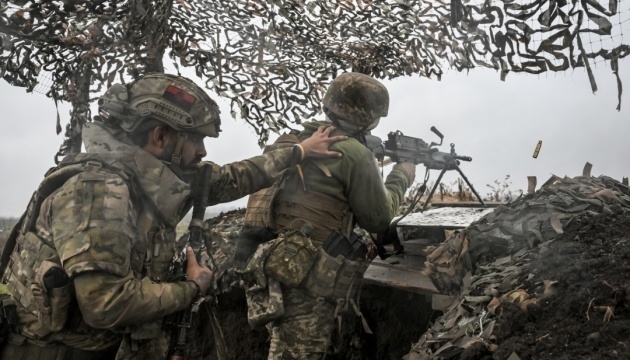
- Russian forces are likely to sustain a high-tempo but localised ground offensive over the next 0-14 days, especially in the Pokrovsk, Kostiantynivka, Lyman and Vovchansk directions, while a decisive operational breakthrough is unlikely. Ukrainian reporting recorded 244 combat engagements on 7 September, including 39 attacks in the Pokrovsk sector, 12 in the Kostiantynivka sector and nine in the Lyman sector. A Ukrainian officer reported intensifying Russian attacks near Vovchansk, but Russian operations in northern Kharkiv Oblast produced no advance on 6 and 7 September. Confidence is medium because attack reporting is corroborated by multiple sources, while territorial control and the scale of recent net movement remain contested. (Confidence: medium · ASSESSED)
- I&W: Confirming indicator: daily reporting records more than 200 combat engagements and Russian assault attempts in at least three of the Pokrovsk, Kostiantynivka, Lyman and Vovchansk directions. (0-14 days)
- I&W: Breaking indicator: independently verified Russian ground control reaches the southern outskirts of Vovchansk, extends beyond the reported 3-5 kilometres from the border, or produces a sustained advance in the Pokrovsk sector. (0-30 days)
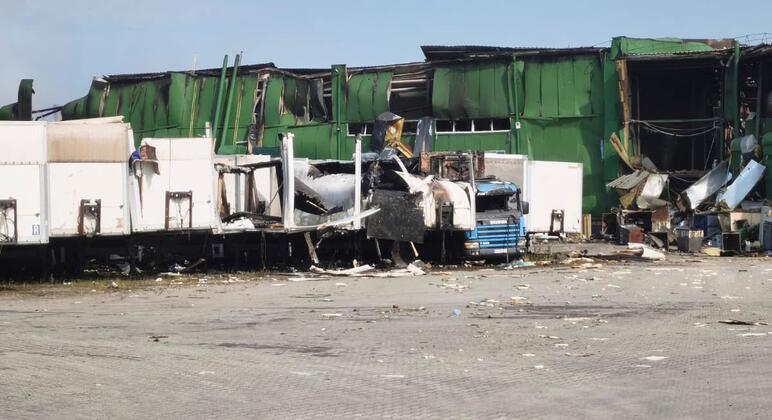
- Russian forces are very likely to continue long-range attacks against Ukrainian population centres, energy infrastructure and humanitarian logistics over the next 0-14 days. Russia launched 167 drones and ballistic missiles against Ukraine overnight on 5 September and 92 drones overnight on 7 September, while Russian attacks caused civilian casualties across six regions, damaged power infrastructure in Kherson and affected humanitarian warehouses in Kyiv oblast, Dnipro, Sumy and Chubynske. Confidence is high because multilateral reporting, official data and repeated operational reporting corroborate the strike pattern. (Confidence: high · ASSESSED)
- I&W: Confirming indicator: Russia launches another overnight wave of at least 90 drones or ballistic missiles, or a new Russian strike damages an energy facility or humanitarian warehouse in Kyiv oblast, Kherson, Dnipro or Sumy. (0-14 days)
- I&W: Breaking indicator: verified Russian long-range attacks against Ukraine cease for 14 consecutive days, including no attacks on Kyiv, Ukrainian energy facilities or UN and WHO-associated storage sites. (0-14 days)
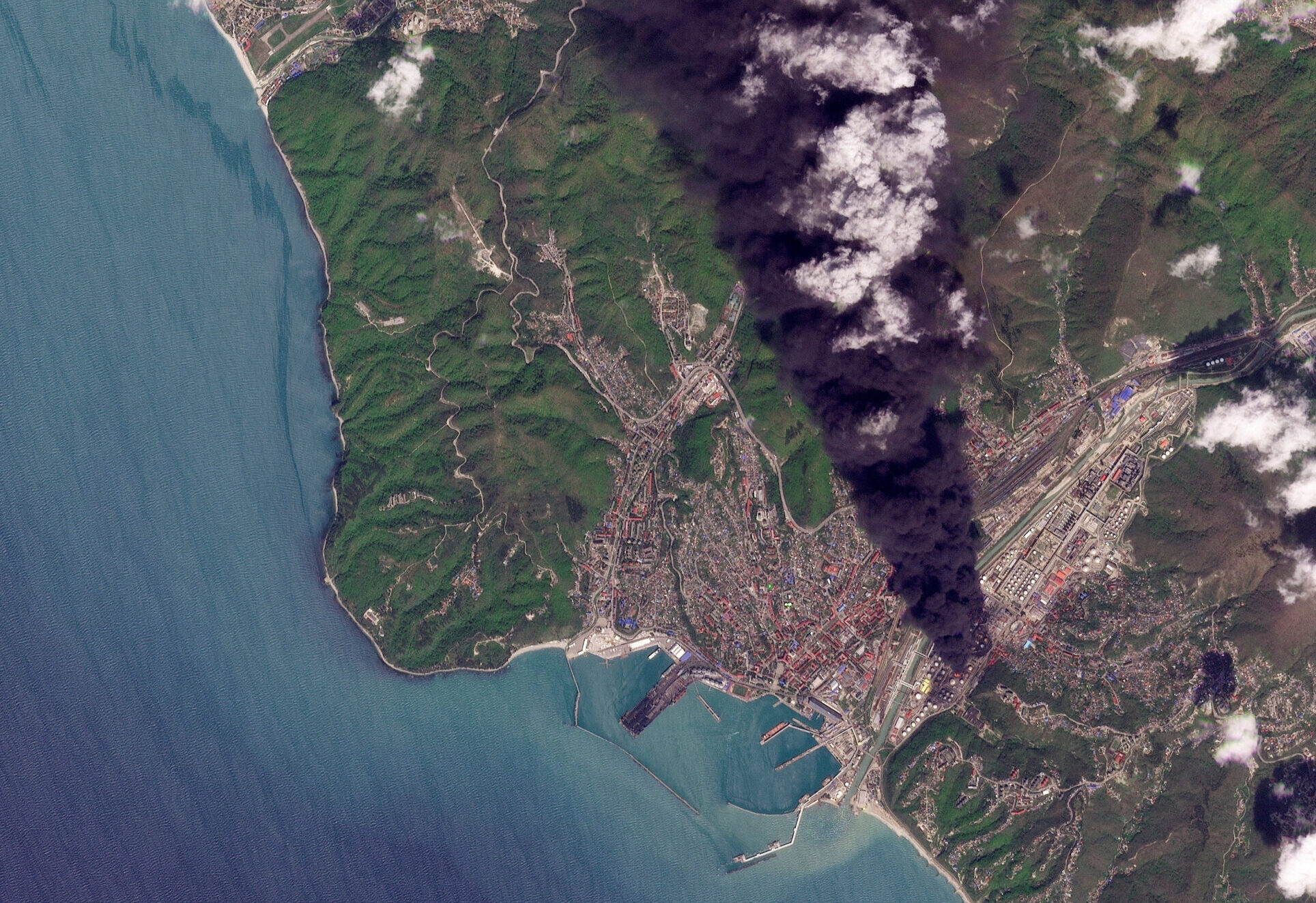
- Ukraine is likely to sustain long-range strikes against Russian military and energy targets over the next 0-14 days, including in Perm Krai, Tatarstan, Kursk Oblast, Bryansk Oblast and the Black Sea. Ukrainian reporting identified strikes on oil refineries and a drone storage site, a Ukrainian Navy report described a USV strike on the Russian support ship Nefrit in Sochi, and Perm Krai Governor Dmitry Makhonin confirmed strikes in Perm Krai. The operational effect remains uncertain because several claims are party-sourced, while NASA FIRMS records heat rather than cause. Confidence is medium. (Confidence: medium · ASSESSED)
- I&W: Confirming indicator: Russian regional officials or independent imagery verify fresh damage at the Perm or Tatarstan refineries, the Caspian Pipeline Consortium infrastructure, Taganrog Airbase or another named military target. (0-14 days)
- I&W: Breaking indicator: no Ukrainian long-range strike is reported against Russian military or energy infrastructure for 14 consecutive days, with no corresponding official acknowledgement or corroborating imagery. (0-30 days)
- A further airspace incident involving Moldova or Romania is roughly even chance over the next 0-30 days, but confidence is low. On 8 September, a Shahed-type drone reportedly entered Moldovan airspace from the direction of Ukraine, crossed into Romanian airspace and crashed near Mihăileni Vechi. NATO and Romanian forces had already reacted to air targets near Romania and found UAVs off the Romanian coast. The specific identification of the drone as a Geran-4 remains unconfirmed. (Confidence: low · ASSESSED)
- I&W: Confirming indicator: another Ukraine-related drone or air target enters Moldovan or Romanian airspace, prompts NATO or national aircraft activity, or crashes in either country. (0-30 days)
- I&W: Breaking indicator: no further cross-border air targets, UAV recoveries or airspace alerts are reported by Moldova, Romania or NATO during the next 30 days. (0-30 days)
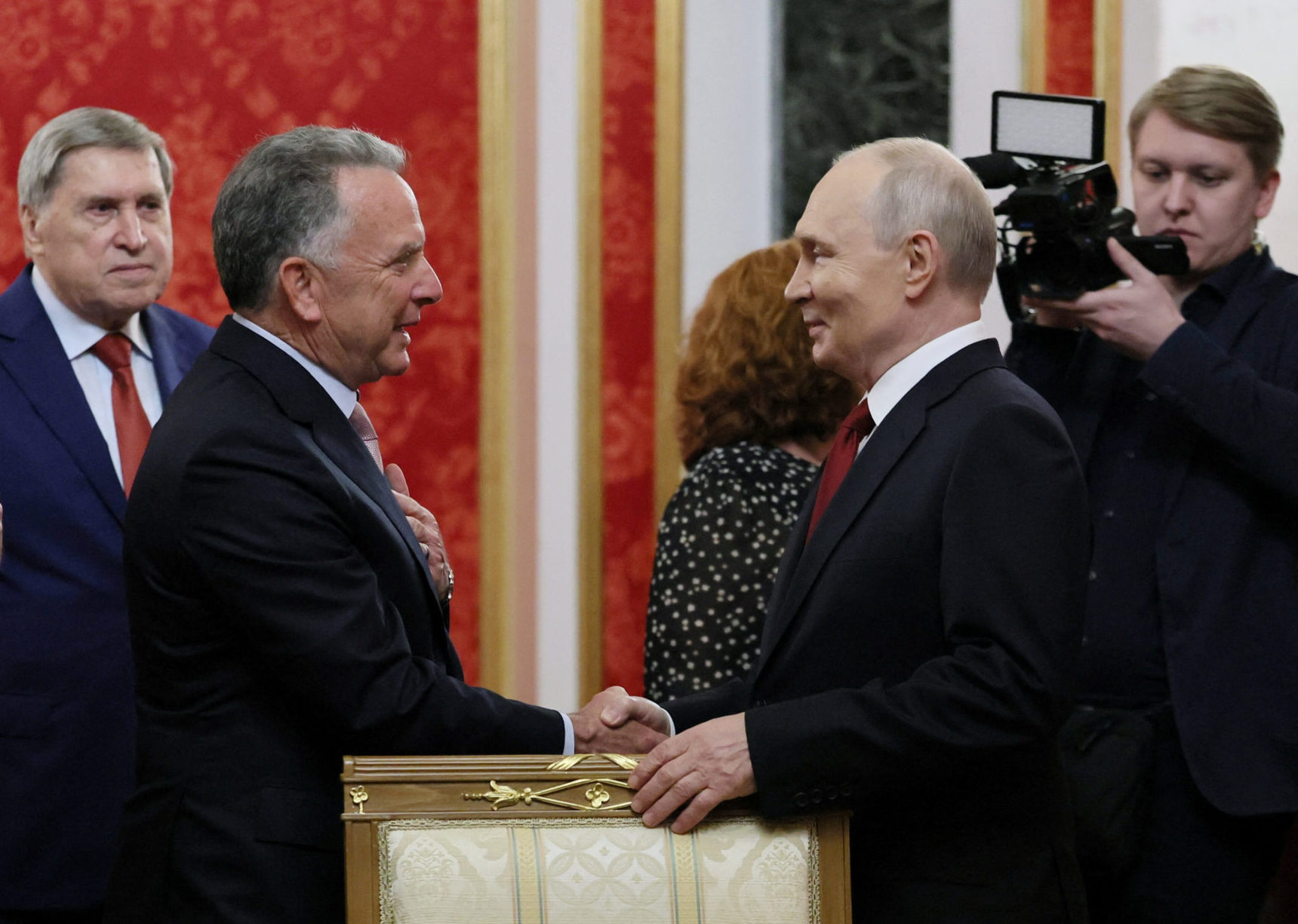
- A substantive Russia-Ukraine ceasefire is unlikely over the next 1-3 months, although a renewed limited arrangement or additional talks have a roughly even chance. Vladimir Putin rejected a broader frontline ceasefire, Russian officials continue to present territorial and political demands, and Volodymyr Zelenskyy said the war is likely to continue into 2027. The US envoys' visits to Moscow and Kyiv, Ukrainian support for renewed trilateral negotiations, and discussion of limits on attacks against energy infrastructure and grain shipments preserve a narrow diplomatic path. Confidence is medium because reporting is internally inconsistent on whether the Putin meeting occurred on 5 or 6 September and whether the temporary ceasefire ended on 7 or 8 September. (Confidence: medium · ASSESSED)
- I&W: Confirming indicator: Russia and Ukraine publicly announce a limited or broader ceasefire with defined scope, start and end dates, followed by at least 72 hours of reduced attacks verified by independent reporting. (0-3 months)
- I&W: Breaking indicator: Russian or Ukrainian forces conduct attacks after a newly announced pause, or Vladimir Putin and Sergei Lavrov restate territorial concessions, military restrictions or alliance limits as preconditions for talks. (0-30 days)
Outlook & scenarios
Continued attrition and reciprocal strikes (70%)
Russian forces maintain frequent attacks around Pokrovsk, Kostiantynivka, Lyman and Vovchansk without a decisive operational breakthrough. Russia continues drone and missile strikes against Ukrainian cities and infrastructure, while Ukraine conducts long-range strikes against Russian military and energy targets.
Russian local tactical gains (20%)
Russian forces exploit pressure around Vovchansk, Pokrovsk or Kostiantynivka to secure a local advance. The result is a change in selected settlement control rather than a front-wide breakthrough, with Ukrainian counterstrikes continuing against Russian logistics and energy infrastructure.
Limited diplomatic pause (20%)
US shuttle diplomacy produces a time-limited arrangement covering selected long-range strikes, energy infrastructure or grain shipments. The arrangement reduces some attacks but does not resolve territorial, military or alliance-related disputes, and fighting resumes after the agreed period.
High-impact airspace spillover (8%)
A further Russia-Ukraine-related drone incident crosses into Moldovan or Romanian airspace, prompts NATO and national military responses, and produces a wider diplomatic crisis without an immediate direct military confrontation between Russia and NATO.
Recommendations
- Refresh the front-line assessment every 24 hours using separate tracking for Vovchansk, northern Kharkiv Oblast, Pokrovsk, Kostiantynivka, Lyman and Svyatohirsk. Record Russian claims, Ukrainian claims and independent visual confirmation separately.
- Prioritise collection on Russian assault density, guided aerial bomb use and drone activity around Pokrovsk, Kostiantynivka, Lyman and Vovchansk. Treat any confirmed advance beyond the reported 3-5 kilometres near Vovchansk as an immediate warning of local operational deterioration.
- Track Russian launch patterns against Kyiv, Kherson, Dnipro, Sumy and humanitarian storage sites, with particular attention to overnight drone totals, ballistic missile use and damage to power generation equipment.
- Verify Ukrainian strike claims against Perm Krai, Tatarstan, Kursk Oblast, Bryansk Oblast, Taganrog Airbase and Caspian Pipeline Consortium infrastructure through official Russian statements, satellite imagery and independent geolocation. Do not treat thermal detections alone as proof of a strike or its attribution.
- Maintain a specific airspace warning line for Moldova and Romania. Review every reported cross-border drone track for launch direction, aircraft response, crash location and recovered components, while keeping the Geran-4 identification separate from the confirmed jet-powered description.
- Require any future ceasefire reporting to specify whether it covers the front line, Kyiv and Moscow, energy infrastructure or grain shipments. Track the start and end time against attacks on the same day before assessing compliance.
Confidence & uncertainty
Overall confidence is high because the main developments are supported by multiple reliable sources, including multilateral reporting from WHO and OCHA, NASA thermal data, ISW assessments, Ukrainian operational reporting and wire coverage. The direction of travel is clear: high-tempo ground combat and long-range strikes continue. The principal uncertainties concern exact territorial control in northern Kharkiv Oblast, the operational effect of Ukrainian strikes inside Russia, the cause of some thermal detections, the identity of the drone that crossed Moldova and Romania, and the scope and end date of temporary ceasefire arrangements.
Intelligence gaps
- [EEI 1.1 · PARTIAL] Geotagged UAV/satellite imagery showing abandoned defensive positions or newly occupied settlements. Recommended collection: overhead imagery
- [EEI 1.2 · UNCOVERED] Confirmed movement of frontline ambulance evacuation routes beyond previous coordinates. Recommended collection: SIGINT/medical logistics
- [EEI 2.1 · UNCOVERED] Concentration of assault battalions (≥3 mechanized companies) within 15km of contact line. Recommended collection: SIGINT/UAV
- [EEI 2.2 · UNCOVERED] Unusual artillery stockpile buildup at forward depots exceeding 30-day consumption rates. Recommended collection: overhead imagery/logistics
- [EEI 3.1 · UNCOVERED] Bridge structural damage assessments at 5 key Dnieper River crossings via multispectral imaging. Recommended collection: overhead imagery
- [EEI 3.2 · UNCOVERED] Rail traffic volume changes at Kryvyi Rih and Pokrovsk rail hubs compared to 7-day baseline. Recommended collection: commercial freight data
Red cell review: CONCUR WITH COMMENT
TLP:CLEAR