TLP:CLEAR · Disclosure is not limited.
Russia-Ukraine front line: Kyiv mass strike, Ukrainian deep hits on St Petersburg oil nodes, and contested Kostyantynivka
Time window: Last 7 days · Audience: General analyst · Type: Situation report · DTG: 2026-07-05 07:12Z · Overall confidence: HIGH
BLUF
Russia very likely carried out a large missile-and-drone strike on Kyiv on 3 July that caused heavy civilian harm while Ukraine almost certainly expanded deep strikes on oil facilities around St Petersburg and Vysotsk, driving fuel restrictions across Russia. Control of Kostyantynivka remains contested despite Kremlin claims of capture.
Executive summary
This week saw Russia’s largest strike on Kyiv in months, with at least 30 killed and about 25 sites hit across the capital, many residential, even as Ukraine reported high air-defence interception rates. Ukraine almost certainly struck oil infrastructure in St Petersburg and the port of Vysotsk, prompting Finland to impose temporary restrictions in the eastern Gulf of Finland and contributing to fuel shortages and petrol sales curbs across more than 40 Russian regions. Moscow has moved to stabilise domestic fuel supply. The status of Kostyantynivka remains unclear: President Vladimir Putin claimed seizure on 3 July, but Ukrainian officials publicly denied loss of control and independent reporting cautions that Russian staff maps often overstate gains. Independent observers report the Sumy axis largely static since April, with no Russian approach to Zaporizhzhia city and no capture of Mala Tokmachka.
Change from previous assessment
New reporting details the 3 July Kyiv barrage: at least 30 killed, about 25 sites struck, and the Ukrainian Red Cross warehouse destroyed, alongside a Ukrainian claim of more than 90 percent interceptions. Ukraine’s deep-strike campaign is now confirmed against oil targets around St Petersburg and Vysotsk, triggering temporary Finnish aviation and maritime restrictions and fuelling retail shortages that prompted extended petrol bans, sales curbs in more than 40 regions and a new Russian domestic fuel law; localised shortages were visible in Novorossiysk and Chita. The status of Kostyantynivka remains contested despite renewed Kremlin claims; Ukrainian denials continue and independent commentary highlights mapping overstatement. Independent sources also indicate front-line stasis on the Sumy axis and no Russian approach to Zaporizhzhia city.
Key judgments
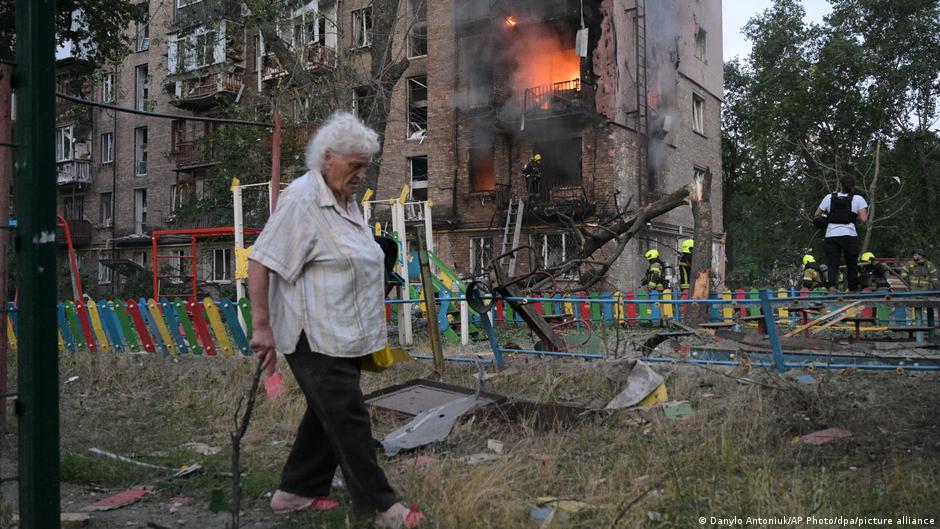
- Russia very likely executed a large missile-and-drone strike on Kyiv on 3 July, causing at least 30 civilian deaths and damaging about 25 sites across the capital, many of them residential, despite Moscow’s assertion that it targeted military-industrial and energy facilities. (Confidence: high · REPORTED)
- I&W: Kyiv City Military Administration publishes a final casualty report confirming 30 or more fatalities and extensive residential damage mapping. (0-14 days)
- I&W: Independent battle damage assessment shows only military-industrial and energy sites struck with minimal residential impact, contradicting current reporting. (0-14 days)
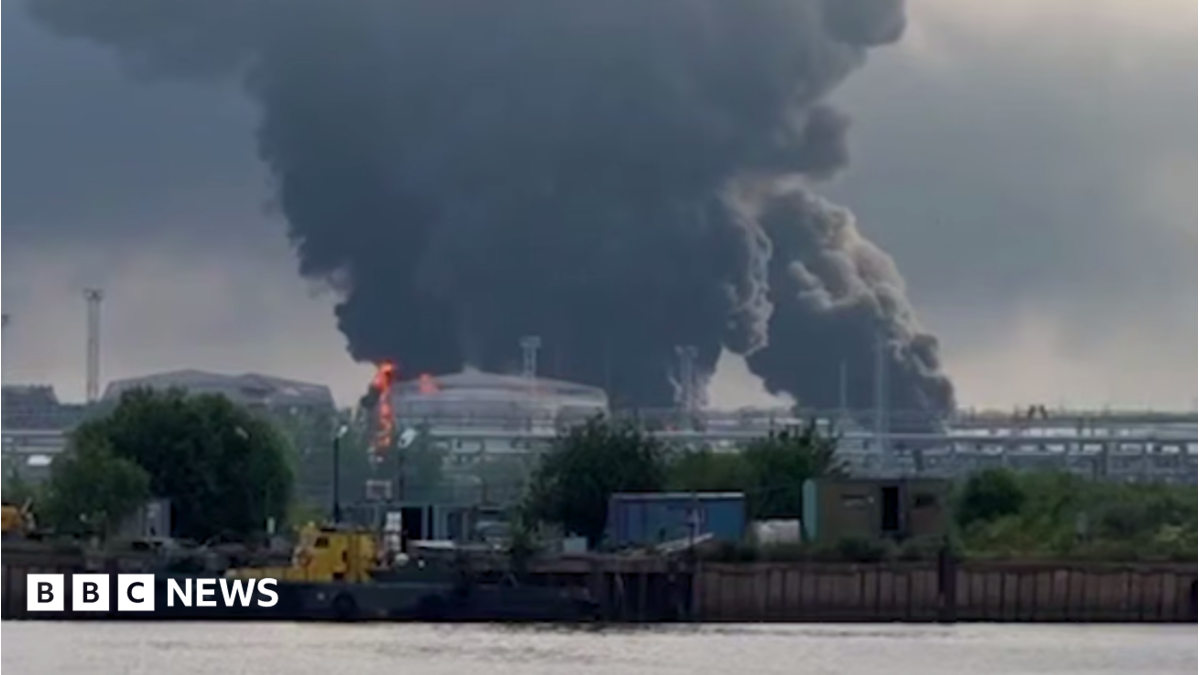
- Ukraine almost certainly struck oil infrastructure around St Petersburg and the port of Vysotsk in early July, contributing to Russia’s fuel shortages, extended petrol export bans and sales restrictions across more than 40 regions and Crimea, and prompting emergency policy steps in Moscow. (Confidence: high · REPORTED)
- I&W: Russian regional authorities announce further extensions of petrol sales restrictions or new rationing beyond the current more than 40 regions and Crimea. (0-1 month)
- I&W: Rapid normalisation of retail fuel availability across restricted regions and lifting of petrol export bans without further reported Ukrainian deep strikes. (0-1 month)
- There is a roughly even chance that Kostyantynivka remains at least partially under Ukrainian control as of 5 July despite Kremlin claims of capture, given Ukrainian official denials, prior reporting of a Ukrainian presence in the city and recurring gaps between Russian staff maps and the real front line. (Confidence: medium · ASSESSED)
- I&W: Geolocated imagery of Ukrainian Defence Forces operating in Kostyantynivka’s administrative centre or formal Ukrainian statements with verifiable location data. (0-14 days)
- I&W: Verified geolocated Russian administrative presence in central Kostyantynivka and Ukrainian acknowledgement of a withdrawal. (0-14 days)
- Russian claims of advances likely overstate gains in several sectors: independent reporting indicates no change on the Sumy axis since April, no Russian approach to Zaporizhzhia city, and no capture of Mala Tokmachka. (Confidence: high · ASSESSED)
- I&W: Persistent absence of verifiable geolocations showing Russian forces inside Mala Tokmachka or on the immediate approaches to Zaporizhzhia city. (1-3 months)
- I&W: Credible geolocated evidence of Russian units entering Mala Tokmachka or closing on Zaporizhzhia city, paired with Ukrainian acknowledgement. (0-1 month)
- It is likely the high strike tempo will persist in the near term, with Russia continuing large salvos against major Ukrainian cities and Ukraine prioritising air defence and long-range interdiction, including in Crimea and deep inside Russia. (Confidence: medium · ASSESSED)
- I&W: At least one additional large-scale Russian barrage against Kyiv or another regional centre and further Ukrainian deep strikes against Leningrad Oblast or Crimea. (0-14 days)
- I&W: A sustained two-week lull in both Russian long-range strikes and Ukrainian deep interdiction activity. (0-14 days)
Outlook & scenarios
Deep-strike duel intensifies and Russian fuel stress deepens (60%)
Ukraine continues to hit oil terminals and port-adjacent energy nodes around St Petersburg and the Gulf of Finland, while Russia struggles with retail fuel availability and extends petrol restrictions and export bans despite emergency measures. Moscow supplements supply with increased imports and ad hoc local sales suspensions in affected cities. Finland periodically renews air and maritime restrictions when cross-border strike activity spikes.
Kostyantynivka falls fully under Russian control (40%)
Russian forces consolidate inside Kostyantynivka after days of close-quarters fighting, validating Kremlin claims. Ukrainian units withdraw to adjacent defensive lines. Messaging gaps narrow as geolocated evidence emerges, although prior over-optimistic staff mapping still hampers external assessment for several days.
Front-line stasis on Sumy and Zaporizhzhia axes persists (50%)
Independent mapping continues to show no change on the Sumy axis while Russian units do not close on Zaporizhzhia city and fail to take Mala Tokmachka. Russian reports continue to over-colour gains on staff maps, complicating daily claims verification.
Wildcard: Russian kinetic provocation against a NATO state (15%)
In line with warnings to Poland about possible Russian provocations, Moscow probes a NATO frontier with limited kinetic action or grey-zone activity intended to distract Western support to Ukraine. Even if contained, such an incident risks escalation dynamics that could reshape resource allocation and air-defence postures along Ukraine’s borderlands.
Recommendations
- Task GEOINT to produce a damage map of the roughly 25 strike locations in Kyiv on 3 July, including the Ukrainian Red Cross warehouse, and reconcile this with claims of more than 90 percent missile and Shahed interceptions to refine air-defence effectiveness estimates.
- Stand up a structured tracker of Russian fuel disruptions by region that logs retail restrictions, export bans, line lengths and ad hoc suspensions, and correlates these with confirmed Ukrainian strikes on oil infrastructure and Russian policy moves including the new domestic fuel law and reported jet-fuel imports.
- Prioritise collection to resolve control of Kostyantynivka: geolocate footage of administrative buildings, police presence and checkpoints; cue social media and commercial satellite collectors against the town centre and key approaches; maintain a running log of unit-level statements.
- Maintain monitoring of the eastern Gulf of Finland NOTAMs and maritime advisories as a tripwire for heightened cross-border strike risk and potential spillover effects on regional air and sea routes.
- Update near-term threat modelling for major Ukrainian cities to reflect Russian strike periodicity and payload mixes seen this week, and cue partner outreach on air-defence resupply in line with Ukraine’s stated prioritisation.
Confidence & uncertainty
Overall confidence is high because the core developments are corroborated by multiple independent sources: Kyiv casualties and damage are reported by Ukrainian authorities and major media, Russia’s strike intent is stated by the Russian Ministry of Defence, and Ukrainian deep strikes are confirmed by both Ukrainian leadership and Russian regional governors, with related Finnish restrictions. Fuel impacts are reflected in policy actions and restrictions across dozens of Russian regions. The principal uncertainty lies around the control of Kostyantynivka, where claims conflict and geolocated proof is not presented in the reporting set, which lowers confidence on that single judgement but does not undercut the broader picture.
Alternative analysis (red cell)
Many of the judgments rely on preliminary, single-origin, or sector-limited reporting and self-reported assessments lacking independent forensic or geolocated confirmation. Key inferences about casualty totals, attribution, and future tempo are therefore contestable; independent satellite imagery, forensic munition analysis, and official production/export data are required to confirm or refute the core conclusions.
Intelligence gaps
- [EEI 1.1 · UNCOVERED] Geotagged UAV/satellite imagery showing abandoned defensive positions or newly occupied settlements. Recommended collection: overhead imagery
- [EEI 1.2 · UNCOVERED] Confirmed movement of frontline ambulance evacuation routes beyond previous coordinates. Recommended collection: SIGINT/medical logistics
- [EEI 2.1 · PARTIAL] Concentration of assault battalions (≥3 mechanized companies) within 15km of contact line. Recommended collection: SIGINT/UAV
- [EEI 2.2 · UNCOVERED] Unusual artillery stockpile buildup at forward depots exceeding 30-day consumption rates. Recommended collection: overhead imagery/logistics
- [EEI 3.1 · UNCOVERED] Bridge structural damage assessments at 5 key Dnieper River crossings via multispectral imaging. Recommended collection: overhead imagery
- [EEI 3.2 · UNCOVERED] Rail traffic volume changes at Kryvyi Rih and Pokrovsk rail hubs compared to 7-day baseline. Recommended collection: commercial freight data
Cited sources
[1] cnn.com · Russia’s latest attack on Kyiv was exceptionally deadly – here is why | CNN (A) · sha256:c79bdd2ad64c [2] UK Government · UN Human Rights Council 62: UK Statement for the Interactive Dialogue on Ukraine (A) · sha256:d5788f99efc6 [3] aljazeera.com · Will economic pressure move the Kremlin towards talks with Kyiv? (A) · sha256:ddd5f05efdf1 [4] dw.com · Ukraine: Russia strikes kill 4 as Kyiv holds day of mourning (A) · sha256:b54d586560ff [5] dw.com · Ukraine strikes oil terminals near St. Petersburg in Russia (A) · sha256:6c7729737956 [6] BBC · Ukraine hits major oil terminal in Russia's St Petersburg (A) · sha256:31fd7a770161 [7] Institute for the Study of War · Russian Offensive Campaign Assessment, July 3, 2026 (B) · sha256:0e1c8ae01cd5 [8] nashaniva.com · "Assaults on Credit." How the Front in Russian General Staff Reports Differs from Reality (B) · sha256:8fd83796d226 [9] mezha.net · Zelensky orders expansion of high tech weapons production (B) · sha256:75517c337773 [10] The New York Times · Ukraine Is Bringing the War With Russia to Crimea, Strike After Strike (A) · sha256:300f7697438f [11] The Russia Today · Russia's Safety Net Is Collapsing - Drones Hit the Heartland || Peter Zeihan (B) · sha256:4538367ebd0d
Source content hashes were computed at collection time; the cited text is preserved unmodified for the life of this product.
Red cell review: PARTIAL DISSENT
TLP:CLEAR