TLP:CLEAR · Disclosure is not limited.
Russia-Ukraine Front Line: Local Advances, Energy Strikes and Abu Dhabi Talks
Time window: Last 7 days · Audience: General analyst · Type: Situation report · DTG: 2026-11-09 07:16Z · Overall confidence: HIGH
BLUF
Russian forces are likely to sustain localised attacks, with reporting indicating gains near Kostyantynivka and Dobropillia but no established front-wide shift in control. Russia's 7 November strike wave damaged Ukrainian energy infrastructure, while the planned Abu Dhabi talks face a low prospect of a settlement breakthrough.
Executive summary
Reporting on 7-8 November describes Russian advances near Kostyantynivka and Dobropillia, alongside attacks that did not produce advances near Lyman, Kupiansk or Orikhiv. This mixed picture supports continued local fighting, not a front-wide change in control. Ukrainian officials reported that Russia's 7 November wave of more than 30 ballistic missiles and over 170 drones damaged energy infrastructure in Kyiv and other regions. Russian, Ukrainian and US negotiators are scheduled to meet in Abu Dhabi on 10-11 November. Russia's stated demands and its opposition to European participation weigh against an agreement, although the supplied reporting gives limited detail on Ukraine's negotiating position.
Change from previous assessment
Compared with the 8 November brief, this assessment adds reports of Russian advances in Kostyantynivka and western Zaporizhzhia, positions in and southwest of Dobropillia, and 24 assaults in the Kostiantynivka-Druzhkivka direction. Confidence in local Russian gains is higher than in the prior brief, but remains medium because other sectors reported attacks without advances and the supplied accounts do not independently establish the extent of gains. The assessment also adds Russia's stated terms for the Abu Dhabi talks and its opposition to European participation, which reinforce the judgement that a settlement breakthrough is unlikely. Reports of Ukrainian strikes on Russian oil refineries are also included.
Key judgments
- Russian forces are likely to continue localised attacks and incremental advances over the next 14 days, but the reporting does not establish a front-wide shift in control. An 8 November ISW assessment relayed by major media noted recent Russian advances in Kostyantynivka and western Zaporizhzhia. Other reporting described Russian positions in and southwest of Dobropillia and 24 assaults in the Kostiantynivka-Druzhkivka direction. By contrast, reporting on 7-8 November said Russian forces failed to advance near Lyman and Kupiansk, and in limited operations in western Zaporizhzhia; Ukrainian forces counterattacked southeast of Orikhiv. The front-line picture is mediated through ISW and Ukrainian General Staff reporting, and the supplied material does not independently confirm the extent of reported gains. This limits confidence. (Confidence: medium · ASSESSED)
- I&W: Confirm: subsequent ISW or Ukrainian General Staff reporting geolocates additional Russian positions inside Dobropillia or records a further advance near Kostyantynivka. (0-14 days)
- I&W: Break: updated reporting records no further Russian gains in these areas and continued attacks without advances near Lyman, Kupiansk or Orikhiv. (0-14 days)
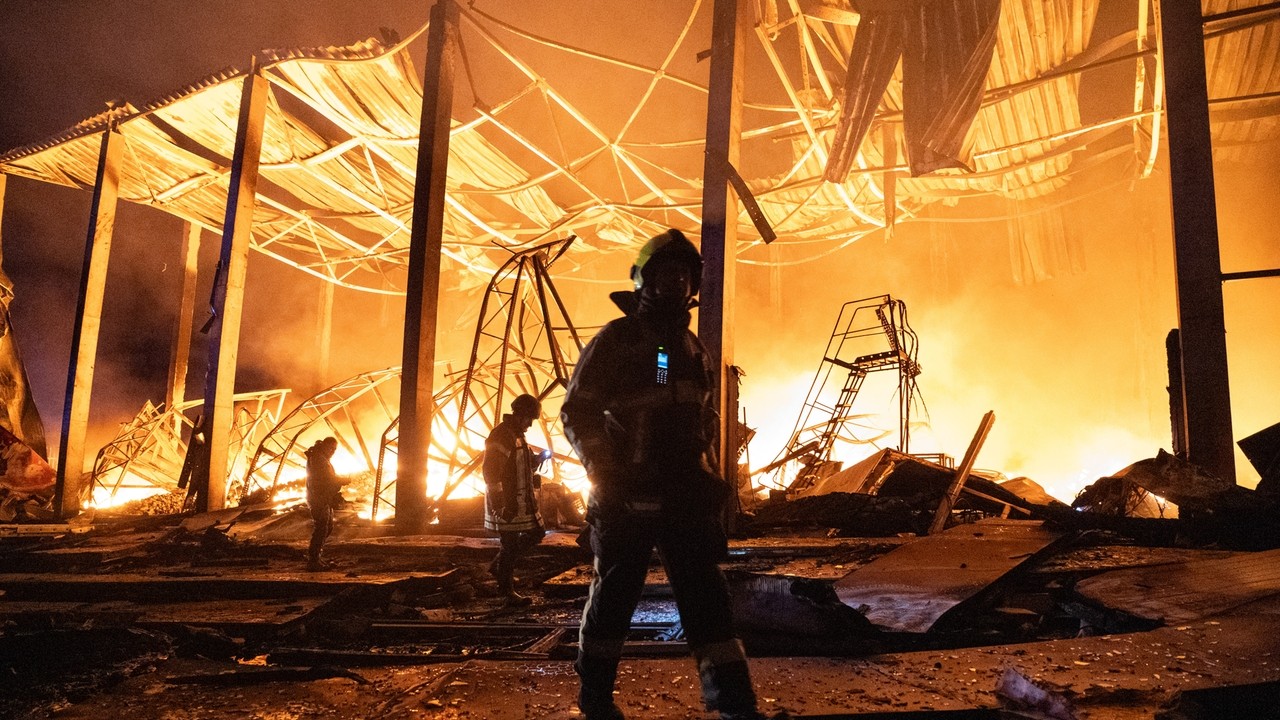
- Russia is likely to continue long-range attacks on Ukraine's energy system over the next 14 days. Ukrainian officials reported that the 7 November wave involved more than 30 ballistic missiles and over 170 drones, hit 12 regions, damaged substations in the Kyiv region and five other regions, and caused power cuts in five regions. The attack and damage are supported by major-media reporting and Ukrainian official statements. The forecast rests on the reported attack pattern in this period, and the scale of future damage is uncertain. (Confidence: medium · ASSESSED)
- I&W: Confirm: Ukrainian officials report another Russian attack involving ballistic missiles and drones that damages named substations or causes power cuts. (0-14 days)
- I&W: Break: Ukrainian authorities report no further attacks on energy infrastructure through the end of the 14-day period. (0-14 days)
- Russian, Ukrainian and US negotiators are likely to open the scheduled Abu Dhabi talks on 10-11 November. Major-media reporting describes a two-day session, and Volodymyr Zelenskyy reported a 90-minute conversation with US negotiators Steve Witkoff and Jared Kushner on 4 November. The meeting plan is directly reported, but the supplied material does not independently confirm that all delegations will attend; confidence is therefore medium. (Confidence: medium · REPORTED)
- I&W: Confirm: delegations publicly confirm their arrival in Abu Dhabi or the opening of talks. (0-3 days)
- I&W: Break: Russia, Ukraine or the US publicly announces postponement or cancellation before the scheduled opening. (0-3 days)
- A settlement breakthrough at the Abu Dhabi talks is unlikely. Vladimir Putin's reported terms include Ukrainian withdrawal from four annexed regions, abandoning its NATO bid and accepting limits on its military; Kremlin adviser Yuri Ushakov said European envoys would not be admitted to the talks. These are public Russian positions, not a complete account of the negotiating positions, and the supplied reporting provides limited detail on Kyiv's terms. That gap lowers confidence. (Confidence: medium · ASSESSED)
- I&W: Break: the parties announce agreed ceasefire or settlement terms, or Russia publicly revises its stated territorial and security demands. (0-14 days)
- I&W: Confirm: talks end without an agreement and Russian officials repeat their demands or exclusion of European envoys. (0-14 days)
- The six-day Oleshky pause did not produce a lasting cessation of hostilities: fighting resumed in Kherson, and local authorities reported a strike on a medical facility in central Kherson city. Reports say hundreds of Oleshky residents evacuated, but the headcount remains disputed. Melania Trump cited almost 800 people, while Yana Lantratova said far fewer than 750 left; another report said neither government had published an official count. The resumption of fighting is reported by major media, but the evacuation total is unverified. (Confidence: medium · REPORTED)
- I&W: Confirm: Ukrainian or Russian authorities report another strike in Kherson or around Oleshky. (0-14 days)
- I&W: Break: both sides announce and observe a renewed local ceasefire around Oleshky for at least 72 hours. (0-14 days)
- Ukrainian forces are likely to continue long-range attacks on Russian energy facilities over the next 14 days. Reporting describes Ukrainian drones striking energy facilities in four Russian regions, including the Samara oil refinery for a fifth time in a month, and separately reports strikes on two refineries with a combined processing capacity of 31 million tons per year. The repeated Samara strikes support the assessment of continued targeting, but the supplied reporting does not identify both refineries or independently establish the extent of damage. (Confidence: medium · ASSESSED)
- I&W: Confirm: a major-media or official report identifies another Ukrainian drone or missile strike on a Russian refinery or fuel facility. (0-14 days)
- I&W: Break: no further strikes on Russian energy facilities are reported during the period. (0-14 days)
Outlook & scenarios
Local fighting continues without a front-wide shift (65%)
Russian forces continue attacks around Kostyantynivka and Dobropillia while fighting persists near Lyman, Kupiansk and Orikhiv. Russia continues long-range strikes on Ukrainian energy infrastructure, and the Abu Dhabi meeting produces no settlement agreement.
Talks produce a limited humanitarian or military measure (25%)
Russian, Ukrainian and US negotiators agree a limited pause or humanitarian arrangement without resolving territorial and security terms. The Oleshky pause shows that a local truce can enable evacuations, but fighting resumed after that arrangement ended.
A renewed strike wave causes wider infrastructure disruption (10%)
A Russian attack again damages substations linking the Rivne and Khmelnytsky nuclear power plants to Kyiv and central Ukraine, with wider disruption to electricity, water or heating. This is an unlikely, high-impact scenario; the 7 November attack already damaged energy infrastructure across multiple regions.
Recommendations
- Maintain a daily sector-by-sector record of reported gains and attacks without gains. Track Dobropillia and Kostyantynivka separately from Lyman, Kupiansk and Orikhiv, and label claims relayed through ISW or Ukrainian officials until independently geolocated.
- For the Abu Dhabi talks, distinguish scheduled attendance, actual participation and an agreed text. Compare any public outcome with Russia's stated territorial and security demands and its position on European participation.
- Track each Russian attack on Ukrainian energy infrastructure by weapon count, affected region, named substation and reported restoration status. Flag any repeat of the 7 November attack scale and record reported effects on Kyiv's water and heating systems.
- Track reported Ukrainian strikes on Russian energy facilities by facility name, location and independently reported operational impact. Do not infer damage at an unnamed refinery from the combined processing-capacity figure alone.
- Do not present Russian Defence Ministry or Andrey Marochko battlefield casualty claims as verified counts. Keep the Oleshky evacuation figures labelled as disputed unless an official count is published.
Confidence & uncertainty
Overall confidence is high for the broad situation picture because major-media reporting and official statements converge on continued fighting, the 7 November energy attack and the scheduled Abu Dhabi talks. Confidence is lower on the extent of Russian territorial gains, the future scale of strikes and the evacuation headcount from Oleshky. Front-line reporting is partly mediated through ISW and Ukrainian official assessments, and some operational claims lack independent confirmation in the supplied material.
Alternative analysis (red cell)
The Abu Dhabi meeting may produce limited procedural or humanitarian understandings even if it does not resolve the core territorial and security issues. Claims af633862-6bb1-402c-b119-7cfd8eea1edb and af540706-6d22-4fc5-a5ce-cab9229c6c4e indicate substantial obstacles, but they are public positions whose negotiating rigidity is not established. On the supplied evidence, a breakthrough is not demonstrated, but neither is it sufficiently supported to assess as clearly unlikely.
Intelligence gaps
- [EEI 1.1 · PARTIAL] Geotagged UAV/satellite imagery showing abandoned defensive positions or newly occupied settlements. Recommended collection: overhead imagery
- [EEI 1.2 · UNCOVERED] Confirmed movement of frontline ambulance evacuation routes beyond previous coordinates. Recommended collection: SIGINT/medical logistics
- [EEI 2.1 · UNCOVERED] Concentration of assault battalions (≥3 mechanized companies) within 15km of contact line. Recommended collection: SIGINT/UAV
- [EEI 2.2 · UNCOVERED] Unusual artillery stockpile buildup at forward depots exceeding 30-day consumption rates. Recommended collection: overhead imagery/logistics
- [EEI 3.1 · PARTIAL] Bridge structural damage assessments at 5 key Dnieper River crossings via multispectral imaging. Recommended collection: overhead imagery
- [EEI 3.2 · UNCOVERED] Rail traffic volume changes at Kryvyi Rih and Pokrovsk rail hubs compared to 7-day baseline. Recommended collection: commercial freight data
Red cell review: PARTIAL DISSENT
TLP:CLEAR