TLP:CLEAR · Disclosure is not limited.
Russia-Ukraine Front Line: Local Gains, Continued Strikes, No Broad Shift
Time window: Last 7 days · Audience: General analyst · Type: Situation report · DTG: 2026-10-30 07:17Z · Overall confidence: HIGH
BLUF
The front remains active, with Ukrainian forces reporting local gains near Lyman and Kupiansk, but the available reporting does not establish a broad change in territorial control. Russian attacks on civilian and rail targets, including the 29 October strike on Dnipro railway station, and continued fighting around Pokrovsk and Huliaipole remain the immediate operational concerns.
Executive summary
Ukrainian commanders report that Operation Vivaldi recaptured territory in Donetsk region and disrupted Russian plans around Sloviansk and Kramatorsk. Ukraine has also reported gains from Operation Veles near Kupiansk. These accounts are contested by Russian Chief of the General Staff Valery Gerasimov, and the headline territorial and casualty figures have not been independently confirmed. Ukrainian military reporting recorded 191 combat engagements on 28 October, with Pokrovsk the busiest reported direction. On 29 October, a Russian drone struck Dnipro's main railway station, killing at least 14 people; strikes were also reported in Chernihiv, Kremenchuk and Kyiv. In Kherson region, a local ceasefire is supporting a humanitarian operation in Alyoshki, although aid delivery and evacuation completion remain unconfirmed. US, Ukrainian and Russian statements point to a planned technical-level meeting, but its timing and venue are unsettled.
Change from previous assessment
Since the 29 October prior brief, reporting adds Operation Veles near Kupiansk, further detail on claimed Vivaldi gains, and the 29 October strikes on Dnipro, Chernihiv, Kremenchuk and Kyiv. The Alyoshki aid convoy has now reportedly departed, but delivery and evacuation remain unconfirmed. Confidence in an early-November trilateral meeting has been lowered: Zelensky says no date is fixed, while Putin's reported readiness points to after mid-November. The assessment remains that local Ukrainian gains and a humanitarian pause do not establish a broad change in territorial control or a front-wide halt.
Key judgments
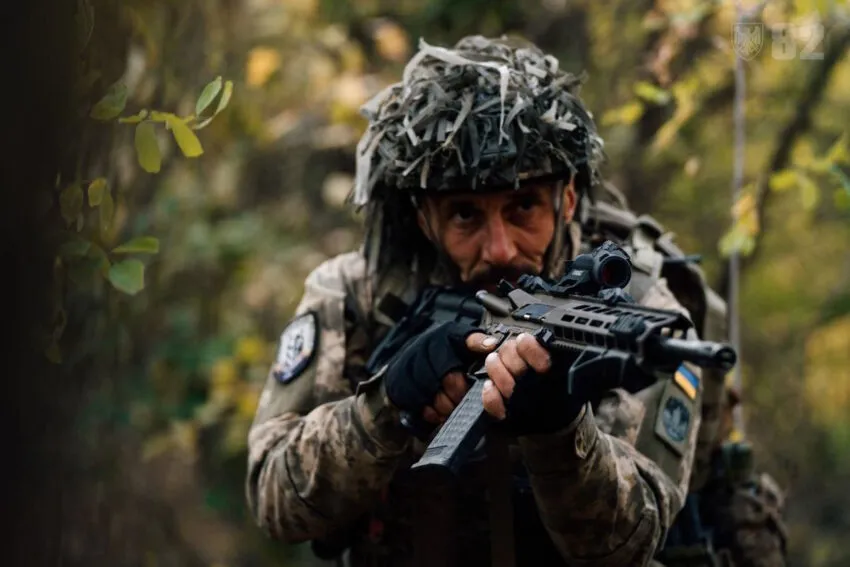
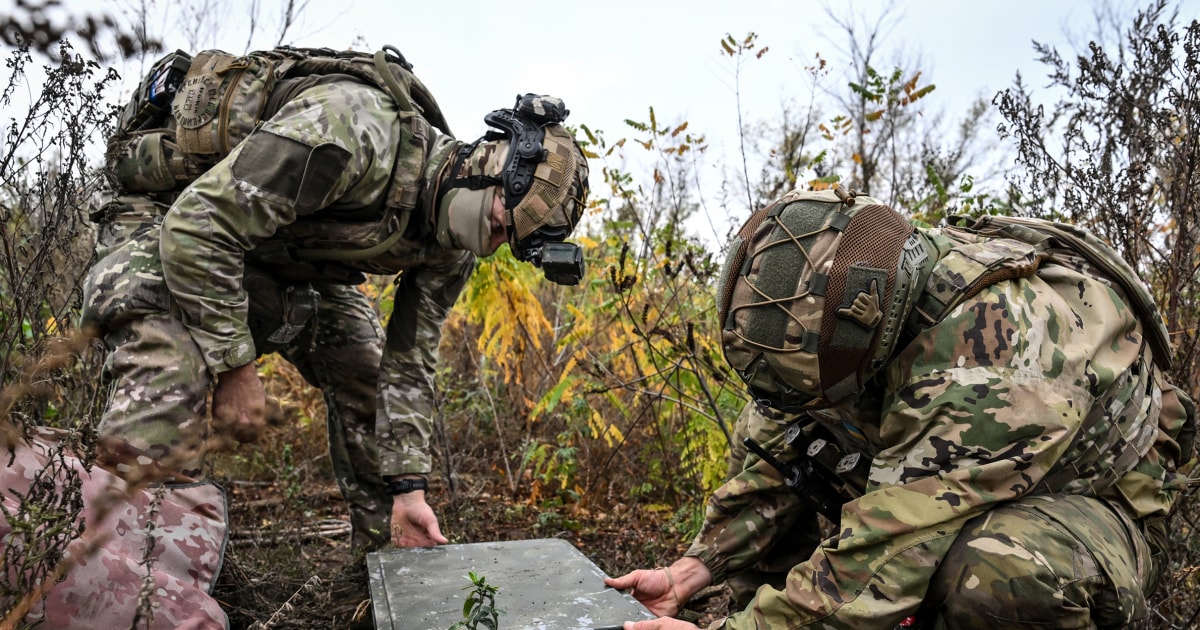
- Ukrainian counterattacks likely secured local gains around Lyman and the Oleksandrivka axis, but reporting does not establish a broad shift in control. Ukraine's 3rd Army Corps commander Andriy Biletsky reported that Operation Vivaldi recaptured 277 square kilometres and more than 16 settlements; reporting also describes Ukrainian advances from Vesele towards Skudne. Control of Perebudova remains contested, with one account saying Ukrainian forces retook it and another placing Russian forces on its north-eastern edge. Near Kupiansk, Ukraine's Khartiia 2nd Corps reported an underground advance of more than 15 kilometres, while Volodymyr Zelensky said Russian losses exceeded 100 and more than 30 Russian soldiers were captured. Zelensky also reported more than 800 square kilometres liberated in three operations, but separate reporting attributes that figure to an Air Assault Forces campaign, leaving its scope unclear. Gerasimov called Vivaldi ineffective and claimed 3,500 Ukrainian casualties. The conflicting wartime accounts and lack of independent confirmation of the headline figures support medium confidence. (Confidence: medium · ASSESSED)
- I&W: Confirm if geolocated reporting shows Ukrainian forces holding positions around Vesele, Skudne or Perebudova without a broader change across the Donetsk front. (1-3 months)
- I&W: Break if independently verified maps show either a sustained Ukrainian advance across multiple front-line axes or Russian forces retaking the reported gains around Lyman and Oleksandrivka. (1-3 months)
- Russian forces are very likely to continue high-tempo assaults over the next 14 days. The Ukrainian General Staff reported 191 combat engagements on 28 October, including 32 on the Pokrovsk direction; Ukrainian reporting also listed 17 Russian attacks at Huliaipole and six assaults on the Lyman direction. A separate Ukrainian military report counted 9,654 Russian kamikaze drones used in one day. These operational totals are Ukrainian reporting and have not been independently verified here. Reporting also says Ukrainian counterattacks on the Oleksandrivka axis prompted Moscow to redirect elements of the 120th Naval Infantry Division and the 40th Separate Naval Infantry Brigade from operations elsewhere. (Confidence: medium · ASSESSED)
- I&W: Confirm if Ukrainian General Staff reporting records at least 150 daily engagements, including at least 25 on the Pokrovsk direction, on three consecutive days. (0-14 days)
- I&W: Break if reported daily engagements fall below 100 for seven consecutive days and attacks on Pokrovsk and Huliaipole also decline. (0-14 days)
- Russian long-range attacks are very likely to continue causing civilian casualties and disrupting transport over the next 14 days. On 29 October, a Russian drone struck Dnipro's main railway station, killing at least 14 people and injuring at least 14 others. Russian attacks were also reported in Chernihiv and Kremenchuk, while a ballistic missile attack on Kyiv was reported late that day. A UK statement reported that 110 ballistic missiles had been fired into Ukrainian cities between 13 and 28 October. The Dnipro incident is corroborated by major-media reporting and statements from Ukrainian officials; the wider strike pattern and missile total rely partly on official reporting. (Confidence: medium · ASSESSED)
- I&W: Confirm if Ukrainian authorities or major media report another Russian missile or drone strike causing civilian casualties or damage to a railway facility. (0-14 days)
- I&W: Break if no Russian-attributed strike causes civilian casualties or railway damage during the next 14 days. (0-14 days)
- The Kherson-sector ceasefire is likely to remain a local humanitarian pause through its reported 1 November end, rather than become a front-wide halt. TASS reported that Russian forces began observing a ceasefire at 04:00 Moscow time on 27 October; Ukraine's ombudsman said the Oleshky truce was holding into a third day, and BBC reporting said no breaches had been reported. An anonymous local government source separately alleged that Russian forces were using the lull to reinforce positions and bring in supplies. A convoy carrying food, medicines, hygiene products and fuel set off for Alyoshki on 30 October, but delivery and evacuation completion are not confirmed. The differing accounts of the ceasefire's scope and conduct leave medium confidence. (Confidence: medium · ASSESSED)
- I&W: Confirm if the Alyoshki convoy's arrival, aid distribution or civilian evacuation is reported before the ceasefire's stated end, with no reported breach. (0-3 days)
- I&W: Break if either side reports a confirmed exchange of fire in the Kherson sector or the pause is formally extended beyond the humanitarian operation. (0-14 days)
- A US-Ukraine-Russia technical-level meeting is likely to be scheduled in November, but a near-term broad ceasefire is unlikely. Zelensky said the parties agreed to a trilateral meeting but that its date was not known; Putin said Russia was ready to resume talks after mid-November, while another report placed a possible meeting in the first half of November. Those accounts leave the timing and venue unsettled. Putin has said Russia wants a full end to the conflict rather than a short ceasefire. Confidence is medium because leaders have publicly described plans for talks, but their timing and stated objectives remain unresolved. (Confidence: medium · ASSESSED)
- I&W: Confirm if the US, Ukraine or Russia publicly announces an agreed date and venue for technical-level talks. (0-16 days)
- I&W: Break the meeting assessment if a participant publicly withdraws or no date is announced by 15 November. (0-16 days)
Outlook & scenarios
Continued fighting without a broad territorial shift (65%)
Russian assaults continue around Pokrovsk and Huliaipole while Ukrainian counterattacks remain local around Lyman and the Oleksandrivka axis. The reported Vivaldi and Veles gains do not translate into a broad change in front-line control. Russian strikes continue to threaten Ukrainian cities and railway infrastructure.
Ukrainian local gains widen (20%)
Ukrainian forces consolidate positions gained near Lyman, Oleksandrivka and Kupiansk, then extend pressure on nearby Russian positions. Moscow diverts additional forces from planned operations elsewhere, while Russian assaults continue on other directions.
Talks proceed without a ceasefire (10%)
The US, Ukraine and Russia schedule technical-level talks in November. The meeting addresses terms for a final settlement, but fighting continues because Russia's stated preference for a full end to the conflict does not produce an agreed near-term halt.
High-impact wildcard: attack affecting Zaporizhzhia plant safety (5%)
A further drone incident at or near the Zaporizhzhia Nuclear Power Plant kills or injures staff, or disrupts plant operations while its shut-down reactors still require cooling. The recent death of a plant employee has not been attributed to either side, leaving escalation risk difficult to assess.
Recommendations
- Maintain a daily, geolocated control map for the Lyman, Oleksandrivka and Kupiansk directions. Separate verified positions from Ukrainian and Russian claims, and treat Perebudova as contested until reporting resolves the discrepancy.
- Track daily Ukrainian General Staff engagement counts for Pokrovsk, Huliaipole and Lyman against the 28 October figures. Record the reporting source and date to avoid conflating different reporting periods.
- Verify casualty updates and damage from the 29 October strikes in Dnipro, Chernihiv, Kremenchuk and Kyiv against local authorities and major-media reporting. Track reported railway disruption separately from casualty totals.
- Monitor the Alyoshki aid convoy and evacuation through the ceasefire's stated end. Record whether aid reached civilians, whether evacuations occurred, and whether either side reported a breach.
- Do not treat a proposed November meeting as evidence of a ceasefire. Track official date and venue announcements separately from statements about sanctions relief, a final settlement or attacks on Russian energy infrastructure.
Confidence & uncertainty
Overall confidence is high for the basic event picture because several major incidents, particularly the Dnipro railway station strike, are supported by multiple media reports and statements from Ukrainian officials. Official government, wire-service and major-media reporting also corroborates the existence of active fighting and the Alyoshki humanitarian initiative. Confidence is lower in territorial-control claims, casualty totals for Operation Vivaldi, the conduct and scope of the Kherson ceasefire, and the timing of trilateral talks. Some reports repeat statements from the same parties and should not be counted as independent confirmation.
Intelligence gaps
- [EEI 1.1 · PARTIAL] Geotagged UAV/satellite imagery showing abandoned defensive positions or newly occupied settlements. Recommended collection: overhead imagery
- [EEI 1.2 · UNCOVERED] Confirmed movement of frontline ambulance evacuation routes beyond previous coordinates. Recommended collection: SIGINT/medical logistics
- [EEI 2.1 · PARTIAL] Concentration of assault battalions (≥3 mechanized companies) within 15km of contact line. Recommended collection: SIGINT/UAV
- [EEI 2.2 · PARTIAL] Unusual artillery stockpile buildup at forward depots exceeding 30-day consumption rates. Recommended collection: overhead imagery/logistics
- [EEI 3.1 · UNCOVERED] Bridge structural damage assessments at 5 key Dnieper River crossings via multispectral imaging. Recommended collection: overhead imagery
- [EEI 3.2 · UNCOVERED] Rail traffic volume changes at Kryvyi Rih and Pokrovsk rail hubs compared to 7-day baseline. Recommended collection: commercial freight data
Red cell review: CONCUR WITH COMMENT
TLP:CLEAR