TLP:CLEAR · Disclosure is not limited.
Russia-Ukraine Front Line: Local Ukrainian Gains, Sustained Russian Pressure
Time window: Last 7 days · Audience: General analyst · Type: Situation report · DTG: 2026-10-19 16:27Z · Overall confidence: HIGH
BLUF
Russian forces are likely to maintain pressure on the Pokrovsk, Kostiantynivka, Kupiansk and Huliaipole directions, but reporting does not establish a broad breakthrough. Ukraine reports local gains from Operation Vivaldi, while Russia's 18-19 October strike wave and a disputed US warning failure add to pressure on Kyiv; an immediate ceasefire remains unlikely.
Executive summary
Fighting remained intense across several front-line directions. Ukraine's General Staff reported 204 combat engagements on 19 October, including 30 Russian attacks on the Pokrovsk direction and 21 near Kostiantynivka. Ukraine also reported that Operation Vivaldi had recaptured territory in eastern Donbas, although reported totals range from 275 to 277 square kilometres and the timeframe for the 16 settlements claimed is unclear. Russian strikes on 18-19 October damaged energy infrastructure and facilities in Kyiv, according to Ukrainian authorities and company statements. Ukraine and the United States gave conflicting accounts of whether Kyiv received advance warning. US officials denied a general suspension of intelligence sharing, while Marco Rubio attributed missed notifications on 12-13 October to a software error. The parties' stated positions on territory and a ceasefire remain incompatible.
Change from previous assessment
Since the 19 October morning brief, this assessment adds Ukraine's Operation Vivaldi claims of gains totalling 275-277 square kilometres and 16 settlements. Confidence in local Ukrainian gains is medium, but the totals and timeframes remain unresolved. Reporting now records 30 Russian attacks on Pokrovsk and 21 near Kostiantynivka on 19 October, while assessments of Russian momentum near Dobropillia conflict. The 18-19 October strike wave and the dispute over US warning support are new developments. The assessment that an immediate ceasefire is unlikely is unchanged.
Key judgments
- Russian forces are likely to sustain ground pressure on the Pokrovsk, Kostiantynivka, Kupiansk and Huliaipole directions over the next 14 days, but available reporting does not establish a broad breakthrough near Dobropillia. Ukraine's General Staff reported 30 attacks on Pokrovsk and 21 near Kostiantynivka on 19 October, alongside 11 attacks toward Kupiansk and nine on the Huliaipole direction. Dobropillia assessments conflict: Oleh Zhdanov described a 100,000-strong Russian force and a 25-kilometre encirclement zone, while Oleksandr Kovalenko assessed on 19 October that Russian forces were stalled. Denis Pushilin described Dobropillia as liberated but said Ukrainian forces still needed to be cleared from the city. (Confidence: medium · ASSESSED)
- I&W: Daily Ukrainian General Staff reports record at least 20 Russian attacks on the Pokrovsk direction on most days, confirming continued pressure. (0-14 days)
- I&W: Independently geolocated reporting confirms Russian forces have breached a Ukrainian defensive line near Dobropillia or established control of the city, indicating a breakthrough and breaking the current assessment. (0-14 days)
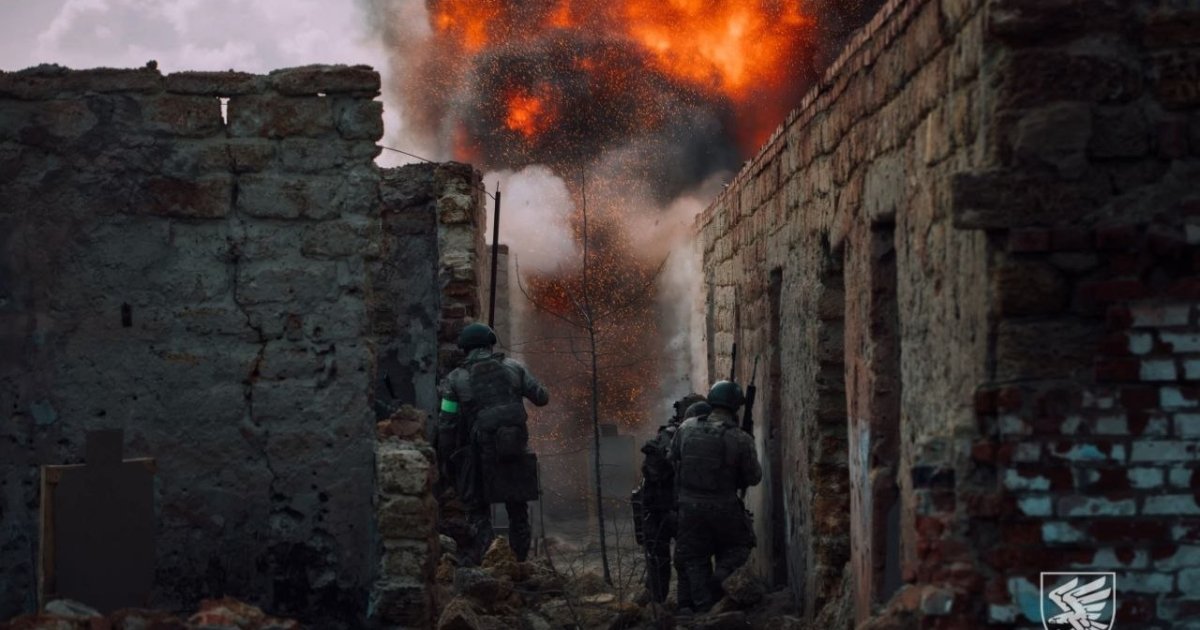
- Ukrainian forces very likely achieved localized gains during Operation Vivaldi on the Lyman axis and in eastern Donbas, but the reported total of 275-277 square kilometres and 16 settlements is not independently established. Ukraine's Third Army Corps said its fourth phase reclaimed an additional 100 square kilometres on 16 October. Reports that pro-Russian military bloggers acknowledged Ukrainian advances support the claim of local movement, while the Russian Ministry of Defence did not publicly acknowledge those gains. The reported totals use differing timeframes. (Confidence: medium · ASSESSED)
- I&W: Independent geolocated imagery and consistent front-line mapping confirm Ukrainian control of positions corresponding to the reported Operation Vivaldi gains. (0-30 days)
- I&W: Geolocated reporting confirms Russian forces have retaken positions attributed to Operation Vivaldi, weakening the assessment that Ukraine retains those local gains. (0-30 days)
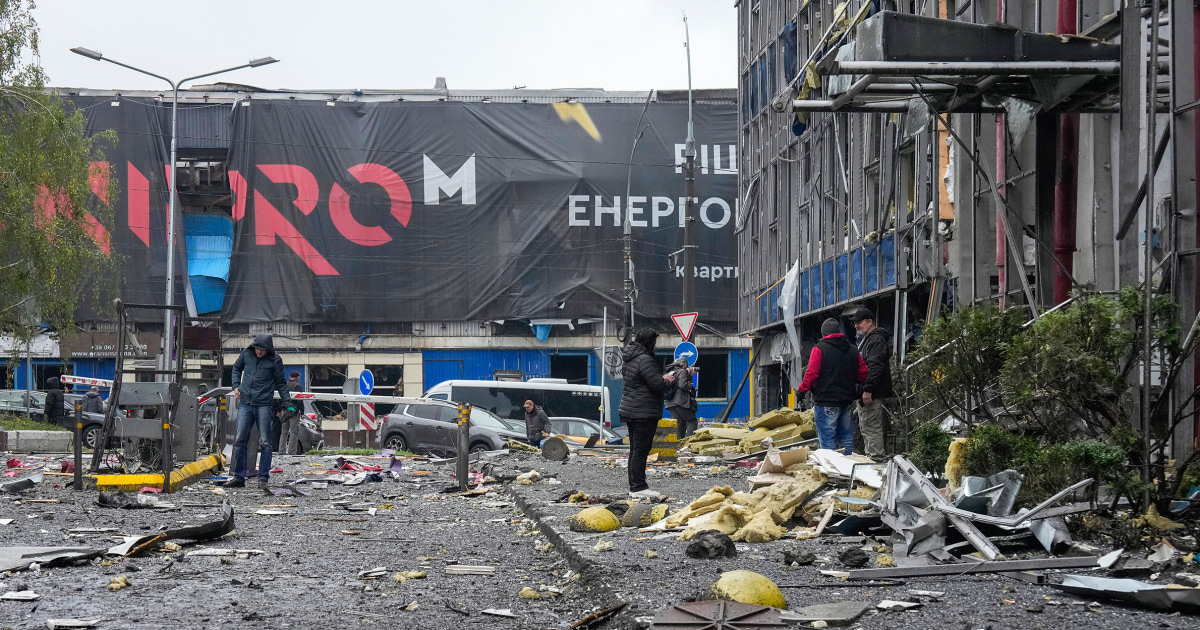
- Russian long-range attacks on Ukrainian energy and infrastructure targets are likely to continue over the next 14 days. Ukrainian reporting on the 18 October barrage cited 16 ballistic missiles against Kyiv, damage to more than 10 energy facilities and outages affecting over 500,000 people. Russia's Ministry of Defence announced a major strike on 19 October, and Datagroup said its Kyiv data centre was disabled beyond repair. The full extent of damage to individual facilities remains subject to verification. (Confidence: medium · ASSESSED)
- I&W: Ukrainian authorities report further Russian missile or drone attacks on named energy facilities or electricity networks, confirming continued pressure. (0-14 days)
- I&W: Fourteen consecutive days pass without a reported Russian attack on Ukrainian energy infrastructure, breaking the forecast of continued attacks. (0-14 days)
- It is unlikely that current public reporting establishes a deliberate US policy to withhold warning of the 18-19 October Russian attack. Volodymyr Zelensky said Ukraine received no early warning, while Donald Trump and Marco Rubio said intelligence sharing had not been suspended. Rubio separately attributed missed notifications on 12-13 October to a software error. Those statements do not resolve whether an alert was generated or shared for the later attack. (Confidence: low · ASSESSED)
- I&W: A US European Command investigation or date-specific alert records show that the 18-19 October warning gap resulted from a software fault rather than an order to withhold information, supporting the assessment. (0-30 days)
- I&W: An official record or named US or Ukrainian official confirms an explicit order to withhold warning for the 18-19 October attack, breaking the assessment. (0-30 days)
- The reported Starlink speed restriction likely constrained Ukrainian high-speed drone interception, but public reporting does not establish who ordered the restriction or whether it was deliberate. Ukraine said high-speed interceptors lost connectivity and reported that Starlink operated at higher speeds during tests on EU territory. Donald Trump denied deliberately slowing the network, and Scott Bessent called Volodymyr Zelensky's allegation reckless. The operational effect and attribution therefore remain contested. (Confidence: low · ASSESSED)
- I&W: SpaceX publishes service limits, or Ukrainian telemetry shows a repeatable loss of connectivity above 160 kilometres per hour in Ukraine but not in EU tests, confirming a service constraint. (0-30 days)
- I&W: SpaceX removes the reported speed limit and Ukrainian units report uninterrupted connectivity during high-speed intercepts, breaking the assessment of an ongoing constraint. (0-30 days)
- An immediate ceasefire is unlikely over the next 14 days. Volodymyr Zelensky has said he would accept a ceasefire along current front lines followed by talks, while Vladimir Putin has insisted Ukraine surrender territory it still holds, including in Donbas. Donald Trump's 60-day sanctions pause is described by Marco Rubio as time to assess economic effects, not as evidence that Moscow and Kyiv have agreed to stop fighting. A reported proposal for a Trump-Putin-Xi summit in China in November does not include Zelensky in the proposed meeting. (Confidence: medium · ASSESSED)
- I&W: Moscow repeats its demand for Ukrainian territorial withdrawal and no joint ceasefire text or start date is announced, confirming the near-term assessment. (0-14 days)
- I&W: Moscow and Kyiv announce a ceasefire along current front lines with a start date and monitoring arrangements, breaking the assessment. (0-14 days)
Outlook & scenarios
Continued attrition and Russian strike pressure (60%)
Russian forces continue repeated attacks on the Pokrovsk and Kostiantynivka directions, with fighting also reported near Kupiansk and Huliaipole. Russian long-range attacks continue to target Ukrainian energy or infrastructure sites. Ukraine retains some local gains, but reporting does not establish a broad shift in control.
Ukraine consolidates Operation Vivaldi gains (35%)
Ukrainian forces hold the local positions they report regaining on the Lyman axis and in eastern Donbas. Independent geolocation confirms some of the reported advances, while Russian attacks continue without a broad breakthrough near Dobropillia.
Russian breakthrough near Dobropillia (15%)
Russian forces convert pressure near Dobropillia into a breach of Ukrainian defensive positions. This is a low-probability, high-impact scenario: it would challenge the assessment that recent Russian advances remain local and increase pressure on Ukrainian-held Fortress Belt cities.
Support friction degrades Ukrainian interception (10%)
The reported Starlink restriction persists or expands, and Ukrainian high-speed interceptor units continue to lose connectivity. The operational effect is difficult to measure in current reporting, but a sustained disruption would add to the risk from Russian missile and drone attacks.
Recommendations
- Track Ukrainian General Staff daily attack counts by direction against geolocated reporting. Treat the claims of a 100,000-strong Russian force and a 25-kilometre encirclement zone near Dobropillia as unverified until independent evidence confirms them.
- Maintain separate records for Operation Vivaldi's reported 275-277 square kilometres, the additional 100 square kilometres claimed for its fourth phase, and the 16 settlements figure. Do not present them as a single independently verified total.
- Request incident-specific US and Ukrainian clarification on warning records for 12-13 October and 18-19 October. Do not treat the dispute over those warnings as evidence of a general intelligence-sharing suspension.
- Monitor verified outage and restoration reports for Kyiv's TPP-5 and TPP-6 and Datagroup's data centre, and distinguish company or government claims from independently confirmed damage.
- Seek technical confirmation of the reported Starlink speed limit and its effect on Ukrainian interceptors before attributing the restriction to a US government decision.
Confidence & uncertainty
High confidence applies to the broad pattern of intense fighting and the 18-19 October strike wave, supported by major-media reporting, Ukrainian and Russian official statements, and Datagroup's confirmation that its data centre was disabled. Confidence is lower on exact front-line control and Operation Vivaldi's territorial totals, which rely heavily on Ukrainian reporting and have unresolved timeframe differences. The US warning dispute and the cause of the Starlink restriction remain contested.
Intelligence gaps
- [EEI 1.1 · PARTIAL] Geotagged UAV/satellite imagery showing abandoned defensive positions or newly occupied settlements. Recommended collection: overhead imagery
- [EEI 1.2 · UNCOVERED] Confirmed movement of frontline ambulance evacuation routes beyond previous coordinates. Recommended collection: SIGINT/medical logistics
- [EEI 2.1 · PARTIAL] Concentration of assault battalions (≥3 mechanized companies) within 15km of contact line. Recommended collection: SIGINT/UAV
- [EEI 2.2 · UNCOVERED] Unusual artillery stockpile buildup at forward depots exceeding 30-day consumption rates. Recommended collection: overhead imagery/logistics
- [EEI 3.1 · UNCOVERED] Bridge structural damage assessments at 5 key Dnieper River crossings via multispectral imaging. Recommended collection: overhead imagery
- [EEI 3.2 · UNCOVERED] Rail traffic volume changes at Kryvyi Rih and Pokrovsk rail hubs compared to 7-day baseline. Recommended collection: commercial freight data
Red cell review: CONCUR WITH COMMENT
TLP:CLEAR