TLP:CLEAR · Disclosure is not limited.
Russia-Ukraine Front Line: Localised Pressure and Wider Strike Risks, 13 November 2026
Time window: Last 7 days · Audience: General analyst · Type: Situation report · DTG: 2026-11-13 07:19Z · Overall confidence: HIGH
BLUF
Reporting does not establish a front-wide Russian breakthrough: Ukrainian counterattacks and Russian infiltration reports point to a mixed, sector-specific picture, while a Russian claim of major gains remains disputed. Russia’s 12 November strike wave and reported Starshield restrictions add immediate pressure on Ukraine’s air defence and energy systems; diplomacy has produced a prisoner-exchange track but no reported ceasefire or territorial compromise.
Executive summary
Front-line reporting describes Ukrainian gains and Russian infiltration activity, alongside conflicting accounts of Russian territorial progress. On 12 November, Russia launched missiles and 123 attack drones at Ukraine; reports describe civilian casualties, damage to Kyiv buildings and continuing pressure on electricity supplies. Volodymyr Zelenskyy also reported Starshield speed restrictions affecting Ukrainian military units, though the supplied reporting does not independently verify the service impact. The Abu Dhabi talks produced an agreement to prepare a large prisoner exchange, but Russia’s position on territory and European participation in future talks remains disputed. Finnish and Estonian officials reported an attack on the Russian vessel Naro-Fominsk in the Gulf of Finland on 11 November; Ukraine’s SBU claimed responsibility.
Change from previous assessment
Since the 12 November prior brief, reporting adds the 12 November missile and drone attack on Ukraine, Zelenskyy’s account of renewed Starshield restrictions, and the 11 November strike on Naro-Fominsk in the Gulf of Finland. The front-line picture is now more specific: reporting describes Operation Vivaldi’s October end and Russian net territorial losses in September and October, but a Russian claim of 1,800 square kilometres of gains conflicts with that account, so confidence in the overall trend remains medium. The diplomatic assessment is unchanged on the absence of a reported ceasefire or territorial breakthrough; European participation in the next round is now a sharper point of disagreement.
Key judgments
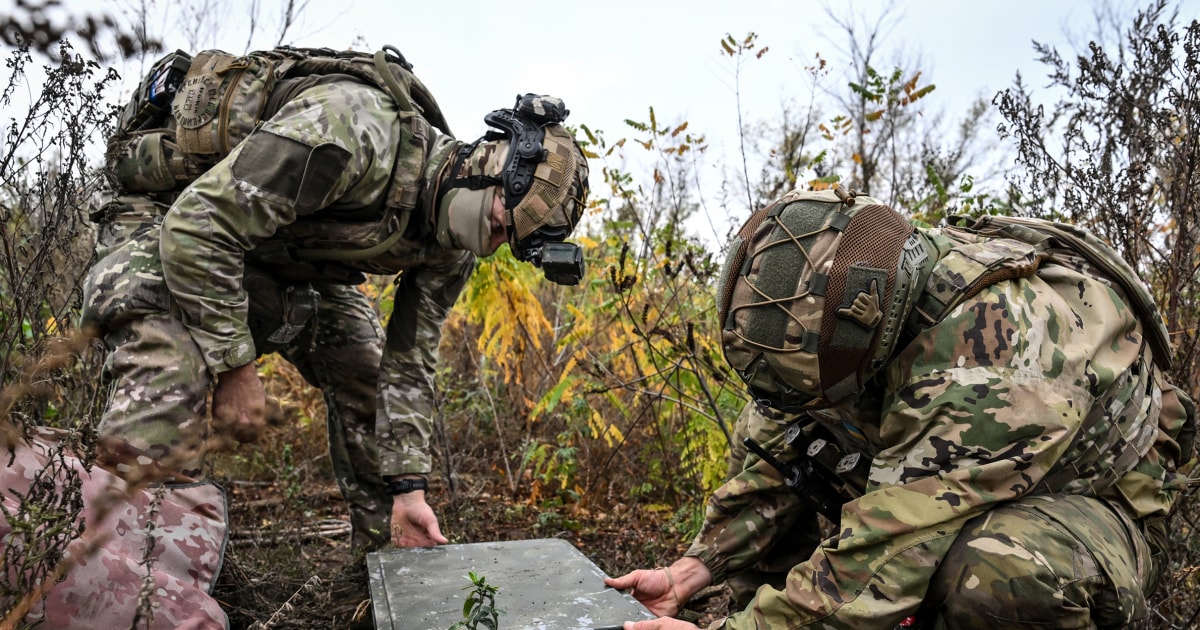
- A front-wide Russian breakthrough over the next 14 days is unlikely; localised Russian pressure and Ukrainian counterattacks are likely to continue. Reporting on Washington-based think-tank maps describes slow front-line change, while other reporting says Russia suffered net territorial losses in September and October, including near Kupiansk, Oleksandrivka and Lyman. Ukraine’s 3rd Army Corps said Operation Vivaldi retook 106 square miles before ending in October, but also described Russian infiltrators as a problem during the operation. Russian officials’ claim of 1,800 square kilometres of advances since September comes from a single social-media report and conflicts with the reporting on net losses. (Confidence: medium · ASSESSED)
- I&W: Confirmation: independently geolocated reporting shows Russian forces capturing additional named positions in Sumy, Zaporizhzhia or Donetsk Oblast. (0-14 days)
- I&W: Break: independent front-line mapping shows no verified Russian expansion and confirms Ukrainian positions holding near Kupiansk, Oleksandrivka and Lyman. (0-14 days)
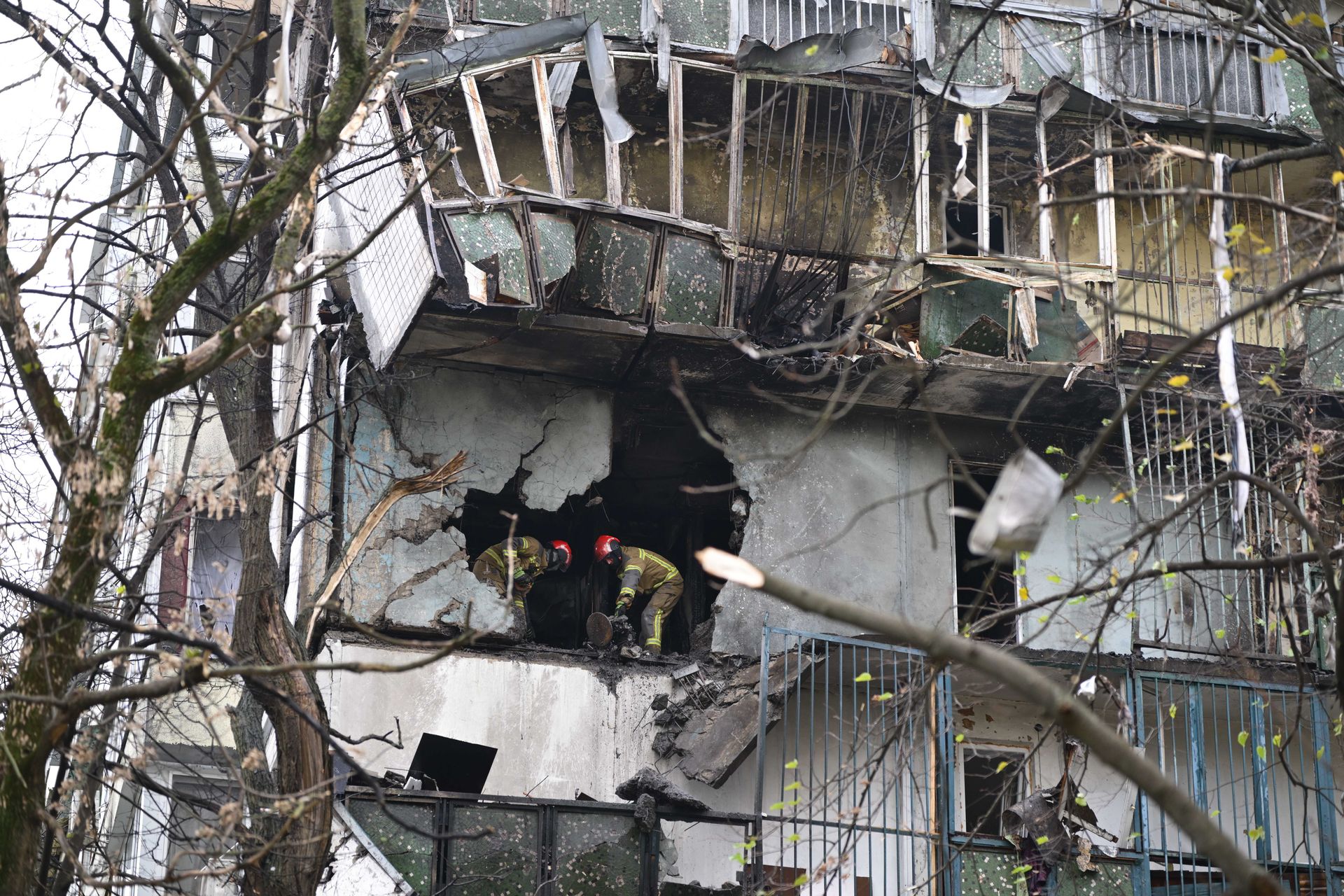
- Russian long-range strikes are likely to continue over the next 14 days and sustain pressure on Ukraine’s electricity supply. The Ukrainian Air Force reported that Russia launched 123 drones, 72-73 of them jet-powered, alongside Iskander-M and S-400 ballistic missiles and Zircon anti-ship missiles on 12 November; it recorded hits at 17 locations. Ukrainian officials reported five civilians killed and 29 injured nationwide, while Kyiv’s mayor reported one person killed and eight injured in the capital. Separate reporting describes rolling power cuts, outages of up to 20 hours for some Kyiv families and a ballistic-missile strike on an unnamed front-line power station. Casualty figures vary by report and scope. (Confidence: medium · ASSESSED)
- I&W: Confirmation: Ukrainian officials report further strikes on named energy facilities or rolling household outages continuing below four hours of electricity per day. (0-14 days)
- I&W: Break: Ukrainian authorities report that household supply has been restored above four hours per day and no further strikes damage named energy facilities. (0-14 days)
- Reported Starshield restrictions are likely to impair Ukrainian drone interception while the reported speed limit remains in place, but confidence is low. Zelenskyy said military units across the front line faced restrictions of about 100 mph, or 161 km/h, and linked the limits to strikes getting through. The supplied reporting largely repeats his account and contains no independent service telemetry or confirmation of the operational effect. (Confidence: low · ASSESSED)
- I&W: Confirmation: Ukrainian military units in more than one named sector report continuing speed restrictions and delayed interceptions, or service telemetry verifies the reported cap. (0-14 days)
- I&W: Break: Ukrainian units report normal service speeds and no continuing restriction, or SpaceX publishes service data showing the reported cap has ended. (0-14 days)
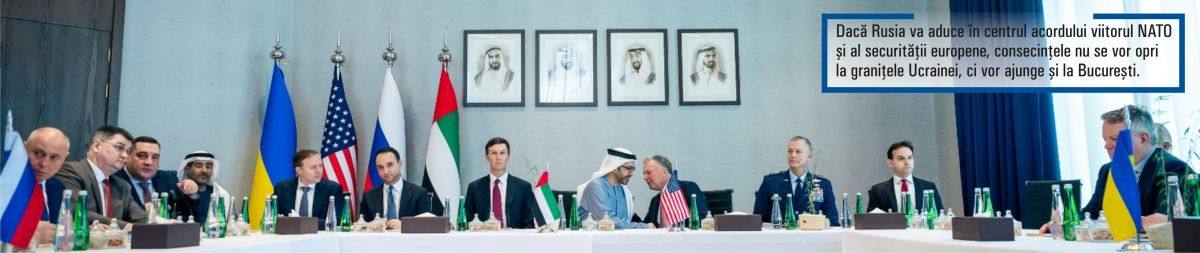
- A ceasefire or territorial settlement in the next 14 days is unlikely; a large prisoner exchange is the clearest near-term diplomatic outcome. The Abu Dhabi talks ended without a reported breakthrough on a ceasefire or Donbas, while Russia and Ukraine agreed to prepare a large exchange whose numbers and timing remain unannounced. Vladimir Putin reiterated Russia’s territorial demands and rejected European troops in Ukraine after a ceasefire. US envoys said European representatives would join the next round, but Russian delegation head Vladimir Medinsky disputed that account, leaving Russian agreement to European participation unresolved. (Confidence: medium · ASSESSED)
- I&W: Confirmation: Russia and Ukraine publish an exchange timetable or begin releasing named groups of prisoners without announcing ceasefire or territorial terms. (0-14 days)
- I&W: Break: Russia and Ukraine jointly announce a ceasefire framework or territorial terms, or Russia formally confirms European participation in the next negotiating round. (0-14 days)
- A strike on the Russian vessel Naro-Fominsk in the Gulf of Finland on 11 November is likely, but the precise damage and drone route remain disputed. Finnish officials confirmed that a Russian warship was attacked; Estonian Defence Minister Martin Herem said the vessel was hit, emitted smoke and returned towards St Petersburg. Ukraine’s SBU said it targeted Naro-Fominsk as part of an operation against the Ust-Luga oil export depot. Herem said one drone briefly entered Estonian airspace, while Ukraine’s foreign ministry spokesman called allegations of Baltic airspace use baseless. Estonia, Latvia and Lithuania issued shelter warnings, and NATO warplanes were scrambled. (Confidence: medium · REPORTED)
- I&W: Confirmation: Finnish or Estonian authorities, or authenticated imagery, identify Naro-Fominsk and document damage from the 11 November strike. (0-14 days)
- I&W: Break: Finnish or Estonian authorities issue a correction stating that Naro-Fominsk was not struck or that the vessel identification was wrong. (0-14 days)
Outlook & scenarios
Localised attrition and reciprocal strikes (55%)
Russian small-group infiltration and attacks continue alongside Ukrainian counterattacks near Kupiansk, Oleksandrivka and Lyman. The front line changes locally rather than through a verified front-wide breakthrough. Russian strikes continue to damage energy and civilian infrastructure, while negotiations produce no ceasefire.
Russian forces secure local gains (20%)
Russian forces make independently verified gains in selected sectors, potentially in Sumy or Zaporizhzhia, while maintaining pressure in Donetsk. Such gains would not by themselves validate the Russian officials’ claim of 1,800 square kilometres of advances since September.
Prisoner exchange advances, talks remain unresolved (20%)
Russia and Ukraine implement the agreed large prisoner exchange, and European representatives attend a subsequent negotiating round. The parties still fail to bridge differences over territory, a ceasefire or post-ceasefire security arrangements.
Baltic spillover incident (5%)
A further drone crosses or approaches Estonian, Latvian or Lithuanian airspace during attacks near the Gulf of Finland or Ust-Luga. New shelter warnings and NATO air-policing activity follow, creating a high-impact risk of misidentification or escalation.
Recommendations
- Maintain separate records for verified front-line changes and official claims. Prioritise geolocated reporting on Kupiansk, Oleksandrivka, Lyman, Sumy and Zaporizhzhia before treating the Russian 1,800-square-kilometre figure as established.
- Track Ukrainian outage schedules and reported damage by named location, especially Kyiv, Rivne and Zhytomyr. Distinguish a reported strike on an unnamed power station from confirmed damage to identified facilities.
- Seek operational confirmation of the Starshield speed restriction from Ukrainian units in separate sectors and service data from SpaceX or relevant US authorities. Do not treat Zelenskyy’s account alone as proof of a system-wide technical effect.
- Track the prisoner exchange through announced numbers, named releases and implementation dates. Record European participation as confirmed only when Russia, Ukraine and the US provide consistent accounts.
- Monitor Finnish and Estonian statements and authenticated imagery concerning Naro-Fominsk, and track new airspace notices or shelter warnings from Estonia, Latvia and Lithuania. Do not infer NATO engagement from reports that aircraft were airborne.
Confidence & uncertainty
Overall confidence is high for the occurrence and broad sequence of major reported events, including the 12 November strike wave, the Abu Dhabi prisoner-exchange understanding and the 11 November attack on a Russian warship, which was reported by multiple major-media outlets and supported by Finnish and Estonian official accounts. Confidence is lower on the precise front-line trend, casualty totals, Starshield’s operational effect, the drone route near Baltic airspace and whether Russia has accepted European participation in future talks. Several battlefield figures come from parties to the conflict, and the Russian claim of 1,800 square kilometres of gains is single-source in the supplied reporting.
Intelligence gaps
- [EEI 1.1 · UNCOVERED] Geotagged UAV/satellite imagery showing abandoned defensive positions or newly occupied settlements. Recommended collection: overhead imagery
- [EEI 1.2 · UNCOVERED] Confirmed movement of frontline ambulance evacuation routes beyond previous coordinates. Recommended collection: SIGINT/medical logistics
- [EEI 2.1 · UNCOVERED] Concentration of assault battalions (≥3 mechanized companies) within 15km of contact line. Recommended collection: SIGINT/UAV
- [EEI 2.2 · UNCOVERED] Unusual artillery stockpile buildup at forward depots exceeding 30-day consumption rates. Recommended collection: overhead imagery/logistics
- [EEI 3.1 · UNCOVERED] Bridge structural damage assessments at 5 key Dnieper River crossings via multispectral imaging. Recommended collection: overhead imagery
- [EEI 3.2 · UNCOVERED] Rail traffic volume changes at Kryvyi Rih and Pokrovsk rail hubs compared to 7-day baseline. Recommended collection: commercial freight data
Red cell review: CONCUR WITH COMMENT
TLP:CLEAR