TLP:CLEAR · Disclosure is not limited.
Russia-Ukraine Front Line: Lyman Gains and Sustained Strike Pressure
Time window: Last 7 days · Audience: General analyst · Type: Situation report · DTG: 2026-09-20 07:08Z · Overall confidence: HIGH
BLUF
Ukraine's 3rd Army Corps has very likely achieved a local operational success around Lyman, disrupting the Russian salient and its logistics, but the territorial gain remains disputed. Russia is very likely to sustain attacks against Ukrainian cities, energy infrastructure and logistics over the next two weeks, while a substantive ceasefire remains very unlikely.
Executive summary
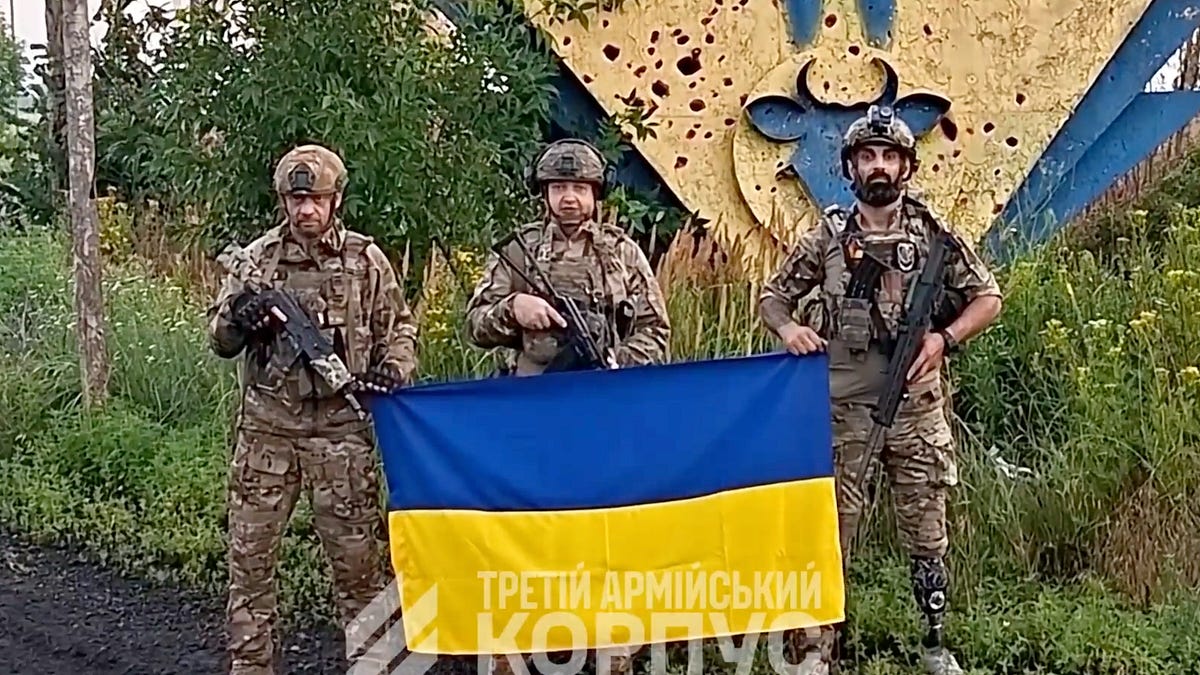
Ukraine's Operation Vivaldi has cut the Russian salient north of Lyman and reportedly pushed Russian forces towards the Zherebets River. Ukrainian and independent assessments disagree over the scale, ranging from 85 square kilometres to 200-240 square kilometres. Russia retains offensive pressure around Kostyantynivka, Slovyansk, Kramatorsk and Dobropillya, including preparations for mechanised assaults and the deployment of roughly 1,200 Rubikon drone crews. Both sides continue long-range strikes. Russia launched 174 drones and two Zircon missiles against Ukraine on 19 September, while Ukraine struck Russian aircraft at Rostov-Central Airfield and conducted a large drone attack against the Moscow region on 20 September.
Change from previous assessment
Since the 19 September prior brief, the Lyman assessment is more firmly anchored by reporting that Operation Vivaldi began roughly in May, cut the Russian salient, disrupted the 144th Motorized Rifle Division's support network and was acknowledged in part by pro-Kremlin reporting. Confidence remains medium on the territorial scale because the reported figures range from 85 square kilometres to 200-240 square kilometres. The assessment of Russian strike pressure remains high and now includes the 19 September barrage and the 20 September attack on the Moscow region. The judgement that a substantive ceasefire is very unlikely is unchanged.
Key judgments
- Ukraine's 3rd Army Corps has very likely achieved a local operational success around Lyman. Operation Vivaldi cut the Russian salient north of the city, pushed Russian forces towards the Zherebets River and disrupted Russian fuel logistics, including a reported pipeline supplying occupied Luhansk Oblast. Ukrainian reporting put the cleared or liberated area at 85 square kilometres, while Clément Molin assessed more than 77 square miles and other open-source analysts estimated 200-240 square kilometres. The scale of the gain remains unresolved, and the evidence does not yet establish a broader operational breakthrough. (Confidence: medium · ASSESSED)
- I&W: Confirmation: independent geolocated reporting continues to show Ukrainian control of Serednie, Novoselivka, Yarova, Oleksandrivka and the outskirts of Korovii Yar, while Russian forces fail to restore a coherent salient north of Lyman. (0-14 days)
- I&W: Break: Russian forces reoccupy any of those settlements or regain positions inside or north of Lyman. (0-14 days)
- Russia is likely to retain offensive pressure across several Donetsk sectors without achieving a decisive operational breakthrough over the next 0-14 days. ISW reported limited but significant Russian gains around Kostyantynivka and east of Slovyansk and Kramatorsk, while Ukraine reported preparations by Russia's 51st, 8th and 41st Combined Arms Armies for mechanised assaults towards Dobropillya. Roughly 1,200 Rubikon drone crews, about one-third of the organisation, are reportedly operating in that direction. Countervailing reporting states that Russian forces made no advance in northern Sumy Oblast, that Ukraine regained ground around Kupiansk and that Russian gains had reached zero over the preceding six months. (Confidence: medium · ASSESSED)
- I&W: Confirmation: Russian mechanised units from the 51st, 8th or 41st Combined Arms Armies begin attacks in the Dobropillya direction, accompanied by sustained Rubikon drone activity. (0-14 days)
- I&W: Break: Russian forces make no confirmed territorial gain around Dobropillya, Kostyantynivka, Slovyansk or Kramatorsk, while Ukrainian interdiction continues to limit Russian logistics. (0-14 days)
- Russia is very likely to sustain high-volume missile and drone attacks against Ukrainian cities, energy infrastructure and transport over the next 0-14 days. On 19 September, Ukraine's Air Force reported 174 drones and two Zircon missiles, with 141 incoming targets intercepted or jammed. Recent attacks hit a warehouse in Kyiv, energy infrastructure in Poltava, a passenger bus near Nikopol, and populated areas in Kyiv, Sumy, Kharkiv, Kherson and Dnipropetrovsk. Poland again scrambled aircraft and placed air-defence systems on high readiness during the 19 September barrage. (Confidence: high · ASSESSED)
- I&W: Confirmation: Russia conducts another large barrage against Kyiv, Poltava, Dnipropetrovsk, Kharkiv, Kherson or Sumy involving dozens of drones or missiles, with reported damage to civilian or energy infrastructure. (0-14 days)
- I&W: Break: no new Russian drone or missile barrage, urban strike or energy-infrastructure strike is independently reported across a continuous 14-day period. (0-14 days)
- Ukraine is likely to continue long-range strikes against Russian military logistics, airfields, industrial facilities and energy-related infrastructure over the next 0-30 days. Ukraine's SBU reported striking two An-26 aircraft, one An-12 aircraft and three helicopters at Rostov-Central Airfield on 17 September. Ukraine also struck Gazprom's Novy Urengoy and Purovsky gas-processing plants in Yamalo-Nenets, roughly 3,000 kilometres from the front, and conducted a large drone attack against the Moscow region on 20 September. Moscow regional authorities reported 249 drones shot down, while Moscow's mayor reported 450, and an oil refinery was reportedly damaged. Exact damage and drone totals remain disputed. (Confidence: medium · ASSESSED)
- I&W: Confirmation: Ukraine reports or independently documented evidence shows another strike on Russian logistics, an airfield, a refinery or an industrial facility more than 1,000 kilometres from the front. (0-30 days)
- I&W: Break: no further Ukrainian deep strike is reported and Russian authorities demonstrate restored operations at the affected logistics, airfield or industrial sites. (0-30 days)
- A substantive ceasefire is very unlikely over the next 0-30 days. Russia and Ukraine continued to hit energy infrastructure during the reporting period despite the proposed mutual pause. Volodymyr Zelensky reaffirmed Ukraine's willingness to halt attacks on energy targets, but Dmitry Peskov tied Russia's position to sanctions relief, while Sergei Lavrov reiterated Russia's unchanged maximalist war aims. These statements and the continuing strikes provide no evidence of an operational reciprocal pause. (Confidence: medium · ASSESSED)
- I&W: Confirmation: Russian and Ukrainian forces continue striking energy infrastructure, or Russia repeats its demand for sanctions relief as a condition for the proposed pause. (0-30 days)
- I&W: Break: Russia and Ukraine sign specific reciprocal terms and independently verified monitoring records a sustained halt to energy-infrastructure strikes by both sides. (0-30 days)
Outlook & scenarios
Attritional continuation with a Ukrainian hold around Lyman (52%)
Russia sustains attacks around Dobropillya, Kostyantynivka, Slovyansk and Kramatorsk, while Ukraine holds its gains around Lyman and continues drone interdiction against Russian logistics. Long-range Russian strikes against Ukrainian cities and energy infrastructure continue.
Russian local counterattack (25%)
Russia uses the 51st, 8th and 41st Combined Arms Armies, supported by Rubikon drone crews, to launch mechanised attacks in the Dobropillya direction and contest Ukrainian gains around Lyman. Russia regains limited ground without achieving a wider breakthrough.
Ukrainian exploitation of Operation Vivaldi (18%)
Ukraine extends its positions around Lyman, deepens disruption of Russian fuel and support networks in occupied Luhansk Oblast, and expands strikes against Russian airfields, refineries and industrial facilities. Russian attacks continue elsewhere but fail to reverse the local Ukrainian advantage.
High-impact strike spillover (5%)
A further Russian drone or missile incident affects NATO airspace, or Russian strikes damage another commercial vessel in the Black Sea. Poland and other eastern-flank states raise air-defence readiness, increasing escalation risks without producing a deliberate large-scale Baltic operation.
Recommendations
- Prioritise daily geolocated mapping of Serednie, Novoselivka, Yarova, Oleksandrivka, Korovii Yar, the Zherebets River and Russian positions north, south and inside Lyman. Keep Ukrainian official figures separate from independent OSINT estimates.
- Track the 51st, 8th and 41st Combined Arms Armies and the reported 1,200 Rubikon drone crews in the Dobropillya direction. Flag evidence of mechanised assembly, repeated drone sorties or renewed Russian advances within 24 hours.
- Maintain a near-term warning watch for Russian barrages against Kyiv, Poltava, Dnipropetrovsk, Kharkiv, Kherson and Sumy. Record drone and missile counts by source because Ukrainian and Russian reporting can differ in scope.
- Monitor Russian rear-area facilities at Rostov-Central Airfield, Yamalo-Nenets, Moscow and occupied Luhansk Oblast for confirmed damage, operational shutdowns and restoration activity.
- Treat any energy ceasefire announcement as political reporting until specific terms, reciprocal compliance and independent verification are available. Report each subsequent Russian or Ukrainian strike on energy infrastructure against the proposed pause.
- Issue immediate escalation warnings for another Russian drone or missile entry into NATO airspace, a new commercial-vessel strike in the Black Sea, or repeated Polish air-defence activations during Russian attacks on Ukraine.
Confidence & uncertainty
Overall confidence is high for the principal reported events because they are supported by multiple high-reliability sources, including ISW assessments, major media reporting, official Ukrainian and Russian statements, and corroborating Russian and open-source battlefield accounts. Confidence is lower for the exact scale of Operation Vivaldi, the competing Moscow-region drone totals, the extent of damage at rear-area targets and the prospects for covert Russian mobilisation. These uncertainties do not materially alter the assessment of a local Ukrainian success around Lyman, continuing Russian strike pressure and the absence of an operational ceasefire.
Intelligence gaps
- [EEI 1.1 · PARTIAL] Geotagged UAV/satellite imagery showing abandoned defensive positions or newly occupied settlements. Recommended collection: overhead imagery
- [EEI 1.2 · UNCOVERED] Confirmed movement of frontline ambulance evacuation routes beyond previous coordinates. Recommended collection: SIGINT/medical logistics
- [EEI 2.1 · PARTIAL] Concentration of assault battalions (≥3 mechanized companies) within 15km of contact line. Recommended collection: SIGINT/UAV
- [EEI 2.2 · UNCOVERED] Unusual artillery stockpile buildup at forward depots exceeding 30-day consumption rates. Recommended collection: overhead imagery/logistics
- [EEI 3.1 · UNCOVERED] Bridge structural damage assessments at 5 key Dnieper River crossings via multispectral imaging. Recommended collection: overhead imagery
- [EEI 3.2 · UNCOVERED] Rail traffic volume changes at Kryvyi Rih and Pokrovsk rail hubs compared to 7-day baseline. Recommended collection: commercial freight data
Cited sources
[1] Institute for the Study of War (ISW) · Russian Offensive Campaign Assessment, September 17, 2026 (B) · Fri Sep 18 2026 03:39:16 GMT+0000 (Coordinated Universal Time) · sha256:08a85dded475 [2] Newsweek · Map shows major Ukrainian frontline breakthrough after months of clashes (B) · Mon Sep 14 2026 17:02:14 GMT+0000 (Coordinated Universal Time) · sha256:948247d90595 [3] Institute for the Study of War (ISW) · Russian Offensive Campaign Assessment, September 15, 2026 (B) · Wed Sep 16 2026 02:57:06 GMT+0000 (Coordinated Universal Time) · sha256:d853b840784e [4] Mick Ryan (Substack) · Vivaldi’s First Season, Faster Drones, Slower Diplomacy and an Authoritarian Confrontation Without End, The Big Five 20 September edition (D) · Sun Sep 20 2026 01:06:58 GMT+0000 (Coordinated Universal Time) · sha256:b232a78c12d0 [5] newsweek.com · Map shows scale of Ukraine's new battlefield gains in major counteroffensive (F) · Wed Sep 16 2026 13:40:23 GMT+0000 (Coordinated Universal Time) · sha256:5a03dfe6fa65 [6] Institute for the Study of War (ISW) · Russian Offensive Campaign Assessment, September 16, 2026 (B) · Thu Sep 17 2026 02:10:14 GMT+0000 (Coordinated Universal Time) · sha256:697a97a70235 [7] Al Jazeera · Russia kills eight people in Ukraine, attacks two vessels in Black Sea (A) · Sat Sep 19 2026 10:51:21 GMT+0000 (Coordinated Universal Time) · sha256:21fea73c3cf8 [8] Al Jazeera · At least five killed in Russian drone strike near Ukraine front line (A) · Wed Sep 16 2026 09:32:52 GMT+0000 (Coordinated Universal Time) · sha256:4d1c310caa9f [9] BBC News · Two killed in 'massive' Ukrainian drone attack on Moscow region, says Russia (A) · Sun Sep 20 2026 05:04:54 GMT+0000 (Coordinated Universal Time) · sha256:30a80cc69c91 [10] Aerospace Global News · How far can Ukraine's long-range drones actually reach? (C) · Mon Sep 14 2026 11:49:00 GMT+0000 (Coordinated Universal Time) · sha256:61388442c51b
Source content hashes were computed at collection time; the cited text is preserved unmodified for the life of this product.
TLP:CLEAR