TLP:CLEAR · Disclosure is not limited.
Russia-Ukraine front line: mass strike on Kyiv and deep strikes into Russia, 26 June, 3 July 2026
Time window: Last 7 days · Audience: General analyst · Type: Situation report · DTG: 2026-07-03 07:12Z · Overall confidence: MEDIUM
BLUF
Russia very likely executed an 11-hour massed missile and drone strike on Kyiv overnight 1-2 July, causing high civilian casualties and damage at around 30 locations, as Ukraine very likely sustained deep strikes into Russia, including a hit on a major refinery in the Nizhny Novgorod region and an interdiction strike on a Luhansk rail bridge. Claims of Russian territorial advances near Volchansk, Pokrovsk and Zaporizhzhia remain weakly corroborated.
Executive summary
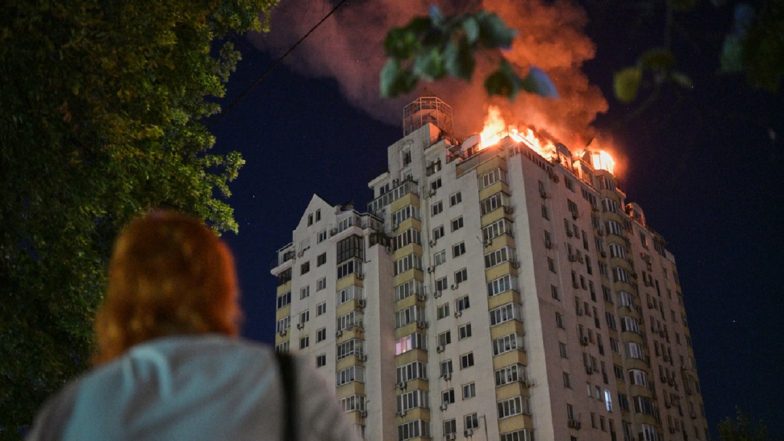
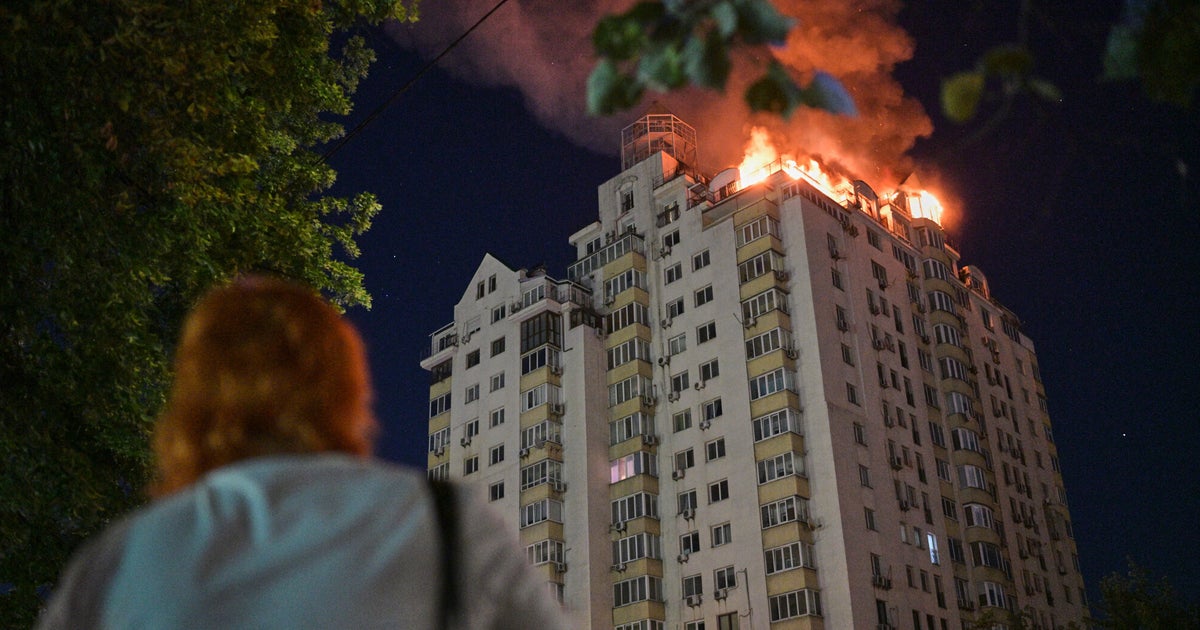
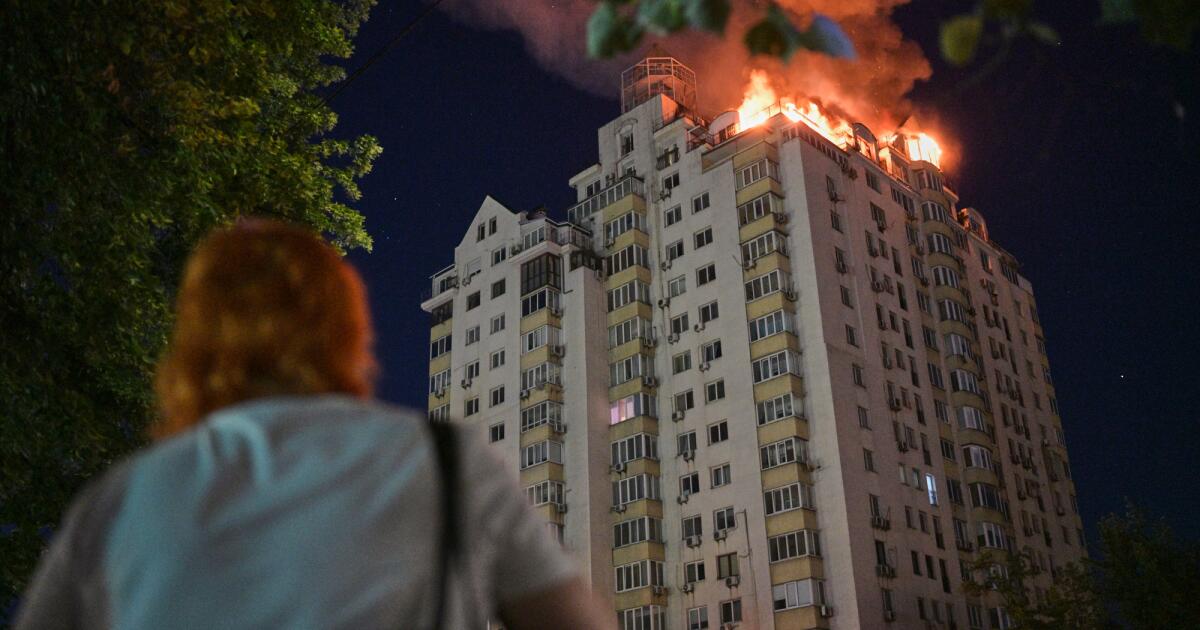
The reporting period was dominated by a large Russian strike on Kyiv with fatalities reported between 17 and 21, more than 90 injured, and widespread damage across the city including to the Kyiv-Pechersk Lavra. Ukraine’s air force reported Russia launched 74 missiles and 496 drones in the wave, which Moscow characterised as retaliation for Ukrainian hits on oil infrastructure. Ukraine very likely struck the Lukoil-Nizhegorodnefteorgsintez refinery in the Nizhny Novgorod region, triggering a fire and casualties, and struck a railway bridge over the Siverskyi Donets in occupied Luhansk. High-tempo bilateral drone and missile activity persisted, including casualties reported in Russia’s Belgorod region. Russian media claims of advances near Volchansk, Pokrovsk and Zaporizhzhia are not independently verified. NASA thermal detections across Ukraine spiked over 2-3 July, consistent with widespread heat events linked to strikes, though they do not identify cause.
Change from previous assessment
New reporting refines the 1-2 July Kyiv strike picture from a minimum of 13 fatalities to a range of 17-21, with more than 90 injured and damage confirmed at roughly 30 locations including the Kyiv-Pechersk Lavra. We add assessed confidence that Ukraine struck the Lukoil-Nizhegorodnefteorgsintez refinery in the Nizhny Novgorod region with associated casualties, and we incorporate Ukrainian strikes on a railway bridge over the Siverskyi Donets in occupied Luhansk. We continue to treat Russian claims of advances near Volchansk, Pokrovsk and Zaporizhzhia as weakly corroborated. A Sweden, Ukraine fighter transfer agreement enters the outlook, with effects likely from 2027, not this reporting period.
Key judgments
- Russia very likely conducted an 11-hour combined missile and drone strike on Kyiv overnight 1-2 July, killing at least 17 civilians, with some reporting 20 to 21, injuring more than 90, and damaging about 30 locations including residential sites and the Kyiv-Pechersk Lavra; Ukraine’s air force reported 74 missiles and 496 drones were launched, and Moscow framed the barrage as retaliation for Ukrainian refinery strikes. (Confidence: high · REPORTED)
- I&W: Kyiv City Military Administration issues a final casualty list for the 2 July strike totalling 20 or more fatalities. (0-14 days)
- I&W: An official revision reduces the Kyiv damage assessment materially below 30 sites. (0-14 days)
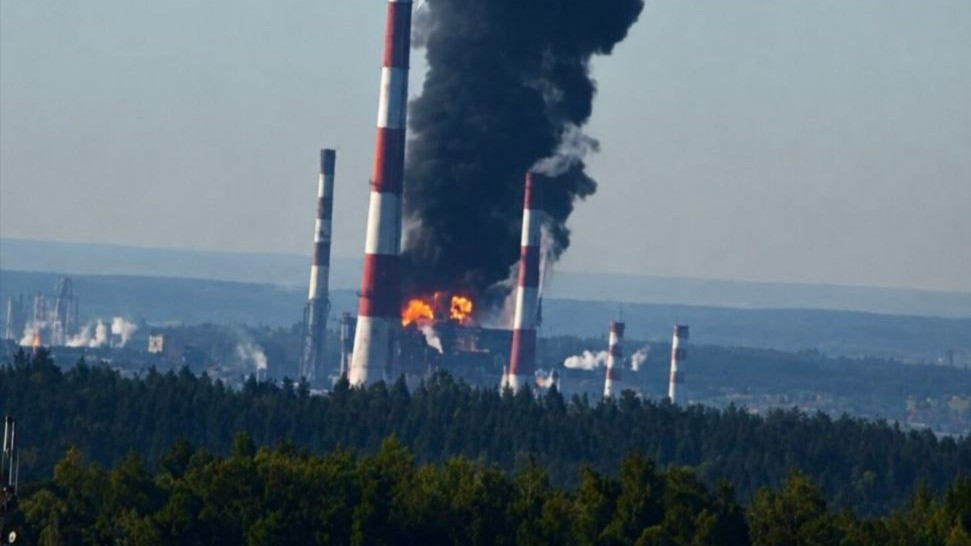
- Ukraine very likely sustained its deep-strike campaign into Russia on 2 July, hitting the Lukoil-Nizhegorodnefteorgsintez refinery in the Nizhny Novgorod region, triggering a fire and causing one death and four injuries amid governor reports of roughly three dozen incoming drones; concurrently, Ukrainian forces struck a railway bridge over the Siverskyi Donets in occupied Luhansk as part of interdiction of Russian logistics. (Confidence: high · REPORTED)
- I&W: Imagery or company statements confirm prolonged outage or repairs at the Kstovo refinery primary units. (0-14 days)
- I&W: Russian regional authorities publish verified assessments showing only superficial damage and rapid full resumption at the refinery. (0-14 days)
- The war very likely features a sustained high-tempo bilateral drone and missile exchange, reflected in Ukraine’s report of 74 missiles and 496 drones used in the Kyiv wave and in Russian regional accounts of massed Ukrainian drones and cross-border casualties in Nizhny Novgorod and Belgorod. (Confidence: medium · ASSESSED)
- I&W: At least two additional nights with governor reports of 20-plus inbound UAVs and Ukrainian reports of triple-digit drone launches. (0-14 days)
- I&W: A two-week lull with only isolated single-digit drone incidents reported by either side. (1-3 months)
- Russian forces are likely applying localised pressure near Volchansk, Pokrovsk and Zaporizhzhia, but there is a roughly even chance that reported advances translate into durable territorial control given reliance on Russian army announcements and social media without independent geolocated confirmation. (Confidence: low · ASSESSED)
- I&W: Geolocated imagery of Russian units inside Volchansk administrative centre or on the approaches to Pokrovsk, or Ukrainian General Staff acknowledgements of named settlement losses. (0-14 days)
- I&W: Ukrainian release of geolocated footage showing counter-attacks restoring lines and destroying Russian forward elements in these sectors. (0-14 days)
- Long-range strikes are very likely a leading driver of recent Ukrainian civilian harm, evidenced by the Kyiv fatalities and injuries and a Russian guided bomb killing a 7-year-old girl in Dnipropetrovsk; NASA recorded 363 thermal detections across Ukraine over 2-3 July consistent with widespread heat events linked to strike activity, though thermal data record heat not cause. (Confidence: medium · ASSESSED)
- I&W: OHCHR or Kyiv authorities attribute a majority of newly reported July civilian casualties to missiles, drones or guided bombs. (1-3 months)
- I&W: Casualty reporting shifts to front-line small-arms or artillery fire exceeding long-range strike incidents. (1-3 months)
- Kyiv is likely to expand its combat aviation from 2027 following a contract for 16 used Gripen E fighters and a statement that 16 older aircraft will transfer at the beginning of 2027, implying no near-term effect on the front but potential medium-term improvements in air defence and strike options. (Confidence: medium · ASSESSED)
- I&W: Announcements on training pipelines, basing and delivery schedules by Sweden or Ukraine. (1-3 months)
- I&W: Official notices indicating cancellation or deferral of the fighter transfer. (1-3 months)
Outlook & scenarios
Sustained tit-for-tat: massed Russian barrages and Ukrainian deep strikes persist (65%)
Russia continues periodic mass missile and drone raids on Kyiv and other cities while Ukraine intensifies long-range UAV and strike activity against Russian energy and logistics sites. Moscow continues to justify barrages as retaliation for refinery strikes, and casualty ranges remain contested after each wave.
Localised Russian gains without breakthrough (40%)
Russian forces secure tactical footholds near Volchansk or on approaches to Pokrovsk and probe in Zaporizhzhia, but face attrition and counter-attacks that limit operational depth. Control claims hinge on announcements and select battlefield footage until independent geolocations emerge.
Ukrainian interdiction pressure grows (60%)
Ukrainian long-range strikes expand in frequency and target set, sustaining damage to refineries and rail nodes such as bridges over the Siverskyi Donets. Russian regions report repeated drone salvos, and authorities grapple with repair cycles and air-defence tasking far from the front, prompting further Russian retaliation raids.
Wildcard: extended-range Ukrainian strike raises escalation risk (20%)
A one-off deep strike reaches further into Russia’s interior against a high-value energy or logistics node, reinforcing Kyiv’s declared expansion of its long-range campaign and prompting a sharper Russian response on urban targets.
Recommendations
- Validate the Kyiv 2 July casualty range by consolidating official tallies from the Kyiv City Military Administration and mayoral channels with hospital reporting and publish a reconciled figure with sources.
- Task GEOINT collection over the Lukoil-Nizhegorodnefteorgsintez refinery at Kstovo to characterise damage to primary processing units, using SAR to detect thermal anomalies and repair activity; cross-cue with NASA thermal detections.
- Set OSINT tripwires for geolocated evidence of control in Volchansk and on the approaches to Pokrovsk, including signage, municipal buildings and unique terrain features, and maintain a watch on Ukrainian General Staff acknowledgements of settlement status.
- Monitor the railway bridge over the Siverskyi Donets near Stanytsia Luhanska for span closures, pontoon bridging or rapid repair attempts, using commercial imagery and local logistics reporting.
- Catalogue and photo-document missile and UAV debris from the Kyiv strike to validate reported launch counts and munition types; update the order-of-battle implications for Russian long-range inventories.
- Maintain a standing watch on Nizhny Novgorod and Belgorod regional channels for after-action and casualty reports tied to Ukrainian drone waves, tagging events with time, location and reported impact for trend analysis.
- Track delivery and training milestones tied to the 16-aircraft transfer to Ukraine, including basing and pilot conversion timelines, to model when any airpower effects could begin to influence front-line dynamics.
- Map and log reported damage to cultural heritage assets in Kyiv after the 2 July strike, including the Kyiv-Pechersk Lavra, to inform risk assessments for future urban strike waves.
Confidence & uncertainty
Multiple independent major-media and official sources corroborate the 1-2 July Kyiv strike, associated casualties, and damage across approximately 30 locations, as well as Ukrainian deep strikes on the Nizhny Novgorod refinery and the Luhansk rail bridge. Figures for fatalities in Kyiv diverge across credible outlets, and missile and drone launch counts are reported by Ukraine’s air force without independent verification. Claims of Russian advances near Volchansk, Pokrovsk and Zaporizhzhia rely on single-source announcements and social media without geolocated confirmation. NASA thermal data robustly indicate heat events but do not establish causation. These factors support a medium overall confidence.
Alternative analysis (red cell)
The available reporting indicates notable escalation in missile and drone activity around 1–2 July, but internal contradictions in casualty and ordnance counts and reliance on clustered or partisan reporting leave key specifics unsettled. Independent geolocated imagery, forensic munition analysis, and corroborating engagement logs are needed to reconcile counts and confirm attribution; until then, alternative readings that some high-profile numbers are preliminary or duplicated remain plausible.
Intelligence gaps
- [EEI 1.1 · UNCOVERED] Geotagged UAV/satellite imagery showing abandoned defensive positions or newly occupied settlements. Recommended collection: overhead imagery
- [EEI 1.2 · UNCOVERED] Confirmed movement of frontline ambulance evacuation routes beyond previous coordinates. Recommended collection: SIGINT/medical logistics
- [EEI 2.1 · UNCOVERED] Concentration of assault battalions (≥3 mechanized companies) within 15km of contact line. Recommended collection: SIGINT/UAV
- [EEI 2.2 · UNCOVERED] Unusual artillery stockpile buildup at forward depots exceeding 30-day consumption rates. Recommended collection: overhead imagery/logistics
- [EEI 3.1 · UNCOVERED] Bridge structural damage assessments at 5 key Dnieper River crossings via multispectral imaging. Recommended collection: overhead imagery
- [EEI 3.2 · UNCOVERED] Rail traffic volume changes at Kryvyi Rih and Pokrovsk rail hubs compared to 7-day baseline. Recommended collection: commercial freight data
Cited sources
[1] latestly.com · Russia Pounds Kyiv for 11 Hours, 20 Killed as Moscow Claims Retaliation for Ukraine Attacks | 🌎 LatestLY (B) · sha256:a1853d9e3ef2 [2] HuffPost · Major Russian Attack Kills 20 In Kyiv As Ukraine Keeps Striking Moscow's Oil Sector (A) · sha256:dabe8cdae7b9 [3] Los Angeles Times · Russia lands heavy strikes on Ukraine's capital, killing at least 21 - Los Angeles Times (A) · sha256:ddf6fb9f05ab [4] kazu.org · A major Russian attack kills 17 in Kyiv as Ukraine keeps striking Moscow's oil sector (A) · sha256:5c44f3f7c257 [5] wcbu.org · A major Russian attack kills 17 in Kyiv as Ukraine keeps striking Moscow's oil sector (A) · sha256:befe71326bee [6] UK Government · Russia’s actions in Ukraine and at the OSCE must not be normalised: UK statement to the OSCE (A) · sha256:7478b44667e4 [7] jpost.com · Russia launches massive attack on Kyiv, killing at least 10 in retaliation for Ukrainian strikes (A) · sha256:95e409b99a15 [8] kyivpost.com · Ukraine Hits One of Russia’s Largest Refineries, Bridge and Command Post in Multi-Target Strike (B) · sha256:650df5e2aac1 [9] Al Jazeera · Russian attacks kill three in Ukraine as Kyiv hits another oil refinery (A) · sha256:fd0eb7616fdf [10] الحرب الثالثة · روسيا تسيطر على بلدتين وتتقدم في فولشانسك وبوكروفسك وزابوروجي | آخر تطورات حرب أوكرانيا (B) · sha256:1ee11c97a3e6 [11] Рома Сомов · Это Невозможно! ВСУ Перешли в Наступление! Военные Сводки 03.07.2026 (E) · sha256:8fd81717623a [12] KNT media · Russia's Latest Offensive Could Change Everything (B) · sha256:f482c775d0a4 [13] TSN English · UKRAINE IS SHATTERING PUTIN'S OFFENSIVE! Russia's relentless assaults are ending in heavy losses! (B) · sha256:7afadfd96b74 [14] NASA · NASA FIRMS thermal detections — Ukraine (2d) (A) · sha256:fad01ee5c95a
Source content hashes were computed at collection time; the cited text is preserved unmodified for the life of this product.
Red cell review: PARTIAL DISSENT
TLP:CLEAR