TLP:CLEAR · Disclosure is not limited.
Russia-Ukraine front line: mass strikes, deep attacks into Russia, and Crimea supply stress
Time window: Last 7 days · Audience: General analyst · Type: Situation report · DTG: 2026-06-26 15:26Z · Overall confidence: HIGH
BLUF
Russia mounted a large overnight barrage on 25 June as Ukraine intensified deep strikes against Russian energy and communications nodes, with occupation authorities in Crimea declaring an emergency amid supply disruption. Expect the strike duel to persist while Russia likely reallocates air defences toward Moscow and the Kerch Bridge.
Executive summary
Over 25-26 June, Ukraine reported Russia launched a ballistic missile and 90 long-range drones, with lethal effects in Kryvyi Rih and Balakliia and injuries at a Sumy fuel station. In parallel, Ukraine struck high-value sites deep inside Russia, including a major gas processing complex in Orenburg and satellite communications infrastructure, with additional hits reported on refineries in Ufa and an oil depot in Krasnodar. Ukrainian drones are assessed to range beyond 2,500 km, enabling these attacks. Russian-installed authorities in Crimea announced a state of emergency as strikes cut supplies to the peninsula. NASA thermal detections confirm widespread heat signatures over Ukraine this period but do not prove causation. Russia’s Ministry of Defence issued divergent tallies of drones downed, indicating an extensive Ukrainian drone effort but inconsistent counting. Civilian and humanitarian impacts remain acute, including four deaths in Kryvyi Rih, two demining staff killed, and an urgent nationwide ambulance shortfall.
Change from previous assessment
Since the prior brief, we incorporate fresh reporting of the 25 June strike package and its civilian impacts in Kryvyi Rih, Balakliia and Sumy; add corroborated details on Ukrainian deep strikes against the Orenburg gas complex and refineries in Ufa; and note the emergency declared by Russian‑installed authorities in Crimea amid supply disruption. We retain, with medium confidence, the assessment that Russia is reallocating air defences to Moscow and the Kerch Bridge. Our confidence in the scale of Ukrainian drone activity remains medium due to inconsistent Russian shoot‑down claims, though the overall strike tempo assessment is unchanged.
Key judgments
- Russia almost certainly executed a mass overnight strike on 25 June, launching a ballistic missile and 90 long-range drones, which killed four in Kryvyi Rih, killed a 56‑year‑old woman in Balakliia, and injured four at a Sumy fuel station. (Confidence: high · REPORTED)
- I&W: Ukrainian Air Force daily readouts continue to report nightly launches approaching or exceeding several dozen long‑range drones (0-14 days)
- I&W: A sustained 14‑day lull with fewer than 10 long‑range drones launched per night and no ballistic missiles reported (0-14 days)
- Ukraine very likely expanded its deep‑strike campaign into Russia during 19-26 June, hitting a major gas processing plant in Orenburg and satellite communications infrastructure, with additional reported strikes on refineries in Ufa and an oil depot in Krasnodar, enabled by long‑range drones exceeding 2,500 km and directed by Kyiv’s pre‑emptive strike guidance. (Confidence: high · ASSESSED)
- I&W: Independent commercial satellite imagery or plant operator statements confirming sustained damage or outages at Orenburg and Ufa facilities (1-3 months)
- I&W: Russian energy throughput data and local reporting show normal operations at named facilities and no additional long‑range Ukrainian strikes (1-3 months)
- Russian‑installed authorities in Crimea almost certainly declared a state of emergency as strikes cut supplies to the peninsula, signalling acute supply disruption. (Confidence: high · REPORTED)
- I&W: Public announcements in Crimea of rationing of fuel, food, or utilities, or restrictions on commercial activity (0-30 days)
- I&W: Official revocation of the emergency status and reported resumption of normal freight flows across the Kerch corridor (0-30 days)
- Russia is likely reallocating air‑defence systems to protect Moscow, Valdai, and the Kerch Bridge in response to Ukrainian deep strikes, at probable cost to coverage elsewhere. (Confidence: medium · ASSESSED)
- I&W: Imagery or official notices showing additional S‑300/400 launchers or radars deployed around Moscow or the Kerch Bridge concurrent with reported drawdowns elsewhere (1-3 months)
- I&W: Evidence of net increases in front‑line air‑defence density without reductions near Moscow or Kerch (1-3 months)
- Divergent Russian Ministry of Defence claims of drones downed, ranging from 269 to 660 in recent reporting, almost certainly reflect an extensive Ukrainian drone campaign but the counts themselves are inconsistent. (Confidence: medium · ASSESSED)
- I&W: Further MoD bulletins cite triple‑digit drone interceptions across multi‑night windows coupled with independent reports of Ukrainian deep strikes (0-14 days)
- I&W: Cessation of MoD high‑volume interception claims alongside absence of reported long‑range strikes inside Russia (0-14 days)
- Satellite thermal detections very likely captured widespread heat sources across Ukraine on 25-26 June, but they record heat signatures not causation and do not by themselves confirm strikes. (Confidence: high · REPORTED)
- I&W: Subsequent NASA FIRMS datasets show anomaly spikes temporally aligned with reported attack windows (0-14 days)
- I&W: Suppressed anomaly detections due to weather during periods of verified strike activity (0-14 days)
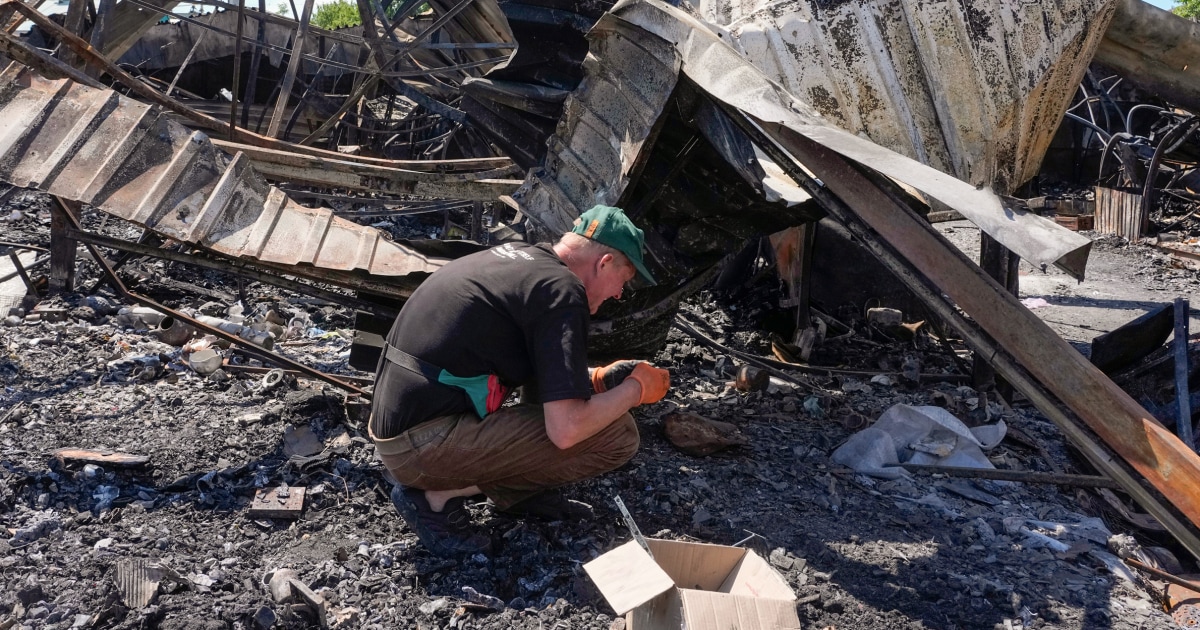
- Civilian harm and medical strain are almost certainly intensifying, evidenced by two Norwegian People’s Aid staff killed during a Russian attack, four killed in Kryvyi Rih by a ballistic strike using cluster munitions, and Ukraine’s urgent need for 1,696 C‑type ambulances after 495 were destroyed or damaged since 2022. (Confidence: high · REPORTED)
- I&W: Additional NGO or official reports of aid‑worker casualties or medical evacuation shortfalls on or near the front line (0-30 days)
- I&W: Ukrainian Ministry of Health announces procurement or delivery that materially reduces the stated ambulance shortfall (1-3 months)
Outlook & scenarios
Strike duel persists and intensifies (60%)
Russia maintains frequent missile and drone raids while Ukraine continues deep strikes against energy, logistics, and communications targets inside Russia, keeping Crimea under supply pressure and prolonging the emergency regime. Expect continued civilian harm and infrastructure disruptions on both sides.
Russian air-defence redeployment blunts deep strikes (40%)
Moscow shifts additional air-defence assets to protect the capital, Valdai and the Kerch Bridge, reducing successful Ukrainian penetrations against deep targets. Ukrainian planners adapt with saturation and route diversification but net strike effects diminish temporarily.
Crimea enters extended supply crisis (50%)
Sustained Ukrainian attacks on nodes serving Crimea, coupled with interdiction effects, drive prolonged shortages and rationing under an emergency regime. Russian logistics rely more on vulnerable maritime and bridge routes, increasing risk to rear-area stability.
Humanitarian strain escalates along the northern and eastern axes (50%)
Continued strikes prompt further evacuations in border regions such as Chernihiv, while ambulance deficits and attacks on aid workers degrade medical response near the front line, raising mortality and complicating civil protection.
Recommendations
- Prioritise OSINT collection on Crimean logistics: track public rationing notices, port and ferry schedules, and Kerch Bridge traffic flows to assess duration and severity of the emergency regime.
- Task imagery and local reporting review to verify damage and downtime at Orenburg and Ufa facilities and the Vladimir Space Communications Centre; build a facility-level impact ledger to quantify strike effectiveness.
- Treat Russian drone shoot‑down tallies as indicative of scale but not definitive; corroborate with independent visuals and incident mapping before drawing conclusions about interception rates.
- Use NASA FIRMS thermal detections as a cueing tool only, pairing anomalies with time‑aligned geolocated reporting to avoid attributing non‑combat heat sources to strikes.
- Maintain a rolling assessment of Russian air‑defence dispositions around Moscow, Valdai, and the Kerch Bridge; watch for corresponding coverage gaps in Belgorod, Bryansk, and occupied Ukraine that could open windows for follow‑on strikes.
- Engage humanitarian partners to track Ukraine’s ambulance deficit and frontline medical needs; flag rapid support options that ease the 1,696‑vehicle shortfall and protect medics operating under fire.
Confidence & uncertainty
Overall confidence is high because key developments rest on multiple independent, reliable sources that corroborate one another: major media citing Ukrainian military reporting for the 25 June barrage and associated casualties; several outlets and official statements describing Ukrainian deep strikes in Orenburg and against satellite communications infrastructure; NASA satellite detections confirming widespread heat signatures; and official or NGO reporting on humanitarian impacts and ambulance losses. The principal uncertainties are the precise damage extent inside Russia and the veracity of Russian Ministry of Defence drone shoot‑down counts, where figures diverge markedly. These gaps temper some assessments but do not undermine the core picture supported by convergent reporting.
Alternative analysis (red cell)
Several consequential judgments rely heavily on low‑admiralty or single‑source reports, creating plausible alternative readings. A sober alternative assessment is that reporting inconsistencies, potential propaganda inflation, and uncorroborated tactical claims could account for the dramatic strike and redeployment narratives; independent geospatial, SIGINT, or forensic evidence is required before treating these as high‑confidence operational shifts.
Intelligence gaps
- [EEI 1.1 · UNCOVERED] Geotagged UAV/satellite imagery showing abandoned defensive positions or newly occupied settlements. Recommended collection: overhead imagery
- [EEI 1.2 · UNCOVERED] Confirmed movement of frontline ambulance evacuation routes beyond previous coordinates. Recommended collection: SIGINT/medical logistics
- [EEI 2.1 · UNCOVERED] Concentration of assault battalions (≥3 mechanized companies) within 15km of contact line. Recommended collection: SIGINT/UAV
- [EEI 2.2 · UNCOVERED] Unusual artillery stockpile buildup at forward depots exceeding 30-day consumption rates. Recommended collection: overhead imagery/logistics
- [EEI 3.1 · UNCOVERED] Bridge structural damage assessments at 5 key Dnieper River crossings via multispectral imaging. Recommended collection: overhead imagery
- [EEI 3.2 · UNCOVERED] Rail traffic volume changes at Kryvyi Rih and Pokrovsk rail hubs compared to 7-day baseline. Recommended collection: commercial freight data
Cited sources
[1] Los Angeles Times · Zelensky says Russia shifting air defenses to Moscow, other key sites - Los Angeles Times (A) · sha256:f954daedac1e [2] NBC News · Ukraine’s latest long-range strikes on Russia hit a major natural gas plant and satellite centers (A) · sha256:537b1ae3a38d [3] Kyiv Post · Zelensky Says Ukraine Strikes Are Response to Russian Attacks (A) · sha256:0ceecdcaf7b4 [4] Al Jazeera · Ukraine decimates Russian logistics, bringing chaos to Crimea (A) · sha256:2fca235ec6fb [5] eurasiantimes.com · Ex-U.S. General Compares Drones to World War I Machine Guns, Says They Are Not the Future of Warfare (B) · sha256:dc87cfecc013 [6] Al Jazeera · Russia reports downing 660 Ukrainian drones, denies seeking Belarus war aid (A) · sha256:04014a5297a0 [7] Frontline · Crimea at risk as Ukraine seizes Kinburn spit in southern corridor battle (B) · sha256:3a0d41ac16d5 [8] NASA · NASA FIRMS thermal detections — Ukraine (2d) (A) · sha256:daf0d5dcf2fa [9] u24.gov.ua · Scott Kelly’s ambulance fundraiser (C) · sha256:e9f34a667952
Source content hashes were computed at collection time; the cited text is preserved unmodified for the life of this product.
Red cell review: PARTIAL DISSENT
TLP:CLEAR