TLP:CLEAR · Disclosure is not limited.
Russia-Ukraine Front Line: Operation Vivaldi and Sustained Strike Pressure
Time window: Last 7 days · Audience: General analyst · Type: Situation report · DTG: 2026-09-17 07:08Z · Overall confidence: HIGH
BLUF
Ukrainian forces are likely to retain local initiative north of Lyman after the 3rd Army Corps publicly confirmed Operation Vivaldi, although Russian advances near Mykolaivka and elsewhere keep the territorial picture contested. Russia is very likely to sustain heavy strikes across Ukraine, while Ukraine is likely to continue long-range attacks inside Russia. A substantive ceasefire remains very unlikely in the next 30 days.
Executive summary
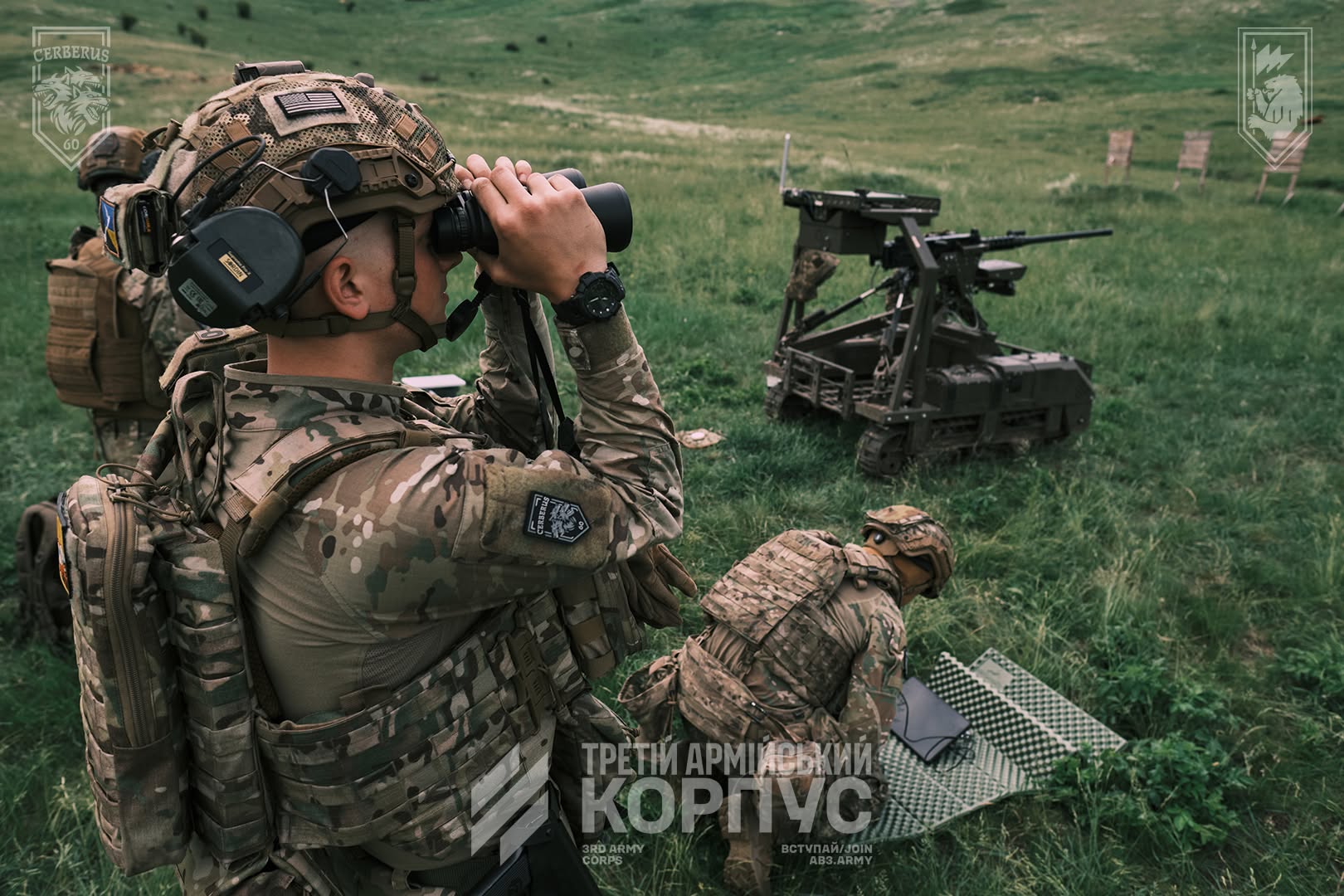
Between 10 and 17 September, Ukraine's 3rd Army Corps publicly confirmed an ongoing counteroffensive north of Lyman and named it Operation Vivaldi. Russian pro-war channels acknowledged Ukrainian movement towards the Zherebets River, while Ukrainian claims of 85 square kilometres cleared or liberated remain disputed by other reporting. Russian forces continue attacks in the Lyman, Kostiantynivka, Sloviansk and Kupiansk directions, alongside extensive air and drone activity. Reciprocal strikes on energy, industrial, transport and military infrastructure are continuing despite conflicting statements about a proposed energy ceasefire. The front remains active, with no verified indication of a substantive halt in fighting.
Change from previous assessment
Since the 16 September brief, the assessment of the Lyman sector has strengthened in direction but not in precision. The 3rd Army Corps has now publicly named Operation Vivaldi, and Russian pro-war channels have acknowledged Ukrainian movement towards the Zherebets River. New reporting of Russian advances near Mykolaivka, Olkhatka and Dobropillya reinforces the caveat that local control remains contested. The strike assessment remains unchanged in direction, with continued high Russian strike activity and Ukrainian attacks inside Russia. The ceasefire assessment also remains unchanged, with low confidence because Trump, Zelensky, Peskov and other Russian officials describe different policy positions. This brief adds a higher-resolution assessment of education disruption and winter humanitarian pressure.
Key judgments
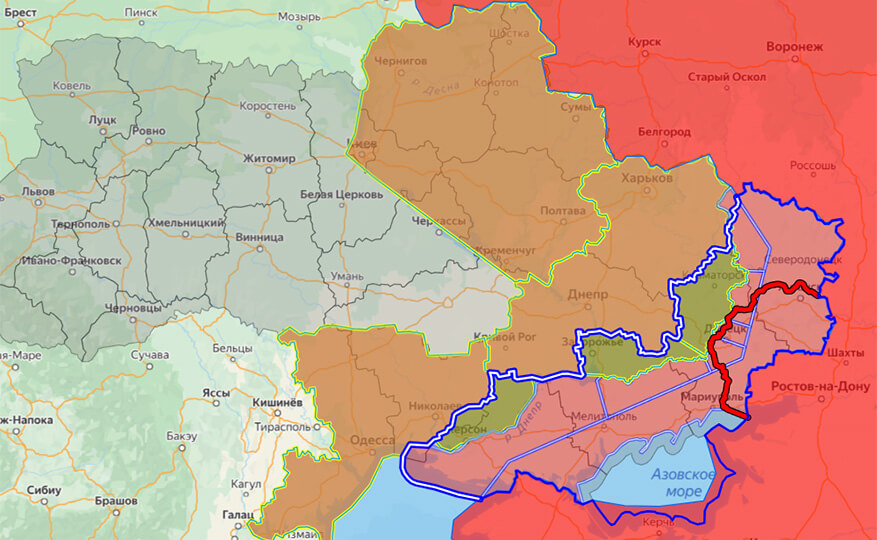
- Ukrainian forces are likely to retain local initiative north of Lyman over the next 0-14 days. The 3rd Army Corps has publicly confirmed Operation Vivaldi, and Ukrainian reporting claims 85 square kilometres cleared or liberated, including Serednie, Novoselivka, Yarova, Oleksandrivka and the outskirts of Korovii Yar. Russian pro-war channels have acknowledged Ukrainian movement towards the Zherebets River. The extent of Ukrainian control remains contested because the 85 square kilometre claim has no independent confirmation, while another assessment placed the cleared area above 200 square kilometres and local reporting described much of the area as a grey zone. (Confidence: medium · ASSESSED)
- I&W: Confirm: Independent geolocated imagery, supported by Russian and Ukrainian reporting, shows Ukrainian forces holding Serednie and extending positions towards or beyond the Zherebets River. (0-14 days)
- I&W: Break: Russian forces retake Serednie, restore the salient north of Lyman, or establish new positions west of the Zherebets River. (0-14 days)
- Russian forces are likely to maintain attacks towards Mykolaivka and the Sloviansk direction over the next 0-14 days, but a decisive breakthrough towards Sloviansk is unlikely. Russian forces reported eight attacks in the Lyman sector and 18 in the Kostiantynivka sector on 15 September, while other reporting described advances near Mykolaivka, Olkhatka, Dobropillya and Starorayskoye. A Kremlin-affiliated milblogger assessed that Ukrainian gains would delay the Russian offensive on Sloviansk. Territorial-gain totals from local media remain less reliable and conflict with the broader assessment of near-zero Russian net gains since March. (Confidence: medium · ASSESSED)
- I&W: Confirm: Russian forces advance into or beyond Mykolaivka while attack rates in the Lyman and Kostiantynivka sectors remain at or above the 15 September levels. (0-14 days)
- I&W: Break: Ukrainian forces continue to hold the Lyman salient, disrupt Russian logistics beyond 50 to 120 kilometres from the front, and prevent renewed movement towards Sloviansk. (0-14 days)
- Russia is very likely to sustain high-volume strikes against Ukrainian military, civilian and infrastructure targets over the next 0-14 days. On 15 September, Russian forces reportedly conducted 106 airstrikes, dropped 356 guided aerial bombs, deployed 7,106 kamikaze drones and carried out 2,366 shelling attacks. Reporting also records strikes on Kramatorsk, Kyiv, Poltava, Sumy, Nikopol and the Yahodyn border area. Faster jet-powered Geran drones are adding pressure to Ukrainian air defences. (Confidence: high · ASSESSED)
- I&W: Confirm: Russian reporting or Ukrainian official reporting records another 24-hour period with more than 100 airstrikes, hundreds of guided bombs or several thousand drones. (0-14 days)
- I&W: Break: Russian strike activity falls materially for seven consecutive days, with no new attacks on Ukrainian energy, industrial, transport or urban targets. (0-14 days)
- Ukraine is likely to continue long-range strikes against Russian energy, military and transport infrastructure over the next 0-30 days. Ukraine has conducted strikes against oil and gas infrastructure from Sochi to Siberia, attacked the Slavneft-YANOS refinery in Yaroslavl, struck infrastructure near Rostov-on-Don and Bryansk, and temporarily disrupted flights at Domodedovo and Vnukovo. The pattern is corroborated, but the full extent of damage and the attribution of some incidents rely on official or blog reporting. (Confidence: medium · ASSESSED)
- I&W: Confirm: Ukraine claims, and independent imagery supports, additional damage to Russian refineries, fuel infrastructure, airfields or logistics nodes beyond the established strikes in Yaroslavl, Rostov-on-Don and Bryansk. (0-30 days)
- I&W: Break: Ukraine announces a sustained halt to deep strikes inside Russia and no new Ukrainian strike-related fires, outages or flight disruptions are reported for 14 consecutive days. (0-30 days)
- A substantive ceasefire is very unlikely over the next 0-30 days, while a formal energy-target pause is unlikely to become operational without a verification mechanism. Donald Trump stated that Russia and Ukraine had agreed not to strike energy infrastructure, but Volodymyr Zelensky described Ukraine's position as conditional, Dmitry Peskov linked the proposal to wider sanctions issues, and Russian officials continued to describe unresolved negotiating questions and maximalist war aims. Reciprocal strikes on the Syzran refinery, Kyiv infrastructure and Poltava energy facilities further weaken the case that a working pause is in place. (Confidence: low · ASSESSED)
- I&W: Confirm: Russia and Ukraine issue matching public statements, establish mutually accepted terms and record a verified 72-hour halt in strikes against energy infrastructure. (0-14 days)
- I&W: Break: either side conducts another confirmed strike against an energy facility after publicly accepting the proposed pause. (0-14 days)
- Russia is likely to pursue an additional force-generation measure within the next 1-3 months, but an immediate mobilisation of 800,000 personnel is very unlikely. Ukraine's GUR head Oleh Ivashchenko reported that Russian generals sought 800,000 additional troops after the September State Duma elections, while also assessing that Russia can absorb no more than 300,000 to 500,000 recruits at once. The reporting is primarily single-source Ukrainian intelligence, with supporting analytical judgement but no independent confirmation of an 800,000-person request. (Confidence: low · ASSESSED)
- I&W: Confirm: Russia announces a new mobilisation, expands conscription administration beyond existing arrangements, or increases recruitment measures after the State Duma election. (1-3 months)
- I&W: Break: Russian authorities make no new force-generation announcement and recruitment remains within existing reported levels through the next three months. (1-3 months)
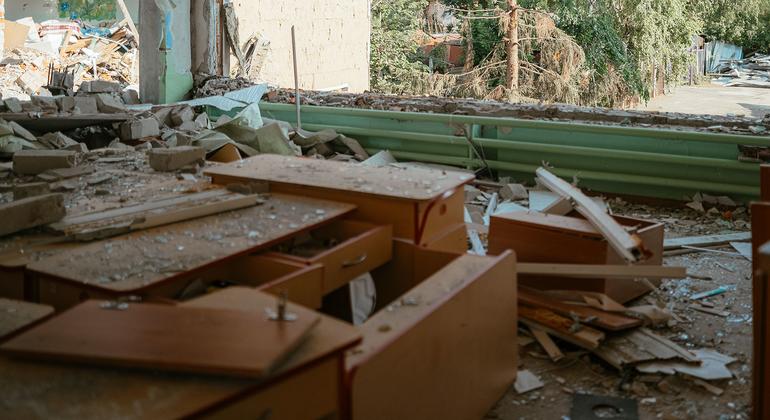
- Education disruption in Ukraine is very likely to continue through the coming winter, especially in Sumy, Mykolaiv and Odesa regions. UNICEF reported more than 1,000 air raid alerts during the first 15 days of the school year, damage to one in two education facilities in those regions, more than 4,200 damaged educational institutions nationwide and nearly two million children affected by loss of heat, electricity and water during the previous winter. UNICEF plans to support three million people, including 540,000 children, and 375,000 students this winter. (Confidence: high · ASSESSED)
- I&W: Confirm: UNICEF or Ukrainian authorities report additional school closures, shelter-school use or interruptions to in-person learning in Sumy, Mykolaiv or Odesa following new strikes. (0-30 days)
- I&W: Break: Ukrainian authorities report sustained restoration of electricity, heating and in-person schooling across the affected regions without new strike-related closures. (1-3 months)
Outlook & scenarios
Ukrainian local initiative holds (45%)
Ukrainian forces are likely to consolidate positions north of Lyman and preserve local initiative around the Zherebets River, while Russian forces continue attacks towards Mykolaivka and the Sloviansk direction. Russia sustains long-range strikes and Ukraine continues attacks inside Russia. No substantive ceasefire is reached.
Russian forces regain local momentum (25%)
Russian forces are likely to exploit Ukrainian losses or disrupted logistics to regain ground near Mykolaivka, the Lyman sector or the Kupiansk direction. The Russian advance remains local rather than a decisive breakthrough towards Sloviansk, while strike activity continues at high volume.
Reciprocal strikes intensify (25%)
Russia is very likely to expand attacks on Ukrainian energy, transport and urban infrastructure, while Ukraine increases strikes against Russian refineries, fuel facilities, airfields and logistics. Civilian casualties and education disruption rise, and diplomatic statements fail to produce a working energy pause.
Verified energy pause opens wider talks (5%)
Russia and Ukraine establish matching terms for an energy-target pause and sustain it long enough to create a basis for wider negotiations. This is a low-probability, high-impact outcome because current statements conflict over whether an agreement already exists and Russia continues to state maximalist war aims.
Recommendations
- Prioritise daily geolocation and satellite review of Serednie, Novoselivka, Yarova, Oleksandrivka, Korovii Yar, the Zherebets River and Mykolaivka. Record control, grey-zone status and Russian or Ukrainian movement separately.
- Maintain separate reporting lines for confirmed territorial changes, official claims and analyst estimates. Do not combine the 85 square kilometre Ukrainian claim with the above-200 square kilometre OSINT estimate without explaining the discrepancy.
- Track Russian strike volumes over consistent 24-hour windows, including airstrikes, guided bombs, kamikaze drones and jet-powered Geran drones. Avoid comparing totals from different counting periods.
- Treat the energy ceasefire as unimplemented until Russia and Ukraine publish matching terms and a verified pause is observed. Use confirmed strikes on the Syzran refinery, Kyiv infrastructure, Poltava energy facilities or other named sites as immediate break indicators.
- Monitor Russian force-generation decisions after the State Duma election, including mobilisation decrees, conscription changes and evidence of expanded recruitment. Do not treat the reported 800,000-person request as confirmed without independent evidence.
- Use UNICEF and Ukrainian government reporting to track school closures, shelter-school capacity and winter utility disruptions in Sumy, Mykolaiv and Odesa. Link changes in education access to verified strike and power-loss data rather than to general front-line activity.
Confidence & uncertainty
Overall confidence is high for the broad assessment because high-reliability ISW, major-media, wire-service and multilateral reporting corroborate the active front, Operation Vivaldi, sustained Russian strikes and continuing Ukrainian deep strikes. Confidence is lower for exact territorial control, the scale of Ukrainian gains, Russian force-generation intent and the status of the proposed energy ceasefire. Those uncertainties are reflected in lower confidence for the affected judgements rather than in the overall situation picture.
Intelligence gaps
- [EEI 1.1 · PARTIAL] Geotagged UAV/satellite imagery showing abandoned defensive positions or newly occupied settlements. Recommended collection: overhead imagery
- [EEI 1.2 · UNCOVERED] Confirmed movement of frontline ambulance evacuation routes beyond previous coordinates. Recommended collection: SIGINT/medical logistics
- [EEI 2.1 · UNCOVERED] Concentration of assault battalions (≥3 mechanized companies) within 15km of contact line. Recommended collection: SIGINT/UAV
- [EEI 2.2 · UNCOVERED] Unusual artillery stockpile buildup at forward depots exceeding 30-day consumption rates. Recommended collection: overhead imagery/logistics
- [EEI 3.1 · UNCOVERED] Bridge structural damage assessments at 5 key Dnieper River crossings via multispectral imaging. Recommended collection: overhead imagery
- [EEI 3.2 · PARTIAL] Rail traffic volume changes at Kryvyi Rih and Pokrovsk rail hubs compared to 7-day baseline. Recommended collection: commercial freight data
Cited sources
[1] The Kyiv Independent · Analysis: Through the fog of war, Ukraine reveals 'Operation Vivaldi' counterattack near Lyman (B) · Tue Sep 15 2026 17:32:46 GMT+0000 (Coordinated Universal Time) · sha256:5242d459d90e [2] Institute for the Study of War (ISW) · Russian Offensive Campaign Assessment, September 15, 2026 (B) · Wed Sep 16 2026 02:57:06 GMT+0000 (Coordinated Universal Time) · sha256:d853b840784e [3] Institute for the Study of War (ISW) · Russian Offensive Campaign Assessment, September 13, 2026 (B) · Mon Sep 14 2026 01:52:08 GMT+0000 (Coordinated Universal Time) · sha256:f1e1caa75ead [4] Institute for the Study of War (ISW) · Russian Offensive Campaign Assessment, September 12, 2026 (B) · Sun Sep 13 2026 01:38:00 GMT+0000 (Coordinated Universal Time) · sha256:2099c5246f5c [5] mskvremya.ru · Карта боевых действий на Украине на сегодня (E) · Tue Sep 15 2026 21:00:00 GMT+0000 (Coordinated Universal Time) · sha256:c9ecf681bc85 [6] voenhronika.ru (Военная хроника) · Военная хроника. УКРАИНА - Горячее: видео и сводки. Документальные фильмы про войну и хроника (E) · sha256:0cbfee118f0f [7] Ukrinform · War update: 278 combat engagements on frontline over past day (B) · Wed Sep 16 2026 05:57:00 GMT+0000 (Coordinated Universal Time) · sha256:0d077d1e2c3c [8] Meduza · Война (B) · Wed Sep 16 2026 14:50:37 GMT+0000 (Coordinated Universal Time) · sha256:88b2d81510d8 [9] Al Jazeera · At least five killed in Russian drone strike near Ukraine front line (A) · Wed Sep 16 2026 09:32:52 GMT+0000 (Coordinated Universal Time) · sha256:a83649ca530a [10] Kyiv Post · Ukraine Faces New Russian Jet-Powered Drones | Stefan Korshak (B) · Mon Sep 14 2026 05:35:00 GMT+0000 (Coordinated Universal Time) · sha256:ad10ea49f9de [11] BBC · Russia's elections will have few surprises, but for the Kremlin they matter (A) · Thu Sep 17 2026 05:00:36 GMT+0000 (Coordinated Universal Time) · sha256:3257a6dae283 [12] United Nations News (UN News) · Ukraine: Attacks on education threaten an entire generation, UNICEF warns (A) · Tue Sep 15 2026 14:24:40 GMT+0000 (Coordinated Universal Time) · sha256:2a3c0301a61d
Source content hashes were computed at collection time; the cited text is preserved unmodified for the life of this product.
Red cell review: CONCUR WITH COMMENT
TLP:CLEAR