TLP:CLEAR · Disclosure is not limited.
Russia-Ukraine Front Line: Positional War and Expanding Strike Risk
Time window: Last 7 days · Audience: General analyst · Type: Situation report · DTG: 2026-09-15 07:10Z · Overall confidence: HIGH
BLUF
The front line is likely to remain positional over the next 0-14 days, with Ukrainian forces retaining local initiative around Lyman and Svyatohirsk but no confirmed operational breakthrough by either side. Russia is very likely to sustain high-volume strikes across Ukraine, while Ukraine is likely to continue deep strikes against Russian energy, military and port infrastructure. Diplomatic contacts are likely to continue, but a substantive ceasefire remains unlikely.
Executive summary
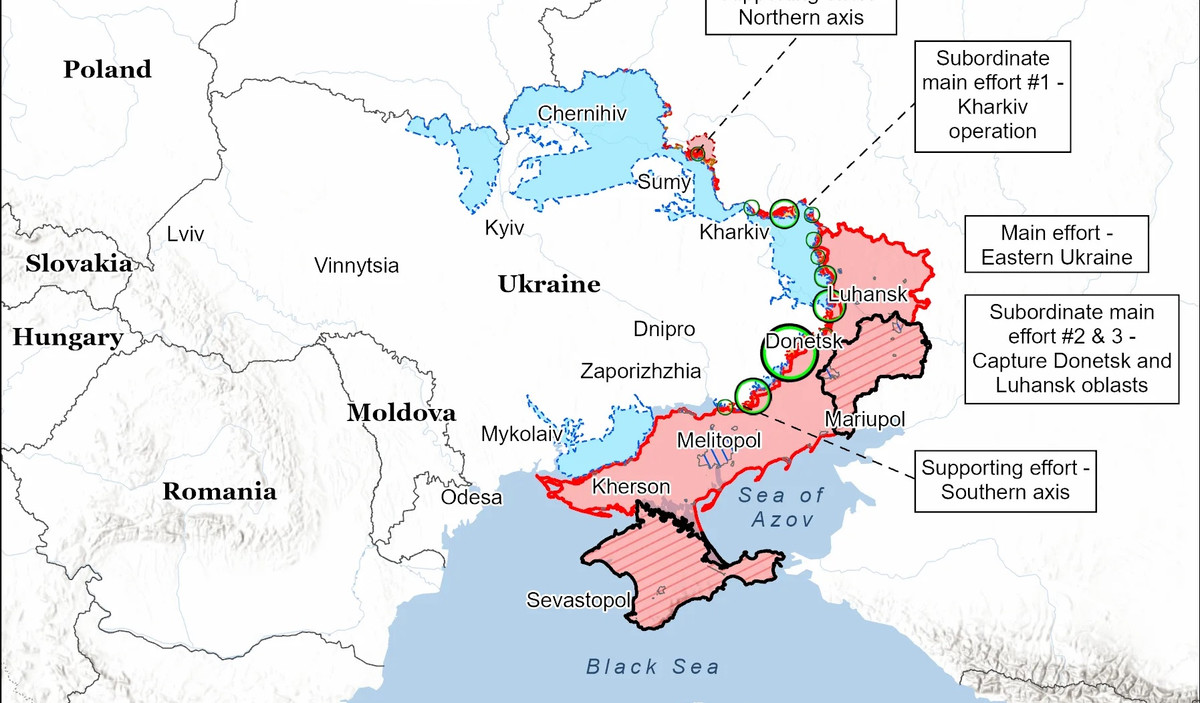
Reporting from 8 to 14 September indicates continued battlefield stasis alongside intense long-range strike activity. Ukrainian forces appear to have retained local initiative around Lyman, where Russian milbloggers acknowledged the loss of the salient north of the town, while Ukrainian forces demonstrated control of Svyatohirsk. Russia nevertheless claimed the seizure of Shevchenkove, and territorial assessments differ over the scale of Russian gains since March. Russian attacks have continued against Kyiv, Odesa Oblast, Ukrainian energy infrastructure and western logistics. Ukrainian forces have struck Russian refineries, ports, naval assets, air-defence systems and gas facilities, including targets roughly 2,780 to 2,840 kilometres from Ukraine's border. Border incidents involving Poland, Lithuania, Moldova and Romania raise the risk of further airspace spillover.
Change from previous assessment
The assessment has shifted towards greater confidence that Ukrainian forces retain local initiative around Lyman and Svyatohirsk, supported by further Russian milblogger acknowledgements and Ukrainian evidence of control of Svyatohirsk. The assessment of Russian battlefield stasis is retained but confidence remains medium because the Russian Ministry of Defence claimed Shevchenkove and territorial estimates conflict over Russian gains since March. The strike assessment is unchanged in direction but now includes a more explicit risk of incidents near Poland and Lithuania, following the Yahodyn strike and the NATO interception of a drone in Lithuanian airspace. The outlook for negotiations remains low confidence, with the claimed energy-strike agreement now treated as unresolved. A new judgment has been added on Russian force generation and the possibility of mobilisation.
Key judgments
- Russian forces are likely to remain without a decisive operational breakthrough over the next 0-14 days, while Ukrainian forces retain local initiative around Lyman and Svyatohirsk. Reporting records no confirmed advance by either side on 11 or 14 September, Russian milbloggers acknowledge that Ukrainian forces largely eliminated the Russian salient north of Lyman, and Ukrainian video evidence indicates control of Svyatohirsk. This is an assessed battlefield picture rather than a settled territorial account: the Russian Ministry of Defence claimed the seizure of Shevchenkove, while assessments differ between near-zero Russian net gains since March and a Russian net gain of 361.47 square kilometres including infiltrations. Confidence is medium because the Lyman and Svyatohirsk picture relies heavily on analytical reporting, milblogger material and competing official claims. (Confidence: medium · ASSESSED)
- I&W: Independent geolocation and reporting confirm Ukrainian positions along the Zherebets River and in Svyatohirsk, with no verified Russian advance around Lyman. (0-14 days)
- I&W: Russian forces establish and sustain confirmed positions beyond the current Zherebets line or independently verify control of Shevchenkove followed by a further advance. (0-14 days)
- Russia is very likely to sustain high-volume drone and missile strikes across Ukraine over the next 0-14 days, including attacks on Kyiv, Odesa Oblast, energy infrastructure and logistics. The Ukrainian Air Force reported 1,090 Russian strike drones and at least 75 missiles between the evening of 1 September and the morning of 8 September. Russia also conducted daily strikes in Odesa Oblast during that period, while attacks on civilian infrastructure had reached 7,170 by August and Russia was projected to launch 840 ballistic missiles against Ukraine during 2026. Confidence is high because Ukrainian official data, ACLED reporting, CSIS analysis and major-media reporting corroborate the continuing strike pattern. (Confidence: high · ASSESSED)
- I&W: Ukrainian authorities report another period exceeding 1,000 Russian strike drones or repeated missile attacks against Kyiv, Odesa Oblast or Ukrainian energy sites. (0-14 days)
- I&W: Ukraine records 14 consecutive days without a Russian drone or missile attack against Kyiv, Odesa Oblast, energy infrastructure or major logistics nodes. (0-14 days)
- Ukraine is likely to continue long-range strikes against Russian energy, military and port infrastructure over the next 0-30 days, including targets far beyond the front line. Ukrainian forces have reported strikes on the Novy Urengoy and Purovsky gas facilities in Yamalo-Nenets Autonomous Okrug, roughly 2,840 and 2,780 kilometres from Ukraine's border, as well as Russian refineries, the Port of Sochi, Makhachkala Sea Trade Port, Novorossiysk naval assets, an S-400 radar in Sochi and a drone launch site near Kursk. Confidence is medium because some damage is supported by satellite imagery, but many strike details come from Ukrainian official reporting and Russian authorities assess the economic effect as insignificant. (Confidence: medium · ASSESSED)
- I&W: Ukraine reports another strike on a Russian refinery, gas facility, port, naval asset or air-defence site, with satellite imagery or local footage confirming damage. (0-30 days)
- I&W: Ukraine announces a halt to long-range strikes and no new Ukrainian strike against Russian energy, military or port infrastructure is independently reported for 30 days. (0-30 days)
- Further cross-border airspace and border-infrastructure incidents are likely over the next 0-30 days. A Russian drone struck a train locomotive two kilometres from the Polish border, Poland reported aviation operations because of Russian jet-powered drones striking Ukraine, and NATO fighter jets shot down a drone that entered Lithuanian airspace. The incident pattern also includes a Russian Shahed-type drone identified in Moldova and an object that travelled from Belarus through Lithuania into Russian airspace, although the Lithuanian authorities had not confirmed its origin. Confidence is medium because the incidents are multiply reported, but attribution and intent remain contested. (Confidence: medium · ASSESSED)
- I&W: Another drone or missile crosses into Polish, Lithuanian, Romanian or Moldovan airspace, prompting a military interception, airspace restriction or official border-security response. (0-30 days)
- I&W: No further cross-border airspace incursion or border-infrastructure strike is reported in Poland, Lithuania, Moldova or Romania for 30 days. (0-30 days)
- Zaporizhzhia Nuclear Power Plant safety margins are likely to remain degraded over the next 0-30 days despite restoration of off-site power. ZNPP recorded ten off-site power losses during the latest reporting period, bringing the conflict total to 26, and more than one-third of all such losses occurred in the preceding three months. Fewer than one-third of off-site radiation monitoring stations remained operational by mid-July, while the IAEA had warned that the plant could face a station blackout without restored power. Confidence is high because IAEA-related reporting, UK government reporting and plant-specific data corroborate the power and monitoring problems. (Confidence: medium · ASSESSED)
- I&W: ZNPP records another loss of off-site power or a further reduction in operational radiation-monitoring stations. (0-30 days)
- I&W: Off-site power remains continuously available and more than two-thirds of radiation-monitoring stations return to operation for the reporting period. (0-30 days)
- A substantive ceasefire is unlikely over the next 0-30 days, although diplomatic contacts are likely to continue. Volodymyr Zelensky supports renewed trilateral talks, Vladimir Putin has spoken with Donald Trump, and Jared Kushner claimed that Russia, Ukraine and the US had resolved all issues except territory. These claims conflict with Yuriy Ushakov's statement that many issues, including territorial ones, remain unresolved, Zelenskyy's assessment that the war will continue into winter, and the absence of a declared settlement after the September talks. Donald Trump's claim of a mutual energy-strike agreement is also disputed by Zelenskyy's description of a proposal and Dmitry Peskov's support for Ukrainian restraint without a clear Russian commitment. Confidence is low because the evidence is politically interested, single-source in important respects and directly contradictory. (Confidence: low · ASSESSED)
- I&W: Russian and Ukrainian strikes continue after 14 September without publicly verified reciprocal terms covering the front line and energy infrastructure. (0-30 days)
- I&W: Russia, Ukraine and the US publish agreed terms and independently verified reporting confirms a sustained cessation of fighting and energy strikes. (0-30 days)
- Russia is likely to pursue some form of additional force-generation measure within the next 1-3 months, but an 800,000-person mobilisation is unlikely in that period. Ukrainian military intelligence reported that Russian generals had asked Vladimir Putin for 800,000 additional troops, while ISW assessed that rising casualties and declining recruitment would force some form of mobilisation. Russia's stated capacity to train 800,000 recruits is limited, and Dmitry Medvedev has denied that mobilisation will occur. Confidence is medium because the 800,000 request rests mainly on Ukrainian intelligence reporting and secondary analytical assessment, while Russian official statements contradict it. (Confidence: medium · ASSESSED)
- I&W: The Kremlin issues a mobilisation decree or expands recruitment, training capacity and force-generation measures alongside the October conscription cycle. (1-3 months)
- I&W: Russia introduces no new mobilisation or force-generation measure and maintains the current recruitment model through the next 1-3 months. (1-3 months)
Outlook & scenarios
Entrenched attritional war with sustained strikes (65%)
The front line remains largely positional, with Ukrainian forces holding local advantages around Lyman and Svyatohirsk while Russia sustains pressure elsewhere. Russia continues high-volume attacks on Ukrainian cities, energy infrastructure and logistics, and Ukraine continues long-range strikes against Russian energy and military sites. Diplomatic contacts continue without a substantive ceasefire.
Ukrainian local initiative broadens (25%)
Ukraine consolidates its positions around the Zherebets River and Svyatohirsk, expands counterattacks in the Lyman area and uses long-range strikes to disrupt Russian drone production, air defence, naval assets and energy infrastructure. Russian forces remain unable to convert local pressure into an operational breakthrough.
Russian force regeneration produces local gains (20%)
Russia responds to casualty and recruitment pressures with additional force-generation measures, intensifies attacks around Lyman or north of Kharkiv and uses repeated strikes against Ukrainian logistics and energy infrastructure. The Russian Ministry of Defence's claim over Shevchenkove is followed by independently verified territorial gains, weakening the current assessment of battlefield stasis.
Low-probability, high-impact NATO-border incident (10%)
A further drone or missile incident crosses into Poland or Lithuania, or causes damage near a NATO border, prompting an air-defence interception and rapid political escalation. The incident's origin remains disputed, but the proximity to NATO territory compresses decision time and reduces the room for diplomatic management.
Recommendations
- Prioritise daily geolocation of the Lyman, Zherebets River and Svyatohirsk areas. Reconcile Ukrainian, Russian Ministry of Defence and Russian milblogger claims before treating any reported territorial change as confirmed.
- Track Shevchenkove separately from the Lyman axis. Require independent imagery or multiple geographically specific reports before assessing that Russia has converted its claim into durable control.
- Maintain a 14-day strike dashboard covering Kyiv, Odesa Oblast, Ukrainian energy infrastructure, Chornomorsk, Orlivka and western railway links. Record drone and missile volume, target type, damage and Ukrainian interception data separately.
- Monitor Ukrainian long-range strike activity against the Novy Urengoy and Purovsky gas facilities, Kirishi, Saratov and Slavyansk oil refineries, Sochi, Makhachkala and Novorossiysk. Distinguish reported strikes from satellite-confirmed damage and from claims about sustained economic effects.
- Establish a border-incursion watchlist for Poland, Lithuania, Moldova and Romania. Record route, launch-area attribution, air-defence response, damage and official confidence separately because current attribution remains contested.
- Treat the claimed mutual energy-strike moratorium as unverified until Russia and Ukraine publish matching terms and implementation is observed at the front line and against energy infrastructure.
- Track Russian mobilisation indicators through the next 1-3 months, including a formal decree, recruitment changes, new training capacity and activity associated with the October conscription cycle. Do not equate reports of an 800,000-person request with an approved mobilisation.
- Maintain a separate ZNPP safety file recording every off-site power loss, the status of radiation-monitoring stations and any change to the restored power arrangement.
Confidence & uncertainty
Overall confidence is high for the core situation: the continuing strike campaign, ZNPP power losses, Ukrainian deep-strike activity and the absence of confirmed advances on 11 and 14 September are supported by multiple official, multilateral, analytical and major-media sources. Confidence is lower for the precise territorial picture around Lyman and Svyatohirsk, the scale of Russian territorial gains, mobilisation decisions, drone attribution near NATO territory and the status of the proposed energy-strike moratorium. These uncertainties do not overturn the central assessment of a largely positional front line accompanied by sustained long-range strikes.
Intelligence gaps
- [EEI 1.1 · UNCOVERED] Geotagged UAV/satellite imagery showing abandoned defensive positions or newly occupied settlements. Recommended collection: overhead imagery
- [EEI 1.2 · UNCOVERED] Confirmed movement of frontline ambulance evacuation routes beyond previous coordinates. Recommended collection: SIGINT/medical logistics
- [EEI 2.1 · UNCOVERED] Concentration of assault battalions (≥3 mechanized companies) within 15km of contact line. Recommended collection: SIGINT/UAV
- [EEI 2.2 · UNCOVERED] Unusual artillery stockpile buildup at forward depots exceeding 30-day consumption rates. Recommended collection: overhead imagery/logistics
- [EEI 3.1 · UNCOVERED] Bridge structural damage assessments at 5 key Dnieper River crossings via multispectral imaging. Recommended collection: overhead imagery
- [EEI 3.2 · UNCOVERED] Rail traffic volume changes at Kryvyi Rih and Pokrovsk rail hubs compared to 7-day baseline. Recommended collection: commercial freight data
Cited sources
[1] Institute for the Study of War (ISW), republished by Kyiv Post · ISW Russian Offensive Campaign Assessment, September 12, 2026 (B) · Sun Sep 13 2026 05:54:00 GMT+0000 (Coordinated Universal Time) · sha256:e28d75082136 [2] Institute for the Study of War (ISW) · Russian Offensive Campaign Assessment, September 14, 2026 (B) · Mon Sep 14 2026 22:56:27 GMT+0000 (Coordinated Universal Time) · sha256:c8feeed2c359 [3] Atlantic Council · As Russia’s invasion falters, Putin boasts of imaginary victories (C) · Thu Sep 10 2026 13:59:01 GMT+0000 (Coordinated Universal Time) · sha256:b1512686a5c0 [4] Institute for the Study of War (ISW) · Russian Offensive Campaign Assessment, September 8, 2026 (B) · Wed Sep 09 2026 03:06:43 GMT+0000 (Coordinated Universal Time) · sha256:412dcfa46ffc [5] Institute for the Study of War (ISW) · Russian Offensive Campaign Assessment, September 9, 2026 (B) · Wed Sep 09 2026 23:56:15 GMT+0000 (Coordinated Universal Time) · sha256:eb215b8a06c4 [6] Institute for the Study of War (ISW) · Russian Offensive Campaign Assessment, September 12, 2026 (B) · Sun Sep 13 2026 01:38:00 GMT+0000 (Coordinated Universal Time) · sha256:19814d18f5eb [7] Centre for Eastern Studies (OSW) · Three days of calm in Kyiv. Day 1658 of the war (B) · Tue Sep 08 2026 12:00:00 GMT+0000 (Coordinated Universal Time) · sha256:caf660064208 [8] Al Jazeera · In maps and charts: Russian and Ukrainian attacks on civilian targets (A) · Wed Sep 09 2026 08:42:33 GMT+0000 (Coordinated Universal Time) · sha256:1a604ecb921f [9] BBC · Ukraine's postal workers deliver lifeline under Russian fire (A) · Tue Sep 15 2026 05:01:46 GMT+0000 (Coordinated Universal Time) · sha256:d65b36a3d4e9 [10] United Nations (UN News) · Ukraine: Drone attacks on Chornobyl are ‘gambling with the safety of millions of people’ (A) · Thu Sep 10 2026 20:29:23 GMT+0000 (Coordinated Universal Time) · sha256:bef20539447b [11] Institute for the Study of War (ISW) · Russian Offensive Campaign Assessment, September 10, 2026 (B) · Fri Sep 11 2026 01:30:02 GMT+0000 (Coordinated Universal Time) · sha256:a571031c9936 [12] Institute for the Study of War (ISW) · Russian Offensive Campaign Assessment, September 11, 2026 (B) · Sat Sep 12 2026 02:08:51 GMT+0000 (Coordinated Universal Time) · sha256:76b39f6cd5cf [13] Institute for the Study of War (ISW) · Russian Offensive Campaign Assessment, September 13, 2026 (B) · Mon Sep 14 2026 01:52:08 GMT+0000 (Coordinated Universal Time) · sha256:f1e1caa75ead [14] BBC · Nato jets shoot down drone that flew into Lithuanian airspace (A) · Mon Sep 14 2026 23:26:47 GMT+0000 (Coordinated Universal Time) · sha256:d4e5d93f84c2 [15] UK Government (Foreign, Commonwealth & Development Office) · UK statement on Ukraine - IAEA Board of Governors September 2026 (A) · Fri Sep 11 2026 09:44:02 GMT+0000 (Coordinated Universal Time) · sha256:a6a2e20d6d16
Source content hashes were computed at collection time; the cited text is preserved unmodified for the life of this product.
Red cell review: PARTIAL DISSENT, KJ-5 downgraded HIGH→MEDIUM (estimative_mismatch)
TLP:CLEAR