TLP:CLEAR · Disclosure is not limited.
Russia Ukraine Front Line: Pressure Holds, Strike Campaign Widens
Time window: Last 7 days · Audience: General analyst · Type: Situation report · DTG: 2026-09-02 07:14Z · Overall confidence: HIGH
BLUF
Russian forces are likely to sustain intense ground and air pressure across the Pokrovsk, Kostiantynivka, Lyman, Sumy and Kharkiv sectors over the next 0-14 days, but a decisive capture of Kostiantynivka, Sloviansk or Kramatorsk remains unlikely. Ukraine retains local counterattack capacity and is extending strikes against Russian fuel, air-defence and military infrastructure, while negotiations remain unlikely to produce a substantive ceasefire in the next 1-3 months.
Executive summary
The 1 September reporting indicates a high-tempo but geographically limited Russian offensive. The Ukrainian General Staff reported 210 combat clashes, including 45 Russian attacks near Pokrovsk, 20 near Kostiantynivka and 16 in the South Sloboda direction. Russian forces also conducted 93 air strikes, dropped 319 guided bombs, used 10,947 kamikaze drones and carried out 2,872 shellings. Ukrainian units continue local advances near Olgivka, Zapadne and Dvorichna, while Ukrainian strikes have reached Omsk, Kirishi, Yeysk, Millerovo and Engels-2. Russia is preparing further strikes on Ukrainian power stations, and senior Russian officials continue to reject a ceasefire based on current front lines.
Change from previous assessment
Since the 1 September prior brief, the assessment now places greater weight on the reported 210 combat clashes on 1 September, including 45 Russian attacks near Pokrovsk and 20 near Kostiantynivka. The territorial picture is clearer but remains contested: new reporting places Russian forces in about 72.23 percent of Kostiantynivka while disputing Moscow's claim of full control, and August estimates record 129.81 square kilometres liberated by Ukrainian forces against 90.35 square kilometres seized or consolidated by Russia. Confidence in continued Russian strike pressure has increased following the reported 2,800 jet-powered drones launched in August and the Russian military's stated preparation for massive attacks on Ukrainian power stations. Evidence of Ukrainian deep-strike effects has also expanded through strikes on Omsk, Kirishi, Yeysk, Millerovo and Engels-2, along with Putin's acknowledgement of damage inside Russia. The negotiation judgement is firmer after Putin, Lavrov and Peskov rejected or constrained further talks. A new low-confidence judgement covers suspected Russian-linked spillover activity in Germany, Poland and Sweden. The prior mobilisation judgement is retired because this reporting window contains no new approved claim on mobilisation.
Key judgments
- Russian forces are likely to sustain high operational pressure across the Pokrovsk, Kostiantynivka, Lyman, Sumy and South Sloboda sectors over the next 0-14 days and 1-3 months, but a decisive Russian capture of Kostiantynivka, Sloviansk or Kramatorsk is unlikely. The Ukrainian General Staff reported 210 combat clashes on 1 September, including 45 Russian attacks on the Pokrovsk direction, 20 on the Kostiantynivka direction, six on the Lyman direction and 16 in the South Sloboda direction. Russian forces have consolidated positions north of Ryasne and east of Kramatorsk, while small Russian infantry groups near Vasiutynske were assessed to be 6.8-7 kilometres from Kramatorsk airfield. Russian command reportedly committed the entire 3rd Army Corps and part of the 8th Combined Arms Army to the Kostiantynivka battle. The Russian Ministry of Defence claimed full control of Kostiantynivka, but other reporting assessed that Russian forces held positions in about 72.23 percent of the city without completing its seizure. This unresolved battlefield-control dispute lowers confidence in the territorial assessment. (Confidence: medium · ASSESSED)
- I&W: Confirm: within 0-14 days, Ukrainian reporting records another day with at least 40 Russian assaults near Pokrovsk and at least 15 near Kostiantynivka, alongside continued Russian consolidation north of Ryasne or east of Kramatorsk. (0-14 days)
- I&W: Break: independent geolocated evidence confirms Russian control of all Kostiantynivka or sustained Russian positions at the immediate approaches to Sloviansk and Kramatorsk. (0-14 days to 1-3 months)
- Ukrainian forces are likely to retain local counterattack capacity around Olgivka, Zapadne, Dvorichna, Nova Kruhliakivka and Orikhiv over the next 0-14 days and 1-3 months, but an operational Ukrainian breakthrough is unlikely. ISW assessed that Ukrainian forces liberated at least 129.81 square kilometres in August, compared with about 90.35 square kilometres seized or consolidated by Russian forces. The Ukrainian 2nd Khartiya Corps reported clearing two square kilometres southwest of Zapadne and advancing west of Dvorichna. Geolocated reporting also confirmed a Ukrainian advance southeast of Olgivka and a strike on Russian positions east of Nova Kruhliakivka. Ukrainian forces reported destroying a Russian sabotage and reconnaissance group near Orikhiv. The assessment rests on multiple geolocated and official reports, but the territorial totals do not establish a sustained operational breakthrough. (Confidence: medium · ASSESSED)
- I&W: Confirm: new geolocated footage shows Ukrainian forces extending positions beyond the named areas near Olgivka, Zapadne, Dvorichna, Nova Kruhliakivka or Orikhiv during the next 14 days. (0-14 days)
- I&W: Break: Russian forces regain the recently cleared ground southwest of Zapadne or establish a continuous advance that threatens Ukrainian positions west of Dvorichna and near Orikhiv. (0-14 days to 1-3 months)
- Russian forces are very likely to continue high-volume combined drone and missile strikes against Kyiv City, Kyiv Oblast and Ukrainian military, logistics, energy and civilian infrastructure over the next 0-14 days. The Ukrainian Air Force reported more than 2,800 jet-powered drones launched in August, with an interception rate of about 60 percent, and more than 550 S8000 Banderol, Shahed, Gerbera and Parodiya systems launched between 28 and 29 August. Russia launched at least 429 missiles into Ukraine in July, more than twice the previous month's total. Russian strikes killed 12 people on 31 August, while the 29 August strike on an ammunition warehouse near Myla killed at least 37 people and injured at least 42. The Russian military has also stated that it is preparing massive strikes on Ukrainian power stations. Confidence is high because the continuation pattern is supported by Ukrainian official reporting, Russian statements, UN reporting and major-media coverage, although Russian claims about targeting and military effects remain contested. (Confidence: high · ASSESSED)
- I&W: Confirm: the Russian military announces or conducts another strike wave involving at least 500 drones, or confirms strikes on Ukrainian power stations, within the next 14 days. (0-14 days)
- I&W: Break: 14 consecutive days pass without a comparable Russian drone and missile operation, and Russian statements about massive power-station strikes are withdrawn or not followed by reported attacks. (0-14 days)
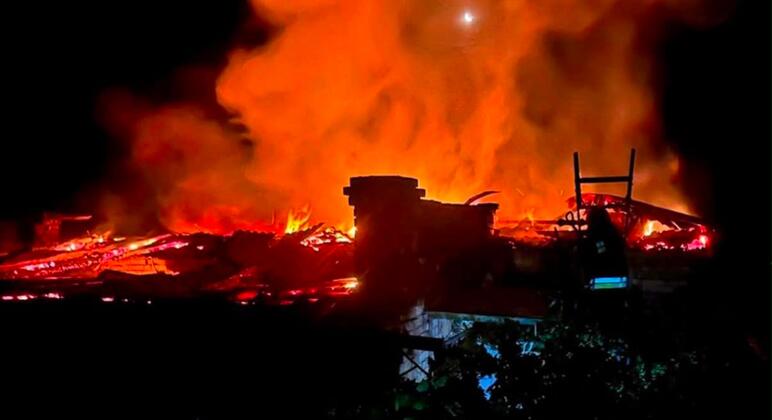
- Ukrainian forces are likely to continue deep strikes against Russian refineries, airfields, air-defence systems, military logistics and maritime infrastructure over the next 1-3 months. Local disruption is very likely, but a strategic degradation of Russia's war effort is unlikely to be established in that period. Ukrainian strikes reached the Omsk refinery, almost 2,500 kilometres from the Russia-Ukraine border, the Kirishi refinery about 790 kilometres from the border, and the Yeysk, Millerovo and Engels-2 military sites. Vladimir Putin acknowledged damage to Russian infrastructure and oil refineries. Russia extended its export ban on diesel, marine fuel and gas oils until 30 September, while Rostov Oblast declared a state of emergency after Ukrainian strikes disrupted maritime logistics and stopped port operations. The evidence confirms repeated long-range reach and local economic effects, but does not establish the scale or duration of strategic damage. (Confidence: medium · ASSESSED)
- I&W: Confirm: Ukrainian strikes damage another Russian refinery, airfield or radar site beyond 300 kilometres from the border, or Russia extends the fuel export ban beyond 30 September. (0-14 days to 1-3 months)
- I&W: Break: Russian authorities report restored port operations in Rostov Oblast and sustained refinery output, while no further deep Ukrainian strike is independently geolocated during the next month. (1-3 months)
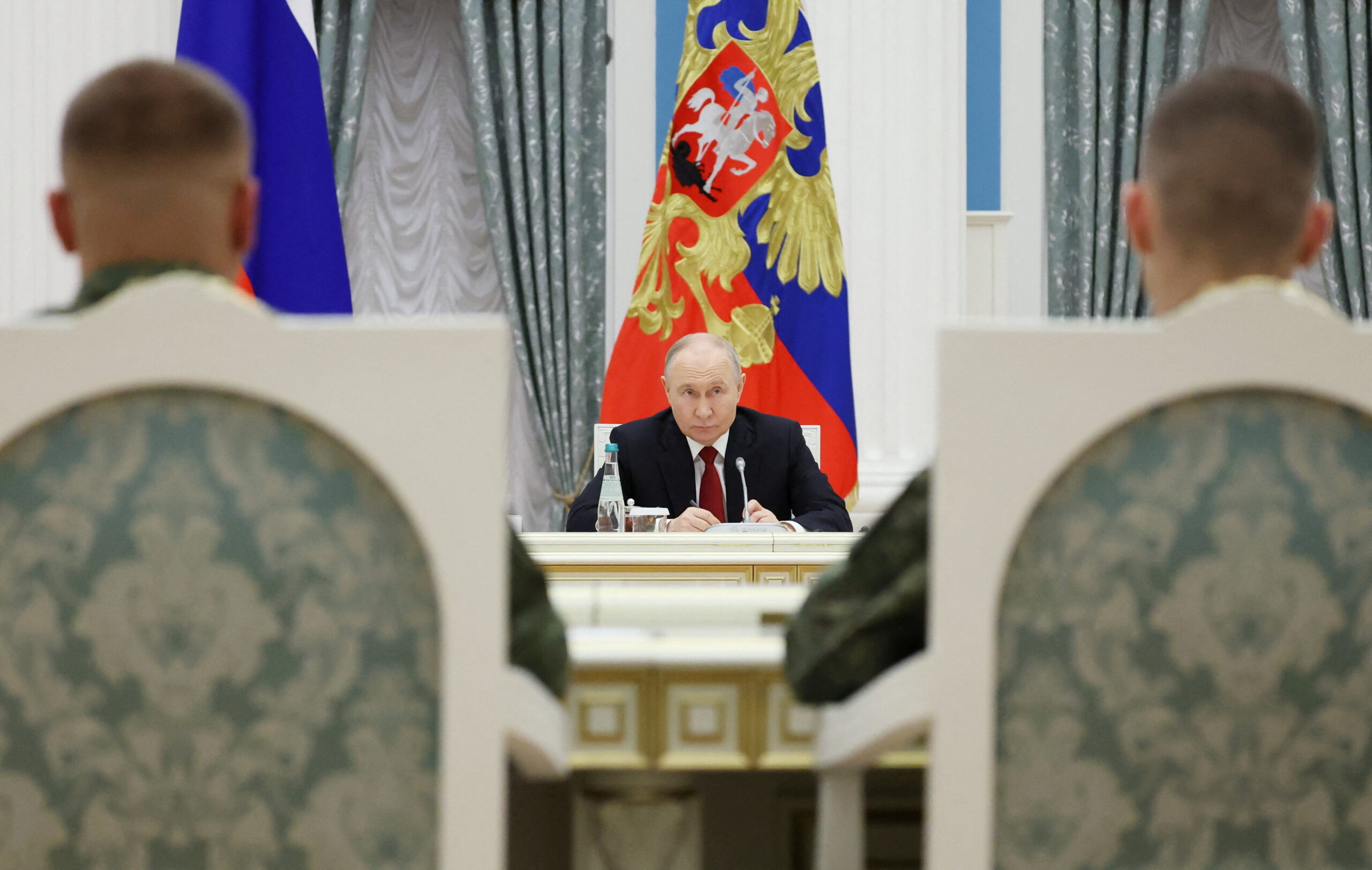
- A substantive ceasefire or negotiated settlement between Russia and Ukraine is unlikely over the next 1-3 months. Vladimir Putin rejected renewed negotiations by describing Ukraine as a terrorist actor, Sergei Lavrov rejected a ceasefire based on the present front lines, and Dmitry Peskov said a summit would have no purpose unless a deal was ready to sign. Moscow also rejected a proposed trilateral summit involving Russia, Ukraine and the United States. Russian terms reportedly require Ukraine to recognise occupied territory, abandon the Donbas fortress belt, withdraw from Donbas, accept restrictions on NATO membership and limit its military capabilities. The official positions are corroborated across several reports, but public statements do not fully reveal private negotiating intent, so confidence is medium rather than high. (Confidence: medium · ASSESSED)
- I&W: Confirm: Moscow rejects another ceasefire or summit proposal while retaining demands for Ukrainian territorial concessions, neutrality and military restrictions. (0-14 days to 1-3 months)
- I&W: Break: Russia and Ukraine announce direct talks with a formal agenda that includes a ceasefire based on current front lines, and Moscow accepts that baseline. (0-14 days to 1-3 months)
- Russian-attributed or suspected hostile activity in Germany, Poland and Sweden is likely to remain a secondary spillover risk over the next 1-3 months, but individual attribution remains unresolved. German officials attributed the 5 August Leipzig/Halle Airport drone attack to Russia, while Vladimir Putin accused Germany of fabricating evidence. German authorities also found explosive devices near a power facility in Brandenburg, and Polish officials assessed that fires at defence-industrial sites in Skarzysko-Kamienna and Lublin were likely arson. GPS jamming linked to Russia disrupted ambulance navigation in Kalmar County and Gotland. This is a low-confidence judgement because the Leipzig attribution is disputed, the Brandenburg reports contain a location discrepancy, and the Polish incidents have not been independently attributed to Russia. (Confidence: low · ASSESSED)
- I&W: Confirm: German or Polish investigators publicly link the Brandenburg devices, Leipzig/Halle incident or the two Polish defence-site fires to a common Russian operation. (0-14 days to 1-3 months)
- I&W: Break: forensic findings attribute the incidents to non-Russian actors and no new suspected Russian-linked disruption affects a German, Polish or Swedish transport, energy or defence site. (1-3 months)
Outlook & scenarios
Attritional continuation with persistent strikes (55%)
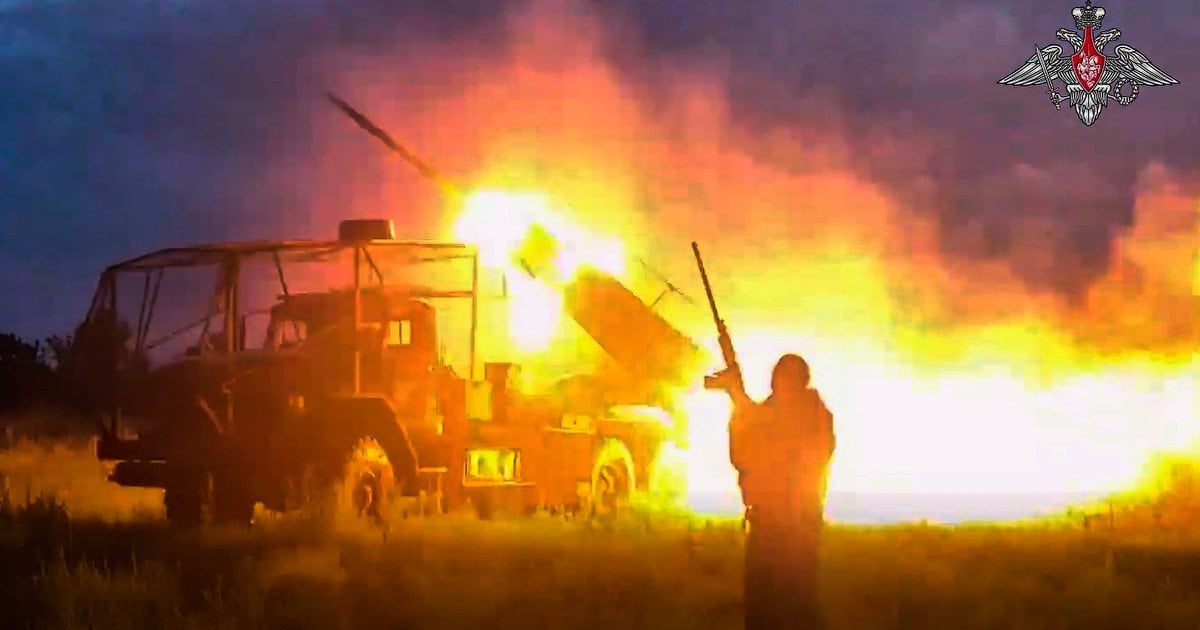
Russian forces maintain high assault rates near Pokrovsk and Kostiantynivka, consolidate positions near Sumy and east of Kramatorsk, and fail to secure a decisive breakthrough. Ukrainian forces retain local counterattack capacity near Dvorichna, Olgivka and Orikhiv. Russian drone and missile strikes against Kyiv and Ukrainian infrastructure continue, while Ukrainian deep strikes produce local disruption inside Russia. A substantive ceasefire does not emerge over the next 1-3 months.
Russian local breakthrough in Donetsk (22%)
Russian forces exploit their concentration of the 3rd Army Corps and part of the 8th Combined Arms Army to complete the seizure of Kostiantynivka or reach the immediate approaches to Sloviansk and Kramatorsk. Ukrainian forces continue counterattacks but lose ground around the Fortress Belt. The advance remains local rather than a collapse of the wider Ukrainian front.
Strike escalation and constrained negotiation (12%)
Ukraine expands strikes against Russian refineries, airfields, radar systems and maritime logistics, while Russia follows through on preparations for attacks against Ukrainian power stations. Damage to transport, fuel and civilian infrastructure increases pressure on both governments, but Moscow retains its territorial and neutrality demands. Contact continues without a signed ceasefire.
European spillover wildcard (15%)
A confirmed Russian-attributed attack causes casualties or major disruption at a NATO state's airport, power facility or defence-industrial site. The current German, Polish and Swedish incidents provide warning context, but the probability remains low because attribution is unresolved. Such an incident would sharply raise pressure for a wider European response while the Ukraine front remains active.
Recommendations
- Maintain a daily front-line tracker for Pokrovsk, Kostiantynivka, Lyman, South Sloboda, Sumy, Dvorichna, Olgivka and Orikhiv. Reconcile Ukrainian General Staff reporting with ISW assessments and new geolocated imagery before changing control-of-terrain judgements.
- Treat Russian claims of full control of Kostiantynivka as contested in all products until independent geolocation confirms control across the city. Separate Russian presence, infiltration and consolidation from established administrative control.
- Prioritise warning collection on Russian preparations for attacks against Ukrainian power stations. Monitor missile and jet-powered drone launch rates, damage to Kyiv-area infrastructure, Patriot interceptor availability and repeated thermal detections from NASA FIRMS, while treating thermal signatures as corroboration of fire rather than proof of cause.
- Track Ukrainian strike effects through observable measures: refinery operating status at Omsk and Kirishi, airfield activity at Yeysk, Millerovo and Engels-2, port operations in Rostov Oblast, and the status of Russia's diesel and marine-fuel export restrictions after 30 September.
- Keep negotiations reporting separate from battlefield reporting. Record any Russian acceptance of a ceasefire based on current front lines, any formal trilateral summit agenda and any change to Moscow's demands on Ukrainian territory, NATO membership and military capabilities.
- Raise collection priority for suspected Russian-linked incidents affecting German, Polish and Swedish transport, energy and defence sites. Require forensic or official investigative corroboration before treating attribution as established, particularly for the Leipzig/Halle, Brandenburg and Polish fire incidents.
Confidence & uncertainty
Overall confidence is high for the broad assessment because the main developments are corroborated by multiple reliable sources, including the UN, WHO, NASA FIRMS, the Ukrainian General Staff, ISW, BBC reporting, Russian official statements and geolocated imagery. Confidence is lower for the exact control of Kostiantynivka, the scale of Ukrainian strike damage inside Russia, the attribution of incidents in Germany and Poland, and the prospects for private diplomatic contact. These uncertainties do not overturn the central judgement that the front remains active, Russian strike pressure is intensifying and a near-term substantive settlement is unlikely.
Intelligence gaps
- [EEI 1.1 · PARTIAL] Geotagged UAV/satellite imagery showing abandoned defensive positions or newly occupied settlements. Recommended collection: overhead imagery
- [EEI 1.2 · UNCOVERED] Confirmed movement of frontline ambulance evacuation routes beyond previous coordinates. Recommended collection: SIGINT/medical logistics
- [EEI 2.1 · PARTIAL] Concentration of assault battalions (≥3 mechanized companies) within 15km of contact line. Recommended collection: SIGINT/UAV
- [EEI 2.2 · UNCOVERED] Unusual artillery stockpile buildup at forward depots exceeding 30-day consumption rates. Recommended collection: overhead imagery/logistics
- [EEI 3.1 · UNCOVERED] Bridge structural damage assessments at 5 key Dnieper River crossings via multispectral imaging. Recommended collection: overhead imagery
- [EEI 3.2 · UNCOVERED] Rail traffic volume changes at Kryvyi Rih and Pokrovsk rail hubs compared to 7-day baseline. Recommended collection: commercial freight data
Cited sources
[1] Delo.ua · Карта боевых действий в Украине на 1 сентября 2026 года (D) · Tue Sep 01 2026 05:12:53 GMT+0000 (Coordinated Universal Time) · sha256:6a3de02c94e4 [2] TSN (tsn.ua) · У россиян есть важные тактические успехи на двух направлениях — ISW (карты) (B) · Tue Sep 01 2026 05:32:57 GMT+0000 (Coordinated Universal Time) · sha256:18b2b19b06a8 [3] Observer Research Foundation (ORF) · Russia-Ukraine War: Frozen Front, Burning Hinterland (C) · Sat Aug 29 2026 13:06:08 GMT+0000 (Coordinated Universal Time) · sha256:e6ab22ff4160 [4] Institute for the Study of War (ISW) · Russian Offensive Campaign Assessment, September 1, 2026 (B) · Wed Sep 02 2026 02:41:58 GMT+0000 (Coordinated Universal Time) · sha256:4a4d200d8393 [5] Institute for the Study of War (ISW) · Russian Offensive Campaign Assessment, August 30, 2026 (B) · Sun Aug 30 2026 22:25:45 GMT+0000 (Coordinated Universal Time) · sha256:bb795a35f647 [6] Institute for the Study of War · Russian Offensive Campaign Assessment, August 29, 2026 (B) · Sat Aug 29 2026 22:06:07 GMT+0000 (Coordinated Universal Time) · sha256:abb3fede183d [7] UK Government (gov.uk) · Russia’s actions do not change Ukraine’s sovereignty, nor rewrite her borders: UK statement at the UN General Assembly (A) · Tue Sep 01 2026 16:02:00 GMT+0000 (Coordinated Universal Time) · sha256:6b764120fd06 [8] BBC · Zelensky says airlines should avoid Russian airspace as Ukraine escalates drone operations (A) · Wed Sep 02 2026 04:23:23 GMT+0000 (Coordinated Universal Time) · sha256:513e33603200 [9] United Nations (UN News) · WHO reports more than 3,200 attacks on Ukraine’s healthcare system since full-scale invasion (A) · Fri Aug 28 2026 19:04:14 GMT+0000 (Coordinated Universal Time) · sha256:24473abcc473 [10] Atlantic Council (UkraineAlert) · For Putin, the ‘root cause’ of the war is the existence of independent Ukraine (C) · Tue Sep 01 2026 21:02:20 GMT+0000 (Coordinated Universal Time) · sha256:cd0fc33f2960 [11] BBC News · Germany says Russia behind Leipzig airport drone attack (A) · Tue Sep 01 2026 15:43:44 GMT+0000 (Coordinated Universal Time) · sha256:5c4cdca80301 [12] Atlantic Council · Where and how Putin could expand his war in Europe beyond Ukraine (B) · Tue Sep 01 2026 20:18:15 GMT+0000 (Coordinated Universal Time) · sha256:22db2bdfe421
Source content hashes were computed at collection time; the cited text is preserved unmodified for the life of this product.
TLP:CLEAR