TLP:CLEAR · Disclosure is not limited.
Russia-Ukraine Front Line: Pressure Without Breakthrough
Time window: Last 7 days · Audience: General analyst · Type: Situation report · DTG: 2026-09-14 07:07Z · Overall confidence: HIGH
BLUF
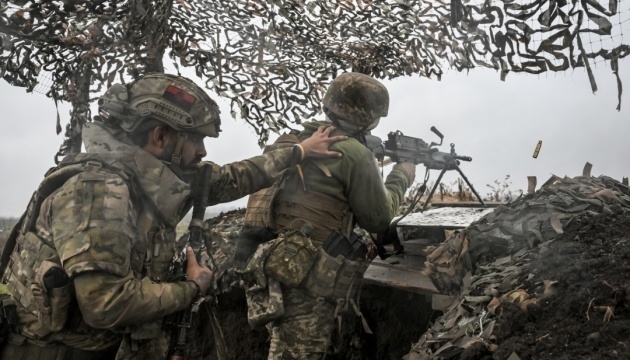
Russian forces are likely to sustain intense but localised ground pressure, led by 39 attacks in the Pokrovsk sector on 7 September, while independent mapping and analytical reporting indicate near-zero Russian net gains and Ukrainian counterattacks around Kupyansk, Lyman and Dnipropetrovsk. A decisive Russian operational breakthrough is unlikely over the next 0-14 days. Russia is very likely to continue high-volume strikes, including against Kyiv, Odesa and rail infrastructure near Poland.
Executive summary
The front line remains active but operationally fluid. Ukrainian reporting recorded 244 engagements on 7 September, with the heaviest Russian pressure in the Pokrovsk sector and continued attacks in Sumy and Chernihiv. Independent mapping indicates that Russia's 2026 advance has slowed to near standstill, while Ukrainian forces have contested the initiative and conducted local counterattacks. Reports of a Ukrainian advance across the Zherebets River remain unconfirmed, and control of Sviatohirsk is disputed after Vladimir Putin claimed its capture and Ukrainian forces later demonstrated control in the city centre. Russia has intensified its stand-off campaign, with 2,100 drones, 1,700 glide bombs and 73 missiles reportedly launched across Ukraine during the past week. Zaporizhzhia Nuclear Power Plant remains exposed despite restoration of off-site power.
Change from previous assessment
Since the 13 September prior brief, the assessment has shifted towards greater emphasis on Ukrainian operational resistance. New reporting records 244 front-line engagements and 39 Russian attacks in the Pokrovsk sector on 7 September, while analytical reporting adds evidence of Ukrainian counterattacks in Kupyansk, Lyman and Dnipropetrovsk and near-zero Russian net territorial gains since March. Confidence that a decisive Russian breakthrough is unlikely remains medium because the Lyman and Sviatohirsk control pictures are still contested. The strike assessment has been strengthened by reporting of 2,100 drones, 1,700 glide bombs and 73 missiles in one week, the Odesa residential strike and attacks on rail infrastructure near Poland. The ZNPP judgement is unchanged in direction but updated to reflect restored off-site power alongside ten recent power losses and degraded radiation monitoring.
Key judgments
- Russian forces are likely to sustain high-tempo but localised ground pressure over the next 0-14 days, concentrated in the Pokrovsk sector and supported by attacks in Sumy and Chernihiv, while a decisive operational breakthrough remains unlikely. The Ukrainian General Staff recorded 244 engagements on 7 September, including 39 Russian attacks in the Pokrovsk sector, alongside 99 airstrikes, 285 guided aerial bombs, 8,495 kamikaze drones and 2,508 shelling attacks. ACLED reporting places Donetsk, Kharkiv and Sumy among the most heavily attacked areas. Independent mapping indicates that Russian advances have slowed sharply and that Ukrainian forces have held Russian gains near zero since March. The assessment remains medium confidence because the activity figures come chiefly from Ukrainian reporting and the precise territorial picture remains contested. (Confidence: medium · ASSESSED)
- I&W: Confirm: Ukrainian General Staff reporting records more than 200 daily engagements and keeps the Pokrovsk sector above 30 Russian attacks for at least three consecutive days. Break: independent mapping records sustained Russian net territorial gains for 14 consecutive days. (0-14 days)
- I&W: Confirm: Russian attacks continue across the named Sumy and Chernihiv settlements without a corresponding confirmed breakthrough towards a major Ukrainian defensive position. Break: independently geolocated reporting confirms a Russian operational penetration that remains held for seven days. (0-14 days)
- Ukrainian forces are likely to deny Russia a decisive operational breakthrough and retain local initiative in the Kupyansk, Lyman, Oleksandrivka and Dnipropetrovsk directions over the next 0-14 days. Analytical reporting describes successful Ukrainian counterattacks, near-zero Russian net territorial gains since March and the defeat of Russian efforts to push into Dnipropetrovsk Oblast. The available evidence indicates that Sviatohirsk is likely to remain under Ukrainian control despite Vladimir Putin's 1 September claim that Russian forces had captured it. Reports that Ukrainian forces cut the Russian salient north of Lyman and reached the Zherebets River remain unconfirmed by Ukrainian officials, which lowers confidence in the extent of the claimed reversal. (Confidence: medium · ASSESSED)
- I&W: Confirm: independent geolocated imagery verifies continued Ukrainian control of Sviatohirsk or Ukrainian positions across the Zherebets River. Break: Russian forces are independently confirmed to capture and hold Sviatohirsk or regain the Lyman salient. (0-14 days)
- I&W: Confirm: independent mapping records additional Ukrainian gains in the Kupyansk, Lyman or Dnipropetrovsk directions. Break: Russian forces record net gains in two successive mapping updates across these directions. (0-30 days)
- Russia is very likely to continue high-volume drone, glide-bomb and missile strikes against Ukrainian cities and infrastructure over the next 0-14 days, with Kyiv, Odesa and western rail links remaining exposed. Volodymyr Zelenskyy reported 2,100 drones, 1,700 glide bombs and 73 missiles launched at targets across Ukraine during the past week. A Russian air campaign against Kyiv lasted 10 consecutive days and killed at least 53 people, while a 12 September drone strike on a 25-storey residential building in Odesa killed two and injured more than 20. Russia also used the upgraded Iskander-1000 against Kyiv for the first reported time. The 13 and 14 September strikes near Yahodyn hit a petrol station and passenger-train locomotives within two kilometres of the Polish border. The strike's intended target remains disputed, with Russia describing railway infrastructure as the target and Ukrzaliznytsia suggesting that a diplomatic train might have been intended. (Confidence: high · ASSESSED)
- I&W: Confirm: Russia launches another weekly strike package approaching 2,000 drones and 70 missiles, or repeats attacks against Kyiv, Odesa or western Ukrainian rail infrastructure. Break: Ukrainian reporting records seven consecutive days without a Russian missile or drone strike against a major city or transport link. (0-14 days)
- I&W: Confirm: CSIS records Ukraine's ballistic-missile interception rate at or below the reported 10.2 percent level during another Russian missile salvo. Break: interception rates return above 24 percent in a subsequent assessment. (0-30 days)
- Ukraine is likely to sustain long-range drone attacks against Russian energy and military infrastructure over the next 0-30 days, although the scale and effect of the announced campaign remain uncertain. Volodymyr Zelenskyy pledged at least 1,000 Ukrainian drones against Russia each day, compared with a previous daily average of about 300. ACLED recorded 3,560 Ukrainian attacks in Russia by August 2026, with 27 percent targeting civilian infrastructure. On 9 September, Yamalo-Nenets Autonomous Okrug Governor Dmitry Atryukhov reported a drone downed over Novy Urengoy, while geolocated footage showed smoke rising from the Novy Urengoy Condensate Preparation Plant. This judgement rests on Ukrainian statements and a single reported incident, so confidence is medium. (Confidence: medium · ASSESSED)
- I&W: Confirm: Ukrainian authorities report a daily launch rate near 1,000 drones or record additional strikes against Russian refineries, gas-processing plants or military facilities. Break: Ukraine's reported daily rate remains near 300 and no further Russian energy-site incident is reported for 30 days. (0-30 days)
- I&W: Confirm: independent imagery verifies damage or sustained production disruption at the Novy Urengoy Condensate Preparation Plant. Break: imagery shows no damage and Russian authorities report uninterrupted operations. (0-30 days)
- Zaporizhzhia Nuclear Power Plant safety conditions are likely to remain degraded over the next 0-30 days despite the restoration of off-site power. The IAEA warned that the plant could face a station blackout without restored power, while reporting recorded ten off-site power losses during the latest period, bringing the conflict total to 26. More than one-third of all such losses occurred in the preceding three months, and fewer than one-third of off-site radiation monitoring stations remained operational by mid-July. The restoration reduces the immediate blackout risk but does not resolve the plant's degraded safety margins. (Confidence: high · ASSESSED)
- I&W: Confirm: the IAEA records another loss of off-site power or reports that monitoring coverage remains below one-third of stations. Break: the IAEA reports sustained power availability and restoration of monitoring coverage above two-thirds. (0-30 days)
- I&W: Confirm: the IAEA issues another station-blackout warning or reports damage to power, cooling or monitoring systems. Break: no further power loss is recorded and the IAEA reports stable operation throughout the period. (0-30 days)
Outlook & scenarios
Attritional Russian pressure without an operational breakthrough (55%)
This is the most likely outcome over the next 0-30 days. Russian forces maintain heavy attacks around Pokrovsk and pressure in the northern sectors, while Ukrainian forces conduct local counterattacks and prevent sustained Russian territorial gains. Russia continues large-scale aerial strikes against cities and infrastructure.
Local Ukrainian reversal around Lyman (25%)
Ukrainian forces consolidate reported gains near the Lyman salient and the Zherebets River, then extend pressure towards Russian forward positions. Russian forces withdraw from additional exposed positions without losing the wider front. This scenario depends on reporting that is currently unconfirmed by Ukrainian officials.
Strike-led escalation near Ukraine's western border (30%)
Russia repeats strikes against western Ukrainian transport infrastructure, including rail links near Yahodyn, while Ukrainian long-range drones continue to target Russian energy facilities. A further airspace or border incident involving Poland, Romania or Moldova increases political pressure without producing direct NATO-Russia combat.
ZNPP power emergency (10%)
A further loss of off-site power at Zaporizhzhia Nuclear Power Plant occurs while radiation-monitoring coverage remains degraded. The IAEA issues another station-blackout warning, creating a high-impact nuclear safety crisis and diverting attention from the ground campaign.
Recommendations
- Maintain a daily sector-level tracker for Pokrovsk, Kupyansk, Lyman, Oleksandrivka, Dnipropetrovsk, Sumy and Chernihiv. Record engagements, claimed advances, geolocated evidence and source type separately.
- Do not update the control map for Sviatohirsk or the Lyman salient on a single military statement or milblogger report. Require independent geolocation or corroboration from a second reliable source before treating either as a confirmed change.
- Track Russian weekly strike totals against the current reported baseline of 2,100 drones, 1,700 glide bombs and 73 missiles. Record Kyiv, Odesa and western rail incidents separately from front-line activity to identify changes in target selection.
- Establish a dedicated watch for strikes within 10 kilometres of the Polish, Romanian or Moldovan borders. Separate confirmed impact locations from claims about intended targets, especially where diplomatic or passenger trains are involved.
- Review IAEA reporting after every reported power interruption at Zaporizhzhia Nuclear Power Plant. Treat restored off-site power as a temporary risk reduction until monitoring coverage and power continuity remain stable for 30 days.
- Monitor Russian official decisions on mobilisation, recruitment and non-war spending. A mobilisation announcement, a further cut to non-war expenditure or evidence that casualties continue to exceed recruitment would indicate rising pressure on Russia's ability to sustain the current tempo.
Confidence & uncertainty
Headline confidence is high because the principal developments are supported by multiple source types, including Ukrainian official reporting, the IAEA, UN agencies, major media, independent mapping and conflict datasets. The direction of the assessment is consistent across these sources: Russian strike activity is high, ground gains remain limited and Ukrainian forces retain the capacity for local counterattacks. The main uncertainties concern exact territorial control around Lyman and Sviatohirsk, the intended target of the Yahodyn strike and the reliability of Ukrainian and Russian claims about force losses and future drone output.
Intelligence gaps
- [EEI 1.1 · UNCOVERED] Geotagged UAV/satellite imagery showing abandoned defensive positions or newly occupied settlements. Recommended collection: overhead imagery
- [EEI 1.2 · UNCOVERED] Confirmed movement of frontline ambulance evacuation routes beyond previous coordinates. Recommended collection: SIGINT/medical logistics
- [EEI 2.1 · UNCOVERED] Concentration of assault battalions (≥3 mechanized companies) within 15km of contact line. Recommended collection: SIGINT/UAV
- [EEI 2.2 · UNCOVERED] Unusual artillery stockpile buildup at forward depots exceeding 30-day consumption rates. Recommended collection: overhead imagery/logistics
- [EEI 3.1 · UNCOVERED] Bridge structural damage assessments at 5 key Dnieper River crossings via multispectral imaging. Recommended collection: overhead imagery
- [EEI 3.2 · UNCOVERED] Rail traffic volume changes at Kryvyi Rih and Pokrovsk rail hubs compared to 7-day baseline. Recommended collection: commercial freight data
Cited sources
[1] Ukrinform · War update: 244 clashes on front line over past day, fiercest fighting in Pokrovsk sector (B) · Tue Sep 08 2026 06:02:00 GMT+0000 (Coordinated Universal Time) · sha256:320b6dd2f648 [2] Al Jazeera · In maps and charts: Russian and Ukrainian attacks on civilian targets (A) · Wed Sep 09 2026 08:42:33 GMT+0000 (Coordinated Universal Time) · sha256:1a604ecb921f [3] Atlantic Council · As Russia’s invasion falters, Putin boasts of imaginary victories (C) · Thu Sep 10 2026 13:59:01 GMT+0000 (Coordinated Universal Time) · sha256:b1512686a5c0 [4] Institute for the Study of War (ISW) · Russian Offensive Campaign Assessment, September 12, 2026 (B) · Sun Sep 13 2026 01:38:00 GMT+0000 (Coordinated Universal Time) · sha256:19814d18f5eb [5] Institute for the Study of War (ISW) · Russian Offensive Campaign Assessment, September 9, 2026 (B) · Wed Sep 09 2026 23:56:15 GMT+0000 (Coordinated Universal Time) · sha256:eb215b8a06c4 [6] Radio Free Europe/Radio Liberty (RFE/RL) · Trump Tells Kyiv To Stop Attacks On Russian Diesel As Moscow's Drones Strike Near Polish Border (A) · Sun Sep 13 2026 10:26:43 GMT+0000 (Coordinated Universal Time) · sha256:03f9eb068f09 [7] BBC · Why a Russian strike on train near Ukraine-Poland border could mark an escalation (A) · Mon Sep 14 2026 01:12:20 GMT+0000 (Coordinated Universal Time) · sha256:933e656091b6 [8] BBC · Russia hits Ukrainian train shortly after Boris Johnson and top European officials leave station (A) · Sun Sep 13 2026 16:05:41 GMT+0000 (Coordinated Universal Time) · sha256:5f5506ef3c47 [9] UK Government (GOV.UK) · UK statement on Ukraine - IAEA Board of Governors September 2026 (A) · Fri Sep 11 2026 09:44:02 GMT+0000 (Coordinated Universal Time) · sha256:a6a2e20d6d16
Source content hashes were computed at collection time; the cited text is preserved unmodified for the life of this product.
TLP:CLEAR