TLP:CLEAR · Disclosure is not limited.
Russia-Ukraine front line SITREP, 6-13 June: Russian strike tempo stays high; Ukraine hits Sevastopol and pressures Crimea crossings
Time window: Last 7 days · Audience: General analyst · Type: Situation report · DTG: 2026-06-13 07:13Z · Overall confidence: MEDIUM
BLUF
Russian forces very likely sustained an exceptionally high air and drone strike tempo into early June, while Ukraine struck a Russian facility in Sevastopol on 11 June and continued pressure on the Armyansk, Henichesk, Chonhar crossings into Crimea. Civilian harm remained elevated and nuclear‑site risks persisted.
Executive summary
UK Government reporting indicates over 2,400 drones and 77 missiles were launched at Ukraine between 1-9 June after the largest ballistic and hypersonic strike of the war on 1-2 June. Ukraine’s Navy reported a successful Neptune strike overnight 11 June against a Russian military facility in Sevastopol’s Striletska Bay, and Ukrainian forces continued to target the Armyansk, Henichesk and Chonhar chokepoints with mid‑range drones operated by the 1st Separate Assault Regiment. UN monitors recorded May as the deadliest month in four years, with short‑range drones the primary cause of casualties near the front. Nuclear‑site risk remains high given a reported drone strike against Chornobyl’s Centralised Spent Nuclear Fuel Storage Facility, repeated losses of off‑site power at Chornobyl and Zaporizhzhia, and persistent military activity across all Ukrainian nuclear sites. NASA detected 29 thermal anomalies across Ukraine over the past two days, consistent with ongoing combat activity though not determinative of cause.
Change from previous assessment
New reporting since the 12 June brief adds a Ukrainian Navy account of a successful Neptune strike in Sevastopol on the night of 11 June and specifies early‑June Russian strike volumes through 9 June. This update also elevates nuclear‑site risk with reporting of a drone strike on Chornobyl’s Centralised Spent Nuclear Fuel Storage Facility and repeated off‑site power losses at Chornobyl and ZNPP. NASA’s detection of 29 thermal anomalies over the past two days supports ongoing combat activity. Confidence in interdiction effects on Crimea logistics is held at medium pending additional imagery and traffic corroboration.
Key judgments
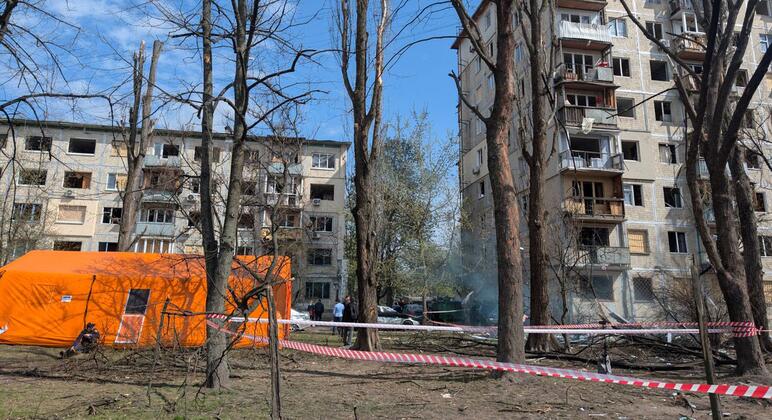
- Russian forces very likely maintained an exceptionally high strike tempo in early June, including the largest ballistic and hypersonic salvo of the war on the night of 1-2 June and over 2,400 drones and 77 missiles launched between 1-9 June, which killed 98 civilians and injured more than 680. (Confidence: high · REPORTED)
- I&W: Official or multilateral reporting of another 48‑hour period with more than 200 one‑way UAVs and multiple missile launches against Ukraine (0-14 days)
- I&W: A sustained 7‑day interval with daily Russian launches falling below 20 drones and no missiles in official reporting (0-14 days)
- Ukraine likely degraded Russian logistics and naval support in and around occupied Crimea during 6-13 June by striking a Russian military facility in Sevastopol’s Striletska Bay overnight on 11 June with a Neptune coastal defence missile and by repeatedly attacking the Armyansk, Henichesk and Chonhar crossings using mid‑range drones operated by the 1st Separate Assault Regiment. (Confidence: medium · ASSESSED)
- I&W: Commercial satellite imagery showing damaged storage facilities and sustained repair activity at Striletska Bay, Sevastopol (0-14 days)
- I&W: Verified reopening of full‑capacity traffic lanes at Armyansk, Henichesk and Chonhar without renewed strike reporting (0-14 days)
- Civilian harm remained high in May and early June: at least 274 civilians were killed and 1,763 injured in May 2026, a 93 percent increase year‑on‑year and 23 percent month‑on‑month, with short‑range drones the primary cause near the frontline; Russian strikes between 1-9 June killed 98 and injured more than 680. (Confidence: medium · REPORTED)
- I&W: Next UN HRMMU monthly update shows casualties at or above May 2026 levels (1-3 months)
- I&W: Month‑on‑month casualty totals drop below April 2026 baselines in UN reporting (1-3 months)
- Nuclear safety risks in Ukraine are high, given a reported drone strike on the Chornobyl Centralised Spent Nuclear Fuel Storage Facility, multiple losses of off‑site power at Chornobyl and the Zaporizhzhia Nuclear Power Plant, and persistent military activity at all nuclear sites. (Confidence: high · REPORTED)
- I&W: IAEA or official updates report additional loss‑of‑off‑site‑power events at ZNPP or Chornobyl (0-14 days)
- I&W: A 90‑day period without reported security incidents or LOOPs at Ukrainian nuclear sites (1-3 months)
- The front remains contested and fluid at the tactical level: Russia is likely sustaining assaults in the south and east while suffering roughly 30,000 casualties a month and refusing a ceasefire, as Ukraine demonstrates localised counterattack capacity near Stepnohirsk. (Confidence: medium · ASSESSED)
- I&W: Geolocated reporting of continued Russian assaults and limited positional changes around Donetsk and Zaporizhzhia (0-14 days)
- I&W: Authoritative announcements or corroborated reporting of an operational pause or any agreed ceasefire terms by Russia (1-3 months)
Outlook & scenarios
High air‑attack tempo, largely static front (60%)
Russian forces continue frequent drone and missile strikes comparable to 1-9 June while ground lines remain broadly unchanged, with attritional fighting in Donetsk and Zaporizhzhia and periodic local Ukrainian counterattacks. Civilian harm stays elevated relative to spring baselines.
Ukrainian interdiction strains Crimea corridor and Sevastopol support (35%)
Follow‑on strikes against Armyansk, Henichesk and Chonhar, together with further attacks in Sevastopol, degrade Russian logistics into southern Ukraine and complicate Black Sea Fleet sustainment, forcing Russia to divert air defences and reroute traffic with measurable delays.
Nuclear‑site incident risk materialises (20%)
Another drone or munitions event at a nuclear‑related facility, or additional losses of off‑site power at ZNPP or Chornobyl, triggers emergency procedures, heightened IAEA engagement and temporary evacuations in nearby settlements.
Recommendations
- Prioritise imagery collection over Sevastopol’s Striletska Bay to assess the 11 June strike’s effects and any rapid repair activity; cross‑cue with harbour traffic patterns for follow‑on disruption assessment.
- Maintain a standing collection plan on the Armyansk, Henichesk and Chonhar crossings to quantify lane closures, queue lengths and repair cycles, and to detect fresh strike damage or air‑defence deployments.
- Correlate NASA FIRMS thermal detections with known strike windows and task time‑dominant SAR collects along the Donetsk, Zaporizhzhia contact line to refine the daily battle rhythm picture.
- Track UN HRMMU monthly casualty releases and sub‑national incident reporting from Zaporizhzhia, Kyiv and Luhansk to update risk to civilians and inform protection and humanitarian planning.
- Establish a nuclear safety watch function that flags any reported loss‑of‑off‑site‑power events or security incidents at ZNPP and Chornobyl for immediate escalation and partner coordination.
- Exploit open sources linked to Ukraine’s 1st Separate Assault Regiment for indicators of drone types, payloads and target sets to anticipate future interdiction focus along the Crimea land corridor.
- Monitor Kremlin and occupation‑authority statements for logistics or fuel‑supply mitigation measures in Crimea to gauge the persistence of interdiction effects.
Confidence & uncertainty
Overall confidence is medium. Several core judgments rest on high‑reliability official and multilateral reporting on Russian strike tempo, civilian casualties and nuclear‑site risks. Assessments on the effects of Ukrainian strikes on Sevastopol and Crimea crossings draw on major media and defence trade reporting without full independent corroboration, and front‑line dynamics reflect mixed open reporting. Key uncertainties include the durability of Russian air‑attack rates, the scale of damage in Striletska Bay, and how quickly Russia can adapt logistics around Armyansk, Henichesk, Chonhar.
Alternative analysis (red cell)
Reporting indicates increased strike activity, incidents at nuclear sites, and ongoing localized combat, but the most consequential numeric and causal claims in the key judgments are not sufficiently substantiated by the cited items. Large aggregate figures (largest salvo, 2,400+ drones/77 missiles, 30,000 casualties/month, and precise May casualty totals) rely on aggregation or single-source assertions without the telemetry, imagery, or primary-source verification required to be confident. Pending telemetry, forensics, and independent aggregated data, the prudent estimate is that activity and incidents rose, but the scale and operational effects remain uncertain.
Intelligence gaps
- [EEI 1.2 · UNCOVERED] Confirmed movement of frontline ambulance evacuation routes beyond previous coordinates. Recommended collection: SIGINT/medical logistics
- [EEI 2.1 · UNCOVERED] Concentration of assault battalions (≥3 mechanized companies) within 15km of contact line. Recommended collection: SIGINT/UAV
- [EEI 2.2 · UNCOVERED] Unusual artillery stockpile buildup at forward depots exceeding 30-day consumption rates. Recommended collection: overhead imagery/logistics
- [EEI 3.1 · UNCOVERED] Bridge structural damage assessments at 5 key Dnieper River crossings via multispectral imaging. Recommended collection: overhead imagery
- [EEI 3.2 · UNCOVERED] Rail traffic volume changes at Kryvyi Rih and Pokrovsk rail hubs compared to 7-day baseline. Recommended collection: commercial freight data
Cited sources
[1] UK Government · Russia is not serious about peace and its war against Ukraine is increasingly unsustainable: UK statement to the OSCE (A) · sha256:34a36ee5785c [2] Defense Express · Ukraine Strikes Sevastopol: Neptune Missile Hits russian Weapons Depot in Striletska Bay (Video) | Defense Express (B) · sha256:c83bfec8e3af [3] Business Insider · Ukrainian troops are crippling Russia's supply bridges by slamming drones repeatedly into the asphalt (B) · sha256:82783e3f23ee [4] United Nations · Ukraine civilian casualty toll in May highest in four years, UN monitors say (A) · sha256:e04a52506182 [5] UK Government · UK statement on Ukraine to IAEA Board of Governors - June 2026 (A) · sha256:bb7e18a4f004 [6] Ouest-France · L'Ukraine est-elle vraiment en train de reprendre la main face à la Russie ? (B) · sha256:c3aff47afea0
Source content hashes were computed at collection time; the cited text is preserved unmodified for the life of this product.
Red cell review: PARTIAL DISSENT — KJ-3 downgraded HIGH→MEDIUM (estimative_mismatch)
TLP:CLEAR