TLP:CLEAR · Disclosure is not limited.
Russia-Ukraine front line: situation update, 10-17 June 2026
Time window: Last 7 days · Audience: General analyst · Type: Situation report · DTG: 2026-06-17 07:14Z · Overall confidence: MEDIUM
BLUF
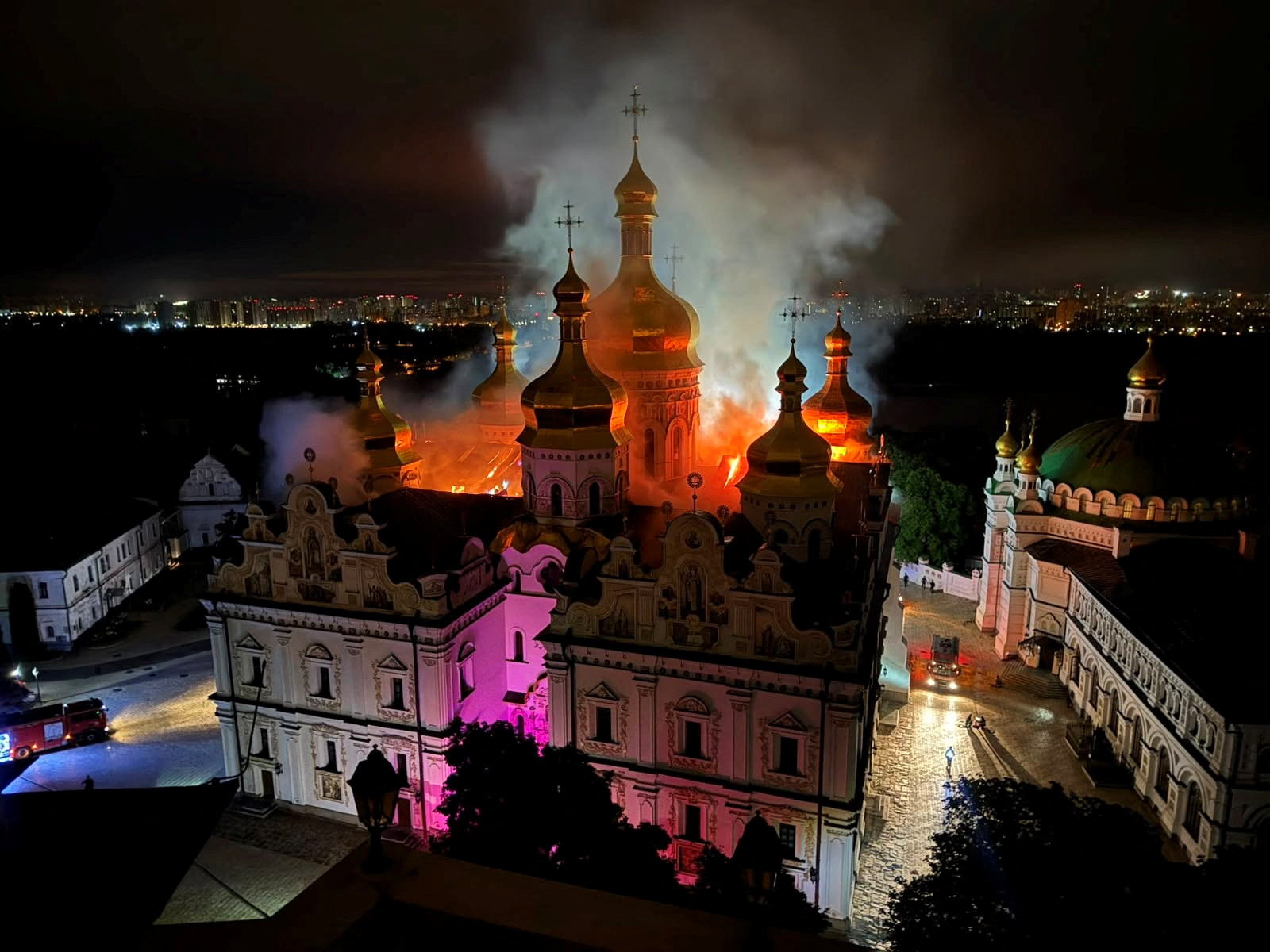
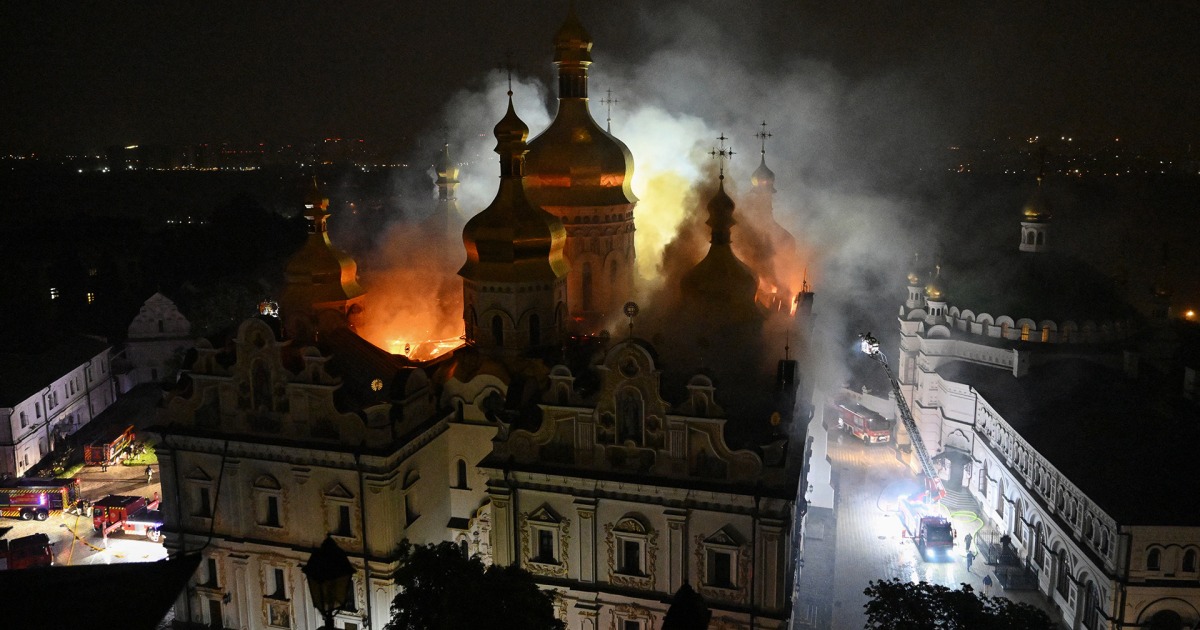
Russia very likely maintained a high-intensity long-range strike tempo over 15-17 June, inflicting civilian casualties and damaging Kyiv-Pechersk Lavra and a concert hall in Dnipro. Ukraine likely sustained deep strikes that are straining Russian logistics in Crimea and reportedly damaged a Moscow oil refinery, while mutually conflicting claims mean there is a roughly even chance the front line has not materially shifted.
Executive summary
Russian forces very likely conducted mass missile and drone raids across Ukraine centred on 15 June, with at least four killed and about 30 wounded in Kyiv, five rescue workers killed in Kharkiv, severe damage at the Kyiv-Pechersk Lavra’s Dormition Cathedral and heavy damage to Dnipro’s Organ and Chamber Music Hall. A suspected Russian drone strike injured at least seven people in Zaporizhzhia on 17 June. Kyiv officials reported 140,000 residents without electricity following the attacks. Ukraine likely continued a coordinated deep-strike campaign that has disrupted fuel supply and logistics in occupied Crimea, triggered fuel and food shortages and panic at petrol stations, and reportedly damaged an oil refinery in Moscow. Claims of ground advances are contradictory, citing Russian pushes near Kostiantynivka, Pokrovsk, Kupiansk and Sumy and Ukrainian gains in Zaporizhzhia, so net territorial change this week remains unclear. G7 messaging and fresh UK sanctions and funding commitments indicate Western backing will remain firm in the near term.
Change from previous assessment
New reporting since the prior brief confirms extensive damage to Kyiv-Pechersk Lavra’s Dormition Cathedral and to Dnipro’s Organ and Chamber Music Hall during the 15 June raids, with Kyiv authorities citing 140,000 residents without electricity and updated casualty figures in Kyiv and Kharkiv. Additional injury reports from a suspected Russian drone strike in Zaporizhzhia on 17 June and a reported Ukrainian drone hit on a Moscow oil refinery expand the strike picture. Claims of Russian advances and Ukrainian counter-pushes remain mutually incompatible, so the assessment of no clear net front-line change is retained with low confidence. Western political backing was reinforced by G7 unity messaging and new UK sanctions and commitments.
Key judgments
- Russia very likely sustained high-intensity long-range strikes between 15 and 17 June, killing civilians in Kyiv and Kharkiv and heavily damaging cultural sites in Kyiv and Dnipro, with additional injuries reported in Zaporizhzhia on 17 June. (Confidence: high · REPORTED)
- I&W: Another nationwide Russian combined missile-drone raid documented by Ukrainian Air Force tallies with double-digit missile launches and large Shahed swarms. (0-14 days)
- I&W: A sustained two-week pause in long-range strikes on Kyiv, Kharkiv and Dnipro reflected in the absence of overnight air-raid alerts and official intercept reports. (0-14 days)
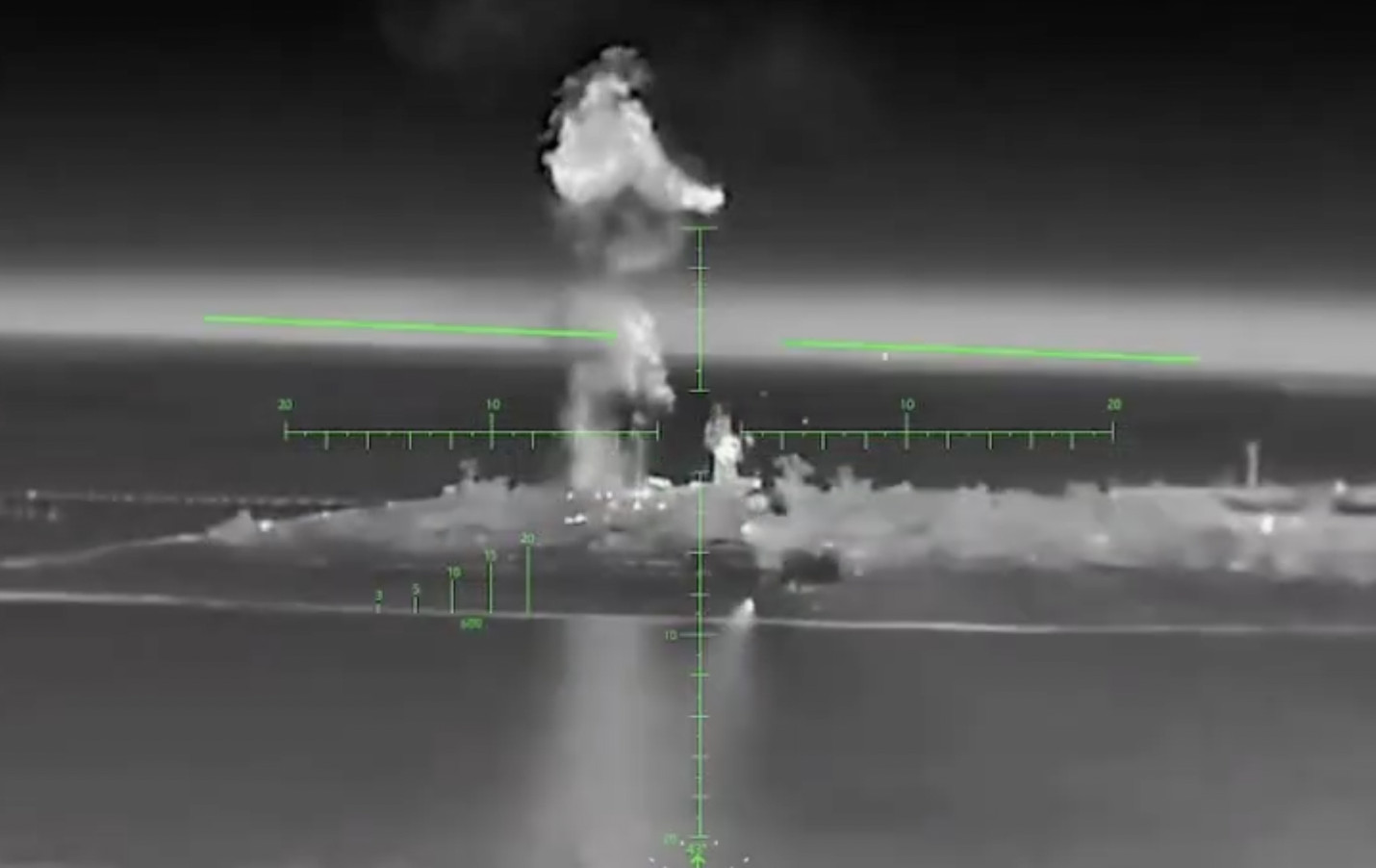
- Ukraine likely sustained a coordinated deep-strike campaign that is imposing acute fuel and supply stress in Russian-occupied Crimea and is reaching into Russia proper, including a reported hit on a Moscow oil refinery on 16 June. (Confidence: medium · ASSESSED)
- I&W: Additional verified strikes on Crimean fuel storage or rail assets with geolocated fire imagery in Sevastopol, Simferopol or Dzhankoi. (0-14 days)
- I&W: Occupation authorities announce normal petrol deliveries and lift sale limits across major Crimean cities for at least two consecutive weeks. (1-3 months)
- There is a roughly even chance the front line saw no material net change between 10 and 17 June, given mutually incompatible claims of Russian advances around Kostiantynivka, Pokrovsk, Kupiansk and Sumy and Ukrainian gains in Zaporizhzhia, alongside rhetoric that Ukraine has seized or regained the initiative. (Confidence: low · ASSESSED)
- I&W: No confirmed geolocated control changes published by credible OSINT outlets in the Kostiantynivka, Pokrovsk, Kupiansk, Sumy or Zaporizhzhia sectors. (0-14 days)
- I&W: Geolocated footage or official communiqués confirm capture or recapture of settlements in any of the named sectors. (0-14 days)
- Western political support for Ukraine is very likely to remain firm in the near term, reflected in G7 unity statements, the UK Prime Minister’s call for sustained backing, and new UK designations and sanctions targeting Russian procurement and shipping networks, alongside sizeable UK financial commitments. (Confidence: medium · ASSESSED)
- I&W: Additional G7 or UK Russia sanctions packages or publicised disbursements under existing UK commitments are announced. (1-3 months)
- I&W: Public splits within the G7 on Ukraine support or a pause in UK Russia sanctions activity for a month or more. (1-3 months)
Outlook & scenarios
Strike-for-strike continuity with largely static lines (60%)
Russia maintains frequent mass drone and missile raids, producing periodic civilian casualties and damage to cultural sites, while Ukraine continues intercepts and deep strikes. Front-line control remains broadly unchanged as both sides prioritise long-range effects over costly ground assaults.
Deep-strike pressure degrades Russian logistics in the south (50%)
Ukrainian attacks on depots, rail and road traffic into Crimea continue, prolonging fuel shortages and complicating resupply to Russian forces in southern Ukraine. Reported strikes inside Russia, including on energy infrastructure, persist, forcing Russia to divert air defences and logistics.
Localised ground gains without operational breakthrough (40%)
Russia achieves incremental advances around Kostiantynivka, Pokrovsk, Kupiansk or Sumy, or Ukraine registers tactical gains in the Zaporizhzhia sector, but neither side converts these into an operational exploit. The information space remains contested with competing claims.
Wildcard: a verified, sector-level front shift (20%)
Credible geolocated evidence confirms a sudden Ukrainian or Russian breach that compels a short-notice repositioning on a named axis. The shift would reshape local logistics demands and casualty patterns and could trigger urgent political messaging from capitals.
Recommendations
- Prioritise geolocation and temporal verification of claimed ground advances around Kostiantynivka, Pokrovsk, Kupiansk, Sumy and in Zaporizhzhia; maintain a daily control-change log tied to visual evidence.
- Build a standing OSINT collection on Crimean fuel availability: collate price boards, rationing notices and queue-length videos from major towns to track stress on Russian logistics over time.
- Track Russian long-range strike patterns and Ukrainian intercept claims on a daily basis; categorise munitions used and map impact sites, with a watchlist for protected cultural heritage such as Kyiv-Pechersk Lavra.
- Task an alert for reported strikes on Russian energy infrastructure, including refineries and depots, and cross-reference with subsequent throughput or supply announcements to assess impact longevity.
- Monitor G7 and UK sanctions outputs and funding announcements for Ukraine; map newly designated entities and GRU-linked procurement nodes against known Russian military supply chains to anticipate mitigation routes.
- Prepare quick-turn talking points for leadership on humanitarian effects of major raids in Kyiv, Kharkiv and Dnipro, including casualty updates and power restoration status, sourced to official statements.
Confidence & uncertainty
Confidence is high that Russia conducted mass long-range strikes centred on 15 June that caused casualties and damaged major cultural sites, supported by multiple credible media and official statements. Confidence is medium that Ukraine’s deep strikes are imposing sustained logistics stress in Crimea and have reached a Moscow refinery, given corroborating but varied-source reporting. Confidence is low on net front-line movement because claims are contradictory and largely from less reliable or partisan channels without independent geolocation. Key uncertainties include the durability of Crimean fuel disruption, the true scale of damage to Russian energy assets, and whether reported local advances translate into durable control.
Alternative analysis (red cell)
Open reporting credibly indicates Ukrainian strikes have degraded some fuel and logistics nodes in Crimea and that both sides claim local battlefield successes; however, evidence that Ukraine is conducting a coordinated deep‑strike campaign into Russia proper (including a Moscow refinery strike) is thin and rests on lower‑grade or single‑source reporting. Likewise, battlefield claims from both sides are largely E1 and contradictory, so it is equally plausible that localized positional changes occurred without clear net territorial shifts. Finally, while public diplomatic statements and sanctions actions show current Western support, the durability of that support against domestic political and fiscal pressures is not demonstrated by the provided claims.
Intelligence gaps
- [EEI 1.1 · UNCOVERED] Geotagged UAV/satellite imagery showing abandoned defensive positions or newly occupied settlements. Recommended collection: overhead imagery
- [EEI 1.2 · UNCOVERED] Confirmed movement of frontline ambulance evacuation routes beyond previous coordinates. Recommended collection: SIGINT/medical logistics
- [EEI 2.1 · UNCOVERED] Concentration of assault battalions (≥3 mechanized companies) within 15km of contact line. Recommended collection: SIGINT/UAV
- [EEI 2.2 · UNCOVERED] Unusual artillery stockpile buildup at forward depots exceeding 30-day consumption rates. Recommended collection: overhead imagery/logistics
- [EEI 3.1 · UNCOVERED] Bridge structural damage assessments at 5 key Dnieper River crossings via multispectral imaging. Recommended collection: overhead imagery
- [EEI 3.2 · UNCOVERED] Rail traffic volume changes at Kryvyi Rih and Pokrovsk rail hubs compared to 7-day baseline. Recommended collection: commercial freight data
Cited sources
[1] nbcnews.com · Fire engulfs centuries-old Ukrainian monastery after deadly strikes (A) · sha256:c2456c87f61d [2] ynetnews.com · Massive Russian attack hits Kyiv, setting 1,000-year-old cave monastery ablaze (A) · sha256:6455821063fd [3] Atlantic Council · Russia escalates war on Ukrainian heritage and national identity (C) · sha256:66f4cc8378f4 [4] aljazeera.com · Russian drone strikes residential building in Ukraine (A) · sha256:c871029b502c [5] Al Jazeera · ‘Island surrounded by war’: Crimeans panic amid Ukrainian attacks (A) · sha256:30a0eceafd8b [6] Kyiv Post · EXPLAINED: Ukraine’s Mid-Range Drone Strikes vs. Russia – Damage Done and What’s Next (B) · sha256:5b2fc07eefc4 [7] understandingwar.org · Russian Offensive Campaign Assessment, June 16, 2026 (B) · sha256:81072189f698 [8] الحرب الثالثة · روسيا تتقدم في كوستيانتينيفكا وبوكروفسك وكوبيانسك وسومي | أوكرانيا تتقدم في زابوروجي (E) · sha256:64af3b11fd05 [9] UKRAINE TODAY · ⚡️UKRAINE LAUNCHED AN OFFENSIVE FROM 4 DIRECTIONS! A FEROCIOUS STRIKE! ZELENSKY SEIZED INITIATIVE! (E) · sha256:f609d3d30e28 [10] RussKaya · Russia’s Spring Offensive COLLAPSES? Ukraine Seizes the Battlefield Initiative #ImperialRussia (E) · sha256:8902cdd4de59 [11] Global News Vault · Ukraine Shattered Russia's Breakthrough Plan in Days.. 17 JUNE 2026 (B) · sha256:2a0d6ed6b4c3 [12] Verdict Revealed · Ukraine Just Found Russia’s Biggest Weakness… And the Consequences Could Be Massive (B) · sha256:038ddc5eae35 [13] gov.uk · PM meeting with President Zelenskyy of Ukraine: 16 June 2026 (A) · sha256:f8a70670e8fd [14] UK Government · UK clamps down on shady networks supplying Putin’s illegal war with new sanctions package (A) · sha256:cd7ab342d4a5 [15] UK Government · Russia: list of designations and sanctions notices (A) · sha256:d6bfb4613a1a [16] gov.uk · List of Russia sanctions designations, 16 June 2026 (A) · sha256:b7ba61e1151a
Source content hashes were computed at collection time; the cited text is preserved unmodified for the life of this product.
Red cell review: PARTIAL DISSENT
TLP:CLEAR