TLP:CLEAR · Disclosure is not limited.
Russia-Ukraine Front Line: Strike Activity and Unsettled Territorial Claims
Time window: Last 7 days · Audience: General analyst · Type: Situation report · DTG: 2026-10-24 07:10Z · Overall confidence: MEDIUM
BLUF
Russian forces are likely to sustain strikes against Ukraine, while Ukrainian long-range attacks inside Russia are also likely to continue. Reports of Ukrainian gains in Donetsk remain contested, and the announced 27 October ceasefire in Oleshky is not evidence of a front-wide truce.
Executive summary
From the evening of 23 October through the morning of 24 October, Ukraine’s Air Force Command reported 126 Russian strike and decoy drones launched against Ukraine, with 101 targets intercepted or suppressed and impacts at 14 locations. Reports also describe Russian strikes in Kyiv and Kramatorsk, and Ukrainian drone attacks in Russia, including at Togliattikauchuk in Togliatti; damage at that plant has not been officially detailed. Ukrainian officials and the Institute for the Study of War report territorial gains in Donetsk, but their scale and attribution to Operation Vivaldi remain uncertain. Accounts of Starlink restrictions and conditions in Oleshky conflict. Russia and the US have discussed resuming trilateral talks, while a reported local ceasefire in Oleshky is due to begin on 27 October.
Change from previous assessment
Since the 23 October brief, reporting adds the 23-24 October Russian drone attack, including 126 strike and decoy drones and impacts at 14 locations, as well as reports of attacks in Togliatti, Oryol, Moscow and Rostov. The territorial assessment now includes an Institute for the Study of War estimate of Ukrainian net gains since 1 September, raising the assessment of some Ukrainian gains while leaving confidence low on Operation Vivaldi’s specific results. Starlink restrictions remain contested. The reported 27 October ceasefire in Oleshky is a new local development, not evidence of a front-wide truce.
Key judgments
- Russian forces are likely to continue long-range attacks against Ukraine over the next 14 days. Ukraine’s Air Force Command reported 126 strike and decoy unmanned aerial systems launched from 18:00 on 23 October through the morning of 24 October, with 101 targets intercepted or suppressed and impacts at 14 locations. A Russian aerial strike damaged a home in Kyiv’s Obolonskyi district and injured two people; Russian tactical aircraft also dropped three FAB-250 UMPK bombs on a residential area of Kramatorsk on 23 October, killing one civilian and wounding six. The reported cumulative number of Russian attacks on Ukraine’s energy infrastructure is unsettled: Zelenskyy cited more than 170 since 11 October, while another Ukrainian government statement counted 86 as of 21 October. (Confidence: medium · ASSESSED)
- I&W: Confirms if Ukraine’s Air Force Command reports another overnight Russian attack involving at least 100 strike and decoy drones. (0-14 days)
- I&W: Breaks if no Russian mass drone or missile attack against Ukraine is reported during the next 14 days. (0-14 days)
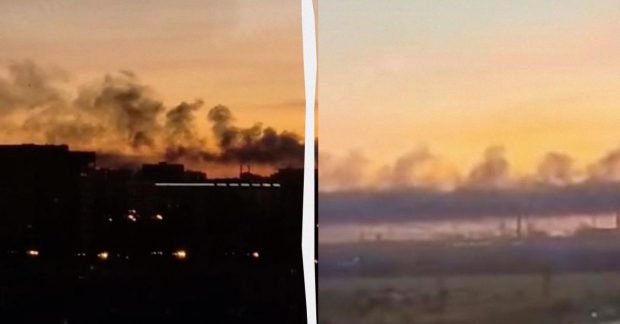
- Ukraine is likely to continue long-range attacks inside Russia over the next 14 days, although damage at some reported targets remains unverified. Reports describe a drone attack and a fire at Togliattikauchuk in Togliatti, Samara Oblast, a reported strike on the Proton plant in Oryol, and a Ukrainian drone raid that temporarily closed all four international airports in Moscow. Togliattikauchuk supplies about 25 per cent of Russia’s synthetic rubber market, but no official account of the strike’s consequences was available. Attribution of the Oryol strike is disputed: the regional governor attributed it to Ukrainian missiles, while another report did not identify the attacker. (Confidence: medium · ASSESSED)
- I&W: Confirms if another Ukrainian-attributed attack prompts a temporary airport closure in Moscow or a confirmed impact at a named Russian industrial site. (0-14 days)
- I&W: Breaks if no long-range attack inside Russia is reported during the next 14 days and Russian authorities report no associated airport closures or industrial damage. (0-14 days)
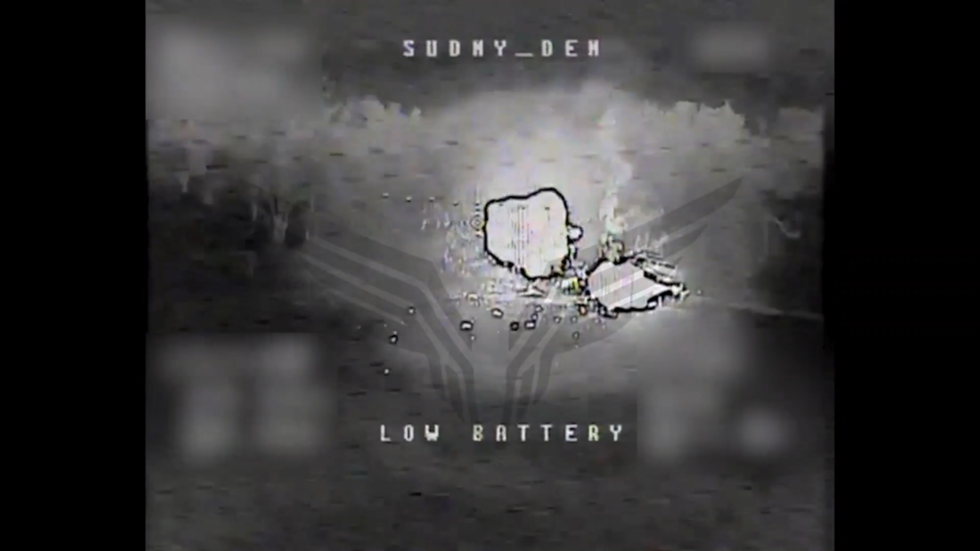
- Ukraine’s Starlink and Starshield restrictions were still affecting some drone operations in reports published on 22 and 23 October, but the service’s status at the end of the reporting period remains unresolved. Ukrainian defence ministry sources and a drone commander called Flint reported connection losses when drones reached about 161 kilometres per hour. Trump said the service had been restored, while Zelenskyy said restrictions remained and that full restoration was expected within 48 to 72 hours. A social media report claiming service had resumed at higher speeds does not resolve the disagreement. (Confidence: medium · ASSESSED)
- I&W: Confirms continued restrictions if Ukrainian defence sources or drone operators report connection loss at speeds above 161 kilometres per hour. (0-14 days)
- I&W: Breaks if Ukrainian defence sources and front-line drone operators confirm successful service tests above 161 kilometres per hour without connection loss. (0-14 days)
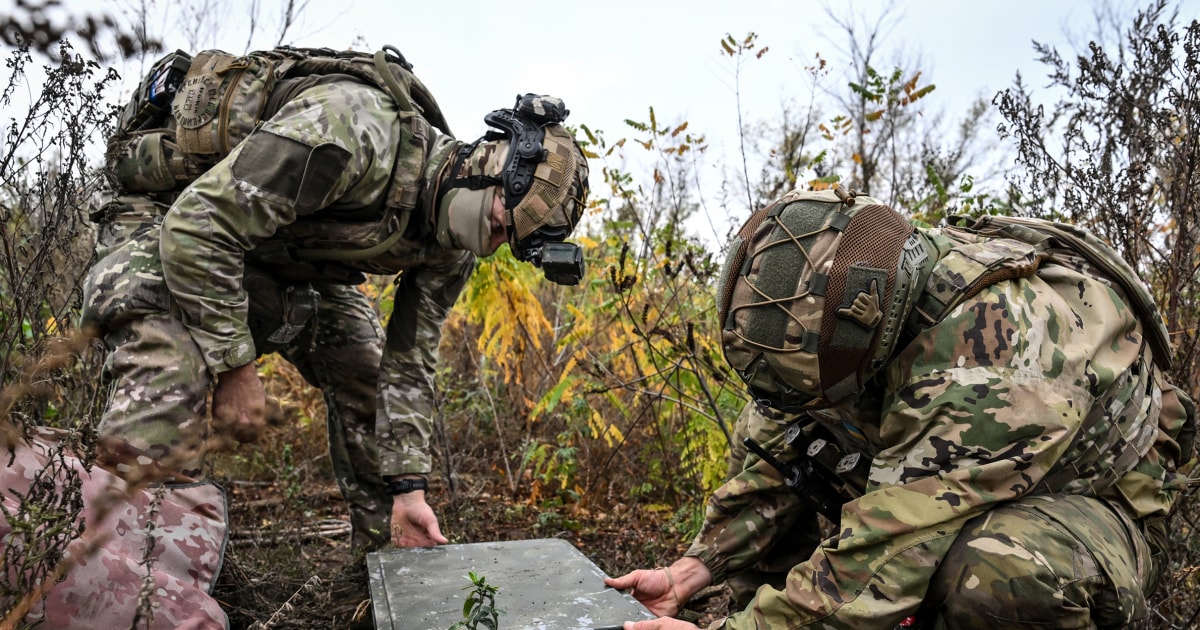
- Ukraine likely made some net territorial gains since 1 September, but the scale and the claimed results of Operation Vivaldi in Donetsk remain unverified. The Institute for the Study of War assessed a Ukrainian net gain of 241 square kilometres over that period; Ukrainian officials separately claimed that Operation Vivaldi reclaimed more than 100 square miles and 16 settlements. Russian General Valery Gerasimov described the operation as unsuccessful, while Ukrainian Brigadier General Andrii Biletskyi claimed heavy Russian losses and said the operation prevented an encirclement near Sloviansk and Kramatorsk. The competing casualty claims are not independently established. (Confidence: low · ASSESSED)
- I&W: Confirms if dated territorial mapping or geolocated imagery verifies additional Ukrainian-held settlements in eastern Donetsk and a net gain since 1 September. (0-14 days)
- I&W: Breaks if dated mapping or geolocated imagery shows no net Ukrainian gain since 1 September or verifies Russian recapture of the claimed settlements. (0-14 days)
- A ceasefire across the full Russia-Ukraine front line within the next 14 days is unlikely. Zelenskyy has offered a ceasefire along the contact line, and Moscow has announced plans to resume trilateral talks with Washington and Kyiv, but reports during this period describe continuing Russian attacks on Ukraine. The reported Oleshky ceasefire is limited to that settlement and does not establish agreement on a broader pause. (Confidence: medium · ASSESSED)
- I&W: Breaks if Russia and Ukraine publicly announce a front-wide ceasefire with a start date and monitoring arrangements. (0-14 days)
- I&W: Confirms if Ukrainian or Russian authorities report combat or strikes continuing after 27 October without a front-wide ceasefire announcement. (0-14 days)
- There is a roughly even chance that the announced Oleshky ceasefire begins on 27 October and permits civilian movement or aid delivery. The White House said Melania Trump and a representative had worked with Russian and Ukrainian leadership on local ceasefire terms, and a report attributed the 27 October start date to Russia’s Defence Ministry. Ukraine’s foreign minister described Oleshky as under a full Russian blockade, while the Kremlin said residents who wished to leave would be able to do so. These conflicting accounts leave implementation and access unconfirmed. (Confidence: low · ASSESSED)
- I&W: Confirms if reporting from Oleshky documents a pause in fighting and civilian departures or aid deliveries beginning on 27 October. (0-14 days)
- I&W: Breaks if fighting continues in Oleshky after 27 October and reporting documents blocked departures or no aid access. (0-14 days)
Outlook & scenarios
Continued long-range strike exchange (55%)
Russian forces repeat large drone attacks against Ukraine, while Ukraine continues raids inside Russia. Kyiv and Kramatorsk remain exposed to strikes, and reports of damage in Togliatti, Oryol, Moscow or Rostov require verification. No front-wide ceasefire takes hold.
Limited pause in Oleshky (25%)
The reported ceasefire begins on 27 October and allows some residents to leave or aid to enter Oleshky. Fighting elsewhere, including in Donetsk, continues because the announcement applies only to that settlement.
Donetsk gains become clearer (15%)
New territorial mapping or geolocated imagery verifies some Ukrainian gains in eastern Donetsk since 1 September. The evidence confirms limited local change rather than the full scale claimed for Operation Vivaldi.
Wildcard: renewed energy-system damage (5%)
A renewed Russian attack damages multiple Ukrainian energy facilities and leaves hundreds of thousands of people without power, matching the scale of the outage reported earlier in this period. The resulting civilian impact would be high even if the front line does not change.
Recommendations
- Reconcile the reported 86 and more than 170 energy-infrastructure attack counts before using either in trend analysis. Record each figure’s reporting date, definition of an attack and counting method.
- For the 27 October Oleshky ceasefire, track observable evidence of a halt in firing, civilian departures and aid deliveries. Treat statements by either side as unverified until movement or access is reported.
- Compare dated territorial maps and geolocated imagery for eastern Donetsk before assessing the claimed Operation Vivaldi gains. Keep the reported 16 settlements and casualty figures separate from independently verified control changes.
- Track Starlink and Starshield status through Ukrainian defence statements and reports from front-line drone operators. Distinguish a political announcement of restoration from a verified connection test above 161 kilometres per hour.
- Separate reports of attacks inside Russia from confirmed damage. Prioritise follow-up on the Togliattikauchuk fire and the disputed attribution and reported target in Oryol.
Confidence & uncertainty
Overall confidence is medium because major media and official reporting corroborate the occurrence of several attacks and the reported civilian impacts. Confidence is lower on precise strike totals and territorial changes, which rely heavily on statements by the belligerents. The Starlink status, attribution of the Oryol strike and conditions for movement in Oleshky remain disputed; the reported consequences of the Togliattikauchuk attack are not officially established.
Intelligence gaps
- [EEI 1.1 · PARTIAL] Geotagged UAV/satellite imagery showing abandoned defensive positions or newly occupied settlements. Recommended collection: overhead imagery
- [EEI 1.2 · UNCOVERED] Confirmed movement of frontline ambulance evacuation routes beyond previous coordinates. Recommended collection: SIGINT/medical logistics
- [EEI 2.1 · UNCOVERED] Concentration of assault battalions (≥3 mechanized companies) within 15km of contact line. Recommended collection: SIGINT/UAV
- [EEI 2.2 · UNCOVERED] Unusual artillery stockpile buildup at forward depots exceeding 30-day consumption rates. Recommended collection: overhead imagery/logistics
- [EEI 3.1 · UNCOVERED] Bridge structural damage assessments at 5 key Dnieper River crossings via multispectral imaging. Recommended collection: overhead imagery
- [EEI 3.2 · UNCOVERED] Rail traffic volume changes at Kryvyi Rih and Pokrovsk rail hubs compared to 7-day baseline. Recommended collection: commercial freight data
Red cell review: CONCUR WITH COMMENT
TLP:CLEAR