TLP:CLEAR · Disclosure is not limited.
Russia-Ukraine Front Line: Strike Exchange and Contested Battlefield Claims
Time window: Last 7 days · Audience: General analyst · Type: Situation report · DTG: 2026-08-24 19:24Z · Overall confidence: HIGH
BLUF
Russian long-range strikes on Ukraine and Ukrainian drone attacks inside Russia are continuing, with the 19 to 20 August attacks killing civilians in Kyiv and a reported 726 Ukrainian drones intercepted over mainland Russia, the Black Sea and the Sea of Azov on 17 to 18 August. Front-line reporting indicates active Ukrainian pressure but does not establish a decisive operational breakthrough. UK-Ukraine defence-technology cooperation is expanding and is likely to draw further Kremlin pressure.
Executive summary
Between 17 and 24 August 2026, Russian long-range attacks caused civilian deaths in Kyiv and Kryvyi Rih, while Ukrainian forces continued drone attacks inside Russia. Claims of Ukrainian territorial recovery and pressure near Oleksandrivka and the southern front contrast with thin, undated or older reporting on Russian proximity to Kostiantynivka and Ukrainian forces under pressure near Pokrovsk, leaving the front-line direction unresolved. The UK and Ukraine have formalised AI and SCALP-related cooperation, while the Kremlin continues warnings against Britain.
Change from previous assessment
Compared with the 23 August brief, the assessment raises confidence in the occurrence and continuation of Russian attacks on Ukrainian populated areas from medium to high, while retaining uncertainty over casualty totals. It lowers confidence in the front-line assessment from medium to low because the current supplied territorial claims are undated, unevenly sourced or offset by reports of Ukrainian forces under pressure. The brief adds a judgment on implementation of the newly documented UK-Ukraine AI and SCALP cooperation. The low-confidence assessment that deliberate Russian action against NATO remains unlikely is retained.
Key judgments
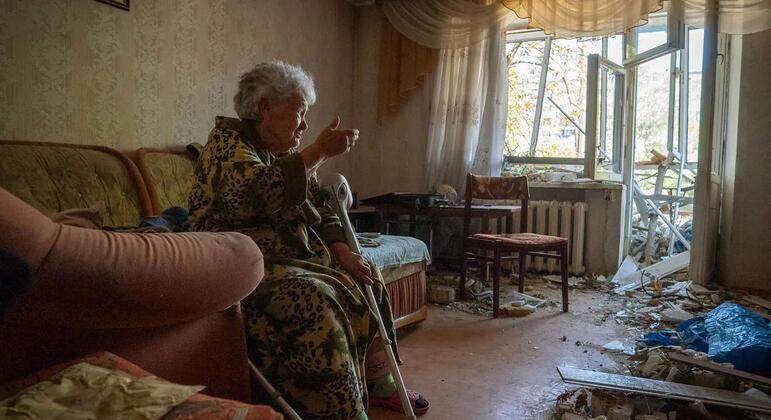
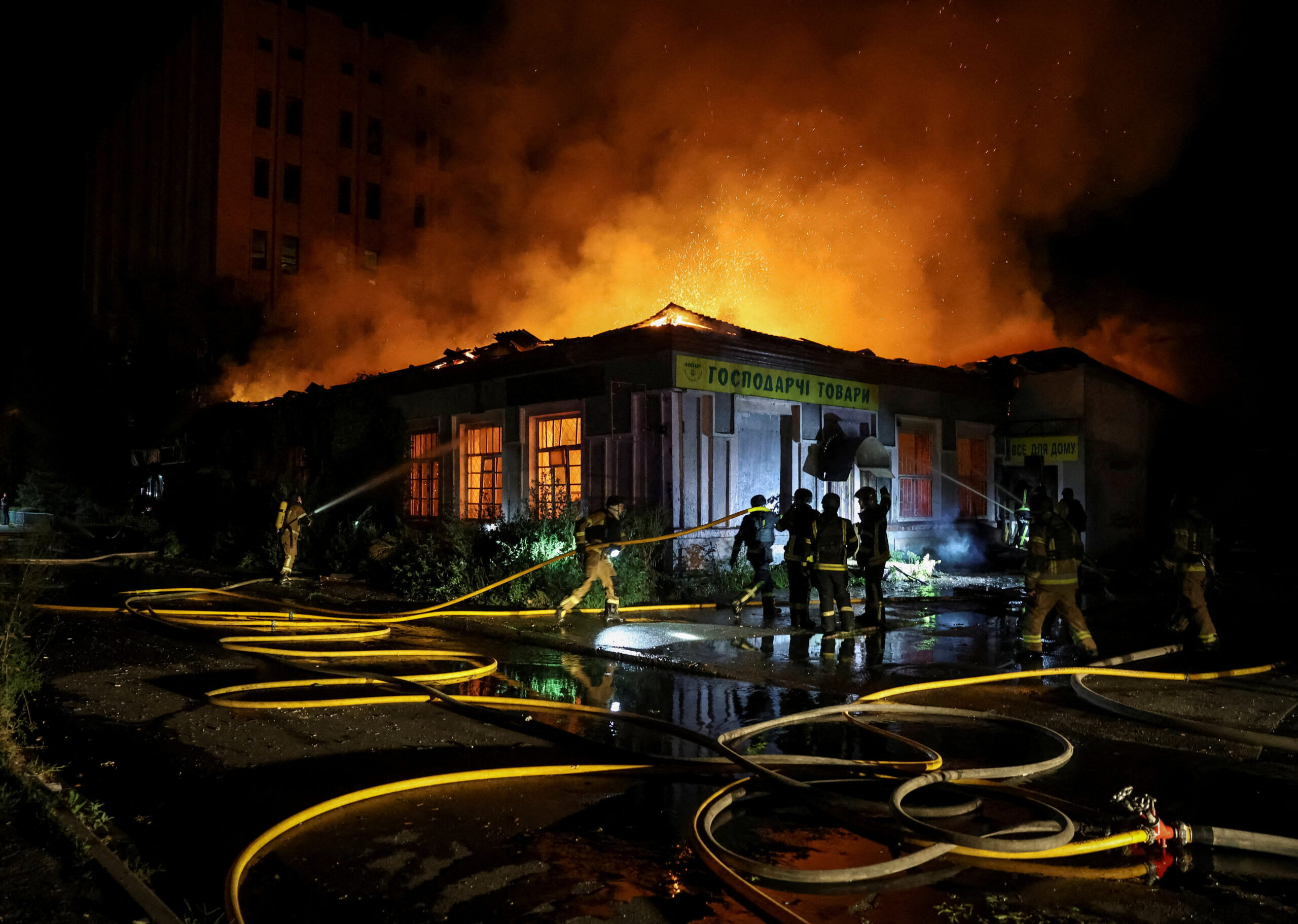
- Russian long-range strikes against Ukrainian populated areas are very likely to continue over the next 1 to 3 months, and ballistic missile and drone attacks will continue to expose reported gaps in Kyiv's air defences. Reporting records the 19 to 20 August mass missile attack, which killed at least 17 civilians, separate reporting of 17 killed and more than 40 injured in Kyiv, seven killed in a nine-storey apartment building in Solomianskyi district, and 16 killed with more than 130 injured at a shopping centre in Kryvyi Rih. The supplied reports do not resolve whether the casualty figures describe overlapping or separate incidents. (Confidence: high · ASSESSED)
- I&W: A further Russian ballistic missile or drone attack kills or injures civilians in Kyiv, Solomianskyi district, Kryvyi Rih or another Ukrainian city, with reporting from Ukrainian authorities and a multilateral or major-media source. (0 to 14 days)
- I&W: No Russian long-range strike on a populated Ukrainian area is reported for a continuous period of 1 to 3 months. (1 to 3 months)
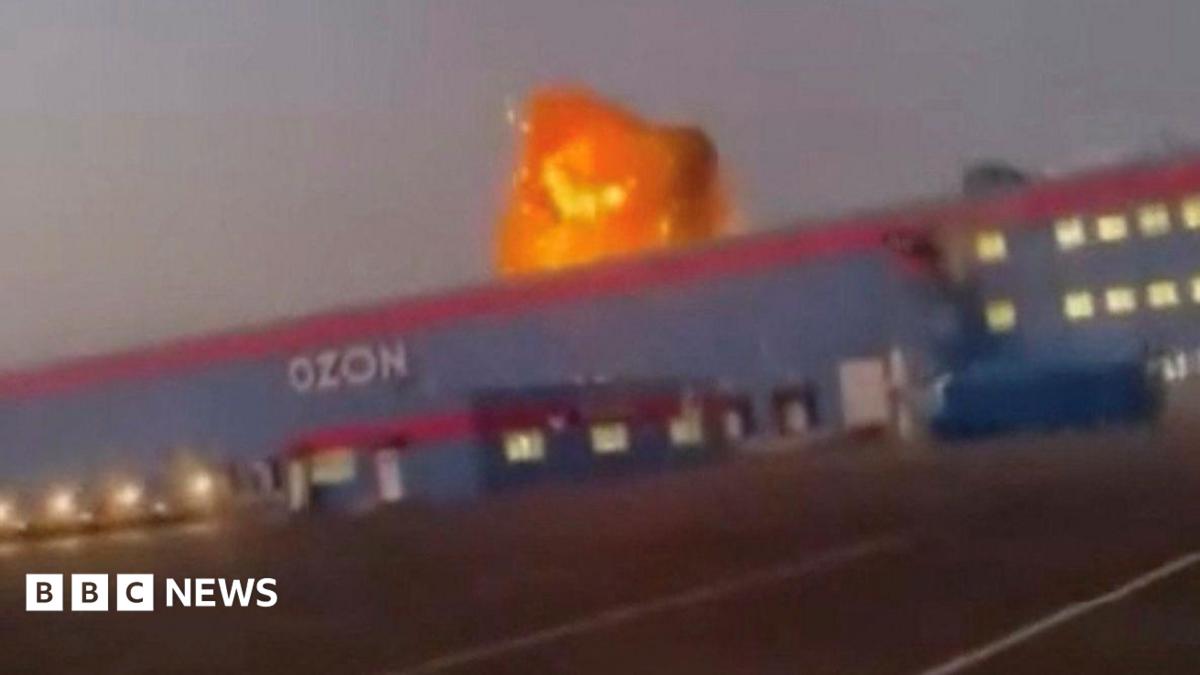
- Ukrainian forces are likely to sustain deep drone strikes against Russian energy, logistics and commercial infrastructure over the next 1 to 3 months, while the immediate effect on Russian battlefield operations is unlikely to be established. Reporting records several Ukrainian drone attacks inside Russia, Russian air-defence claims of 726 interceptions on 17 to 18 August, attacks affecting Ozon logistics facilities in southern Russia, damage and an operational halt at the Perm oil refinery, fuel shortages, and Vladimir Putin's acknowledgement that the bombing campaign is harming Russia's economy. The extent of damage and its direct effect on Russian combat operations remain contested. (Confidence: medium · ASSESSED)
- I&W: Russian reporting records another Ukrainian strike that closes or damages the Perm oil refinery, or causes fires and evacuations at Ozon facilities in Krasnodar, Dagestan, Stavropol or Adygea. (0 to 14 days)
- I&W: No further Ukrainian drone strike inside Russia is reported and the Perm refinery and named Ozon facilities resume normal operations without new disruption. (1 to 3 months)
- Ukraine is likely to retain local battlefield pressure near Oleksandrivka and on the southern front, but an operational breakthrough is not established in the supplied reporting over the next 1 to 3 months. The material includes claims that Ukraine reclaimed 745 square kilometres and 26 villages near Oleksandrivka, as well as reporting of a local counteroffensive in February 2026, near-total recapture of Dnipropetrovsk Oblast in March, and continued fighting around Novohryhorivka and Novoivanivka. These claims are offset by reporting that Ukrainian forces near Pokrovsk were significantly outnumbered and by a low-confidence report placing Russian troops near Kostiantynivka. The territorial claims are undated, unevenly sourced or contested, so confidence in the current front-line balance is low. (Confidence: low · ASSESSED)
- I&W: Geolocated reporting confirms that Ukrainian forces hold the claimed villages near Oleksandrivka and extend gains from the southern front into additional named settlements in Dnipropetrovsk Oblast. (0 to 14 days)
- I&W: Russian forces are verified to capture and hold a named settlement on the Kostiantynivka, Pokrovsk or southern front axes. (0 to 14 days)
- The UK-Ukraine defence-technology partnership is very likely to move into implementation over the next 1 to 3 months. Official UK reporting states that President Volodymyr Zelenskyy and Prime Minister Andy Burnham signed the AI Partnership in Kyiv, that the UK will access Ukraine's Avengers AI Labs, that a first trial is approaching at a UK defence site, and that the UK has agreed to release information on British components for the SCALP missile. The partnership also includes work on AI-enabled armed forces and low-power AI chips for drones, robotics and autonomous systems. (Confidence: high · ASSESSED)
- I&W: The first trial technology is publicly confirmed as deployed at a UK defence site, or SCALP component information is released for Ukrainian production or assembly. (1 to 3 months)
- I&W: The UK or Ukraine announces suspension of the AI Partnership or postpones both the UK defence-site trial and SCALP technical cooperation. (1 to 3 months)
- A deliberate Russian attack on NATO territory is unlikely over the next 1 to 3 months, although Russian coercive and ambiguous activity directed at Britain and NATO remains a low-confidence warning. The supplied reporting includes Kremlin and Russian embassy warnings against Britain, an armed drone at Leipzig Airport that investigators linked to Russia, repeated alleged Russian violations of NATO airspace, and a single-source US intelligence assessment of a possible limited attack on a NATO member. The reporting is thin and relies substantially on think-tank or non-government sourcing, so it does not establish Russian intent to launch a deliberate attack. (Confidence: low · ASSESSED)
- I&W: Kremlin warnings remain non-specific and no Russian kinetic attack on NATO territory is verified. (0 to 14 days)
- I&W: NATO or German authorities formally attribute a new Russian drone or missile incident in Germany, including at Leipzig Airport, or another verified Russian strike occurs on NATO territory. (0 to 14 days)
Outlook & scenarios
Sustained strike exchange without a decisive front-line shift (55%)
Russian missile and drone attacks on Ukrainian cities continue, while Ukrainian drones continue targeting Russian energy and logistics infrastructure. Ukraine retains local pressure near Oleksandrivka and the southern front, but available reporting does not confirm a breakthrough.
Ukrainian deep strikes widen Russian economic disruption (25%)
Repeated attacks on refineries, Ozon logistics facilities and other infrastructure produce additional fuel or distribution problems inside Russia. Moscow expands state control over poorly protected critical infrastructure, while the battlefield effect remains difficult to establish.
Russian forces secure a local front-line advance (10%)
Russian forces convert pressure near Kostiantynivka or Pokrovsk into a verified settlement capture. Ukrainian forces continue defending positions while claims of wider Ukrainian territorial recovery lose credibility.
Low-probability, high-impact wildcard: NATO incident (10%)
A verified Russian drone or missile incident affecting NATO territory, including Germany, follows existing warnings against Britain and reporting about the Leipzig Airport drone. The incident prompts a sharp political response and raises the risk of direct confrontation without necessarily producing a deliberate Russian attack on NATO.
Recommendations
- Maintain a 14-day incident ledger for Russian strikes on Kyiv, Solomianskyi district, Kryvyi Rih and other populated Ukrainian locations. Reconcile casualty totals by date, location, weapon type and whether reports describe the same incident.
- Prioritise collection on Ukrainian strikes against the Perm oil refinery and Ozon facilities in Krasnodar, Dagestan, Stavropol and Adygea. Separate confirmed physical damage, temporary closures, fires and evacuations from official claims of wider economic effect.
- Treat the 745 square kilometre and 26-village territorial claims near Oleksandrivka as unconfirmed until current geolocated reporting establishes the locations, dates and continued Ukrainian control. Track named positions near Kostiantynivka, Pokrovsk and the southern front separately.
- Monitor implementation of the UK-Ukraine AI Partnership and SCALP cooperation. Flag confirmation of the UK defence-site trial, release of SCALP component information or work on AI-enabled drones as evidence of movement from political agreement to operational support.
- Maintain a dedicated escalation watch for Russian activity affecting Britain, Germany or other NATO states. Escalate analytic attention if NATO or German authorities attribute a new incident to Russia, particularly one involving an armed drone or missile near military or logistics facilities.
Confidence & uncertainty
Overall confidence is high for the main reported developments because the recent Russian attacks on Ukraine are supported by multilateral, official-government and major-media reporting, the Ukrainian drone campaign is reflected in multiple current reports, and the UK-Ukraine partnership is documented in official UK statements. Confidence is lower for casualty reconciliation, the extent of damage to Russian infrastructure, current territorial control and the NATO attack warning, which rely on contested, undated or single-source reporting. The headline confidence therefore reflects strong corroboration of the principal events, not uniform confidence across every analytic inference.
Intelligence gaps
- [EEI 1.1 · UNCOVERED] Geotagged UAV/satellite imagery showing abandoned defensive positions or newly occupied settlements. Recommended collection: overhead imagery
- [EEI 1.2 · UNCOVERED] Confirmed movement of frontline ambulance evacuation routes beyond previous coordinates. Recommended collection: SIGINT/medical logistics
- [EEI 2.1 · UNCOVERED] Concentration of assault battalions (≥3 mechanized companies) within 15km of contact line. Recommended collection: SIGINT/UAV
- [EEI 2.2 · UNCOVERED] Unusual artillery stockpile buildup at forward depots exceeding 30-day consumption rates. Recommended collection: overhead imagery/logistics
- [EEI 3.1 · UNCOVERED] Bridge structural damage assessments at 5 key Dnieper River crossings via multispectral imaging. Recommended collection: overhead imagery
- [EEI 3.2 · UNCOVERED] Rail traffic volume changes at Kryvyi Rih and Pokrovsk rail hubs compared to 7-day baseline. Recommended collection: commercial freight data
Cited sources
[1] UK Government · Ukrainian Independence Day 2026: UK Statement to the OSCE (A) · sha256:8bd444211f20 [2] United Nations · Russian missiles kill 17 more in Ukraine as Guterres calls for ceasefire (A) · sha256:7b0d1cd4e4b2 [3] Atlantic Council · What it feels like under a Russian missile attack, and what the US can do about it (B) · sha256:c85fa613adec [4] BBC · Russia's second-biggest online retailer Ozon targeted in Ukrainian strikes (A) · sha256:9d7d3e3d86b3 [5] aljazeera.com · Russia to seize poorly protected infrastructure as Ukraine barrage persists (A) · sha256:614568593dfa [6] Atlantic Council · As pressure mounts on Putin, Russia is escalating against Ukraine’s allies (C) · sha256:5813f6f4dc20 [7] understandingwar.org · Russian Offensive Campaign Assessment, August 19, 2026 (B) · sha256:16374a9013f4 [8] The Frontline Show · MASSIVE BREAKTHROUGH: Ukraine RECLAIMS 745 KM² as Russia’s Frontline COLLAPSES (B) · sha256:d2ef27844498 [9] ParaBellum · Ukraine Takes Back 26 Villages Near Oleksandrivka (B) · sha256:04fb36011850 [10] youtube.com · Die Ukraine geht in die OFFENSIVE – Russlands Logistik BRICHT ZUSAMMEN! (F) · sha256:c9e998fbc162 [11] Wikipedia · 2026 Ukrainian counteroffensive (B) · sha256:cdc4ba49eb3f [12] Defense News Today · Russia Just EXPOSED Ukraine's Fatal WEAKNESS in the New Offensive (B) · sha256:0a947fffb8d0 [13] gov.uk · New partnership set to see the UK and Ukraine develop battle winning technology as Britain secures access to Ukraine's Avengers AI Labs (A) · sha256:400a475ce5e9 [14] bbc.co.uk · Burnham to hand long-range missile blueprints as he visits Kyiv (A) · sha256:87c538ded50b [15] UK Government · Joint Declaration of Intent between the United Kingdom of Great Britain and Northern Ireland and Ukraine on a UK-Ukraine Artificial Intelligence Partnership (A) · sha256:eacf2d96b1a9
Source content hashes were computed at collection time; the cited text is preserved unmodified for the life of this product.
TLP:CLEAR