TLP:CLEAR · Disclosure is not limited.
Russia-Ukraine Front Line: Sustained Offensive Pressure and Expanding Strike Exchange
Time window: Last 7 days · Audience: General analyst · Type: Situation report · DTG: 2026-08-30 23:25Z · Overall confidence: MEDIUM
BLUF
Russian forces are very likely to sustain high-volume strikes against Kyiv, Ukrainian logistics and energy infrastructure while maintaining local ground pressure in Sumy, Donetsk and Zaporizhzhia. Ukrainian forces are likely to continue long-range drone attacks against Russian military and maritime infrastructure, but a decisive operational breakthrough by either side remains unlikely over the next 1-3 months.
Executive summary
Reporting for 23-30 August indicates simultaneous Russian ground advances and intense air operations, alongside Ukrainian strikes inside Russia and against occupied-territory logistics. Russian reporting claimed control of seven settlements during 22-28 August, while Ukrainian reporting recorded 203 combat engagements on 25 August, including 36 Russian assaults in the Pokrovsk direction and 24 in the Kostiantynivka direction. Russian strikes included a more than 28-hour drone and missile series focused on Kyiv, while Ukrainian attacks hit warehouses in Rostov Oblast, a Tu-95MS bomber at Engels-2 and a Buk-M3 system near Klintsy. Civilian and humanitarian damage is rising, but casualty and territorial-control reporting remains contested.
Change from previous assessment
Since the 29 August brief, the assessment adds Russian claims of seven settlement captures during 22-28 August, including named gains in Sumy, Donetsk and Zaporizhzhia, and gives greater weight to the more than 28-hour strike series against Kyiv. The reported Myla casualty picture has become more detailed but remains disputed. New reporting on Ukrainian strikes against Rostov warehouses, the Engels-2 airbase and a Buk-M3 system, alongside Rostov's port emergency, raises the weight assigned to sustained Ukrainian long-range disruption. The assessment retains the prior judgement that a decisive operational breakthrough is unlikely, but lowers confidence in the territorial component because the Sumy settlement lists conflict.
Key judgments
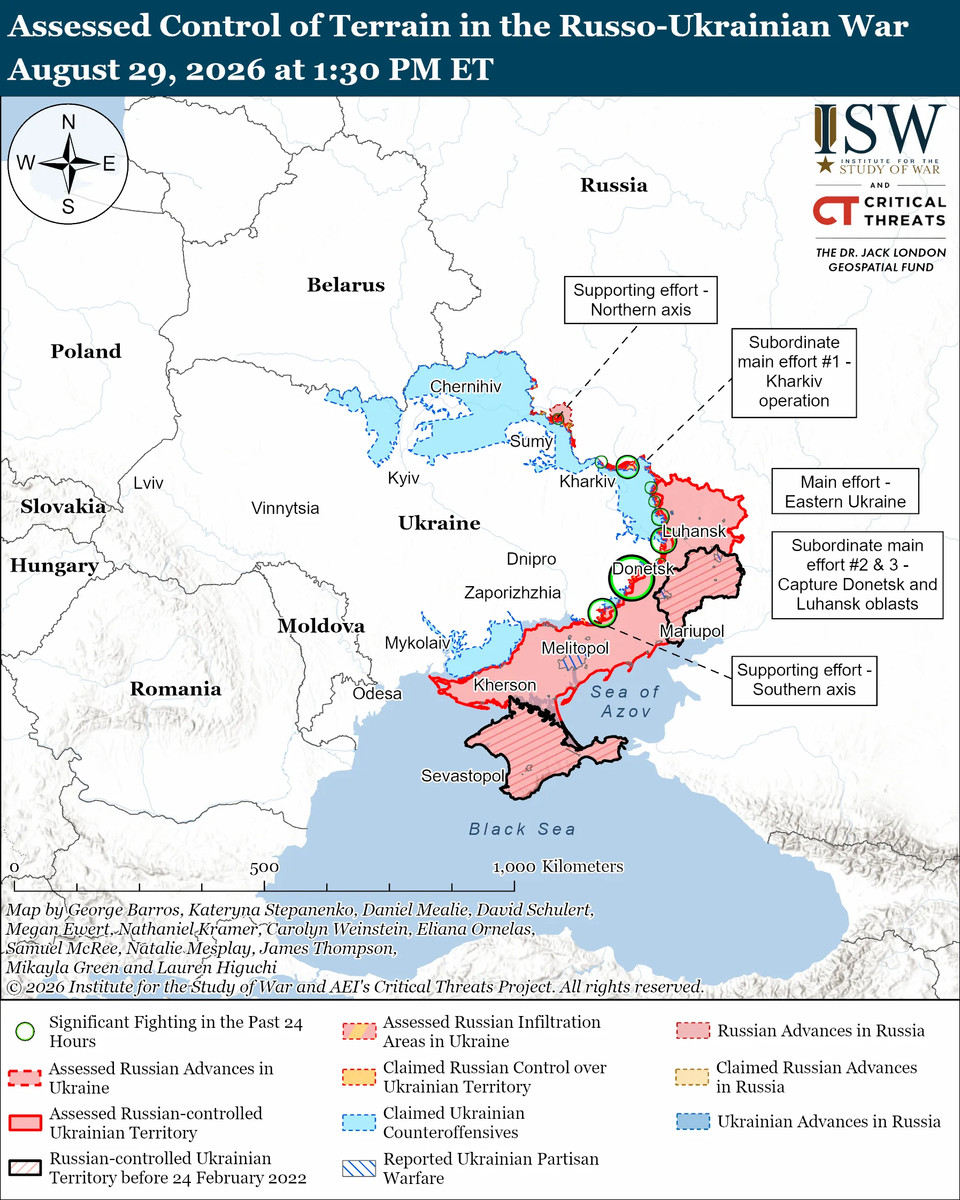
- Russian forces are likely to sustain local offensive pressure over the next 1-3 months in Sumy, Donetsk and Zaporizhzhia, with particularly heavy activity in the Pokrovsk and Kostiantynivka directions, but a decisive operational breakthrough is unlikely. Russian Ministry of Defence reporting claimed control of seven settlements during 22-28 August and separately named Khrapovshchyna, Pershe Travnya, Pisarevka, Annovka, Kucherov Yar, Rubezhne, Novoandriivka, Dolinka, Nezhenka and Shevchenkovskoye. Ukrainian reporting recorded 203 combat engagements on 25 August, including 36 Russian assaults near Bilytske, Serhiivka and Molodetske and 24 assaults near Kostiantynivka, Illinivka, Dovha Balka, Rusyn Yar and Ivanopillia. Ukrainian forces also recently reported an advance in the Dobropillya direction. Confidence is low because the settlement lists are internally inconsistent, most territorial-control claims are party-linked, and the forward assessment is inferential. (Confidence: low · ASSESSED)
- I&W: Confirm: independent geolocation or successive daily situation reports place Russian forces in control of Khrapovshchyna, Pershe Travnya, Pisarevka, Annovka, Kucherov Yar or additional settlements in the same directions. (0-14 days)
- I&W: Break: Ukrainian forces sustain confirmed advances in the Dobropillya, Pokrovsk or Kostiantynivka directions while Russian assault activity falls from the reported levels. (1-3 months)
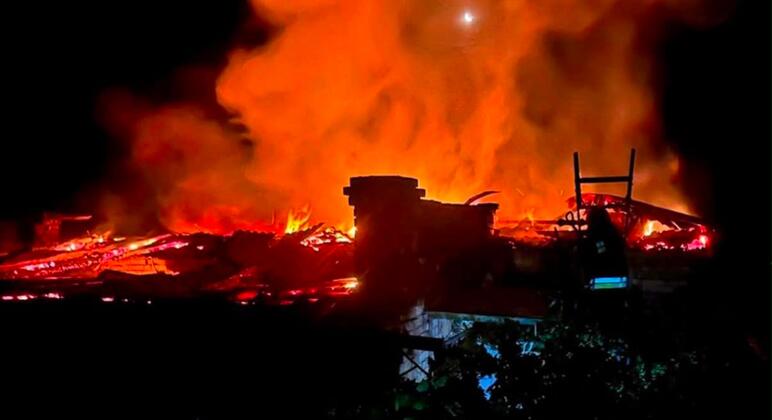
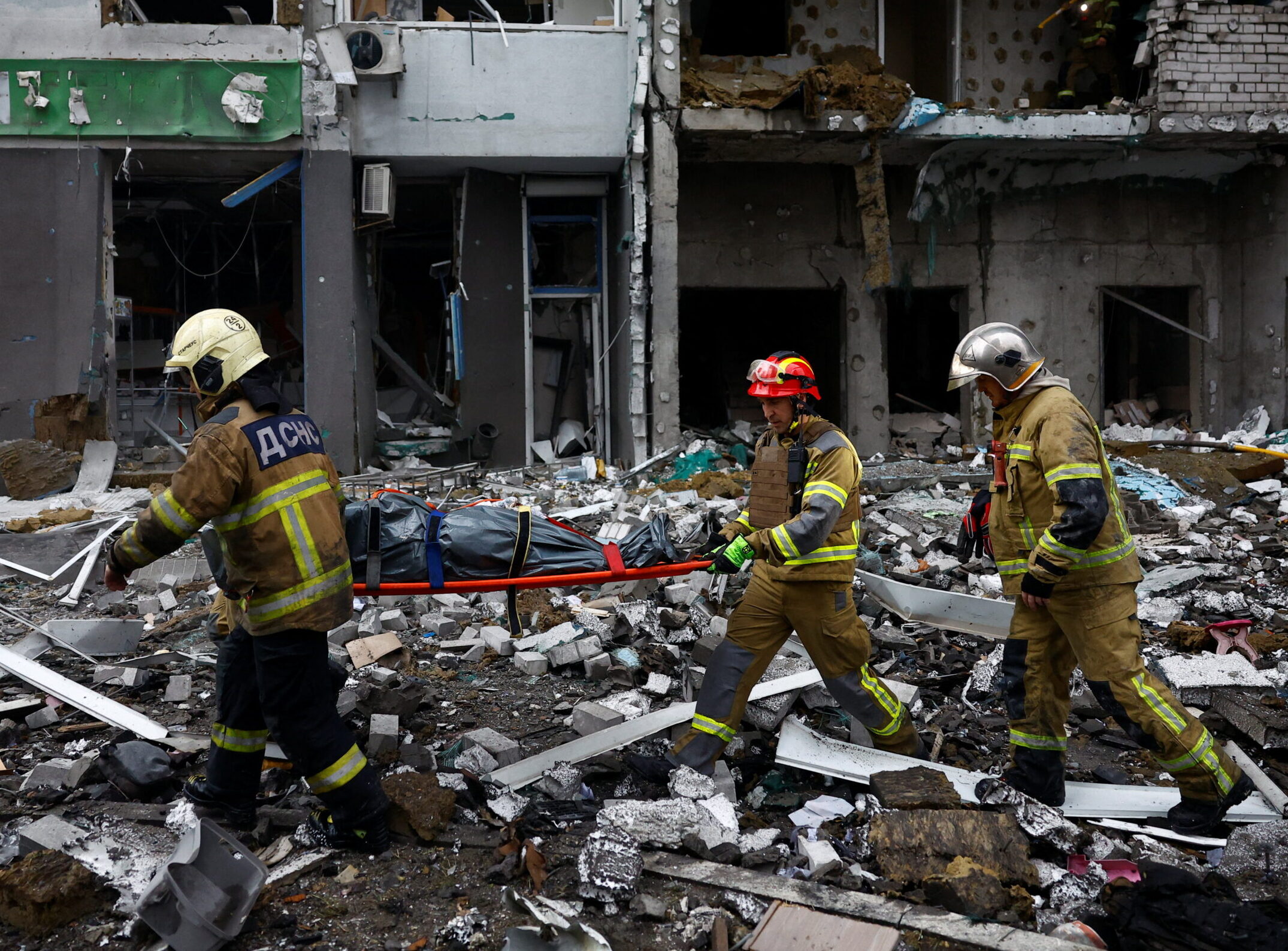
- Russian forces are very likely to continue high-volume drone and missile strikes against Ukrainian urban, military, logistics and energy targets over the next 0-14 days, and likely to maintain that pressure over 1-3 months. The Ukrainian Air Force reported more than 550 S8000 Banderol, Shahed, Gerbera and Parodiya drones and loitering munitions launched on 28-29 August, while separate reporting described a combined strike series lasting more than 28 hours, including Onyx and Iskander-M launches from occupied Crimea. Kyiv City was struck for a third consecutive day, and Russian officials announced preparations for massive strikes against Ukrainian energy facilities. The Myla casualty figures remain contested, with reports ranging from approximately 37-38 dead and 20-42 injured, so confidence in the strike pattern is high but confidence in individual casualty totals is lower. (Confidence: high · ASSESSED)
- I&W: Confirm: Russian forces launch another combined wave involving at least 150 drones or a multi-hour drone and missile series against Kyiv City, Kyiv Oblast or Ukrainian energy facilities. (0-14 days)
- I&W: Break: a 14-day period passes without a comparable Russian drone or missile operation against Ukrainian urban, military, logistics or energy targets. (0-14 days)
- Ukrainian forces are likely to continue long-range drone strikes against Russian military, air-defence, logistics and maritime infrastructure over the next 1-3 months, producing local disruption but unlikely to achieve a decisive operational effect on current evidence. Ukrainian forces reportedly struck Ozon, DNS and Chyzhyk warehouses in Rostov Oblast, damaged a Tu-95MS bomber at Engels-2 and destroyed a Buk-M3 system near Klintsy. Rostov Oblast declared a state of emergency after port operations ceased following strikes on maritime logistics infrastructure. One report attributes Russia's worst fuel crisis since the Soviet collapse to Ukraine's long-range campaign, but other reporting describes the middle strike campaign as focused on Russian logistics trucks in occupied territory, leaving the scale and causal effect of disruption unresolved. Confidence is medium because the strike pattern is supported by several sources, while damage assessments and strategic effects rely heavily on official or think-tank reporting. (Confidence: medium · ASSESSED)
- I&W: Confirm: Rostov Oblast port restrictions or emergency measures persist, or Russian authorities report further disruption to fuel, maritime logistics or military transport after additional Ukrainian strikes. (0-14 days)
- I&W: Break: Rostov port operations resume and no further confirmed Ukrainian strikes hit Russian military, air-defence or logistics nodes during the next month. (1-3 months)
- Ukrainian civilian and humanitarian infrastructure is likely to face recurring disruption over the next 1-3 months, with Kyiv City, Kyiv Oblast, Dnipro, Donetsk and frontline regions most exposed. The UN reported at least 12 civilians killed and more than 65 injured in recent attacks, with frontline regions especially hard hit. The Myla strike damaged at least 130 residential buildings and a retirement home, while UNICEF reported the destruction of a warehouse in the Kyiv region and WHO reported attacks on warehouses in Kyiv and Dnipro, including 20 attacks on humanitarian warehouses in 2026. The Russian Ministry of Defence's announced preparation for attacks on Ukrainian energy facilities increases the exposure of essential services. Confidence is medium because the humanitarian reporting is supported by UN, UNICEF and WHO, but the forward-looking geographic assessment and the Myla casualty totals remain uncertain. (Confidence: medium · ASSESSED)
- I&W: Confirm: UN, WHO or UNICEF report another strike on a humanitarian warehouse, health facility or civilian distribution network in Kyiv, Dnipro, Donetsk or a frontline region. (0-14 days)
- I&W: Break: a 14-day period passes without reported attacks on humanitarian facilities or additional disruption to Ukrainian urban energy infrastructure. (0-14 days)
Outlook & scenarios
Attritional continuation (60%)
Russian forces maintain local assaults in Sumy, Donetsk and Zaporizhzhia while sustaining high-volume strikes against Kyiv and Ukrainian logistics. Ukrainian forces continue drone attacks against Russian military and maritime infrastructure. Front-line movement remains localised, with recurring civilian and humanitarian disruption.
Russian strike escalation against energy and urban targets (25%)
Russian forces translate their announced preparations into repeated strikes against Ukrainian energy facilities and urban centres. Pressure on Ukrainian air defence, particularly Patriot interceptor availability, produces wider local disruption around Kyiv, Dnipro and frontline regions.
Expanded Ukrainian disruption of Russian logistics (10%)
Ukrainian forces expand strikes from Rostov warehouses and Russian air-defence systems to additional logistics and maritime nodes. Port restrictions and fuel-related disruption persist in Rostov Oblast, while Russian ground pressure continues without a decisive breakthrough.
High-impact maritime escalation (5%)
An unresolved incident involving a merchant vessel in the Black Sea off Romania is attributed to one of the belligerents and prompts a wider security response. The resulting disruption extends beyond the immediate front line and raises pressure on regional maritime traffic.
Recommendations
- Prioritise daily geolocation and cross-source reconciliation of Russian settlement-control claims in Sumy, Donetsk and Zaporizhzhia. Treat Khrapovshchyna, Pershe Travnya, Pisarevka, Annovka, Kucherov Yar, Rubezhne, Novoandriivka, Dolinka, Nezhenka and Shevchenkovskoye as reported controls until independent mapping confirms the lists.
- Maintain a 0-14 day strike tracker recording launch volume, platform type, target category, location, damage and casualty updates. Separate Kyiv City, Myla, Dnipro, Mykolaiv, Odesa and energy infrastructure entries to prevent aggregation of distinct incidents.
- Monitor Russian Ministry of Defence statements, Ukrainian Air Force reporting and municipal authorities for evidence that preparations for strikes on Ukrainian energy facilities have translated into operations. Pair this with collection on Patriot interceptor availability and confirmed ballistic missile impacts.
- Track Rostov Oblast port status, maritime traffic and fuel distribution after the state of emergency. Record whether closures persist beyond the initial disruption and distinguish direct strike damage from administrative restrictions.
- Reconcile the Myla casualty figures through updated statements from Volodymyr Zelensky, Kyiv regional authorities, the UN and emergency services before using a single death or injury total in finished analysis.
- Exclude low-reliability social-media assertions about 100,000 Ukrainian and NATO troops being trapped, a collapsed Donetsk offensive or foreign forces crushing Russian troops from the core assessment unless independent reporting confirms them.
Confidence & uncertainty
Overall confidence is medium. Recent combat and strike activity is supported by reporting from ISW, major media, Ukrainian and Russian official sources, the UN, WHO and UNICEF. Confidence is lower on territorial-control totals, the strategic effect of Ukrainian strikes and the casualty figures from Myla, which differ across reports. Low-reliability social-media claims are not used in the core judgements.
Intelligence gaps
- [EEI 1.1 · PARTIAL] Geotagged UAV/satellite imagery showing abandoned defensive positions or newly occupied settlements. Recommended collection: overhead imagery
- [EEI 1.2 · UNCOVERED] Confirmed movement of frontline ambulance evacuation routes beyond previous coordinates. Recommended collection: SIGINT/medical logistics
- [EEI 2.1 · UNCOVERED] Concentration of assault battalions (≥3 mechanized companies) within 15km of contact line. Recommended collection: SIGINT/UAV
- [EEI 2.2 · UNCOVERED] Unusual artillery stockpile buildup at forward depots exceeding 30-day consumption rates. Recommended collection: overhead imagery/logistics
- [EEI 3.1 · UNCOVERED] Bridge structural damage assessments at 5 key Dnieper River crossings via multispectral imaging. Recommended collection: overhead imagery
- [EEI 3.2 · UNCOVERED] Rail traffic volume changes at Kryvyi Rih and Pokrovsk rail hubs compared to 7-day baseline. Recommended collection: commercial freight data
Cited sources
[1] РИА Новости (RIA Novosti) · Российские войска освободили семь населенных пунктов в зоне СВО за неделю (B) · sha256:f8d4156d5626 [2] Министерство обороны Российской Федерации (Ministry of Defence of Russia) · Минобороны России (A) · sha256:38ac4518ffba [3] Ukrinform · War update: 203 combat engagements at front line over past day, Pokrovsk direction remains most active (B) · sha256:0b9ec3e55407 [4] Institute for the Study of War (republished by Kyiv Post) · ISW Russian Offensive Campaign Assessment, August 29, 2026 (B) · sha256:66e3a5cf1585 [5] Institute for the Study of War (ISW) · Russian Offensive Campaign Assessment, August 29, 2026 (B) · sha256:abb3fede183d [6] BBC · At least 37 dead and hundreds evacuated after strike on Kyiv weapons depot (A) · sha256:976947cd7860 [7] POLITICO Europe · Russia preparing ‘massive strikes against Ukraine’s energy facilities’ (A) · sha256:20a20de6c6d0 [8] Atlantic Council · Ukrainians are not superheroes with endless powers of resilience (C) · sha256:797080ccc97a [9] Institute for the Study of War (ISW) · Russian Offensive Campaign Assessment, August 28, 2026 (B) · sha256:698848144bcb [10] Atlantic Council · Drone parade showcases Ukraine's remarkable military transformation (C) · sha256:8b58185b4b6d [11] Wikipedia · Middle strike campaign (C) · sha256:94cb185fc639 [12] United Nations (UN News) · WHO reports more than 3,200 attacks on Ukraine’s healthcare system since full-scale invasion (A) · sha256:24473abcc473
Source content hashes were computed at collection time; the cited text is preserved unmodified for the life of this product.
TLP:CLEAR