TLP:CLEAR · Disclosure is not limited.
Russia-Ukraine Front Line: Sustained Pressure and Strike Spillover
Time window: Last 7 days · Audience: General analyst · Type: Situation report · DTG: 2026-08-21 07:08Z · Overall confidence: HIGH
BLUF
Russian forces likely sustained intense ground pressure, especially in the Pokrovsk and Kostiantynivka sectors, but the reporting does not establish an operational breakthrough. Russian long-range strikes very likely remained the most immediate threat to Ukrainian cities, with the 20 August attack on Kyiv killing at least 17 people and a Russian drone entering Romanian territory.
Executive summary
Reporting for 14 to 21 August shows continued Russian ground pressure alongside Ukrainian localised advances and deep strikes against Russian military and economic targets. The clearest developments are the 192 reported combat clashes on 18 August, the 20 August Russian attack on Kyiv, and Russian drone activity affecting Romanian territory and a Romanian offshore gas project. Ukrainian strikes are placing pressure on Russian logistics and fuel availability, but their immediate effect on Russian battlefield operations remains unconfirmed. Civilian harm remains severe, while casualty totals require careful separation because the available reports cover different locations and time periods.
Change from previous assessment
Since the 20 August 2026 prior brief, the assessment now incorporates the reported 20 August Russian attack on Kyiv, which killed at least 17 people, and new cross-border incidents involving Romanian territory and a Romanian offshore gas project. Confidence has increased on the persistence of Russia's long-range strike threat because of the additional Kyiv and Romania reporting. The assessment of Russian ground pressure remains broadly unchanged, with no confirmed operational breakthrough. The assessment of Ukrainian deep strikes now places greater weight on reported Russian fuel and motor-oil shortages, while retaining low confidence in claims about immediate battlefield effects.
Key judgments
- Russian forces likely maintained high-tempo ground pressure on 18 August 2026, concentrated in the Pokrovsk and Kostiantynivka sectors, but an operational breakthrough is not established. The General Staff of the Armed Forces of Ukraine reported 192 combat clashes and 16 Russian attacks in the Pokrovsk sector. Ukrainian Defense Forces reported repelling 12 assaults near Kostiantynivka, while Russian troops were reported attempting to bypass Ukrainian defences in the Konstantinivka direction and advance near Udachne and Novooleksandrivka. A separate medium-confidence social-media report claimed that the Ukrainian army had lost a major defensive position near Dobropillia, but this remains uncorroborated. (Confidence: medium · ASSESSED)
- I&W: Confirming indicator: Ukrainian General Staff reporting records repeated Russian attacks in the Pokrovsk and Kostiantynivka sectors, alongside an increase in reported daily clashes, over the next 0-14 days. (0-14 days)
- I&W: Breaking indicator: ISW or major-media reporting geolocates sustained Russian control of Dobropillia or a Russian advance beyond Udachne and Novooleksandrivka. (0-14 days)
- Russian forces very likely maintained a substantial long-range strike threat against Ukraine during the reporting period. Russian authorities described a 20 August 2026 high-precision strike on military, transport and logistics facilities in Kyiv and the surrounding region, while Ukrainian authorities reported at least 17 people killed and dozens wounded. On 18 August, Ukrainian Air Defence Forces reported neutralising more than 70 of 76 Russian drones. The same strike activity was associated with a Russian drone crashing in Tulcea, Romania, and a Romanian report that an explosive-laden naval drone targeted an offshore natural gas project. (Confidence: high · ASSESSED)
- I&W: Confirming indicator: Ukrainian authorities report another Russian missile or drone attack on Kyiv or another major Ukrainian city, or Romanian authorities report another Russian drone incursion or debris recovery in Tulcea. (0-14 days)
- I&W: Breaking indicator: Ukrainian, Romanian and major-media reporting records 14 consecutive days without a Russian long-range strike or cross-border drone incident. (0-14 days)
- Ukraine's intermediate-range and deep-strike campaign is likely imposing economic and logistical pressure on Russia, but its immediate effect on Russian battlefield operations remains unconfirmed. The Ukrainian Unmanned Systems Forces launched the campaign in early April 2026. Ukrainian drones were reported targeting Russian military supply trucks on the M14 and M18 highways, while Robert Brovdi reported a 71 per cent fall in Russian military cargo traffic along Crimea's Highway of Death. Putin acknowledged that Ukrainian airstrikes and external pressure were affecting Russian economic growth. Russian reporting also described petrol availability at only 28 per cent of service stations on 18 August and motor-oil shortages. The evidence remains mixed because several operational-effect claims derive from Ukrainian or single-source reporting. (Confidence: medium · ASSESSED)
- I&W: Confirming indicator: Russian fuel-availability reporting shows service-station availability below the 28 per cent reported on 18 August, alongside further disruption to military cargo traffic on Crimean routes. (0-14 days)
- I&W: Breaking indicator: Russian fuel-availability reporting rises above the 41 per cent level recorded the previous week and Russian military cargo traffic returns towards its earlier level. (0-14 days)
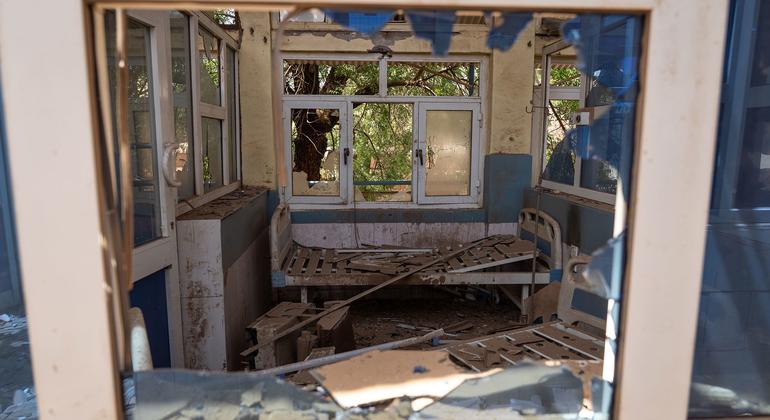
- Civilian harm in Ukraine very likely remained severe through 20 August 2026, although the available casualty figures are not directly additive. Ukrainian authorities reported at least 17 people killed and dozens wounded in the Kyiv attack, while a separate report attributed 25 deaths and 132 injuries to attacks across Ukraine during the preceding 24 hours. NASA detected 150 thermal anomalies in Ukraine over 20 and 21 August, but VIIRS detections do not identify whether heat resulted from strikes, shelling, industrial fires or wildfires. WHO has verified more than 3,000 attacks affecting health facilities in Ukraine since the conflict began. Confidence is medium because casualty reports cover different geographic and temporal scopes, and the thermal data do not establish attribution. (Confidence: medium · ASSESSED)
- I&W: Confirming indicator: Ukrainian regional administrations report another strike causing more than 10 civilian deaths, while WHO verifies a new attack affecting a health facility in Ukraine. (0-14 days)
- I&W: Breaking indicator: WHO or major-media reporting materially revises the Kyiv and nationwide casualty figures after determining that the reports described the same incident or non-conflict causes. (0-14 days)
- Cross-border spillover risk from Russian operations is likely elevated around Romania, Moldova, Turkey and the Black Sea, but the available reporting does not establish a deliberate Russian attack on NATO territory. Russian drones have repeatedly entered Moldovan, Romanian and Turkish airspace, and Russian drones and cruise missiles have reportedly violated NATO airspace since the start of 2026. Romania reported the 20 August drone incidents, while Turkey previously called on Russia and Ukraine to protect navigation after an attack on Turkish vessels near Novorossiysk. The separate US intelligence assessment of a limited Russian attack on a NATO member within months is single-source reporting, so confidence in the escalation forecast is medium. (Confidence: medium · ASSESSED)
- I&W: Confirming indicator: Romanian, Moldovan or Turkish authorities report another Russian drone crossing, debris recovery or attack affecting national airspace, offshore infrastructure or shipping. (0-14 days)
- I&W: Breaking indicator: Romanian and Moldovan authorities attribute the 20 August incidents to non-Russian causes and no further Russian drone enters neighbouring or NATO airspace during the following 14 days. (0-14 days)
Outlook & scenarios
Continued attritional pressure and urban strikes (65%)
Russian forces likely continue attacks in the Pokrovsk and Kostiantynivka sectors while Ukraine holds some local positions and conducts deep strikes against Russian logistics. Russian missile and drone attacks on Kyiv and other Ukrainian locations remain likely over the next 0-14 days.
Limited Russian tactical gain near Pokrovsk (30%)
Russian forces secure positions near Dobropillia and sustain advances towards Udachne or Novooleksandrivka. This outcome would represent a local tactical gain rather than an established operational breakthrough.
Ukrainian strikes deepen pressure on Russian rear areas (35%)
Ukraine's strike campaign further reduces Russian fuel availability and disrupts military cargo movement in Crimea and along the M14 and M18 routes. Russian forces continue ground attacks despite the economic pressure.
NATO-related escalation wildcard (10%)
A further Russian drone incursion into Romanian, Moldovan or Turkish airspace, or another incident affecting Turkish shipping, is followed by deliberate Russian action against a NATO member. This remains unlikely but would have high impact on regional security calculations.
Recommendations
- For the next 0-14 days, maintain separate operational tracks for Pokrovsk, Kostiantynivka, Udachne, Novooleksandrivka, Dobropillia and northern Kharkiv. Do not infer a breakthrough from engagement totals alone.
- Reconcile casualty reporting by incident, location and reporting period. Keep the Kyiv total, the wider Ukraine total and WHO healthcare figures separate until the scope of each report is resolved.
- Use NASA VIIRS thermal detections as a corroborating layer only. Require location-specific imagery or authoritative incident reporting before attributing an anomaly to a strike or shelling.
- Track Russian fuel-station availability, motor-oil supply and military cargo traffic on Crimean routes as near-term measures of the Ukrainian strike campaign's effect. Treat Ukrainian commander reporting and Russian state reporting as separate streams.
- Create a daily warning log for Russian drone activity affecting Romania, Moldova, Turkey and NATO airspace. Record debris location, platform type, national attribution and any effect on offshore infrastructure or commercial shipping.
- Review Ukraine's reported air-defence performance against the 18 August drone wave alongside the reported shortage of interceptor missiles. Distinguish successful interceptions from the continued size and reach of the Russian strike threat.
Confidence & uncertainty
Overall confidence is high because the principal developments are supported by multiple high-reliability sources, including major media, Ukrainian official reporting, WHO, NASA and established conflict-monitoring organisations. The strongest corroboration concerns the 20 August attack on Kyiv, the 18 August combat activity and the Russian drone incidents affecting Romania. The main uncertainties concern the operational meaning of front-line engagement counts, the immediate battlefield effect of Ukrainian deep strikes, the attribution of NASA thermal anomalies and the different scopes of reported casualty totals.
Intelligence gaps
- [EEI 1.1 · UNCOVERED] Geotagged UAV/satellite imagery showing abandoned defensive positions or newly occupied settlements. Recommended collection: overhead imagery
- [EEI 1.2 · UNCOVERED] Confirmed movement of frontline ambulance evacuation routes beyond previous coordinates. Recommended collection: SIGINT/medical logistics
- [EEI 2.1 · UNCOVERED] Concentration of assault battalions (≥3 mechanized companies) within 15km of contact line. Recommended collection: SIGINT/UAV
- [EEI 2.2 · UNCOVERED] Unusual artillery stockpile buildup at forward depots exceeding 30-day consumption rates. Recommended collection: overhead imagery/logistics
- [EEI 3.1 · UNCOVERED] Bridge structural damage assessments at 5 key Dnieper River crossings via multispectral imaging. Recommended collection: overhead imagery
- [EEI 3.2 · UNCOVERED] Rail traffic volume changes at Kryvyi Rih and Pokrovsk rail hubs compared to 7-day baseline. Recommended collection: commercial freight data
Cited sources
[1] Ukrinform · War update: 192 clashes on front line, Russians make 16 attempts to breach Ukrainian defenses in Pokrovsk sector (A) · sha256:a2430f516239 [2] understandingwar.org · Russian Offensive Campaign Assessment, August 15, 2026 (B) · sha256:2f9b6ae2b7c2 [3] t.me · Онежские шхеры (E) · sha256:8d32e0af41ec [4] cnn.com · Huge Russian strikes on Kyiv leave 17 dead as attacks spill over to Romanian and Moldovan territory | CNN (A) · sha256:b52ba1d776d6 [5] Wikipedia · Middle strike campaign (B) · sha256:b46998e10be6 [6] Atlantic Council · As pressure mounts on Putin, Russia is escalating against Ukraine’s allies (C) · sha256:5813f6f4dc20 [7] understandingwar.org · Russian Offensive Campaign Assessment, August 19, 2026 (B) · sha256:16374a9013f4 [8] NASA · NASA FIRMS thermal detections — Ukraine (2d) (A) · sha256:bf5d125c66b5 [9] World Health Organization (WHO) · An attack on healthcare every six hours, and no one held to account (A) · sha256:64dc4ea71664 [10] Atlantic Council · To stop escalation in the Black Sea, Turkey needs a new regional strategy (C) · sha256:0a4a91a0c691
Source content hashes were computed at collection time; the cited text is preserved unmodified for the life of this product.
TLP:CLEAR