TLP:CLEAR · Disclosure is not limited.
Russia-Ukraine front line: Ukraine’s deep strikes hit Russian industry as Russia maintains heavy aerial pressure
Time window: Last 7 days · Audience: General analyst · Type: Situation report · DTG: 2026-06-29 07:12Z · Overall confidence: MEDIUM
BLUF
Ukraine very likely sustained a high-tempo deep-strike campaign this week against Russian defence and energy targets, while Russia likely kept up large-scale drone and missile attacks across Ukraine. Frontline humanitarian conditions on the Kherson left bank remain acute and access constrained.
Executive summary
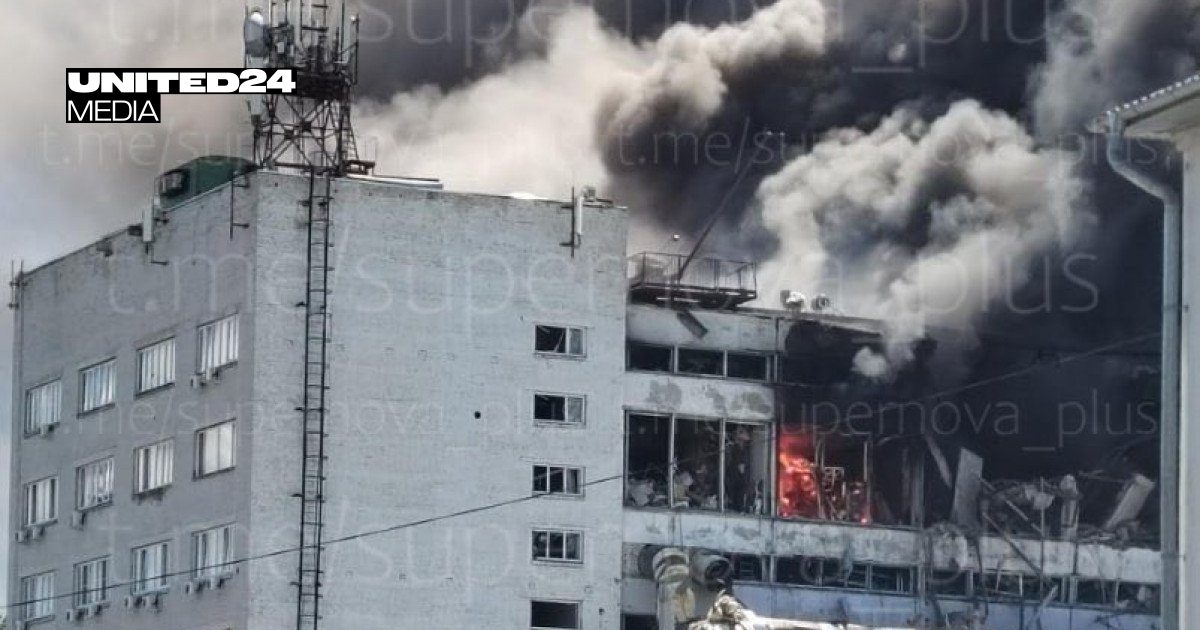
During 22-29 June, Ukraine very likely struck the Titan-Barrikady defence plant in Volgograd with FP-5 Flamingo missiles and hit oil refineries in Slavyansk-na-Kubani and Yaroslavl, while strikes left parts of Sevastopol without power. Reporting cites refinery fires, casualties, and even ‘black rain’ in Moscow following an oil facility attack. June also likely saw at least 13 long-range Ukrainian strikes on Russian defence-industrial targets across several regions, including plants linked to missiles, munitions, and electronics, and damage to two naval support vessels in Crimea. Russia likely maintained heavy strike pressure across Ukraine, with a prominent Kyiv cultural site on fire after a strike and claims of nearly 1,400 drones and 19 missiles launched over a week. On the left bank of Kherson Oblast, at least 29 civilians have been killed and 54 injured this year, aid shipments to Oleshky reportedly halted for nearly a month by 24 June, ambulance access curtailed, and landmines causing civilian and deminer casualties. NASA recorded 268 thermal anomalies, including 13 high-confidence detections on 28-29 June, consistent with clusters of activity but not providing attribution.
Change from previous assessment
Compared with the 28 June brief, this assessment adds Zelenskyy’s confirmation of FP-5 Flamingo use against Titan-Barrikady on 27 June, details of strikes on the Slavyansk-na-Kubani and Yaroslavl refineries, and reported Sevastopol power outages. It also incorporates the June pattern of at least 13 long-range strikes on Russian defence-industrial nodes and the latest FIRMS snapshot of 268 anomalies with 13 high-confidence detections. The humanitarian picture for Oleshky and Hola Prystan is expanded with access and casualty specifics. Confidence remains medium due to continued single-source elements in some reporting.
Key judgments
- Ukraine very likely executed a coordinated wave of deep strikes this week, including an FP-5 Flamingo missile strike on the Titan-Barrikady defence plant in Volgograd on 27 June, drone attacks on the Slavyansk-na-Kubani and Yaroslavl oil refineries, and strikes that left parts of Sevastopol without power; local officials and residents reported refinery fires, casualties, and even ‘black rain’ in Moscow after an oil facility attack. (Confidence: high · ASSESSED)
- I&W: Commercial satellite imagery shows visible damage and ongoing repair activity at Titan-Barrikady and at the Slavyansk-na-Kubani and Yaroslavl refineries. (0-14 days)
- I&W: Sevastopol authorities issue further rolling power-rationing schedules explicitly linked to strike damage. (0-14 days)
- Ukraine likely sustained a record June tempo of at least 13 long-range strikes on Russian defence-industrial nodes, including the Progress plant in Michurinsk, VNIIR-Progress in Cheboksary, the Elastik plant in Ryazan, the Azot plant in Novomoskovsk, and two naval support vessels at the Zaliv shipyard in Crimea. (Confidence: medium · REPORTED)
- I&W: Satellite imagery and factory statements indicate long-duration shutdowns or repair works at the named facilities. (1-3 months)
- I&W: Russian procurement notices or regional announcements cite production disruptions at Progress, VNIIR-Progress, Elastik, or Azot. (1-3 months)
- Russia likely maintained heavy strike pressure across Ukraine over the past week, with Kyiv’s Church of the Tithes on fire after a Russian strike and Ukrainian leadership reporting nearly 1,400 drones and 19 missiles launched against 15 regions last week. (Confidence: medium · REPORTED)
- I&W: Ukrainian Air Force daily tallies continue to report triple-digit drone launches across multiple nights. (0-14 days)
- I&W: Additional regional reports document damage to cultural or energy sites in Kyiv and other oblast centres. (0-14 days)
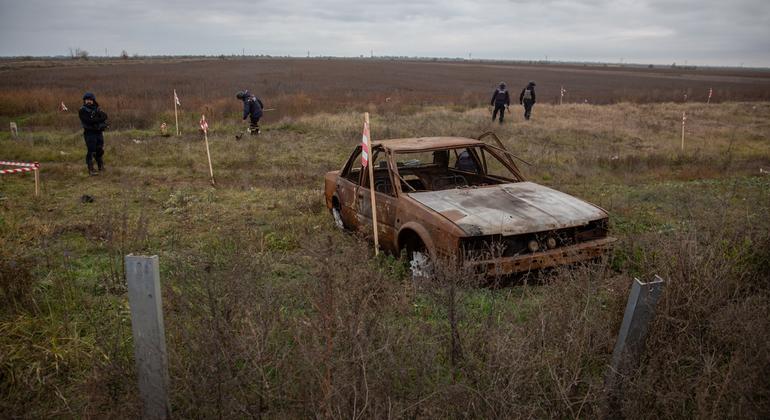
- Frontline humanitarian conditions on the Russian-occupied left bank of Kherson Oblast are acute: at least 29 civilians have been killed and 54 injured in Oleshky and Hola Prystan so far this year, up to 6,000 civilians including more than 180 children remain, aid shipments to Oleshky had not arrived for nearly a month by 24 June, ambulance access is curtailed, and landmines and attacks have killed and injured aid workers and deminers. (Confidence: high · REPORTED)
- I&W: Verified delivery records or imagery show regular aid shipments reaching Oleshky. (0-14 days)
- I&W: Further UN or NGO reporting documents civilian casualties and access constraints in Oleshky and Hola Prystan. (0-14 days)
- NASA almost certainly recorded 268 thermal anomalies, including 13 high-confidence detections, across Ukraine on 28-29 June, consistent with clusters of strike, shelling, or fire activity but not attributing cause. (Confidence: high · REPORTED)
- I&W: FIRMS two-day windows continue reporting more than 200 detections. (0-14 days)
- I&W: FIRMS detections fall below 100 in successive two-day windows, indicating a lull. (0-14 days)
- Russian forces likely intend to intensify pressure toward Kostyantynivka in Donetsk Oblast given reports of a troop build-up threatening the city. (Confidence: medium · ASSESSED)
- I&W: Open-source imagery shows additional Russian artillery and engineering units deploying within 20 km of Kostyantynivka. (0-14 days)
- I&W: Ukrainian General Staff reports note a reduced rate of Russian assaults on approaches to Kostyantynivka. (0-14 days)
Outlook & scenarios
Sustained Ukrainian deep-strike tempo through July (60%)
Ukraine keeps up coordinated strikes on Russian defence and energy targets in the near rear and Crimea, aiming to disrupt production, logistics, and air defence positioning. Expect intermittent refinery fires, factory shutdowns, and further temporary power cuts in occupied Crimea.
Russian aerial retaliation remains high (50%)
Russia continues large-scale drone and missile launches against Ukrainian cities and energy nodes, stressing air defences and causing sporadic damage to cultural and civilian infrastructure. Nightly alert cycles remain frequent.
Localised Russian pressure around Kostyantynivka (40%)
Russian troop concentrations enable incremental assaults toward Kostyantynivka, testing Ukrainian lines without decisive breakthrough. Fighting intensifies on approaches with artillery and glide-bomb use.
Wildcard: Crimean infrastructure cascade (20%)
A successful Ukrainian strike triggers extended power and fuel shortages in a Crimean city, forcing Russia to divert air defence and repair capacity, with knock-on effects for naval support activities.
Recommendations
- Task imagery collection to capture before-and-after shots of the Titan-Barrikady site and the Slavyansk-na-Kubani and Yaroslavl refineries, and produce rapid battle damage assessments for leadership briefings.
- Maintain a standing watch on Sevastopol outage announcements and repair updates from occupation authorities to gauge the persistence and scale of infrastructure disruption.
- Build a geocoded registry of Russian defence-industrial facilities cited as struck in June, track reported shutdowns or repair tenders, and set tripwires for renewed operations.
- Fuse FIRMS thermal anomaly feeds with time-stamped strike reports and local authority posts to separate combat-related heat signatures from industrial or wildfire events.
- Prioritise OSINT collection on Russian unit movements and logistics nodes within 20-30 km of Kostyantynivka, including railheads, ammo sites, and bridging assets.
- Integrate left-bank Kherson humanitarian metrics into operational risk mapping: monitor aid delivery attempts to Oleshky, casualty tallies from mines and strikes, and medical access constraints to anticipate displacement or mortality spikes.
- Track Ukrainian leadership statements on air defence resupply and drone cooperation alongside observed strike patterns to anticipate target sets and pacing.
- Prepare an analytic note on potential Russian air defence redistribution following Ukrainian deep strikes, focusing on Volgograd, Ryazan, Chuvashia, and Crimea.
Confidence & uncertainty
Overall confidence is medium. Several judgments rest on multiple independent and reliable sources, including official statements and major media reporting on the Volgograd strike, refinery hits, Sevastopol outages, and June’s strike tally. NASA FIRMS data are authoritative for detections but do not attribute cause. Some elements, such as the precise scope of defence-industrial disruption and reported Russian troop build-ups near Kostyantynivka, rely on single-source reporting or aggregated monthly summaries. Social-media claims have been excluded from core judgments or treated cautiously. Further corroboration from satellite imagery and official production data would raise confidence.
Alternative analysis (red cell)
While numerous fires, outages, and incidents were reported across Russian regions and Crimea, the assembled evidence does not reliably establish a single, coordinated deep-strike campaign with specific munition attribution (e.g., an FP-5), nor does a single reported troop build-up alone demonstrate intent to launch intensified offensive operations against Kostyantynivka. A more cautious estimate is that elevated tactical activity and localized strikes occurred, but coordination, precise weapon-type attribution, and adversary intent remain insufficiently corroborated by the documented claims.
Intelligence gaps
- [EEI 1.1 · UNCOVERED] Geotagged UAV/satellite imagery showing abandoned defensive positions or newly occupied settlements. Recommended collection: overhead imagery
- [EEI 1.2 · UNCOVERED] Confirmed movement of frontline ambulance evacuation routes beyond previous coordinates. Recommended collection: SIGINT/medical logistics
- [EEI 2.1 · PARTIAL] Concentration of assault battalions (≥3 mechanized companies) within 15km of contact line. Recommended collection: SIGINT/UAV
- [EEI 2.2 · UNCOVERED] Unusual artillery stockpile buildup at forward depots exceeding 30-day consumption rates. Recommended collection: overhead imagery/logistics
- [EEI 3.1 · UNCOVERED] Bridge structural damage assessments at 5 key Dnieper River crossings via multispectral imaging. Recommended collection: overhead imagery
- [EEI 3.2 · UNCOVERED] Rail traffic volume changes at Kryvyi Rih and Pokrovsk rail hubs compared to 7-day baseline. Recommended collection: commercial freight data
Cited sources
[1] united24media.com · Ukraine Launches Record Wave of Strikes on Russia’s Defense Industry in June (B) · sha256:72b5fdd05933 [2] understandingwar.org · Russian Offensive Campaign Assessment, June 27, 2026 (B) · sha256:fd4ae2d53f95 [3] jamaicainquirer.com · Ukraine says it attacked two Russian oil refineries - Jamaica Inquirer – Daily Jamaica News (B) · sha256:f2cf3bca6ce1 [4] BBC News · Ukraine War | Latest News & Updates| BBC News (A) · sha256:148e00843900 [5] Echefu Ijeuru · Ukraine Strikes Russia's Only Helium Plant 1,500 km Behind the Front Line, A Full Strategic War Brie (B) · sha256:59c323e7ac25 [6] NBC News · Ukraine hits defence plant in Russia’s Volgograd region, Zelenskyy says (A) · sha256:4df477a7f3df [7] United Nations · Thousands trapped in southern Ukraine struggle to survive (A) · sha256:723a12fa9d25 [8] NASA · NASA FIRMS thermal detections — Ukraine (2d) (A) · sha256:a22608de0bb8
Source content hashes were computed at collection time; the cited text is preserved unmodified for the life of this product.
Red cell review: PARTIAL DISSENT
TLP:CLEAR