TLP:CLEAR · Disclosure is not limited.
Russia-Ukraine front line: Ukrainian maritime strikes surge, Russian port attacks persist, air-defence coalition advances
Time window: Last 7 days · Audience: General analyst · Type: Situation report · DTG: 2026-07-15 07:11Z · Overall confidence: MEDIUM
BLUF
Ukraine very likely escalated a maritime drone campaign in the Sea of Azov and Black Sea, striking large numbers of Russian-linked vessels and prompting Russian shipping restrictions, while Russia kept up strikes on Ukrainian ports and cities. Kyiv and nine European partners advanced an anti-ballistic missile coalition that is likely to bolster Ukraine’s air-defence posture.
Executive summary
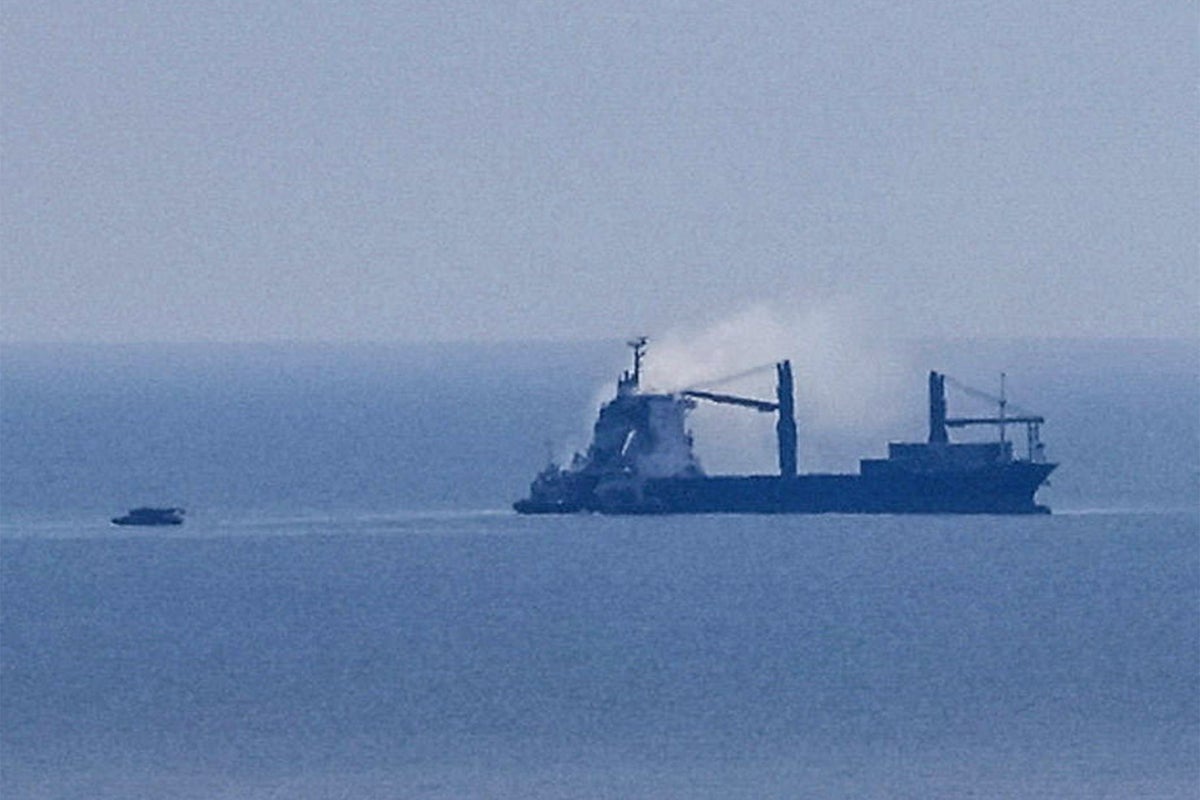
Between 13 and 15 July, Ukrainian forces very likely intensified maritime drone operations, with reporting of 10 vessels hit in a single night, at least 105 struck over eight days in the Sea of Azov, and 20 vessels, including 17 oil tankers, hit overnight in the Black Sea. Russia publicly signalled disruption and rerouting of Azov Sea shipping, including restrictions through the Kerch Strait and suspension of the Don-Azov channel. Russia meanwhile maintained strikes on Ukrainian ports and cities, with three crew killed on a Togolese-flagged ship off Odesa and claims of four vessels hit in Ukrainian ports, plus a new ballistic missile attack on Kyiv that triggered air-defence responses and fires. Kyiv and nine European partners formed an anti-ballistic missile coalition and planned regional drills, aligning with President Zelenskyy’s stated top priority for anti-ballistic defence. Ukraine also likely expanded deep strikes on Russian energy and logistics nodes, with reported hits on refineries in Bashkortostan and Krasnodar, a fuel train near Tokmak, and power rationing in Sevastopol consistent with pressure on Crimea-bound logistics.
Change from previous assessment
Compared with the prior brief, this assessment adds quantifiable reporting on Ukrainian maritime drone strikes in the Sea of Azov and Black Sea and Russia’s consequent shipping restrictions, as well as confirmed fatalities from a Russian attack on a Togolese-flagged vessel off Odesa. It also captures the formal launch of an anti-ballistic missile coalition and planned regional drills aligning with Kyiv’s air-defence priorities, and aggregates new reports of refinery strikes and power rationing affecting Crimea. Confidence on ground-force momentum is lowered due to conflicting and thin sourcing.
Key judgments
- Ukraine very likely intensified a maritime drone campaign in the Sea of Azov and Black Sea between 14 and 15 July, striking between 10 in a single night and at least 105 vessels over eight days, including 17 oil tankers, and prompting Russia to seek alternative routes, restrict Kerch Strait traffic, and suspend the Don-Azov channel. (Confidence: high · ASSESSED)
- I&W: Russia’s transport or maritime authorities issue formal notices further limiting or halting commercial traffic in the Azov Sea or Kerch Strait. (0-14 days)
- I&W: AIS and port-agent reporting show routine, unescorted transits through Kerch and the Don-Azov channel resuming without new restrictions. (1-3 months)
- Russia likely maintained a high tempo of strikes on Ukrainian ports and cities during 13-15 July, killing three crew on a Togolese-flagged vessel off Odesa and claiming four vessels hit in Ukrainian ports, while a ballistic missile attack on Kyiv triggered air-defence responses and fires in the Holosiivskyi district. (Confidence: medium · REPORTED)
- I&W: Port authorities or flag-state reports publish confirmed damage assessments for vessels struck in Odesa ports dated 13-15 July. (0-14 days)
- I&W: Fourteen days pass without Russian overnight claims of port strikes and without independent local damage reports. (0-14 days)
- Ukraine and nine European partners very likely advanced integrated air and missile defence cooperation on 13 July, forming an anti-ballistic missile coalition and planning regional exercises, consistent with President Zelenskyy naming anti-ballistic defence as Kyiv’s top priority. (Confidence: high · REPORTED)
- I&W: Host governments issue exercise notices or NOTAMs specifying dates and locations for coalition air-defence drills. (0-14 days)
- I&W: Formal announcements of system deliveries or cooperation MOUs linked to the coalition. (1-3 months)
- Ukraine likely expanded deep strikes against Russian energy and logistics nodes, including reported hits on refineries in Salavat and Krasnodar, stoppage at Syzran, a fuel train near Tokmak, and measures in Crimea such as power rationing in Sevastopol, consistent with pressure on Russia’s supply to occupied Crimea. (Confidence: medium · ASSESSED)
- I&W: Regional authorities in Bashkortostan or Krasnodar acknowledge refinery outage inspections or production stoppages following strikes. (0-14 days)
- I&W: Official statements report restoration of processing at Syzran or Afipsky refineries and stable electricity supply in Sevastopol. (1-3 months)
- There is a roughly even chance that Russian ground offensive momentum on eastern fronts is slowing, but open-source claims of multiple front retreats and sweeping Ukrainian gains remain weakly corroborated and contested. (Confidence: low · ASSESSED)
- I&W: Independent geolocated reporting confirms Russian withdrawals from named localities on the eastern front. (1-3 months)
- I&W: Russian Ministry of Defence and independent geolocations confirm capture of additional settlements in Donetsk. (0-14 days)
Outlook & scenarios
Sustained Ukrainian maritime interdiction further degrades Azov Sea logistics (60%)
Ukrainian maritime drones continue to hit Russian-linked vessels at a high rate. Moscow formalises limits on Azov Sea traffic, keeps Kerch Strait restrictions in place, and extends the Don-Azov channel suspension intermittently. Crimea-bound fuel and materiel flow faces recurring delays, increasing pressure on Russian forces in southern Ukraine.
Russian adaptation blunts maritime drone effectiveness and traffic resumes (35%)
Russia fields denser counter-UAS, naval escorts and routing adjustments that reduce Ukraine’s strike success. AIS and port data show more routine transits through Kerch and the Don-Azov channel, with fewer reported vessel hits. Ukraine shifts effort toward land logistics and energy targets deeper in Russia.
Maritime mass-casualty or spill event triggers broader Black Sea shipping halt (15%)
A large tanker hit leads to fatalities or major pollution, prompting insurers and port authorities to raise risk levels, with ad hoc pauses in Black Sea traffic beyond Azov routes. Ukraine and Russia face heightened diplomatic pressure over maritime targeting, while both sides seek alternate logistics.
Recommendations
- Prioritise collection on Russian maritime notices, Kerch Strait pilotage advisories and Don-Azov channel bulletins; fuse with AIS to quantify route closures and diversions in near real time.
- Build a geolocated dataset of reported vessel strikes in the Sea of Azov and Black Sea by cross-referencing imagery, port logs and insurer or P&I club incident reports to validate hit claims and typologies.
- Task continuous monitoring of refinery and power infrastructure in Bashkortostan, Krasnodar and occupied Crimea using satellite fire radiance and local authority statements to track strike impact and restoration timelines.
- Track deliverables from the anti-ballistic missile coalition: watch for exercise NOTAMs, host-nation press releases and system delivery announcements; map expected coverage improvements to Ukrainian air-defence.
- Maintain a running ledger of Russian port and city strike patterns, including Odesa and Kyiv, to support alerting for civilian shipping and urban risk; validate with municipal damage reports and open-source imagery.
Confidence & uncertainty
Overall confidence is medium. The surge in Ukrainian maritime strikes and resulting Russian shipping disruptions are supported by multiple independent, reliable outlets and official statements, though reported vessel-hit counts vary by source and timeframe. Russian port and city strike reporting is credible but includes some single-source elements. Deep-strike effects on Russian energy and Crimean logistics are plausible and partially reported, yet causal links remain inferential. Ground-front momentum claims are contested and rely on mixed-quality sources, lowering confidence on that line.
Alternative analysis (red cell)
Open-source reporting shows multiple maritime and inland incident claims, but many of these originate from a single reporting cluster and contain contradictory counts and casualty details. A sober alternative estimate is that there are multiple reports of maritime strikes and some Russian precautionary measures, but current evidence is insufficiently independent or consistent to conclude a sustained, large-scale maritime or deep-strike campaign without further ISR, AIS/port logs, and industry or official confirmations.
Intelligence gaps
- [EEI 1.1 · UNCOVERED] Geotagged UAV/satellite imagery showing abandoned defensive positions or newly occupied settlements. Recommended collection: overhead imagery
- [EEI 1.2 · UNCOVERED] Confirmed movement of frontline ambulance evacuation routes beyond previous coordinates. Recommended collection: SIGINT/medical logistics
- [EEI 2.1 · UNCOVERED] Concentration of assault battalions (≥3 mechanized companies) within 15km of contact line. Recommended collection: SIGINT/UAV
- [EEI 2.2 · UNCOVERED] Unusual artillery stockpile buildup at forward depots exceeding 30-day consumption rates. Recommended collection: overhead imagery/logistics
- [EEI 3.1 · UNCOVERED] Bridge structural damage assessments at 5 key Dnieper River crossings via multispectral imaging. Recommended collection: overhead imagery
- [EEI 3.2 · UNCOVERED] Rail traffic volume changes at Kryvyi Rih and Pokrovsk rail hubs compared to 7-day baseline. Recommended collection: commercial freight data
Cited sources
[1] euronews.com · Ukraine forces hit more than 100 Russian vessels in Azov in eight days (B) · sha256:b3ee455970f8 [2] Kyiv Post · Ukraine’s Azov Sea Drone Strategy Against Russian Tankers (B) · sha256:a85e7b510a2a [3] independent.co.uk · Ukraine-Russia war latest: Kyiv says more than 100 Russian ships in Azov hit in nine days (B) · sha256:8285e49e59eb [4] dw.com · Ukraine, 9 nations form ballistic missile defense coalition (A) · sha256:931b48b4dec8 [5] aljazeera.com · Kyiv attacked after Ukraine launches coalition to tackle Russia missiles (A) · sha256:0a94846db2f9 [6] euobserver.com · Russian oil industry set back 20 years by Ukrainian strikes (Ukraine Battlefield update: Day 1,602) (B) · sha256:ceb60ecc5ae4 [7] The Guardian · Ukraine war briefing: Spotlight on ‘hundreds’ of alleged PoW executions by Russia (A) · sha256:ed2c00b81977 [8] Silent Break Stories · Ukraine Strikes Russian Fuel Train Near Tokmak — Moscow's Southern Armor at Risk of Shutdown (B) · sha256:5d9f21f8736b [9] World Velocity · 4 Russian Fronts Ordered a RETREAT — Then THIS Happened (B) · sha256:b85404699232 [10] Online Quran · 4 Russian Fronts Ordered a RETREAT — Then THIS Happened (F) · sha256:d77d02d1935d [11] УНІАН · Такого НЕ БЫЛО месяцами: замысел России ПРОВАЛЕН, ВСУ накостыляли оккупантам (B) · sha256:c637e8f6e926 [12] Страна 404 · Впервые ЗА МЕСЯЦЫ: стратегия Путина ТРЕЩИТ, ВСУ дали мощный отпор (B) · sha256:f80e7c7077cd [13] NIT International · RUSSIANS WITHDRAW! Ukraine LIBERATES 6 Settlements in Just 72 Hours - Invasion ENDS in This Region (E) · sha256:f238a20efb05
Source content hashes were computed at collection time; the cited text is preserved unmodified for the life of this product.
Red cell review: PARTIAL DISSENT
TLP:CLEAR