TLP:CLEAR · Disclosure is not limited.
Sahel Alliance deepens Russian security ties as Mali reports counter-jihadist operations
Time window: Last 1 day · Audience: General analyst · Type: Situation report · DTG: 2026-07-09 11:38Z · Overall confidence: MEDIUM
BLUF
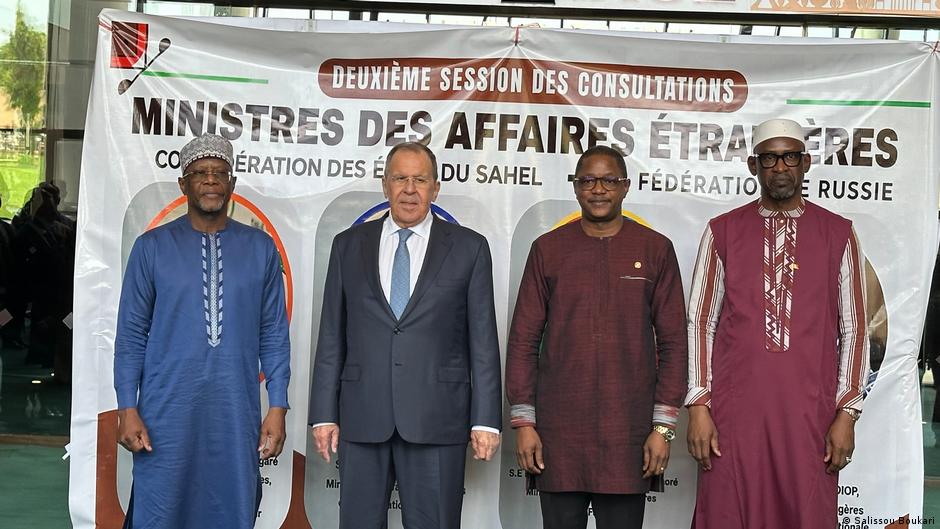
Russia is likely consolidating a leading security role with Mali, Burkina Faso and Niger after a 8 July meeting in Niamey, while the Malian army reports ongoing offensives against jihadists. Questions persist over the effectiveness of these partnerships following lethal attacks in Mali on 25 April 2025.
Executive summary
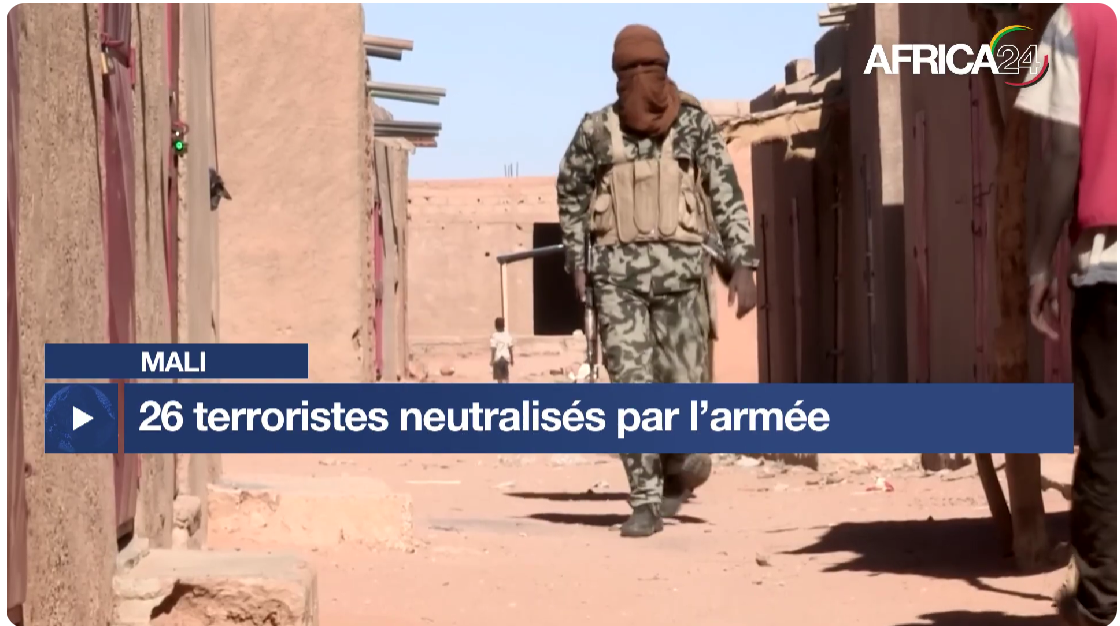
On 8 July 2026 in Niamey, Russian Foreign Minister Sergei Lavrov met counterparts from the Sahel Alliance states of Mali, Burkina Faso and Niger to strengthen security ties. Reporting indicates Russia already provides equipment and instructors, and that the Alliance relies on Moscow’s support to establish a joint armed force, a commitment Russia reaffirmed in April 2025. In Mali, the army claims it has neutralised 26 terrorists, set against the backdrop of 25 April 2025 jihadist attacks that killed Defence Minister Sadio Camara. Some observers question the concrete results of military cooperation following those attacks. In parallel, Niger, Mali and Burkina Faso announced withdrawal from the Rome Statute, signalling a tougher accountability environment for armed actors.
Change from previous assessment
New reporting of Sergei Lavrov’s 8 July meeting in Niamey and explicit references to AES reliance on Russian support for a joint force shift our focus from Mali-specific ties to a bloc-level Russian security role. We also note a Malian army claim of neutralising 26 terrorists and continued scepticism about the efficacy of military cooperation after the April 2025 attacks. Confidence in Russia’s expanding role across the AES has modestly increased on the back of multiple consistent reports, but there remains no corroborated evidence of a region-wide surge in jihadist attack tempo during this run. Initial assessment of this topic at the AES bloc level.
Key judgments
- Russia is likely consolidating a leading external security role with the Sahel Alliance states of Mali, Burkina Faso and Niger, including support to stand up a joint armed force. (Confidence: medium · ASSESSED)
- I&W: Official AES-Russia communiqués detailing timelines for the joint force and additional equipment deliveries or training deployments to Ouagadougou, Bamako or Niamey (1-3 months)
- I&W: Public postponement or cancellation of AES-Russia security initiatives or visible pivot to alternative external security partners (1-3 months)
- Mali faces ongoing jihadist violence and is conducting offensive operations, but the effectiveness of military partnerships remains in doubt following the 25 April 2025 attacks that killed Defence Minister Sadio Camara. (Confidence: low · ASSESSED)
- I&W: Regular Malian army communiqués with verifiable details on engagements and locations, and independent corroboration of operational outcomes (0-14 days)
- I&W: Reports of additional large-scale jihadist attacks in Mali that challenge government control or target senior officials (1-3 months)
- Plans for an AES joint armed force with Russian backing are likely to advance in the near term, while the announced withdrawal of Niger, Mali and Burkina Faso from the Rome Statute will likely complicate cooperation with international accountability mechanisms. (Confidence: medium · ASSESSED)
- I&W: Announcement of a joint AES force command structure, headquarters location or initial operating capability (1-3 months)
- I&W: Public statements signalling delays to force creation or renewed engagement with international justice bodies (1-3 months)
Outlook & scenarios
AES-Russia joint force formalises and begins coordinated operations (60%)
Following the 8 July Niamey meeting, the AES announces command arrangements and initial deployments for a joint force supported by Russian equipment and instructors, with stepped-up operations across the three capitals’ areas of concern.
Malian counter-jihadist operations continue but attack tempo persists (50%)
The Malian army issues further claims of militant neutralisations, yet jihadist attacks continue to inflict periodic high-impact incidents reminiscent of 25 April 2025, leaving the net security picture mixed.
Accountability gap widens as Rome Statute withdrawals bite (40%)
With Niger, Mali and Burkina Faso having announced withdrawal from the Rome Statute, cooperation with international accountability mechanisms diminishes, and security policy is shaped primarily through AES bilateral ties with Russia.
Recommendations
- Prioritise collection on AES-Russia security deliverables: track official communiqués, defence procurement notices, and trainer or equipment movements into Ouagadougou, Bamako and Niamey.
- Establish a standing OSINT workflow to verify Malian army operation claims by geolocating imagery and triangulating with local reporting to assess actual militant losses and territorial effects.
- Maintain an incident ledger for Mali, Burkina Faso and Niger aggregating attack data and state responses to quantify trends in attack tempo and government control.
- Monitor policy and legal steps implementing the Rome Statute withdrawals for Niger, Mali and Burkina Faso to assess implications for international cooperation and information access.
- Map emerging command structures and leadership appointments for the proposed AES joint force to anticipate operating concepts and likely areas of deployment.
- Engage with regional media and civil society reporting channels to detect early signs of cross-border militant manoeuvre that might test AES joint operations.
Confidence & uncertainty
Overall confidence is medium because multiple mutually reinforcing reports describe Russia’s engagement with the Sahel Alliance and the bloc’s reliance on Moscow for a joint force, but most items originate from single major-media accounts with medium source ratings. Mali-specific security reporting includes a single claim of 26 terrorists neutralised and older references to the 25 April 2025 attacks, alongside a low-confidence assessment questioning cooperation outcomes, which limits confidence in judging current attack tempo or operational effectiveness. The legal withdrawal from the Rome Statute is reported, but its practical impact on cooperation remains inferential.
Alternative analysis (red cell)
Reporting documents increased Russia–Sahel engagement and announcements of Rome Statute withdrawals (a0c48454), but the ledger lacks implementation-level evidence (signed force agreements, verified deployments, financial/contract records, or completed legal withdrawals) required to conclude near-term operational consolidation or irreversible legal effects. Mali continues to conduct operations (claim e11f49ef) despite suffering leadership loss (claim 3961187c), suggesting heightened uncertainty and risk rather than clear partnership failure or an imminent Russia-backed joint force formation.
Intelligence gaps
- [EEI 1.1 · PARTIAL] Recent jihadist attack incidents in the last 72 hours: exact locations (GPS or nearest town), date/time, target type (market, military base, convoy, village, border post), weapon systems used, and reported casualty counts. Recommended collection: open source/social_media
- [EEI 1.2 · UNCOVERED] Observed jihadist force movements and posture within 100 km of major towns or critical infrastructure: convoy sightings, checkpoints established/removed, concentrations of fighters, and annotated route preparations. Recommended collection: aerial ISR/imagery
- [EEI 1.3 · PARTIAL] Host-nation and partner military defensive measures near population centers and key infrastructure: troop redeployments, new checkpoints/curfews, roadblocks, air sortie launches, and activation of rapid reaction units (locations and unit IDs if available). Recommended collection: military liaison/satellite
- [EEI 1.4 · PARTIAL] Humanitarian indicators of imminent threat to civilians: sudden internal displacement flows or mass movements within 72 hours, shelter/IDP site openings, and major road closures affecting civilian evacuation routes. Recommended collection: humanitarian/NGO
- [EEI 2.1 · UNCOVERED] Reports or imagery confirming weapons and materiel holdings: number and types of heavy weapons observed or seized (mortars, artillery, technicals, IED caches, MANPADS), locations of caches, and recent rearmament deliveries. Recommended collection: imagery/HUMINT
- [EEI 2.2 · UNCOVERED] Active recruitment and propaganda indicators: new recruitment messages/accounts, numbers of claimed/new recruits by region, youth/ethnic group targeting, and physical recruitment events or forced conscriptions. Recommended collection: social_media/HUMINT
- [EEI 2.3 · UNCOVERED] Cross-border operational indicators: seizures or sightings of convoys crossing borders, capture/abandonment of border posts, patterns of fighters moving between neighboring countries, and use of transnational smuggling routes. Recommended collection: border_patrol/satellite
- [EEI 2.4 · UNCOVERED] Financing and logistics flows that sustain operations: recent seizures of cash/drugs/minerals, transactions or remittances linked to identified networks, and commercial transport companies or ports repeatedly used for shipments to insurgent-held areas. Recommended collection: financial/customs
- [EEI 3.3 · UNCOVERED] Critical sustainment vulnerabilities: reported ammunition/fuel shortages, road/bridge interdictions affecting supply lines, strikes on logistics hubs, and closure rates of key supply routes. Recommended collection: logistics/imagery
Cited sources
[1] Deutsche Welle · À Niamey, la Russie et l’AES renforcent leur partenariat (B) · sha256:c8121d9473f4 [2] Africa24 TV · Mali: 26 terroristes neutralisés par l’armée | Africa24 TV (B) · sha256:dfa2e5605687 [3] NBC News · Breakthrough made in Sudan investigation, International Criminal Court official says (A) · sha256:18e0e73af9fa
Source content hashes were computed at collection time; the cited text is preserved unmodified for the life of this product.
Red cell review: PARTIAL DISSENT
TLP:CLEAR