TLP:CLEAR · Disclosure is not limited.
Sahel: Coordinated JNIM, FLA offensives and Malian counter-operations intensify; civilian risks rising
Time window: Last 7 days · Audience: General analyst · Type: Situation report · DTG: 2026-07-18 12:11Z · Overall confidence: MEDIUM
BLUF
JNIM and the Azawad Liberation Front conducted coordinated multi-city attacks in Mali on 25 April and again on 4 July, and JNIM struck Niamey International Airport on 18 June. Mali’s forces retook Anéfis on 10 July after a siege featuring car bombs and drones, reportedly with direct Russian ‘African Legion’ support. Civilian harm and displacement are already high and very likely to worsen in the near term.
Executive summary
Coordinated offensives by JNIM and the Azawad Liberation Front on 25 April and 4 July, plus JNIM’s 18 June attack on Niamey International Airport that killed 13 people, mark a clear upswing in jihadist activity across the central Sahel. In response, the Malian army retook Anéfis on 10 July after days of fighting in which attackers initially seized the town but failed to breach the military camp; the battle involved repeated waves with car bombs and drones, a relief convoy from Gao, and reportedly direct support from Russia’s ‘African Legion’. UN and NGO reporting points to thousands of civilian deaths this year, 6.8 million internally displaced across West Africa and the Sahel by February, recurrent jihadist abuses, allegations of war crimes by Malian forces and Russian partners, and ethnic cleansing of Fulani civilians by Burkinabè forces and auxiliaries. Regional diplomacy has resumed, including Mali, Algeria normalisation, reopening of the Niger, Nigeria Kamba crossing, a high-level AU visit to Bamako, and an ECOWAS meeting scheduled in Freetown, but the UN assesses the terrorist threat remains acute and is spreading toward coastal states. The closure of the UN Human Rights Office in Burkina Faso will likely further degrade monitoring and accountability.
Key judgments
- It is very likely the jihadist operational tempo across Mali and Niger has surged since late April, evidenced by coordinated JNIM, Azawad Liberation Front attacks on 25 April and 4 July in multiple Malian locations, and JNIM’s 18 June strike on Niamey International Airport that killed 11 soldiers and 2 civilians. (Confidence: high · ASSESSED)
- I&W: Another coordinated, multi-city JNIM, FLA offensive in central or northern Mali reported by credible multilateral sources. (0-14 days)
- I&W: Absence of mass-casualty jihadist attacks in Mali and Niger reported by multilateral or reputable NGO channels. (1-3 months)
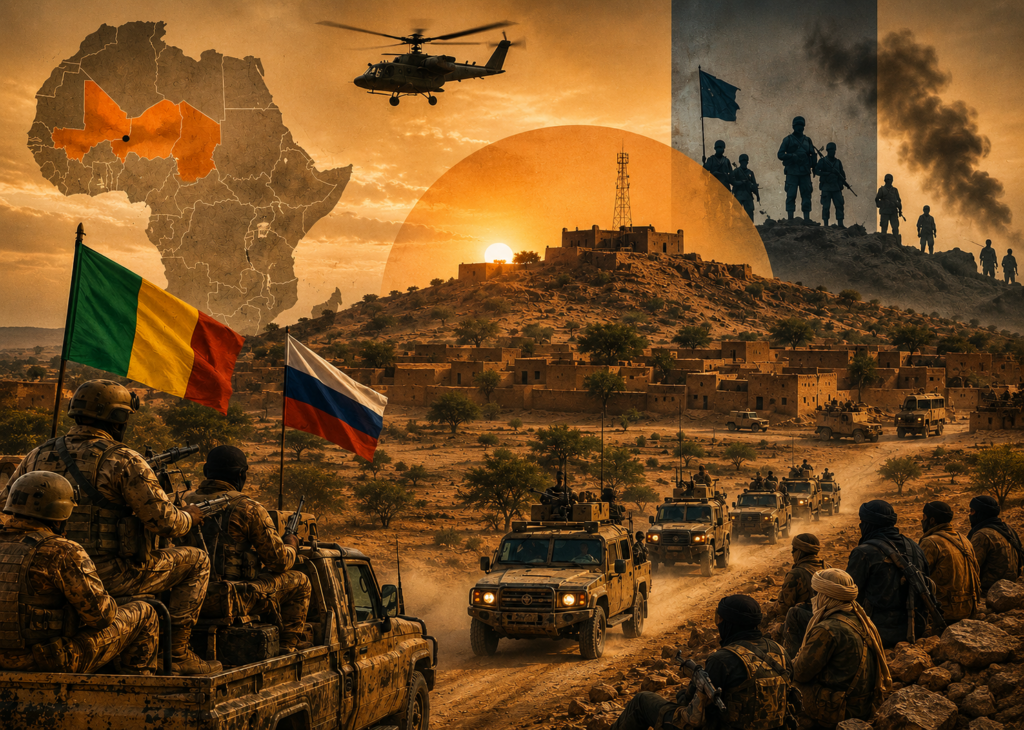
- It is likely the contest around Anéfis signals a shift in Mali’s war from holding towns to controlling roads and supply lines, with FAMa retaking Anéfis on 10 July after attackers seized the town but failed to breach the camp, amid repeated waves using car bombs and drones, a relief convoy from Gao, and reported direct support from Russia’s ‘African Legion’. (Confidence: medium · ASSESSED)
- I&W: Documented ambushes or IED incidents against escorted logistics along the Gao, Anéfis axis. (0-14 days)
- I&W: Sustained weekly escorted convoys operating Gao, Anéfis without reported interdiction. (1-3 months)
- Civilian harm and displacement across the Central Sahel are very likely to rise in the near term, given thousands of deaths recorded in early 2026, 6.8 million internally displaced persons by February, recurrent jihadist abuses, allegations of war crimes by Malian forces and Russian partners, and ethnic cleansing of Fulani civilians by Burkinabè forces and auxiliaries. (Confidence: high · ASSESSED)
- I&W: New UN or NGO reports of mass-killing incidents or significant displacement spikes in Burkina Faso, Mali, or Niger. (0-14 days)
- I&W: Verified monthly casualty tallies fall below the January, March 2026 baseline and humanitarian access expands. (1-3 months)
- Armed actors in Mali and Burkina Faso are likely to expand operational use of drones and other low-cost technologies for reconnaissance and strikes, increasing lethality and complicating defence. (Confidence: medium · ASSESSED)
- I&W: Open-source imagery or credible reporting of drone-directed car bombs or mortar fire in Mali or Burkina Faso. (0-14 days)
- I&W: Security force seizures of drone stocks or counter-UAS deployments reducing drone sightings in incident reports. (1-3 months)
- Despite renewed diplomacy and border reopenings, it is unlikely violence will fall in the short term, although these steps provide channels for deconfliction and future security coordination. (Confidence: medium · ASSESSED)
- I&W: Announcements of joint border security mechanisms or intelligence-sharing between Mali and Algeria, or Niger and Nigeria. (1-3 months)
- I&W: Reclosure of borders or cancellation of planned regional engagements such as the ECOWAS meeting. (0-14 days)
- It is likely, but not yet conclusively confirmed, that the 25 April Mali attacks included the killing of Defence Minister Sadio Camara in Kati amid explosions and heavy gunfire. (Confidence: medium · REPORTED)
- I&W: Official Malian confirmation or state funeral notice for Sadio Camara. (0-14 days)
- I&W: Public reappearance of Sadio Camara in Malian state media. (0-14 days)
- Monitoring and accountability in Burkina Faso are likely to weaken after the UN Human Rights Office’s closure, increasing impunity risks and complicating humanitarian engagement. (Confidence: medium · ASSESSED)
- I&W: Fewer independent human rights reporting outputs from Burkina Faso and reduced humanitarian access requests approved. (1-3 months)
- I&W: Government agreements enabling third-party monitoring or the reopening of human rights mechanisms. (1-3 months)
Outlook & scenarios
Entrenched conflict on Mali’s northern axis (60%)
FAMa holds urban nodes such as Anéfis through static defence and escorted logistics, while JNIM and the Azawad Liberation Front sustain raids and IED ambushes along the Gao, Anéfis, Kidal corridor. Additional multi-city offensives akin to 25 April and 4 July occur, and JNIM seeks further high-impact targets in Niger, including Niamey’s air hub.
Limited stabilisation via targeted coordination (30%)
Malian gains at Anéfis hold, interdictions on the Gao, Anéfis route decline, and Mali, Algeria and Niger, Nigeria coordination modestly improves cross-border security and commerce after airspace and border reopenings. Violence persists at a lower tempo, with fewer mass-casualty incidents over the next quarter.
Rights abuses, reprisal cycle drives displacement surge and coastal contagion (40%)
Continued abuses by state forces and auxiliaries in Burkina Faso and alleged violations in Mali fuel reprisals by armed Islamists, pushing displacement beyond current levels and emboldening networks that UN officials warn are targeting coastal states in the Gulf of Guinea.
Recommendations
- Prioritise daily OSINT collection on JNIM and Azawad Liberation Front claims and incident reporting for Gao, Kidal, Mopti, Sévaré, Aguelhok, Anéfis and Kenieroba; maintain a geolocated event log to track tempo and spread.
- Task commercial satellite imagery and SAR collection on the Gao, Anéfis axis to identify escorted convoy patterns, choke points and fresh IED disturbance areas; cue follow-on imagery after reported attacks.
- Stand up a drone-use watchlist for Mali and Burkina Faso, capturing open-source imagery and incident narratives involving quadcopters or loitering munitions; disseminate monthly TTP updates to partners.
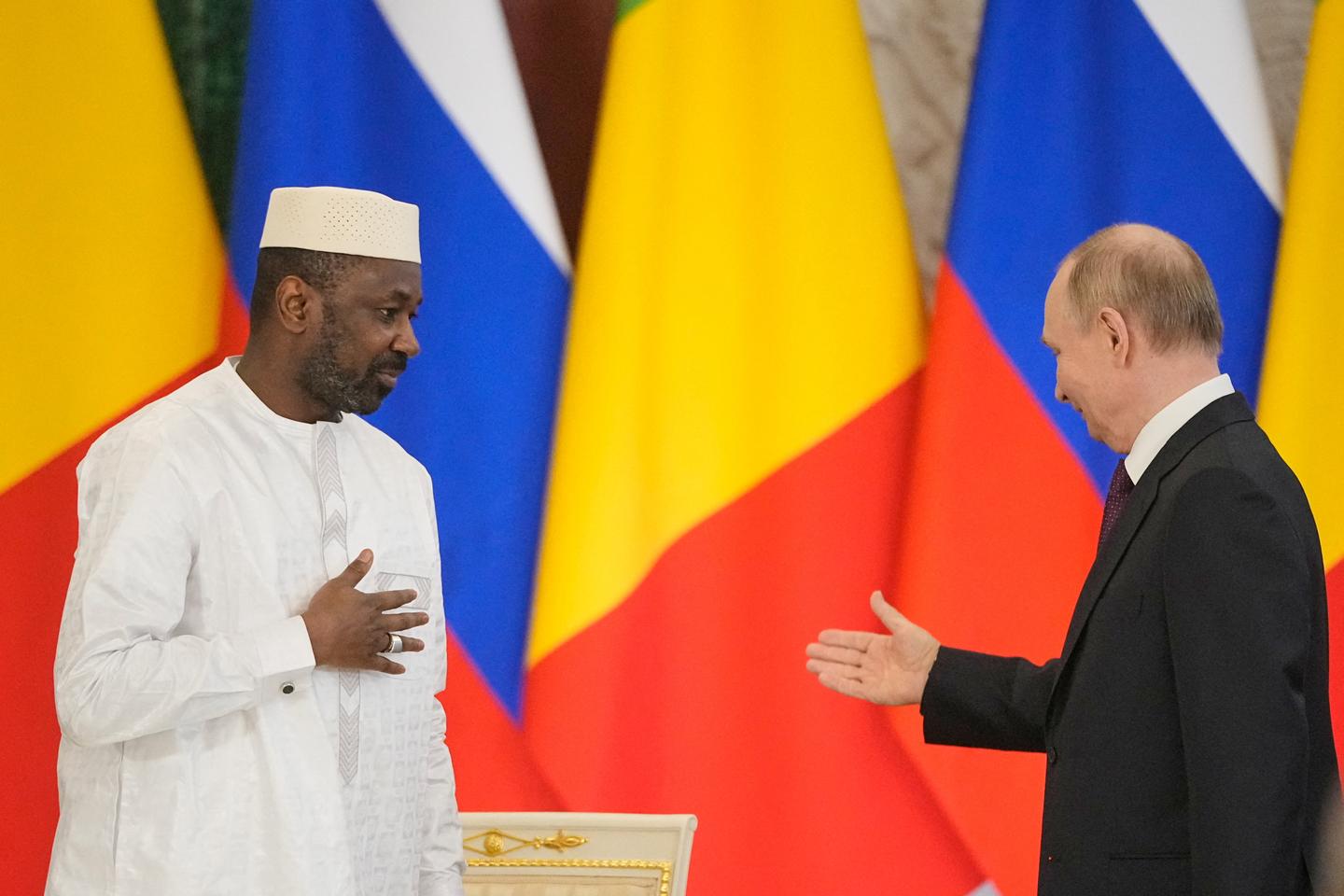
- Engage with UNOWAS and ECOWAS liaison desks to monitor deliverables from the Freetown meeting, and track whether Mali, Algeria or Niger, Nigeria announce joint patrols or information-sharing that affect border security.
- Enhance civilian-harm monitoring by fusing UN and NGO casualty feeds with displacement data, then brief missions in Bamako, Ouagadougou and Niamey on hotspots where protection messaging and access negotiations are most urgent.
- Monitor Malian government communications for confirmation or denial regarding Sadio Camara; use outcome to refine leadership-targeting assessments and coup-risk indicators.
- Add Burkina Faso to a human-rights reporting risk register following OHCHR’s office closure; identify alternative credible sources to mitigate monitoring gaps.
- Prepare contingency assessments on potential spillover to coastal states, aligned to UN warnings, with indicators keyed to first appearances of JNIM-linked cells or attacks in littoral districts.
Confidence & uncertainty
Overall confidence is medium. Several core developments rest on multiple, mutually reinforcing multilateral and reputable sources, including the 25 April and 4 July coordinated attacks, the 18 June Niamey airport attack, and the 10 July recapture of Anéfis. Humanitarian impacts and abuse patterns are supported by UN and NGO reporting. However, some specifics, such as direct Russian ‘African Legion’ support, convoy details, and the reported killing of Mali’s defence minister, rely on think-tank or single-source reporting and remain contested or not yet independently corroborated, which constrains confidence.
Alternative analysis (red cell)
An alternative, defensible reading is that the clustered incidents since late April constitute episodic, high-profile attacks rather than a verified, sustained surge in operational tempo across Mali and Niger; the Anéfis fighting appears to be a localized contest around a military camp and supply route rather than clear evidence of a systemic doctrinal shift to road-control warfare, and Russian direct-combat involvement remains insufficiently corroborated. Likewise, the UN Human Rights Office closure in Burkina Faso may degrade some modes of monitoring but does not by itself prove an irreversible drop in accountability given possible mitigation by NGOs, regional bodies, or remote verification.
Cited sources
[1] United Nations · West Africa and the Sahel: Terrorism is changing its face (A) · sha256:b2ef6c13ee57 [2] securitycouncilreport.org · UN Office for West Africa and the Sahel: Briefing and Consultations (A) · sha256:dbe89e0797e6 [3] Wikipedia · 2026 Mali offensives (B) · sha256:23eaae2b4f04 [4] eurasiaar.org · استعادة أنفيس. ماذا تكشف المعركة عن مستقبل الصراع في مالي والدور الروسي في الساحل؟ (C) · sha256:dfb5ad75a71e [5] Global Centre for the Responsibility to Protect · Central Sahel (Burkina Faso, Mali and Niger) - Global Centre for the Responsibility to Protect (B) · sha256:edaaf85c6bc5 [6] United Nations · Renewed Diplomacy Beginning to Yield Results in West Africa, Sahel Despite Growing Terrorist Threat, Top Official for Region Tells Security Council (A) · sha256:0dc338479901 [7] Le Monde · La main de la Russie derrière le rapprochement entre le Mali et l’Algérie (A) · sha256:bbab6ac6e1b9
Source content hashes were computed at collection time; the cited text is preserved unmodified for the life of this product.
Red cell review: PARTIAL DISSENT
TLP:CLEAR