TLP:CLEAR · Disclosure is not limited.
Sahel: Drone-enabled jihadist activity and junta-led security posture amid worsening access
Time window: Last 1 day · Audience: General analyst · Type: Situation report · DTG: 2026-08-01 00:21Z · Overall confidence: LOW
BLUF
Jihadist factions in Mali, Niger and Burkina Faso are likely escalating attacks, including drone use, against airfields, bases and urban targets. Ruling juntas are entrenching security-first responses as humanitarian access erodes, raising the risk of further complex strikes over the next 1-3 months.
Executive summary
Reporting points to sustained, lethal jihadist operations across the central Sahel: EIPS assailed Niamey International Airport and nearby bases on 29 January 2026, with Niger’s Ministry of Defence citing four soldiers wounded and twenty attackers killed; JNIM and allied cells mounted high-profile raids in Bamako in September 2024 and seven coordinated attacks in western Mali in July 2025; and assaults persist in Burkina Faso’s Nord and Est, at times using drones. Multiple sources indicate an expanded jihadist drone programme since 2023, including FPV-dropped IEDs in Djibo, though attribution of at least 69 recorded strikes varies between “jihadist groups” broadly and JNIM specifically. Humanitarian access is shrinking and displacement remains heavy, while juntas in Mali, Burkina Faso and Niger have extended transitions, installed General Abdourahamane Tiani for five renewable years in Niger, and signalled security-first rule amid a French drawdown and Russia’s Africa Corps replacing Wagner in Mali.
Change from previous assessment
This is an update to the 18 July brief. We move from a cautious stance on “no corroborated surge” to judging a likely sustained and potentially intensifying jihadist threat, based on reporting of the 29 January 2026 EIPS assault in Niamey, repeated high-casualty operations in Mali since 2024, and ongoing assaults in Burkina Faso’s north and east. We add new judgments on expanded jihadist drone use, junta-led political trajectories, and humanitarian access deterioration. Confidence remains low due to attribution discrepancies on drone incidents and uneven temporal specificity across sources.
Key judgments
- Jihadist violence across Mali, Niger and Burkina Faso is likely to remain elevated and intensify over the next 1-3 months, evidenced by the 29 January 2026 EIPS assault on Niamey International Airport and nearby bases, repeated high-casualty operations in Mali since 2024 that included raids in Bamako, and continuing assaults in Burkina Faso’s Nord and Est regions, at times against senior figures such as the Malian Minister of Defence. (Confidence: medium · ASSESSED)
- I&W: Official communiqués or credible local reporting of additional assaults on Niamey International Airport or military sites in Tahoua, or urban raids in Bamako or Kati. (0-14 days)
- I&W: A sustained 30-day period with no reported militant attacks in Burkina Faso’s Nord and Est regions and no urban raids in Mali. (1-3 months)
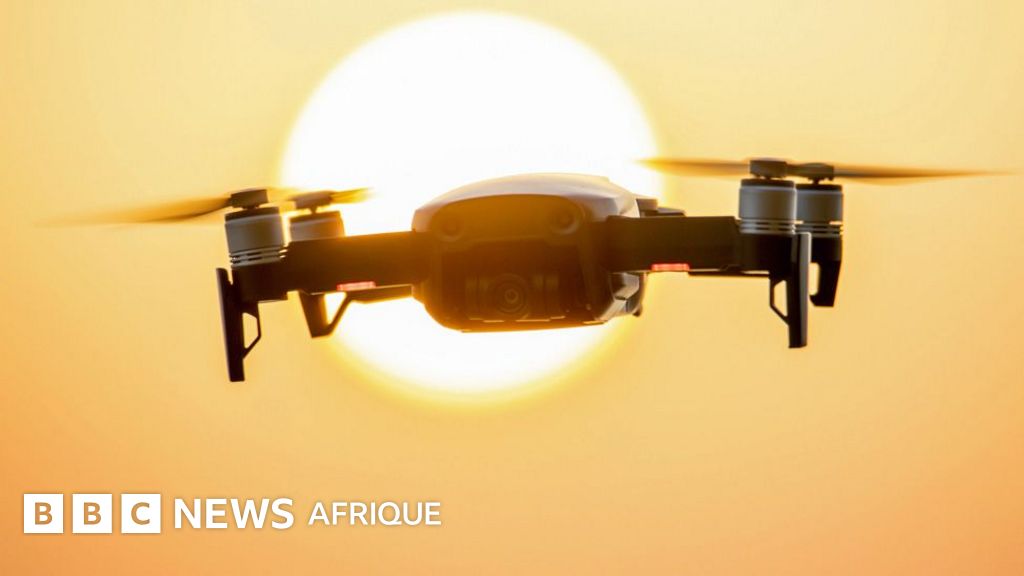
- JNIM and Islamic State affiliates very likely expanded battlefield drone employment since 2023, including FPV-dropped improvised munitions and cross-border strikes, increasing insurgent reach and lethality; attribution of at least 69 recorded strikes varies between ‘jihadist groups’ generally and JNIM specifically, which lowers certainty on exact perpetrators but not on the overall trend. (Confidence: medium · ASSESSED)
- I&W: Insurgent media or official military reporting showing FPV-dropped munitions or recovered drone components from incidents in Mali or Burkina Faso. (0-14 days)
- I&W: Security force seizures of drone workshops or supply caches followed by a marked fall in recorded drone incidents. (1-3 months)
- Military-led regimes in Mali, Burkina Faso and Niger are likely to prioritise regime security and prolong transitions, constraining inclusive crisis-management, amid an external-security reset marked by France’s drawdown and Russia’s Ministry of Defence Africa Corps replacing Wagner in Mali. (Confidence: medium · ASSESSED)
- I&W: New decrees in Ouagadougou, Bamako or Niamey extending transition timelines or tightening restrictions on opposition and media. (1-3 months)
- I&W: Credible imagery or official acknowledgements of Africa Corps units training or operating with Malian forces. (0-14 days)
- Humanitarian conditions in West Africa and the Sahel are likely to deteriorate further in the near term given already shrinking access and heavy displacement, including increased Burkinabé communities in Liberia. (Confidence: medium · ASSESSED)
- I&W: New humanitarian access denials or suspension notices for aid operations in Burkina Faso’s Nord or Est regions, or conflict-affected zones in Niger and Mali. (0-14 days)
- I&W: Officially announced humanitarian corridors or sustained increases in aid convoys reaching previously inaccessible localities. (1-3 months)
Outlook & scenarios
Sustained insurgent tempo with periodic complex attacks (60%)
Through the next quarter, JNIM and ISIS-linked cells keep pressure on capitals and transport nodes, including further attempts on airfields such as Niamey and bases in Tahoua, while drone use spreads in Burkina Faso’s Nord and Est; juntas double down on security posture and elections slip.
Urban spectacular raises regime pressure (30%)
A high-visibility mass-casualty strike hits Bamako or Kati, or another coordinated assault targets Niamey International Airport, prompting sweeping arrests, expanded emergency powers and tighter media controls.
Short operational pause (20%)
Counter-operations and supply disruptions cause a brief dip in attacks across Niger’s centre and Burkina Faso’s east; insurgents regroup and adapt, with humanitarian access not markedly improving.
Wildcard: leadership disruption fractures a network (10%)
An unexpected leadership removal within JNIM or ISIS Sahel temporarily degrades command-and-control, lowering attack rates for several weeks before networks reconstitute.
Recommendations
- Build and maintain a reconciled incident ledger for drone activity in Mali and Burkina Faso, weighting sources to address the attribution variance between ‘jihadist groups’ and JNIM for the reported 69 strikes; explicitly tag FPV use in Djibo and any cross-border ISWAP actions.
- Prioritise OSINT collection against Niamey, Tahoua and Bamako: monitor Defence Ministry communiqués, credible local outlets and insurgent claims for airfield and base-targeted plots; set alerts for references to airports, gendarmerie academies and presidential aviation assets.
- Task targeted collection on insurgent drone supply chains: scan markets and online channels for FPV components frequently seen in prior incidents, and track reporting of seizures of drone workshops in Burkina Faso and Mali.
- Track junta governance signals that shape the security response: catalogue decrees on transition timelines, national dialogues and restrictions on opposition and media; log any public evidence of Africa Corps training or operational integration with Malian forces.
- Map humanitarian access constraints and displacement corridors, including Burkinabé communities in Liberia; prepare forward indicators for corridor openings or new denials in Burkina Faso’s Nord and Est and along Niger’s Niamey, Tahoua axis.
- Establish tripwires for an urban spectacular: watch for insurgent communiqués mentioning Bamako or Kati security institutions, unusual targeting of aviation facilities, or clustering of small-arms and drone sightings near urban perimeters.
Confidence & uncertainty
Overall confidence is low. Several core claims on attacks, governance shifts and humanitarian access come from high-reliability multilateral and major media sources, yet key elements rely on mixed or undated reporting and include unresolved attribution conflicts, notably on the count and perpetrators of drone strikes in Mali and Burkina Faso. Much of the evidentiary base spans 2023-2026 rather than the immediate 24-hour window, and independent, near-term corroboration across all three countries is uneven. These gaps and contradictions constrain confidence in forward-looking assessments.
Intelligence gaps
- [EEI 1.1 · UNCOVERED] Recent jihadist attack incidents in the last 72 hours: exact locations (GPS or nearest town), date/time, target type (market, military base, convoy, village, border post), weapon systems used, and reported casualty counts. Recommended collection: open source/social_media
- [EEI 1.2 · UNCOVERED] Observed jihadist force movements and posture within 100 km of major towns or critical infrastructure: convoy sightings, checkpoints established/removed, concentrations of fighters, and annotated route preparations. Recommended collection: aerial ISR/imagery
- [EEI 1.3 · UNCOVERED] Host-nation and partner military defensive measures near population centers and key infrastructure: troop redeployments, new checkpoints/curfews, roadblocks, air sortie launches, and activation of rapid reaction units (locations and unit IDs if available). Recommended collection: military liaison/satellite
- [EEI 1.4 · UNCOVERED] Humanitarian indicators of imminent threat to civilians: sudden internal displacement flows or mass movements within 72 hours, shelter/IDP site openings, and major road closures affecting civilian evacuation routes. Recommended collection: humanitarian/NGO
- [EEI 2.1 · UNCOVERED] Reports or imagery confirming weapons and materiel holdings: number and types of heavy weapons observed or seized (mortars, artillery, technicals, IED caches, MANPADS), locations of caches, and recent rearmament deliveries. Recommended collection: imagery/HUMINT
- [EEI 2.2 · UNCOVERED] Active recruitment and propaganda indicators: new recruitment messages/accounts, numbers of claimed/new recruits by region, youth/ethnic group targeting, and physical recruitment events or forced conscriptions. Recommended collection: social_media/HUMINT
- [EEI 2.3 · UNCOVERED] Cross-border operational indicators: seizures or sightings of convoys crossing borders, capture/abandonment of border posts, patterns of fighters moving between neighboring countries, and use of transnational smuggling routes. Recommended collection: border_patrol/satellite
- [EEI 2.4 · UNCOVERED] Financing and logistics flows that sustain operations: recent seizures of cash/drugs/minerals, transactions or remittances linked to identified networks, and commercial transport companies or ports repeatedly used for shipments to insurgent-held areas. Recommended collection: financial/customs
- [EEI 3.1 · UNCOVERED] Force posture and sustainment: foreign and host-nation troop deployments (unit types, strength estimates, bases used), changes in airbase activity (sortie rates, aircraft types, times), and frequency of logistics convoys or resupply flights. Recommended collection: diplomatic/military_reporting/satellite
- [EEI 3.3 · UNCOVERED] Critical sustainment vulnerabilities: reported ammunition/fuel shortages, road/bridge interdictions affecting supply lines, strikes on logistics hubs, and closure rates of key supply routes. Recommended collection: logistics/imagery
- [EEI 3.4 · PARTIAL] Political and legal decisions influencing operations: government decrees (states of emergency, mobilization orders), approved cross-border operations or foreign troop agreements, and public statements altering rules of engagement. Recommended collection: diplomatic/government
Cited sources
[1] BBC News Afrique · Attaques jihadistes au Sahel: Comment des groupes affiliés à Al Qaïda et à l’EI renforcent leur puissance grâce aux drones - BBC News Afrique (A) · sha256:339ac9365087 [2] United Nations · Afrique de l’Ouest et Sahel: le terrorisme change de visage (A) · sha256:ef61d9372a3c [3] monde-diplomatique.fr · Dans les pays du Sahel, les juntes en échec face aux djihadistes (B) · sha256:9a2d4de2699c [4] Wikipedia · Retrait militaire français d'Afrique de l'Ouest (B) · sha256:2da0602807d6
Source content hashes were computed at collection time; the cited text is preserved unmodified for the life of this product.
TLP:CLEAR