TLP:CLEAR · Disclosure is not limited.
Sahel Security: Africa Corps Reliance and the Limits of Current Attack Evidence
Time window: Last 1 day · Audience: General analyst · Type: Situation report · DTG: 2026-10-07 14:34Z · Overall confidence: LOW
BLUF
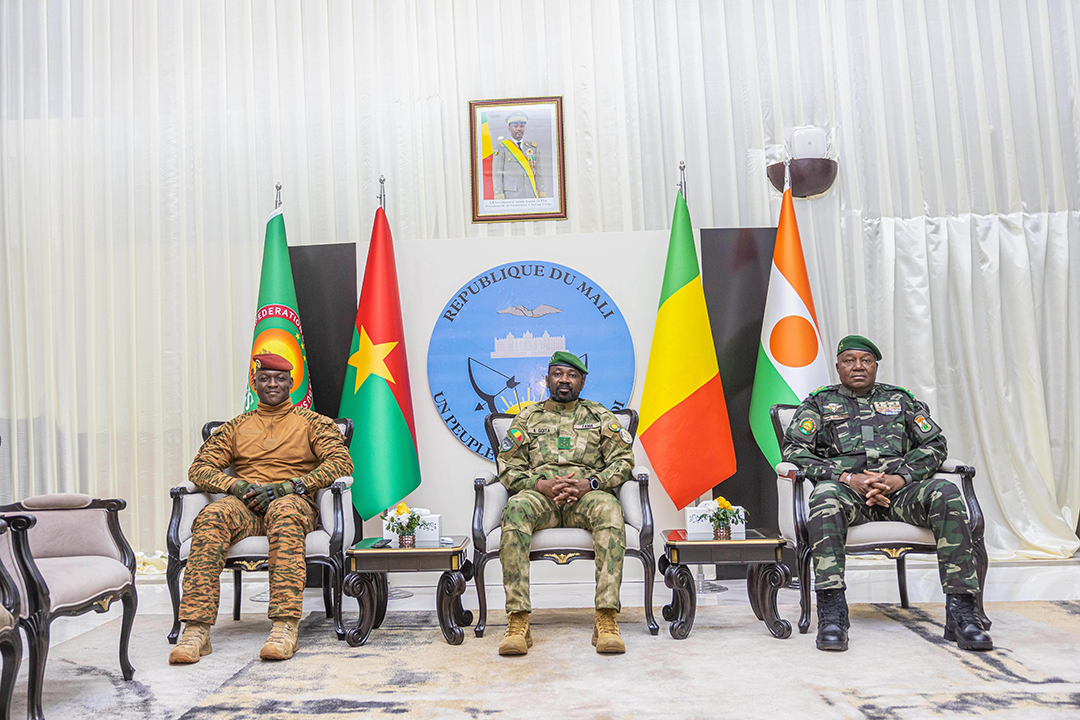
Reporting indicates that Mali and Niger sought Africa Corps assistance after attacks in Bamako and Niamey earlier in 2026, while Africa Corps retreated from Kidal in April. The available claims do not establish a new, region-wide rise in attacks during this reporting period or show that military responses have reduced violence.
Executive summary
The current material centres on Mali and Niger’s reported reliance on Africa Corps, the April retreat from Kidal, and security pressures across the Sahel. ADF Magazine reports that Mali has paid at least $1 billion to Wagner Group and Africa Corps personnel since 2021, but the material does not show whether that spending improved security. A historical estimate that Liptako-Gourma accounted for more than half of global terrorism-related deaths in 2024 does not demonstrate a current increase in attacks. Separate Nigerian reporting describes planned or ongoing investment in intelligence, surveillance and reconnaissance and multi-domain operations, but provides no operational results. Overall, the claims do not substantiate a fresh regional surge.
Change from previous assessment
The 6 October brief centred on the reported killing of Abdussamad Ohida in Owo forest and cautioned against treating that operation as evidence of a regional trend. This brief adds reporting on Mali and Niger's requests for Africa Corps assistance, the April retreat from Kidal and Mali's reported payments to Wagner Group and Africa Corps personnel. The assessment now gives greater attention to Sahel partner reliance, but the new material does not establish a region-wide rise in attack tempo or update the prior assessment of the Ohida operation.
Key judgments
- It is likely Mali and Niger will continue to seek Africa Corps assistance after attacks rather than first rely on national forces or the Alliance of Sahel States standby force. ADF Magazine reports that their military leaders requested assistance after attacks in Bamako and Niamey earlier in 2026; the account has no official confirmation in the material provided. (Confidence: low · ASSESSED)
- I&W: Confirmation: a public statement or deployment report names Africa Corps as providing support to Mali or Niger after an attack. (0-3 months)
- I&W: Break: a public statement or deployment report identifies national forces or the Alliance of Sahel States standby force as leading the response, without Africa Corps involvement. (0-3 months)
- It is likely the April retreat from Kidal weakened Africa Corps' perceived credibility, but the reported Mali payment total does not establish that the partnership improved security. ADF Magazine reports the retreat and cites analyst Ulf Laessing on the loss of credibility; this is a limited assessment based on one article, not a performance review across Mali. (Confidence: low · ASSESSED)
- I&W: Confirmation: independent reporting or imagery verifies that Africa Corps left Kidal and abandoned equipment, including the reported drone station. (0-14 days)
- I&W: Break: independent reporting verifies Africa Corps returned to Kidal and maintained an operational presence there. (1-3 months)
- It is unlikely the available claims establish a new, region-wide rise in attacks. They refer to attacks in Bamako and Niamey earlier in 2026 and to a 2024 estimate for Liptako-Gourma, but provide no comparable current incident series for Mali, Burkina Faso and Niger. Historical evidence of jihadist resilience does not establish a recent change in attack tempo. (Confidence: low · ASSESSED)
- I&W: Confirmation: a dated incident tally shows attacks or deaths in Liptako-Gourma rising against the preceding comparable period. (1-3 months)
- I&W: Break: a dated incident tally shows attacks or deaths in Liptako-Gourma stable or lower against the preceding comparable period. (1-3 months)
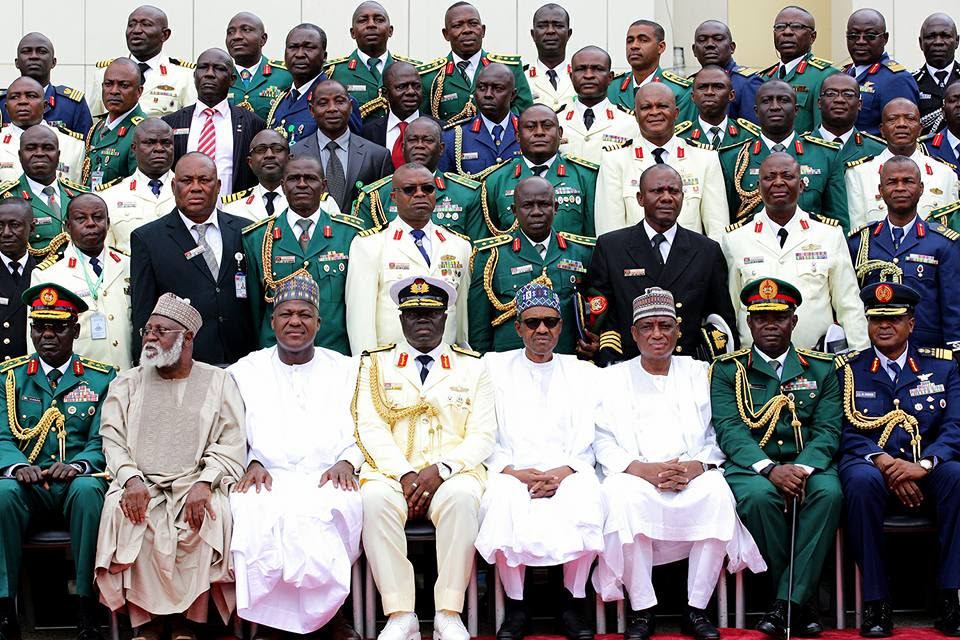
- It is likely the Nigerian Armed Forces are pursuing investment in unmanned aerial systems, satellite imagery and data analytics, alongside a shift towards multi-domain operations. The claim rests on one local-media article and does not document completed acquisitions, deployments or operational results. (Confidence: low · REPORTED)
- I&W: Confirmation: a Nigerian Armed Forces statement or procurement record identifies a completed acquisition or operational deployment of unmanned aerial systems, satellite imagery or data analytics. (1-3 months)
- I&W: Break: a Nigerian Armed Forces statement or procurement record cancels or defers the reported investment in those capabilities. (1-3 months)
Outlook & scenarios
Continued reliance on Africa Corps (55%)
This is the most likely course. Mali and Niger continue to seek Africa Corps support after attacks, while the available claims provide no evidence that the Alliance of Sahel States standby force has replaced that role.
National or Alliance forces take the lead (25%)
This is an unlikely alternative. Mali and Niger rely more heavily on national forces or the Alliance of Sahel States standby force, reducing requests for Africa Corps assistance.
Renewed attacks prompt a more visible Africa Corps role (10%)
This is a low-probability, high-impact scenario. A renewed attack in Bamako or Niamey prompts a public request for Africa Corps support and a deployment that makes Mali and Niger's reliance more visible.
Recommendations
- Maintain separate, dated incident logs for Liptako-Gourma, Bamako, Niamey, Kidal and Nigeria's North-East. Record location, reported actor attribution, fatalities and source, and avoid trend claims without comparable periods.
- Seek official confirmation from Mali and Niger on the reported requests for Africa Corps support. Track whether public statements or deployment reports instead identify national forces or the Alliance of Sahel States standby force.
- Corroborate the reported Kidal retreat and abandoned equipment through independent reporting or imagery. Treat the reported Mali payment total as unverified until supported by official financial or contract records.
- Treat Nigerian Armed Forces reporting on intelligence, surveillance and reconnaissance as a stated capability direction until a public record identifies a completed acquisition or operational deployment.
Confidence & uncertainty
Overall confidence is low because the main Sahel claims rely on one ADF Magazine article, including a quoted analyst's assessment of Africa Corps' credibility, without independent corroboration in the material provided. The Nigerian capability claims come from one local-media article and do not document operational results. Other Sahel context is historical or undated, and the material contains no comparable current incident series or primary official statements to establish a regional rise in attacks.
Alternative analysis (red cell)
The available evidence may indicate stated intentions or isolated requests rather than durable strategic behavior. Claim 0a428663-a5b6-49da-b883-74fb512a7435 does not establish that Mali and Niger will continue preferring Africa Corps over their own or Alliance forces, while claims 99df91e8-9536-484c-bed3-47aaea32f14b and be361026-5667-4269-a914-f910c04d5544 do not distinguish actual capability development from policy rhetoric. A more defensible reading is that both judgments remain plausible but are not materially established beyond reported intent.
Intelligence gaps
- [EEI 1.1 · PARTIAL] Recent jihadist attack incidents in the last 72 hours: exact locations (GPS or nearest town), date/time, target type (market, military base, convoy, village, border post), weapon systems used, and reported casualty counts. Recommended collection: open source/social_media
- [EEI 1.2 · UNCOVERED] Observed jihadist force movements and posture within 100 km of major towns or critical infrastructure: convoy sightings, checkpoints established/removed, concentrations of fighters, and annotated route preparations. Recommended collection: aerial ISR/imagery
- [EEI 1.3 · UNCOVERED] Host-nation and partner military defensive measures near population centers and key infrastructure: troop redeployments, new checkpoints/curfews, roadblocks, air sortie launches, and activation of rapid reaction units (locations and unit IDs if available). Recommended collection: military liaison/satellite
- [EEI 1.4 · UNCOVERED] Humanitarian indicators of imminent threat to civilians: sudden internal displacement flows or mass movements within 72 hours, shelter/IDP site openings, and major road closures affecting civilian evacuation routes. Recommended collection: humanitarian/NGO
- [EEI 2.1 · PARTIAL] Reports or imagery confirming weapons and materiel holdings: number and types of heavy weapons observed or seized (mortars, artillery, technicals, IED caches, MANPADS), locations of caches, and recent rearmament deliveries. Recommended collection: imagery/HUMINT
- [EEI 2.2 · UNCOVERED] Active recruitment and propaganda indicators: new recruitment messages/accounts, numbers of claimed/new recruits by region, youth/ethnic group targeting, and physical recruitment events or forced conscriptions. Recommended collection: social_media/HUMINT
- [EEI 2.3 · UNCOVERED] Cross-border operational indicators: seizures or sightings of convoys crossing borders, capture/abandonment of border posts, patterns of fighters moving between neighboring countries, and use of transnational smuggling routes. Recommended collection: border_patrol/satellite
- [EEI 2.4 · PARTIAL] Financing and logistics flows that sustain operations: recent seizures of cash/drugs/minerals, transactions or remittances linked to identified networks, and commercial transport companies or ports repeatedly used for shipments to insurgent-held areas. Recommended collection: financial/customs
- [EEI 3.1 · PARTIAL] Force posture and sustainment: foreign and host-nation troop deployments (unit types, strength estimates, bases used), changes in airbase activity (sortie rates, aircraft types, times), and frequency of logistics convoys or resupply flights. Recommended collection: diplomatic/military_reporting/satellite
- [EEI 3.2 · PARTIAL] Combat effectiveness indicators from recent engagements: verified casualty and equipment loss counts for state forces and jihadist units, territory regained or lost after operations, and number of operations meeting objectives versus failures. Recommended collection: open source/military_reports
- [EEI 3.3 · UNCOVERED] Critical sustainment vulnerabilities: reported ammunition/fuel shortages, road/bridge interdictions affecting supply lines, strikes on logistics hubs, and closure rates of key supply routes. Recommended collection: logistics/imagery
- [EEI 3.4 · PARTIAL] Political and legal decisions influencing operations: government decrees (states of emergency, mobilization orders), approved cross-border operations or foreign troop agreements, and public statements altering rules of engagement. Recommended collection: diplomatic/government
Cited sources
[1] ADF Magazine (Africa Defense Forum) · Sahel Juntas Depend on Russia, But at What Cost? (A) · 6 October 2026 · sha256:95dd263212a4 [2] Institut de recherche stratégique de l'École militaire (IRSEM) · Sahel au centre du djihadisme mondial (B) · sha256:e7075dfac57d [3] Intervention (intervention.ng) · The Nigerian Armed Forces and Adaptation to New Security Challenges (D) · 6 October 2026 · sha256:07db8c8777ab
Source content hashes were computed at collection time; the cited text is preserved unmodified for the life of this product.
Red cell review: PARTIAL DISSENT
TLP:CLEAR