TLP:CLEAR · Disclosure is not limited.
Sahel security and displacement update
Time window: Last 7 days · Audience: General analyst · Type: Situation report · DTG: 2026-11-15 04:08Z · Overall confidence: HIGH
BLUF
JNIM-ISSP fighting remains active across parts of Mali and Burkina Faso, with reporting also placing the rivalry in Niger and Nigeria. Separately, Guinean enforcement of a gold-mining ban has driven an officially reported 160,000 miners into Mali since early November; AES ministers discussed security cooperation, but the reporting does not show that it has improved operational control.
Executive summary
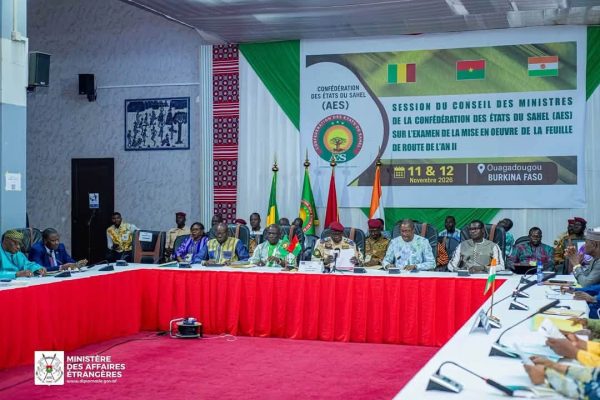
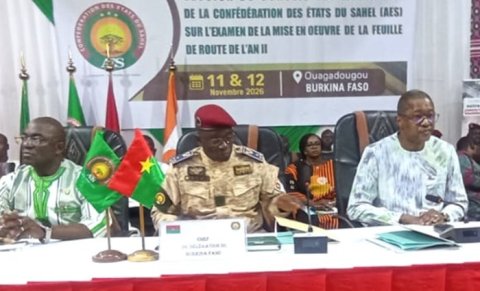
Reports describe JNIM-ISSP clashes around Tessit in eastern Mali and Oudalan province in northern Burkina Faso, following major confrontations in northeastern Burkina Faso in August and October. Estimates of fighter deaths differ and some remain unverified. The AES Council of Ministers met in Ouagadougou on 11-12 November to review its Year Two roadmap, with Burkina Faso's General Célestin Simporé highlighting the unified force and intelligence cooperation. In Guinea, enforcement of the 2 November ban on unregulated artisanal gold mining led to arrests, protests and deaths in Siguiri. Malian authorities report about 160,000 miners arrived in Mali since early November, including about 100,000 in Bamako and nearly 60,000 in Kouremale. The reported displacement figures and Siguiri casualty details remain provisional. A warning that armed extremist groups might recruit displaced miners is not evidence that recruitment has occurred.
Change from previous assessment
The prior brief centred on the 12 November Tillim-Tera ambush in Niger and assessed continued exposure on Tillaberi travel routes; the claims in this update do not revise that incident's disputed attribution or casualty count. This brief adds reports of renewed JNIM-ISSP fighting around Tessit and Oudalan, reported territorial expansion towards Niger and Nigeria, the AES ministers' Ouagadougou review, and the Guinea-related displacement into Mali. Confidence in the assessment that JNIM-ISSP fighting will persist rises from low to medium because the current reporting adds renewed engagements and prior major confrontations, although casualty figures and some October claims remain unverified.
Key judgments
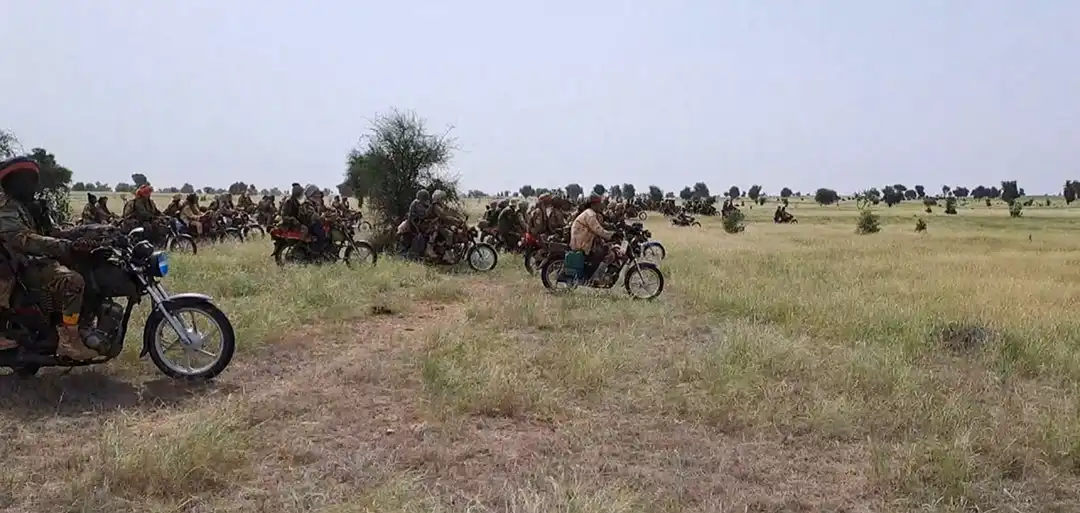
- JNIM and ISSP are likely to continue fighting over territorial influence around Tessit in eastern Mali and Oudalan province in northern Burkina Faso over the next 1-3 months. Reporting describes renewed clashes and two major confrontations in northeastern Burkina Faso in August and October. Casualty estimates are not reconciled: one account reports hundreds of fighters killed across the two confrontations, while preliminary monitoring for October put the toll at about 60, including around 50 JNIM members, and said the figures were unverified. Claims that fighting continued across multiple fronts on 11-12 October also lack independent confirmation. (Confidence: medium · ASSESSED)
- I&W: An independently geolocated report naming JNIM and ISSP in fighting around Tessit or Oudalan by 29 November would confirm continued combat. (0-14 days)
- I&W: A documented cessation agreement followed by no verified clashes around Tessit or Oudalan through 15 February would break this assessment. (1-3 months)
- Reporting places JNIM-ISSP territorial battles in Niger's Tillaberi and Dosso regions and Nigeria's Kebbi state since April 2026. A separate account describes ISSP extending from Menaka in Mali towards the Nigerian border and trying to influence bandit groups in northwest Nigeria. The timing of ISSP's expansion into Niger is unresolved, and the claim about influencing Nigerian groups is an analyst's statement rather than evidence of an established affiliation. The reporting comes chiefly from one major-media account, so confidence in the extent of this eastward expansion is low. (Confidence: low · REPORTED)
- I&W: A second independently sourced, geolocated JNIM-ISSP incident in Tillaberi, Dosso or Kebbi, or documented ISSP contact with a named northwest Nigerian bandit group, would confirm the reported eastward extension. (1-3 months)
- I&W: Independent monitoring or a source correction showing no JNIM-ISSP territorial fighting beyond Mali and Burkina Faso would break this assessment. (1-3 months)
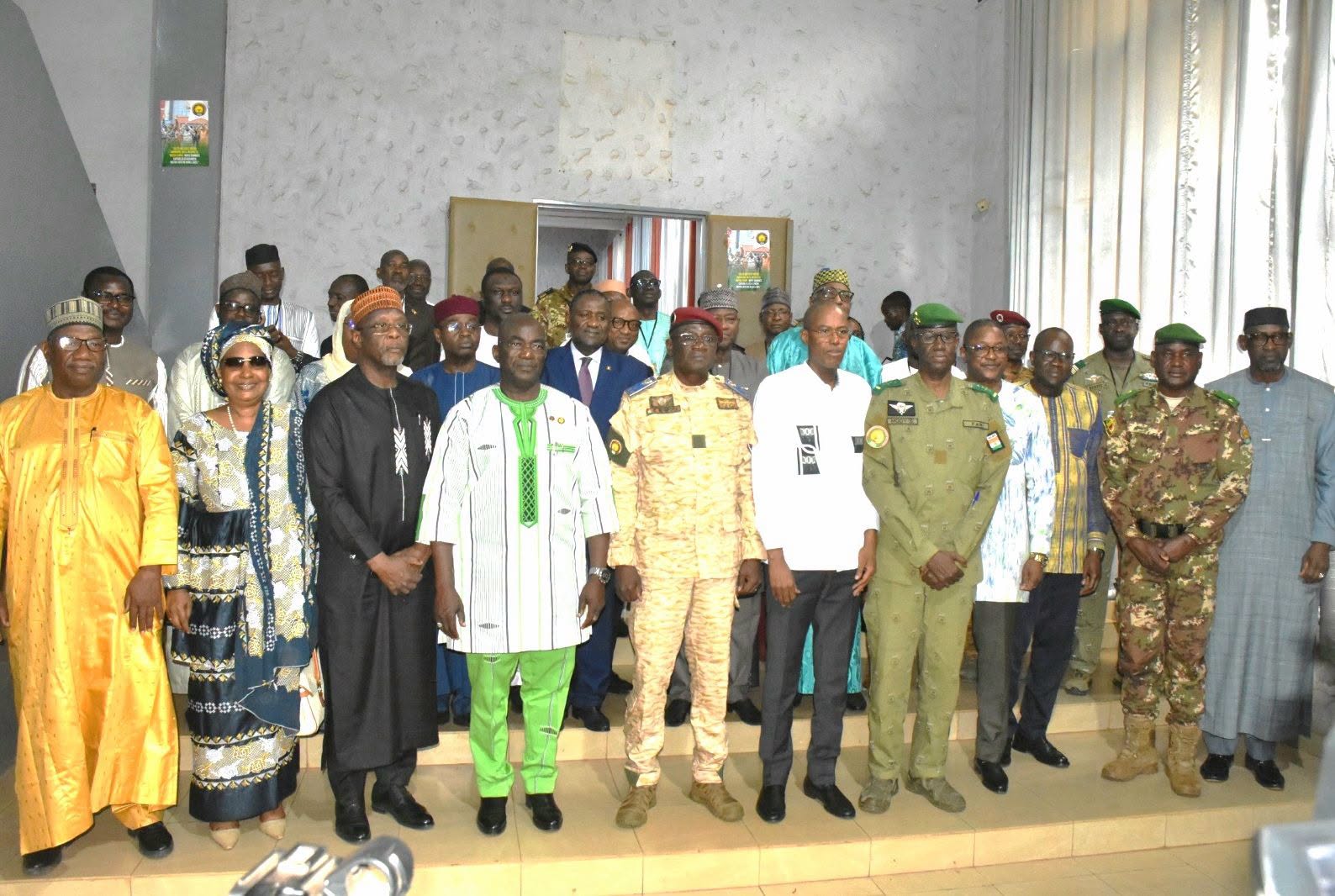
- AES ministers from Burkina Faso, Mali and Niger met in Ouagadougou on 11-12 November to review the Year Two roadmap. General Célestin Simporé highlighted the unified force, national armed forces and intelligence cooperation. The reports establish stated priorities, not operational follow-through or improved security control. Local reporting supports the meeting and its agenda, but largely records official statements. (Confidence: medium · ASSESSED)
- I&W: An AES communiqué naming joint-force units, command arrangements or an intelligence-sharing mechanism would show movement from stated priorities to implementation. (1-3 months)
- I&W: No published operational order or named deployment by 15 February would support the assessment that the meeting had not produced visible operational follow-through. (1-3 months)
- Guinea's enforcement of its 2 November ban on unregulated artisanal gold mining has driven a large displacement into Mali. Malian authorities report about 160,000 gold miners arrived since early November, comprising about 100,000 in Bamako and nearly 60,000 in Kouremale, and record 11 deaths linked to the displacement crisis. Burkina Faso says it repatriated 45,406 citizens forced to leave Guinea. In Siguiri, one report gives 10 deaths; another provisional government account identifies five foreign nationals among those killed and 13 injured but gives no total. These figures are official or provisional reports relayed by trade and local media, not independently reconciled counts. (Confidence: medium · REPORTED)
- I&W: Updated Malian figures that separately identify arrivals and deaths in Bamako and Kouremale would confirm the reported scale and distribution of displacement. (0-14 days)
- I&W: An official revision showing that the Bamako and Kouremale counts overlap, or substantially reducing the estimated total, would break the reported estimate of about 160,000 arrivals. (0-14 days)
- Current reporting does not establish that armed extremist groups have recruited displaced miners in Mali. The warning that such groups might exploit the humanitarian emergency is prospective and appears in a single trade-publication report; confidence in the warning as an indicator of actual recruitment is low. (Confidence: low · REPORTED)
- I&W: A dated, location-specific and independently corroborated case of an armed extremist group recruiting among displaced miners would confirm that the warning has materialised. (0-1 month)
- I&W: A published field assessment from Mali reporting no verified recruitment cases among displaced miners would weaken the warning as an indicator of current activity. (1-3 months)
Outlook & scenarios
Continued JNIM-ISSP clashes (65%)
JNIM and ISSP continue episodic fighting around Tessit and Oudalan, with further reports from the Niger borderlands. The competing casualty estimates remain unresolved, and clashes do not by themselves establish that either group has gained durable control.
AES security plans move towards implementation (35%)
The Ouagadougou review is followed by a public operational directive for the AES unified force or a defined intelligence-sharing arrangement. This would demonstrate implementation beyond the stated ministerial priorities; the current reporting does not establish that such steps have occurred.
Guinea-related displacement remains a humanitarian pressure (45%)
Continued enforcement of Guinea's mining ban sustains movement into Mali and adds to pressure in Bamako and Kouremale. Malian and Burkinabe authorities continue to manage arrivals and returns while AES officials keep the expulsions on their diplomatic agenda.
High-impact wildcard: extremist recruitment from displacement (10%)
Armed extremist groups operating across the Sahel turn displacement in Mali into a recruitment channel, increasing their access to vulnerable people. No supplied report documents recruitment; this outcome would mark a shift from a reported concern to observed exploitation.
Recommendations
- Track JNIM-ISSP incident reporting separately by location in Tessit, Oudalan, Tillaberi, Dosso and Kebbi. Seek independent geolocation and attribution before treating reported casualty estimates or territorial claims as established.
- Request updated arrival and mortality figures from Malian authorities, separating Bamako from Kouremale and identifying whether the reported counts overlap. Keep the Siguiri death toll provisional until a reconciled count is available.
- Monitor AES communiqués for named units, command arrangements, intelligence-sharing mechanisms and deployment orders. Do not treat the ministerial review as evidence that the unified force has improved security control.
- Treat recruitment among displaced miners as an unverified warning. Record any case only when reporting specifies the location, date, group and source of corroboration.
Confidence & uncertainty
Overall confidence is high for the broad situation picture. Reporting on JNIM-ISSP clashes includes a major-media account citing ACLED and a UN panel, with additional think-tank reporting on renewed fighting. Local reporting describes the AES meeting, while trade and local reporting carry Malian and Burkinabe figures on displacement. Key uncertainties remain: October combat casualty estimates are unverified, Siguiri's casualty details are provisional, the AES meeting does not demonstrate operational results, and the recruitment warning is not evidence of actual recruitment.
Alternative analysis (red cell)
Recent clashes demonstrate that JNIM and ISSP remain capable of confronting one another, but the available reporting does not establish a continuing territorial campaign through the next 1-3 months. The conflicting casualty accounts in claims 16704ece-b6ad-444d-ae7d-b7fee72f3b3d and 97360a7d-3a69-4808-b002-a305c481d12d, together with the unverified multi-front claims in 9dfc07ef-f654-49a1-81cb-88bbdbdf5ee2, are also consistent with episodic or localized fighting rather than a sustained contest around both named areas.
Intelligence gaps
- [EEI 1.1 · PARTIAL] Number, location, and scale of attacks (IEDs, ambushes, complex attacks) per week against towns, military bases, police posts, or convoys, with casualty and equipment-loss counts. Recommended collection: ground/HUMINT
- [EEI 1.2 · PARTIAL] Observed movement and size of armed columns (vehicle counts, heavy weapons present) along approach routes to population centers or borders documented by imagery, local reporting, or border guards. Recommended collection: imagery/SATCOM
- [EEI 1.3 · PARTIAL] Reports of occupation, administration, or imposition of checkpoints/taxes by armed groups in named towns, villages, markets, or on specified road segments. Recommended collection: OSINT (local media/social)
- [EEI 1.4 · PARTIAL] Seizure or acquisition of heavy weapons or air-defense systems (mortars >81mm, artillery, armored vehicles, MANPADS) attributed to specific groups as evidenced by photos, captured weapons inventories, or weapons interdictions. Recommended collection: forensics/field reporting
- [EEI 3.1 · UNCOVERED] Interdictions or seizures at borders/markets of weapons, ammunition, fuel, or contraband (type/quantity, seizure location, alleged origin/destination). Recommended collection: border/customs
- [EEI 3.2 · UNCOVERED] Recorded movements of known smuggling routes and convoy volumes: counts of commercial/privately registered vehicles and informal river crossings on specific cross-border corridors. Recommended collection: ground/HUMINT
- [EEI 3.3 · UNCOVERED] Monitored financial flows linked to illicit trade: large cash movements, changes in declared gold exports at named mines/ports, or arrests of money couriers with amounts and origins. Recommended collection: financial/forensics
- [EEI 3.4 · UNCOVERED] Observed changes at border security posts: closures, reductions in personnel, destroyed checkpoints, or documented agreements allowing free movement at named crossings. Recommended collection: imagery/OSINT
Red cell review: PARTIAL DISSENT
TLP:CLEAR