TLP:CLEAR · Disclosure is not limited.
Sahel Security Crisis: 25 October 2026 Situation Report
Time window: Last 7 days · Audience: General analyst · Type: Situation report · DTG: 2026-10-25 04:06Z · Overall confidence: MEDIUM
BLUF
Burkina Faso's parliament likely adopted a revised penal code restoring capital punishment for terrorism, espionage and treason, but the available reporting does not establish that the provisions have been promulgated or applied. Mali-related allegations of civilian abuse and high casualty figures remain weakly corroborated, while NASA FIRMS recorded 85 thermal detections in Mali over the two days to 24 October, not 85 confirmed attacks.
Executive summary
Burkina Faso's parliament reportedly voted unanimously on 20 October to restore the death penalty, and Justice Minister Edasso Rodrigue Bayala confirmed passage of the revised code. Reports differ on the duration of the preceding moratorium, and do not establish implementation. In Mali, a September report said the Azawad Liberation Front and JNIM seized parts of the north, but does not establish whether they still control those areas. Social-media reporting attributes allegations of abuses to Human Rights Watch and claims high casualties at Dioura; neither is independently corroborated in the available reporting. NASA FIRMS recorded 85 active fire or thermal detections in Mali over the two days to 24 October, including five high-confidence detections. These data do not identify the cause of the heat signatures.
Change from previous assessment
Since the 24 October prior brief, the Burkina Faso vote remains assessed as likely, with the current reporting adding Justice Minister Edasso Rodrigue Bayala's confirmation but not establishing promulgation or enforcement. The latest NASA FIRMS snapshot reports 85 detections and five high-confidence detections, compared with the prior brief's 199 detections and 12 high-confidence detections; the observation windows differ, so this does not establish a decline. The Mali Human Rights Watch allegations and Dioura casualty claims remain low-confidence. This packet provides no new evidence to update the prior judgments on JNIM and Islamic State clashes in the tri-border area or the Algeria-Niger military cooperation agreement.
Key judgments
- Burkina Faso's parliament likely voted unanimously on 20 October to adopt a revised penal code restoring capital punishment for terrorism, espionage and treason, with all 71 members reportedly in favour. Justice Minister Edasso Rodrigue Bayala confirmed passage. Reports differ on whether the change ended a six-year or eight-year period without executions, and the available reporting does not establish promulgation or enforcement. Confidence is medium: multiple local-media accounts and the minister's confirmation support passage, but the reporting is not clearly independent and conflicts on the timeline. (Confidence: medium · REPORTED)
- I&W: An official Burkinabè record publishes the revised code and confirms the offences carrying capital punishment. (0-14 days)
- I&W: An official record shows the vote was not final or that the reported offences are not included in the adopted code. (0-14 days)
- The new capital provisions likely increase the risk of coercive or politically selective prosecutions in Burkina Faso. The provisions cover terrorism, treason and espionage, and Captain Ibrahim Traoré reportedly vowed to execute captured foreign spies and their local accomplices. No reported case establishes how the revised code will be used. Confidence is low because the threat and legal reporting rely on local-media accounts, and there is no evidence here of an application under the new code. (Confidence: low · ASSESSED)
- I&W: Burkina Faso's justice ministry or a court announces a case under one of the revised capital provisions. (1-3 months)
- I&W: An official code text or court record shows the provisions are not in force or do not cover the reported offences. (1-3 months)
- The Azawad Liberation Front and JNIM likely seized parts of northern Mali in coordinated attacks on the Malian military and Russia's Africa Corps in September 2026. The available account does not establish whether either group still controls those areas as of 25 October. Confidence is medium because the event is reported by a major-media source, but the available claims provide no independent confirmation or current control update. (Confidence: medium · REPORTED)
- I&W: Follow-up reporting identifies specific northern Mali locations still held by the Azawad Liberation Front or JNIM. (0-14 days)
- I&W: Malian or independent reporting documents government forces retaking locations previously reported under their control. (0-14 days)
- NASA FIRMS almost certainly recorded 85 active fire or thermal detections in Mali over the two days to 24 October, including five high-confidence detections, using VIIRS data within the reported bounding box from 13.87,-4.79 to 18.87,0.21. These are thermal detections, not a confirmed count of attacks or fires with an identified cause. Confidence is high because the count and instrument data come from NASA FIRMS. (Confidence: high · REPORTED)
- I&W: A repeat NASA FIRMS query for the same two-day observation window reproduces 85 detections and five high-confidence detections. (0-14 days)
- I&W: NASA FIRMS revises the count or confidence classifications for the same observation window. (0-14 days)
- A social-media post attributes to Human Rights Watch allegations that Mali's army and Russia's Africa Corps killed civilians in attacks and detention across central and northern Mali, and that jihadist and separatist insurgents tortured and executed captured soldiers. These allegations remain uncorroborated in the available reporting. Confidence is low because the account is indirect and comes from social media, rather than a direct Human Rights Watch publication. (Confidence: low · REPORTED)
- I&W: Human Rights Watch publishes a direct statement or report identifying the alleged incidents and parties involved. (0-14 days)
- I&W: Human Rights Watch denies the attribution or no direct publication supports the social-media account. (0-14 days)
- The claim that jihadist attackers killed at least 100 Malian soldiers and five Africa Corps personnel at Dioura on 10 September remains unverified. The casualty figures in the available claims come from social-media-derived reporting, with no independent confirmation. Confidence is low. (Confidence: low · REPORTED)
- I&W: An independent report or official casualty record confirms the Dioura attack and the reported figures. (0-14 days)
- I&W: An independent account disputes the reported attack or gives materially different casualty figures. (0-14 days)
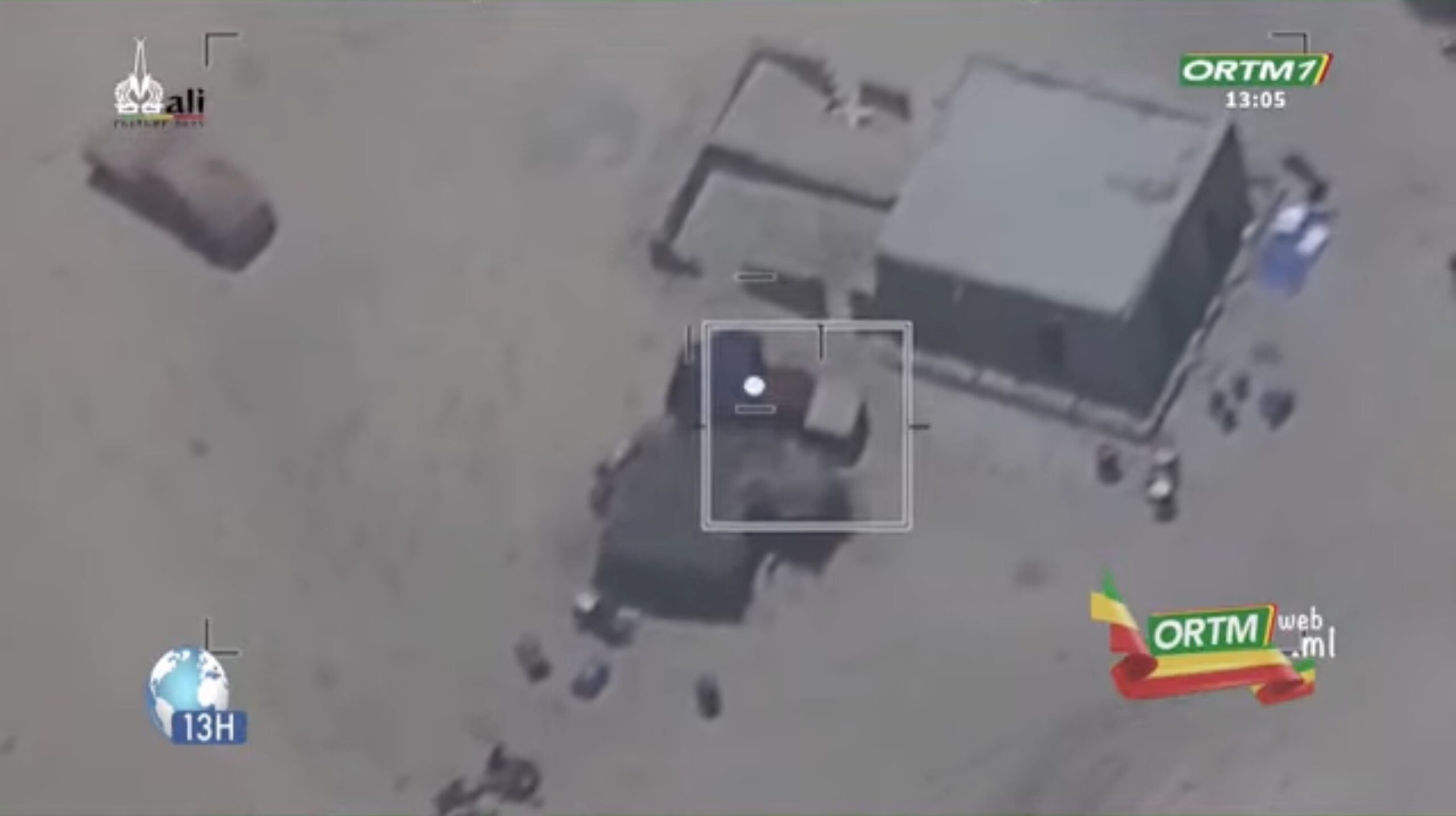
- The target and civilian toll of the Malian armed forces' 8 July 2025 drone strike in Zouera remain disputed. FAMa presented the strike as an operation against a terrorist supply vehicle; information attributed to MSF said four people, including three young girls, were killed and five were treated for injuries. Bellingcat geolocated the strike site inside Zouera, which does not resolve the competing accounts of the target or casualties. Confidence is low because the reporting conflicts and the casualty account is not independently corroborated here. (Confidence: low · REPORTED)
- I&W: Independent geolocated imagery or on-scene reporting verifies civilian casualties at the Zouera impact site. (1-3 months)
- I&W: Independent evidence establishes that the strike hit a vehicle away from the reported civilian impact site and disputes the casualty account. (1-3 months)
Outlook & scenarios
Capital provisions remain in place without a documented case (55%)
The most likely path over the next three months is that Burkina Faso's revised code remains reported as adopted while public reporting does not establish its practical use. The key distinction will be between the parliamentary vote, formal promulgation and any prosecution under the new provisions.
A first prosecution tests the revised code (35%)
There is a lower, but still plausible, chance that Burkinabè authorities bring a terrorism, treason or espionage case under the revised provisions within three months. Such a case would clarify whether the reported adoption has translated into judicial practice.
Execution follows a foreign-spy allegation (10%)
It is very unlikely, but high impact, that Burkina Faso executes a person accused of being a captured foreign spy or local accomplice within three months. Captain Ibrahim Traoré's reported threat and the new capital provisions make this a scenario to monitor; the available reporting does not establish that a relevant detainee or case exists.
Recommendations
- Verify Burkina Faso's official code text, promulgation status and commencement date before treating the reported vote as an enforceable legal change.
- Track public court and justice ministry notices for the first case under the terrorism, treason or espionage provisions, and distinguish charges from convictions or executions.
- Seek a direct Human Rights Watch publication and independent incident-level corroboration before using the Mali abuse allegations or Dioura casualty figures as established facts.
- Use NASA FIRMS detections as a cue for further checking, not as evidence of strikes or conflict incidents; compare repeat VIIRS observations with independently reported events and locations.
Confidence & uncertainty
Overall confidence is medium. NASA FIRMS provides strong direct evidence for its narrow thermal-detection count, and reporting of Burkina Faso's vote includes confirmation attributed to Justice Minister Edasso Rodrigue Bayala. Much of the legal reporting comes from local-media accounts that are not clearly independent and conflict on the duration of the preceding moratorium. The Mali allegations and Dioura casualty figures rely on social-media-derived reporting, while the Zouera accounts conflict on the target and civilian toll.
Intelligence gaps
- [EEI 1.1 · PARTIAL] Number, location, and scale of attacks (IEDs, ambushes, complex attacks) per week against towns, military bases, police posts, or convoys, with casualty and equipment-loss counts. Recommended collection: ground/HUMINT
- [EEI 1.2 · PARTIAL] Observed movement and size of armed columns (vehicle counts, heavy weapons present) along approach routes to population centers or borders documented by imagery, local reporting, or border guards. Recommended collection: imagery/SATCOM
- [EEI 1.3 · UNCOVERED] Reports of occupation, administration, or imposition of checkpoints/taxes by armed groups in named towns, villages, markets, or on specified road segments. Recommended collection: OSINT (local media/social)
- [EEI 1.4 · UNCOVERED] Seizure or acquisition of heavy weapons or air-defense systems (mortars >81mm, artillery, armored vehicles, MANPADS) attributed to specific groups as evidenced by photos, captured weapons inventories, or weapons interdictions. Recommended collection: forensics/field reporting
- [EEI 2.1 · UNCOVERED] Internal security force movements: redeployment of army units, garrison withdrawals, or mass troop movements toward/away from capitals and regional command posts. Recommended collection: imagery/SATCOM
- [EEI 2.2 · UNCOVERED] Detentions, public dismissals, resignations, or public statements by senior military, police, or government officials indicating factional splits (named individuals, ranks, units). Recommended collection: diplomatic/OSINT
- [EEI 2.3 · PARTIAL] Changes in foreign military footprints or security agreements: arrival/departure of foreign troops, opening/closure of foreign bases, visible presence of private military contractors (identified personnel/vehicles). Recommended collection: OSINT/imagery
- [EEI 2.4 · PARTIAL] Targeted external support actions: sanctions, suspension of aid, delivery of weapons or logistics from foreign state or non-state actors (documented shipments, bank transfers, public announcements). Recommended collection: financial/diplomatic
- [EEI 3.1 · UNCOVERED] Interdictions or seizures at borders/markets of weapons, ammunition, fuel, or contraband (type/quantity, seizure location, alleged origin/destination). Recommended collection: border/customs
- [EEI 3.2 · UNCOVERED] Recorded movements of known smuggling routes and convoy volumes: counts of commercial/privately registered vehicles and informal river crossings on specific cross-border corridors. Recommended collection: ground/HUMINT
- [EEI 3.3 · UNCOVERED] Monitored financial flows linked to illicit trade: large cash movements, changes in declared gold exports at named mines/ports, or arrests of money couriers with amounts and origins. Recommended collection: financial/forensics
- [EEI 3.4 · UNCOVERED] Observed changes at border security posts: closures, reductions in personnel, destroyed checkpoints, or documented agreements allowing free movement at named crossings. Recommended collection: imagery/OSINT
Red cell review: CONCUR WITH COMMENT
TLP:CLEAR