TLP:CLEAR · Disclosure is not limited.
Sahel security crisis: active combat in northern Mali, treaty‑risk from submunitions, and persistent operational headwinds in Niger
Time window: Last 7 days · Audience: General analyst · Type: Situation report · DTG: 2026-06-17 04:09Z · Overall confidence: MEDIUM
BLUF
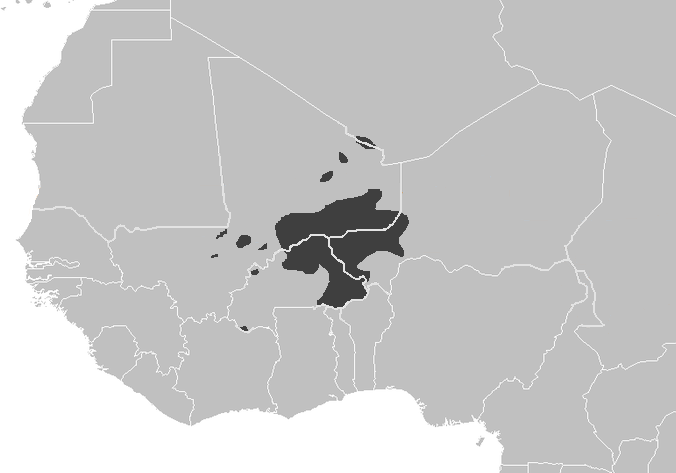
Mali remains a combat theatre, with credible OSINT showing Russian‑made submunitions near Tadjmart after FAMa’s 17 May airstrikes and fresh heat detections on 16 June, sustaining both battlefield risk and treaty‑compliance exposure for Bamako. Niger’s operating environment stays incident‑prone, pointing to continued constraints on movement and programmes across the tri‑border.
Executive summary
Reporting indicates ongoing fighting in northern Mali, including FAMa air operations and insurgent activity by JNIM and the Azawad Liberation Front, alongside evidence of Russian‑made cluster submunitions near Tadjmart after the 17 May strikes. NASA thermal detections on 16 June are consistent with continued conflict activity, while analytic research on roadblock geographies highlights the likelihood of checkpoint extraction dynamics along Sahelian corridors. UNHCR describes Niger’s Q1 2026 environment as marked by security incidents, signalling near‑term constraints on field movement and delivery.
Change from previous assessment
New FIRMS heat detections on 16 June reinforce continued conflict activity in Mali, while OSINT on Tadjmart submunitions and FAMa’s 17 May strikes remains central to the compliance‑risk picture. We add UNHCR’s Q1 2026 Niger operating note to characterise present constraints. We retire prior detail on coastal‑state spillover and specific foreign movement rules due to lack of fresh supporting reporting in this run.
Key judgments
- Mali will almost certainly remain a high‑threat operating environment over the next 30 days, with active FAMa operations in the north, JNIM and FLA pressure, Russian‑aligned Africa Corps support, and fresh 16 June thermal detections consistent with ongoing conflict activity. (Confidence: high · ASSESSED)
- I&W: Repeated NASA FIRMS thermal detections clustered in Kidal, Gao or around Tadjmart, coupled with new FAMa or JNIM communiqués on engagements. (0-14 days)
- I&W: A sustained fall in FIRMS detections across northern Mali and a lull in official or insurgent battle reporting. (1-3 months)
- It is very likely that Russian‑made cluster submunitions were present around Tadjmart after the 17 May FAMa airstrikes, creating exposure to Convention on Cluster Munitions compliance scrutiny for Bamako. (Confidence: high · ASSESSED)
- I&W: Independent EOD or demining reporting confirming recovery of ShOAB‑0.5 bomblets in or near Tadjmart. (1-3 months)
- I&W: An official, technically credible rebuttal demonstrating misidentification of remnants or a prior‑period contamination unrelated to the 17 May strikes. (1-3 months)
- Niger is likely to remain a constrained and incident‑prone theatre for humanitarian and field operations through the next quarter, given the Q1 2026 operating picture marked by security incidents and shifting situational dynamics. (Confidence: medium · REPORTED)
- I&W: UNHCR or partner updates citing fresh security incidents affecting staff movement or access in Tillabéri and other hotspots. (0-14 days)
- I&W: Successive monthly reporting indicating a material decline in reported incidents impacting operations. (1-3 months)
- Burkina Faso is likely to remain highly insecure over the next quarter, reflecting the long‑running Sahel war and the historic expansion of Islamist control across parts of the country. (Confidence: low · ASSESSED)
- I&W: Documented insurgent attacks or territorial assertions by jihadist factions in Boucle du Mouhoun, Sahel or Est regions. (0-14 days)
- I&W: Evidence of government re‑establishing sustained administrative control and secure ground lines in previously contested communes. (1-3 months)
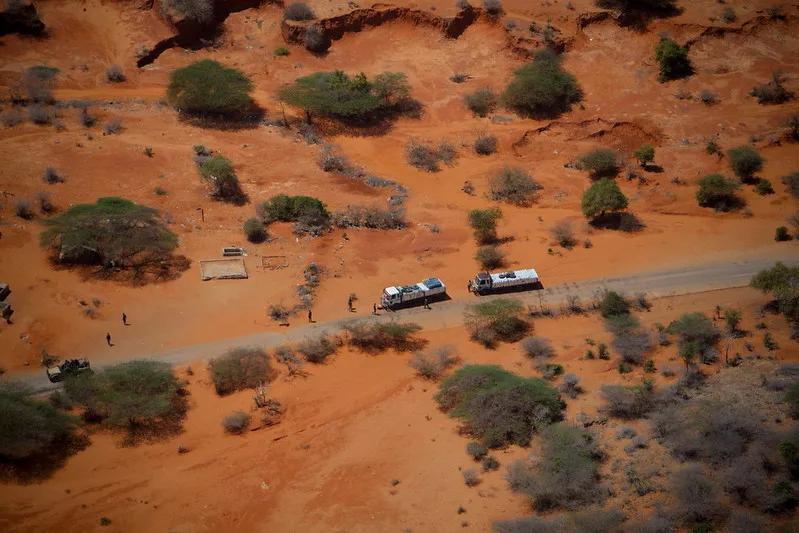
- Checkpoint and roadblock economies are very likely to continue shaping movement, extraction of rents and local authority along Sahel border corridors, compounding logistics friction and protection risks for convoys and field teams. (Confidence: medium · ASSESSED)
- I&W: Field reporting of new or expanded informal checkpoints levying fees along key Sahel corridors linking Gao, Ménaka, border crossings or routes into Niger. (0-14 days)
- I&W: Observed removal or formalisation of roadblocks with verifiable reductions in ad hoc fees along priority aid or trade corridors. (1-3 months)
Outlook & scenarios
Baseline: Protracted fighting in northern Mali with periodic airstrikes and insurgent harassment (60%)
FAMa, with Africa Corps support, sustains air and ground operations against JNIM and FLA in Kidal, Gao axes. OSINT yields additional imagery of submunition remnants near Tadjmart and recurring FIRMS heat signatures. Humanitarian access remains tightly managed, and sporadic route closures persist.
Deterioration: Tri‑border operating picture hardens (40%)
Security incidents affecting staff movement and programmes in Niger persist or increase, prompting tighter movement postures and additional cancellations of field missions along the Mali, Niger, Burkina Faso frontiers. Aid delivery tempos fall and logistics costs rise due to checkpoint extraction and convoy risk.
Partial stabilisation: Localised lulls and improved access windows (20%)
Tactical pauses or weather and terrain effects reduce engagement tempo in select northern Mali zones, reflected in a tapering of FIRMS detections. Authorities and community intermediaries negotiate ad hoc safe‑passage windows that marginally improve road access for time‑bound deliveries.
Recommendations
- Maintain a daily watch on NASA FIRMS detections over Kidal, Gao and the Tadjmart vicinity and correlate with any FAMa or insurgent claims to refine route‑risk forecasting.
- Task high‑resolution satellite collection over Tadjmart and nearby strike sites to document bomblet presence and contamination footprints for operational avoidance planning and legal review.
- Adopt EOD‑level risk controls for any missions within 10 km of reported submunition finds, including no‑go perimeters, marked hazard mapping and community reporting hotlines.
- In Niger, require incident‑updated movement risk assessments and contingency routing for all field travel, with thresholds for postponement when UNHCR or partners flag fresh incidents.
- Plan convoys with buffer time and reserve cashless payment options to mitigate checkpoint rent‑seeking; use vetted facilitators and pre‑negotiated movement letters where feasible.
- Prioritise remote delivery and local partner execution in hotspots, while pre‑positioning essential stocks during any verified access windows to reduce exposure on contested routes.
Confidence & uncertainty
Overall confidence is medium. Multiple high‑quality sources underpin Mali assessments, including Bellingcat geolocations of Russian‑made bomblets and NASA thermal detections aligned with recent operations. The Niger operating picture draws on UNHCR reporting but reflects Q1 2026, not continuous real‑time coverage. Burkina Faso judgements rest on historical open sources with limited current‑period corroboration, lowering confidence. Conceptual research on checkpoint dynamics supports assessed logistics risks but is not location‑specific.
Alternative analysis (red cell)
The unexploded bomblets geolocated to Tadjmart and Mali's CCM membership raise legitimate compliance concerns, but the OSINT and the Malian strike announcement (ad0126d9) do not establish a forensic chain linking the bomblets to the 17 May sorties or conclusively to Russian manufacture. Similarly, Burkina Faso's long‑term exposure to Sahel violence is well documented historically but background history alone is insufficient to forecast near‑term insecurity without current incident and territorial control data.
Intelligence gaps
- [EEI 1.2 · UNCOVERED] Observed movement and size of armed columns (vehicle counts, heavy weapons present) along approach routes to population centers or borders documented by imagery, local reporting, or border guards. Recommended collection: imagery/SATCOM
- [EEI 1.3 · PARTIAL] Reports of occupation, administration, or imposition of checkpoints/taxes by armed groups in named towns, villages, markets, or on specified road segments. Recommended collection: OSINT (local media/social)
- [EEI 1.4 · UNCOVERED] Seizure or acquisition of heavy weapons or air-defense systems (mortars >81mm, artillery, armored vehicles, MANPADS) attributed to specific groups as evidenced by photos, captured weapons inventories, or weapons interdictions. Recommended collection: forensics/field reporting
- [EEI 2.1 · PARTIAL] Internal security force movements: redeployment of army units, garrison withdrawals, or mass troop movements toward/away from capitals and regional command posts. Recommended collection: imagery/SATCOM
- [EEI 2.2 · UNCOVERED] Detentions, public dismissals, resignations, or public statements by senior military, police, or government officials indicating factional splits (named individuals, ranks, units). Recommended collection: diplomatic/OSINT
- [EEI 2.3 · PARTIAL] Changes in foreign military footprints or security agreements: arrival/departure of foreign troops, opening/closure of foreign bases, visible presence of private military contractors (identified personnel/vehicles). Recommended collection: OSINT/imagery
- [EEI 2.4 · PARTIAL] Targeted external support actions: sanctions, suspension of aid, delivery of weapons or logistics from foreign state or non-state actors (documented shipments, bank transfers, public announcements). Recommended collection: financial/diplomatic
- [EEI 3.1 · UNCOVERED] Interdictions or seizures at borders/markets of weapons, ammunition, fuel, or contraband (type/quantity, seizure location, alleged origin/destination). Recommended collection: border/customs
- [EEI 3.2 · PARTIAL] Recorded movements of known smuggling routes and convoy volumes: counts of commercial/privately registered vehicles and informal river crossings on specific cross-border corridors. Recommended collection: ground/HUMINT
- [EEI 3.3 · UNCOVERED] Monitored financial flows linked to illicit trade: large cash movements, changes in declared gold exports at named mines/ports, or arrests of money couriers with amounts and origins. Recommended collection: financial/forensics
- [EEI 3.4 · PARTIAL] Observed changes at border security posts: closures, reductions in personnel, destroyed checkpoints, or documented agreements allowing free movement at named crossings. Recommended collection: imagery/OSINT
Cited sources
[1] bellingcat.com · Banned Russian Submunitions Found After Mali's Military Announces Airstrikes - bellingcat (A) · sha256:6788d3465fd7 [2] firms.modaps.eosdis.nasa.gov · NASA FIRMS thermal detections — Mali (2d) (F) · sha256:12da2a87de1f [3] UNHCR · Country - Niger (B) · sha256:0e4a453b4df1 [4] Wikipedia · War in the Sahel (F) · sha256:7a5b140af8e5 [5] xcept-research.org · Roadblock geographies: A typology of extraction, circulation, and authority in conflict XCEPT (C) · sha256:e6d82083e999
Source content hashes were computed at collection time; the cited text is preserved unmodified for the life of this product.
Red cell review: PARTIAL DISSENT
TLP:CLEAR