TLP:CLEAR · Disclosure is not limited.
Sahel security crisis: AES decoupling, renewed northern Mali fighting, and persistent Burkina Faso threats
Time window: Last 7 days · Audience: General analyst · Type: Situation report · DTG: 2026-07-10 06:28Z · Overall confidence: MEDIUM
BLUF
Northern Mali remains volatile around Anéfis amid conflicting claims of control, while Burkina Faso’s jihadist and kidnapping threats remain acute. The Alliance of Sahel States continues to distance itself from ECOWAS and Western defence partners, and Niger has near‑term fiscal breathing space from the IMF.
Executive summary
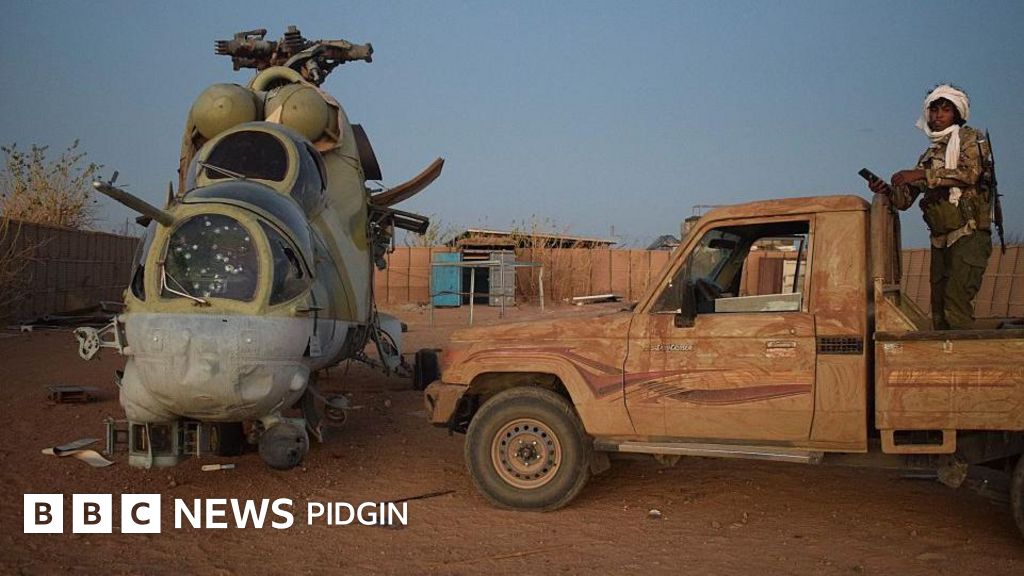
Reporting points to renewed combat around Anéfis in northern Mali, with competing accounts of Malian Armed Forces regaining areas and continued contestation involving Tuareg separatists and jihadist actors. Burkina Faso remains a high‑risk operating environment, with terrorist activity nationwide, states of emergency in the Sahel and East regions, and a sustained high kidnapping threat to Westerners. The Alliance of Sahel States, formed by Mali, Niger and Burkina Faso, has withdrawn from ECOWAS, rejected an ECOWAS timetable extension, and severed key French defence ties, while one claim asserts reliance on Russian mercenaries including the Wagner Group. In parallel, Niger’s IMF programme reviews cite generally satisfactory implementation and an immediate disbursement of roughly 90 million dollars, implying short‑term fiscal relief. NASA recorded 12 VIIRS thermal detections over Mali on 9 July, which can corroborate but not, by themselves, attribute combat activity.
Change from previous assessment
New reporting during this window details July fighting around Anéfis, including a Malian army claim of regaining targeted areas and a Tuareg separatist claim of responsibility, alongside an African Union condemnation. We also registered 12 NASA VIIRS thermal detections over Mali on 9 July. These developments led us to add a discrete judgment on Anéfis with lowered confidence and to reiterate the caution on attributing thermal anomalies. Assessments on Burkina Faso’s persistent threats and AES decoupling remain consistent with prior analysis.
Key judgments
- Control around Anéfis in northern Mali is roughly even chance to remain contested through the immediate term despite claims that the Malian army retook targeted areas following early July attacks. (Confidence: low · ASSESSED)
- I&W: Geolocated imagery or official Malian Armed Forces communiqués confirming sustained presence in central Anéfis and adjacent bases (0-14 days)
- I&W: Verified rebel or JNIM/FLA media showing control of Malian positions in Anéfis township (0-14 days)
- Jihadist violence and kidnapping risks in Burkina Faso are almost certainly persistent at scale, with terrorist activity nationwide, a high kidnapping threat to Westerners, and states of emergency in the Sahel and East regions. (Confidence: high · REPORTED)
- I&W: Official Burkinabè communiqués renewing or expanding states of emergency beyond Sahel and East regions (1-3 months)
- I&W: Claimed or confirmed kidnapping of Western nationals by JNIM or ISGS within Burkina Faso (0-14 days)
- Mali almost certainly remains a high‑risk operating environment: armed conflict is common, violent crime and kidnapping risks are high, U.S. government travel is restricted to Bamako, and an FAA notice warns civil aviation of elevated risk. (Confidence: high · REPORTED)
- I&W: Revision of U.S. travel restrictions permitting official travel outside Bamako (1-3 months)
- I&W: FAA updates extending or expanding the NOTAM/SFAR for Mali airspace (0-14 days)
- The Alliance of Sahel States is very likely to continue distancing from ECOWAS and Western defence partners while deepening internal coordination, following withdrawal announcements, rejection of an ECOWAS timetable extension, and the severing of French defence ties. (Confidence: medium · ASSESSED)
- I&W: AES announces a joint operations centre or coordinated cross‑border security exercise (1-3 months)
- I&W: AES leadership publicly accepts an ECOWAS proposal to modify withdrawal timelines (1-3 months)
- Niger likely has short‑term fiscal breathing space due to IMF decisions, including an immediate disbursement of about 90 million dollars and increased access under the Extended Credit Facility, alongside generally satisfactory programme implementation and planned corrective measures on arrears. (Confidence: medium · ASSESSED)
- I&W: IMF transaction logs or Niger Ministry of Finance notices confirming receipt and allocation of the disbursement (0-14 days)
- I&W: Public documentation of arrears clearance and specified corrective measures (1-3 months)
- NASA’s 12 VIIRS thermal detections over Mali on 9 July almost certainly cannot alone evidence combat activity and require independent corroboration, since such signatures can reflect strikes, shelling, industrial events or wildfires. (Confidence: high · ASSESSED)
- I&W: Geolocated imagery or credible ground reporting of hostilities at specific detection coordinates within 24 hours of the thermal events (0-14 days)
- I&W: Local reporting attributing detections to non‑combat sources such as controlled burns or industrial fires at those coordinates (0-14 days)
- Spillover risks to the northern border zones of Togo and Côte d’Ivoire remain elevated, with armed group attacks in northern Togo and identified JNIM/AQIM threats to northern Côte d’Ivoire despite Abidjan’s creation of CROAT and the Northern Operational Zone. (Confidence: high · REPORTED)
- I&W: Confirmed cross‑border attacks or IED incidents in Togo’s Savanes or Côte d’Ivoire’s northern departments (0-3 months)
- I&W: New or expanded travel restrictions by governments for these northern border areas (0-3 months)
Outlook & scenarios
Anéfis stalemate persists (60%)
Malian forces hold select positions near Anéfis after early July attacks, but FLA and JNIM maintain the ability to harass, keeping the area contested. Periodic claims of control alternate without decisive evidence. Civil aviation and travel advisories for Mali remain unchanged.
AES deepens split and coordination (50%)
Mali, Niger and Burkina Faso formalise deeper AES coordination while remaining outside ECOWAS processes and shunning French security ties. Joint border operations or a coordination cell are announced, and public rhetoric hardens against ECOWAS timelines.
Limited ECOWAS, AES thaw (30%)
Following prior ECOWAS sanctions relief, quiet contacts resume. Technical dialogues open on trade and borders, but security integration within AES continues. No immediate reversal of ECOWAS withdrawal is announced.
Low‑probability, high‑impact urban attack (20%)
A jihadist network executes a high‑profile attack in a capital or major city such as Ouagadougou, echoing past operations, or targets diplomatic facilities as in the 2018 Ouagadougou embassy attack. Regional travel advisories tighten further.
Recommendations
- Maintain an Anéfis incident log that pairs each military claim with independent geolocation or imagery before updating control assessments; treat single‑source battlefield claims as provisional.
- Use NASA VIIRS detections as cues only, not attribution: require spatial, temporal corroboration from ground reporting, official communiqués, or verified user‑generated content before coding an event as combat.
- Sustain near‑daily monitoring of Burkina Faso for kidnapping and terrorism indicators: track official state of emergency communiqués, claimed abductions by JNIM/ISGS, and any new travel restrictions for Western staff.
- Build an AES watchlist: capture official AES statements, any joint operations announcements, and ECOWAS, AES exchanges to assess trajectory of decoupling or potential thaw.
- Track Niger’s IMF programme execution: confirm disbursement receipt, monitor arrears‑related corrective measures, and watch for downstream budget execution or arrears clearance that could affect security‑sector spending.
- Coordinate with colleagues covering littoral West Africa to monitor spillover: follow Togo’s Savanes restrictions and Côte d’Ivoire’s CROAT/ZON posture, and map incident proximity to borders for early warning.
Confidence & uncertainty
Overall confidence is medium. Several judgments rest on well‑corroborated official sources, including U.S. travel advisories, FAA notices, and IMF documentation, which support high‑confidence calls on risk in Mali and persistent threats in Burkina Faso, and on Niger’s IMF support. However, control dynamics around Anéfis rely on partially conflicting and, in part, lower‑confidence media claims, which reduces confidence for that judgment. AES trajectory assessments extrapolate from reported past actions to near‑term outlooks, which is appropriate but still inferential.
Alternative analysis (red cell)
For Anéfis (judgment 0), the reporting is contradictory and dominated by medium/low-confidence, declarative claims; a defensible alternative estimate is that Malian government forces (possibly with Russian-affiliated elements) have a greater probability of holding or consolidating control locally than the brief resumption-of-fighting reports imply, absent corroborating imagery or independent field reporting. For the Alliance of Sahel States (judgment 3), public withdrawals and rhetorical distancing from ECOWAS/Western partners are evident, but operational integration among AES members remains unproven — it is plausible the shift is primarily political signaling rather than a durable, deepened military coalition based on the cited evidence.
Intelligence gaps
- [EEI 1.1 · PARTIAL] Number, location, and scale of attacks (IEDs, ambushes, complex attacks) per week against towns, military bases, police posts, or convoys, with casualty and equipment-loss counts. Recommended collection: ground/HUMINT
- [EEI 1.2 · PARTIAL] Observed movement and size of armed columns (vehicle counts, heavy weapons present) along approach routes to population centers or borders documented by imagery, local reporting, or border guards. Recommended collection: imagery/SATCOM
- [EEI 1.3 · UNCOVERED] Reports of occupation, administration, or imposition of checkpoints/taxes by armed groups in named towns, villages, markets, or on specified road segments. Recommended collection: OSINT (local media/social)
- [EEI 1.4 · UNCOVERED] Seizure or acquisition of heavy weapons or air-defense systems (mortars >81mm, artillery, armored vehicles, MANPADS) attributed to specific groups as evidenced by photos, captured weapons inventories, or weapons interdictions. Recommended collection: forensics/field reporting
- [EEI 2.1 · PARTIAL] Internal security force movements: redeployment of army units, garrison withdrawals, or mass troop movements toward/away from capitals and regional command posts. Recommended collection: imagery/SATCOM
- [EEI 2.2 · UNCOVERED] Detentions, public dismissals, resignations, or public statements by senior military, police, or government officials indicating factional splits (named individuals, ranks, units). Recommended collection: diplomatic/OSINT
- [EEI 2.4 · UNCOVERED] Targeted external support actions: sanctions, suspension of aid, delivery of weapons or logistics from foreign state or non-state actors (documented shipments, bank transfers, public announcements). Recommended collection: financial/diplomatic
- [EEI 3.1 · UNCOVERED] Interdictions or seizures at borders/markets of weapons, ammunition, fuel, or contraband (type/quantity, seizure location, alleged origin/destination). Recommended collection: border/customs
- [EEI 3.2 · UNCOVERED] Recorded movements of known smuggling routes and convoy volumes: counts of commercial/privately registered vehicles and informal river crossings on specific cross-border corridors. Recommended collection: ground/HUMINT
- [EEI 3.3 · UNCOVERED] Monitored financial flows linked to illicit trade: large cash movements, changes in declared gold exports at named mines/ports, or arrests of money couriers with amounts and origins. Recommended collection: financial/forensics
- [EEI 3.4 · UNCOVERED] Observed changes at border security posts: closures, reductions in personnel, destroyed checkpoints, or documented agreements allowing free movement at named crossings. Recommended collection: imagery/OSINT
Cited sources
[1] bbc.com · Mali attacks: Militants target five cities, attackers kpai, AU chook mouth - Wetin dey happun for Mali? - BBC News Pidgin (A) · sha256:154e44fd2283 [2] Wikipedia · Islamist insurgency in Burkina Faso (B) · sha256:2716c529dfc2 [3] U.S. Department of State · Burkina Faso Travel Advisory | Travel.State.gov (A) · sha256:6dbd8e921100 [4] U.S. Department of State · Cote d'Ivoire Travel Advisory (A) · sha256:d92eb303ef23 [5] U.S. Department of State · Mali Travel Advisory | Travel.State.gov (A) · sha256:787c5623427b [6] Wikipedia · Alliance of Sahel States (A) · sha256:54f03dd824e0 [7] International Monetary Fund · [PDF] Niger: Huitième revue de l'accord au titre de la facilité élargie de.. (A) · sha256:fc9ea9c4ccb3 [8] NASA · NASA FIRMS thermal detections — Mali (2d) (A) · sha256:7675c00d2d2f [9] U.S. Department of State · Togo Travel Advisory (A) · sha256:1884a876b26f
Source content hashes were computed at collection time; the cited text is preserved unmodified for the life of this product.
Red cell review: PARTIAL DISSENT
TLP:CLEAR