TLP:CLEAR · Disclosure is not limited.
Sahel security crisis: AES rupture with France, cluster‑munition evidence in Mali, and tightening controls in Burkina Faso
Time window: Last 7 days · Audience: General analyst · Type: Situation report · DTG: 2026-06-30 08:24Z · Overall confidence: MEDIUM
BLUF
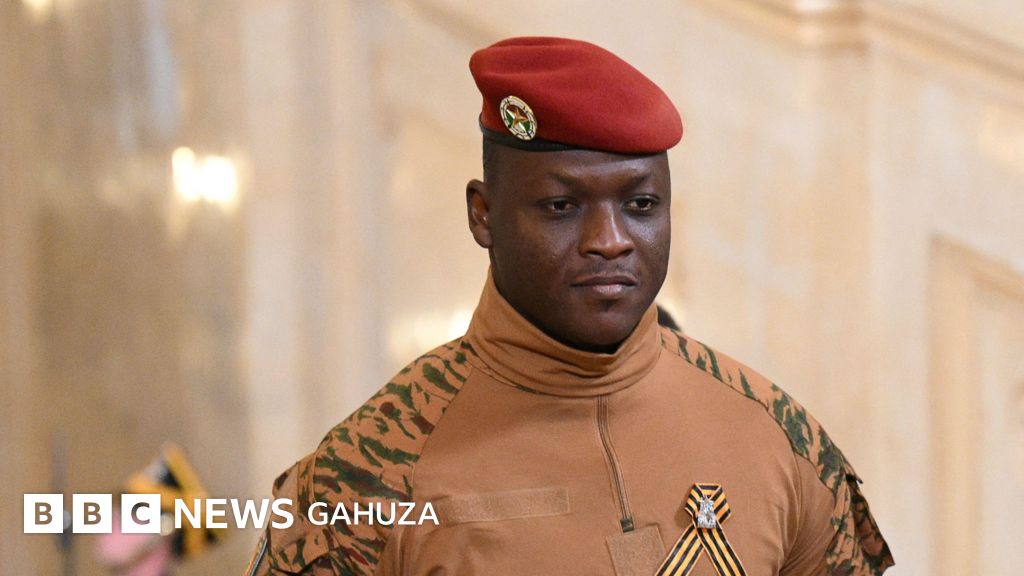
Burkina Faso very likely severed relations with France on 27-28 June and moved to constrain foreigners, while credible OSINT indicates cluster munitions were used around Tadjmart, northern Mali, after Malian airstrikes in mid‑May. Operating risk remains extreme in Mali and high in Burkina Faso, with tighter aviation, movement and consular constraints likely to persist.
Executive summary
Late June reporting indicates the Alliance of Sahel States’ pivot from Western partners is hardening. Burkina Faso very likely formalised a break with France on 27-28 June and tightened the domestic space, including a vague directive affecting tourists and foreign nationals. In northern Mali, geolocated imagery of unexploded ShOAB‑0.5 bomblets following Malian Armed Forces airstrikes in mid‑May strongly points to cluster‑munition use despite Mali’s CCM obligations, with Russia’s Africa Corps reported as supporting Malian operations. Mali remains an extreme‑risk environment across conflict, crime, terrorism and aviation. Burkina Faso’s outlook stays high‑risk under a state of emergency, persistent kidnapping threats against Westerners, widespread crime and constrained medical care.
Change from previous assessment
New reporting specifies that Burkina Faso formalised the break with France on 27-28 June and moved to curtail French embassy operations, and it flags intensified coercive measures plus a directive affecting tourists and foreign nationals. Core judgments on Mali’s extreme‑risk profile and credible evidence of cluster‑munition use around Tadjmart remain unchanged in direction and confidence. This brief adds an assessed judgment on AES federalisation trajectory and updates indicators for Burkina Faso’s tightening internal controls.
Key judgments
- Burkina Faso very likely severed diplomatic relations with France on 27-28 June 2026, shut down or heavily restricted French embassy operations in Ouagadougou, and ordered French military departure, marking a decisive rupture with Western security partners. (Confidence: medium · REPORTED)
- I&W: Official communiqué confirming termination of diplomatic ties or publication of reciprocal French consular closures in Ouagadougou. (0-14 days)
- I&W: Public announcement of restored French consular operations or a joint France, Burkina statement signalling re‑engagement. (1-3 months)
- Burkinabè authorities likely tightened controls on foreigners and civic space in late June, as seen in intensified coercive measures and a vague directive affecting tourists and foreign nationals, raising near‑term risk of arbitrary enforcement in urban centres. (Confidence: medium · REPORTED)
- I&W: Reports of checkpoint sweeps detaining or fining foreigners under new or unclear requirements in Ouagadougou and Bobo‑Dioulasso. (0-30 days)
- I&W: Publication of a clarifying directive rescinding or narrowing the scope of controls on tourists and foreign nationals. (0-30 days)
- Cluster munitions were very likely used around Tadjmart, northern Mali, on or about 17 May 2026, given geolocated imagery of unexploded ShOAB‑0.5 bomblets following Malian Armed Forces airstrikes, Mali’s CCM obligations, and concurrent reporting of Russia’s Africa Corps supporting Malian operations. (Confidence: medium · ASSESSED)
- I&W: Additional independent imagery or forensic documentation of carrier munitions or strike patterns consistent with cluster‑munition delivery around Tadjmart. (0-3 months)
- I&W: Credible third‑party technical analysis attributing the remnants to non‑cluster ordnance or demonstrating fabrication/misattribution. (0-3 months)
- Mali almost certainly remains an extreme‑risk operating environment, with ongoing armed conflict, widespread violent crime and kidnapping risk, a persistent terrorism threat, periodic protests, limited medical care, and aviation restrictions. (Confidence: high · REPORTED)
- I&W: Continuation or expansion of FAA NOTAMs or SFARs restricting civil aviation over Mali. (0-3 months)
- I&W: Easing of U.S. travel restrictions on official movement outside Bamako sustained for 60 days. (1-3 months)
- Burkina Faso’s security outlook is likely to remain high‑risk in the near term, given ongoing military pressure against jihadist networks, a state of emergency in the Sahel and East regions, high kidnapping risk to Westerners, movement limits on U.S. officials, widespread violent crime, and constrained medical services. (Confidence: medium · ASSESSED)
- I&W: Official extension of the state of emergency or new curfews in the Sahel and East regions. (0-2 months)
- I&W: Noticeable easing of U.S. movement restrictions outside Ouagadougou and a downgrade in kidnapping risk advisories. (1-3 months)
- The Alliance of Sahel States is likely to pursue deeper institutional consolidation, including a stated aim to federalise into a single sovereign state, reinforcing separation from ECOWAS and Western security partnerships. (Confidence: medium · ASSESSED)
- I&W: Publication of AES legal instruments detailing shared federal institutions or a draft federal constitution. (1-6 months)
- I&W: Public steps toward re‑engagement with ECOWAS or resumption of Western defence agreements by any AES member. (1-6 months)
Outlook & scenarios
AES rupture hardens and Western presence contracts further (60%)
Burkina Faso completes the diplomatic break with France, French embassy services remain closed or curtailed, and deadlines to remove French personnel are enforced. Domestic controls on foreigners tighten and are sporadically enforced. Mali maintains termination of French defence ties while leaning on Russia’s Africa Corps support. Operating constraints for Western missions and NGOs in both countries increase, with continued Do Not Travel advisories and flight restrictions over Mali.
Limited regional re‑coordination via AU, ECOWAS mechanisms (35%)
The scheduled AU Peace and Security Council, ECOWAS Mediation and Security Council engagement in Abuja produces movement on a Joint Threat Fusion and Analysis Cell with a narrowed mandate. The AU leverages its bridging legitimacy to create technical channels that partially include or inform AES states despite their ECOWAS withdrawal. Intelligence sharing improves at the margins but political estrangement persists.
IHL scrutiny builds over alleged cluster‑munition use in Mali (20%)
Further OSINT and field documentation reinforce evidence of cluster‑munition use around Tadjmart after the 17 May airstrikes. Legal and diplomatic costs rise for Bamako given CCM obligations, prompting tighter scrutiny of arms support and complicating external security partnerships tied to Malian operations.
Recommendations
- Update movement, aviation and duty‑of‑care postures for Mali and Burkina Faso: align travel approvals with Do Not Travel guidance, restrict non‑essential movement outside Bamako and Ouagadougou, and incorporate current FAA NOTAM/SFAR constraints into planning.
- Task targeted OSINT and imagery collection on Tadjmart and surrounding areas to document munition remnants, strike patterns and potential delivery systems, preserving metadata for legal review.
- Establish a standing watch for Burkina Faso enforcement actions affecting foreigners: track checkpoint practices, detentions, and new documentation demands; prepare contingency consular and legal support pathways.
- Engage through the AU Peace and Security Council to shape any Joint Threat Fusion and Analysis Cell toward a precise, actionable mandate and technical standards that can function even with limited AES political buy‑in.
- Prepare interagency messaging and legal options related to CCM compliance in Mali, including briefings on evidentiary thresholds and potential diplomatic responses.
- Stress‑test evacuation and shelter‑in‑place plans for personnel in Bamako and Ouagadougou under scenarios of embassy curtailment, urban unrest, or abrupt movement restrictions.
Confidence & uncertainty
Overall confidence is medium. Several judgments rest on multiple official sources with high reliability, notably U.S. government advisories and FAA aviation notices for Mali, which provide strong, current corroboration. Other developments, particularly Burkina Faso’s break with France and tightened controls on foreigners, rely on high‑confidence but primarily single‑stream think‑tank reporting, with some timeline contradictions about French diplomatic presence that reduce confidence. The cluster‑munition assessment is underpinned by credible OSINT and geolocation but lacks official acknowledgement, keeping confidence at medium.
Alternative analysis (red cell)
While there is credible reporting of diplomatic moves and munitions found in theatre, the available claims do not conclusively demonstrate precise implementation (timing, scope, or attribution) for several judgments. Reasonable alternative interpretations—severance announcements with unclear implementation; geolocated bomblets without definitive strike attribution; and AES rhetorical federalisation without demonstrable institutional consolidation—are defensible given current evidence. Resolving these uncertainties requires primary-source communiqués, forensic analysis, and independent on‑the‑ground confirmation.
Intelligence gaps
- [EEI 1.1 · PARTIAL] Number, location, and scale of attacks (IEDs, ambushes, complex attacks) per week against towns, military bases, police posts, or convoys, with casualty and equipment-loss counts. Recommended collection: ground/HUMINT
- [EEI 1.2 · PARTIAL] Observed movement and size of armed columns (vehicle counts, heavy weapons present) along approach routes to population centers or borders documented by imagery, local reporting, or border guards. Recommended collection: imagery/SATCOM
- [EEI 1.3 · UNCOVERED] Reports of occupation, administration, or imposition of checkpoints/taxes by armed groups in named towns, villages, markets, or on specified road segments. Recommended collection: OSINT (local media/social)
- [EEI 1.4 · PARTIAL] Seizure or acquisition of heavy weapons or air-defense systems (mortars >81mm, artillery, armored vehicles, MANPADS) attributed to specific groups as evidenced by photos, captured weapons inventories, or weapons interdictions. Recommended collection: forensics/field reporting
- [EEI 2.3 · PARTIAL] Changes in foreign military footprints or security agreements: arrival/departure of foreign troops, opening/closure of foreign bases, visible presence of private military contractors (identified personnel/vehicles). Recommended collection: OSINT/imagery
- [EEI 2.4 · UNCOVERED] Targeted external support actions: sanctions, suspension of aid, delivery of weapons or logistics from foreign state or non-state actors (documented shipments, bank transfers, public announcements). Recommended collection: financial/diplomatic
- [EEI 3.1 · UNCOVERED] Interdictions or seizures at borders/markets of weapons, ammunition, fuel, or contraband (type/quantity, seizure location, alleged origin/destination). Recommended collection: border/customs
- [EEI 3.2 · UNCOVERED] Recorded movements of known smuggling routes and convoy volumes: counts of commercial/privately registered vehicles and informal river crossings on specific cross-border corridors. Recommended collection: ground/HUMINT
- [EEI 3.3 · UNCOVERED] Monitored financial flows linked to illicit trade: large cash movements, changes in declared gold exports at named mines/ports, or arrests of money couriers with amounts and origins. Recommended collection: financial/forensics
- [EEI 3.4 · UNCOVERED] Observed changes at border security posts: closures, reductions in personnel, destroyed checkpoints, or documented agreements allowing free movement at named crossings. Recommended collection: imagery/OSINT
Cited sources
[1] geobit.ai · Burkina Faso Security Brief — June 30, 2026 (C) · sha256:ae1de109b0c7 [2] BBC News · Burkina Faso yaciye imigenderanire na France - BBC News Gahuza (A) · sha256:0186ed526c23 [3] U.S. Department of State · Burkina Faso Travel Advisory | Travel.State.gov (A) · sha256:6dbd8e921100 [4] bellingcat.com · Banned Russian Submunitions Found After Mali's Military Announces Airstrikes - bellingcat (A) · sha256:6788d3465fd7 [5] U.S. Department of State · Mali Travel Advisory (A) · sha256:0bd28ce550a9 [6] NASA · NASA FIRMS thermal detections — Burkina Faso (2d) (A) · sha256:56d09b39e27e [7] Wikipedia · Alliance of Sahel States (A) · sha256:2294aee36297
Source content hashes were computed at collection time; the cited text is preserved unmodified for the life of this product.
Red cell review: PARTIAL DISSENT
TLP:CLEAR