TLP:CLEAR · Disclosure is not limited.
Sahel security crisis: AES states under sustained attack amid political estrangement and humanitarian strain
Time window: Last 7 days · Audience: General analyst · Type: Situation report · DTG: 2026-07-15 04:09Z · Overall confidence: MEDIUM
BLUF
Militant violence across Mali, Burkina Faso and Niger remains acute this week, including fighting and road blockades in northern Mali, drone-enabled attacks in Burkina Faso, and strikes on Niamey airport and a base in Tahoua. The Alliance of Sahel States continues to distance itself from ECOWAS even as some dialogue opens, while displacement and service disruptions remain severe.
Executive summary
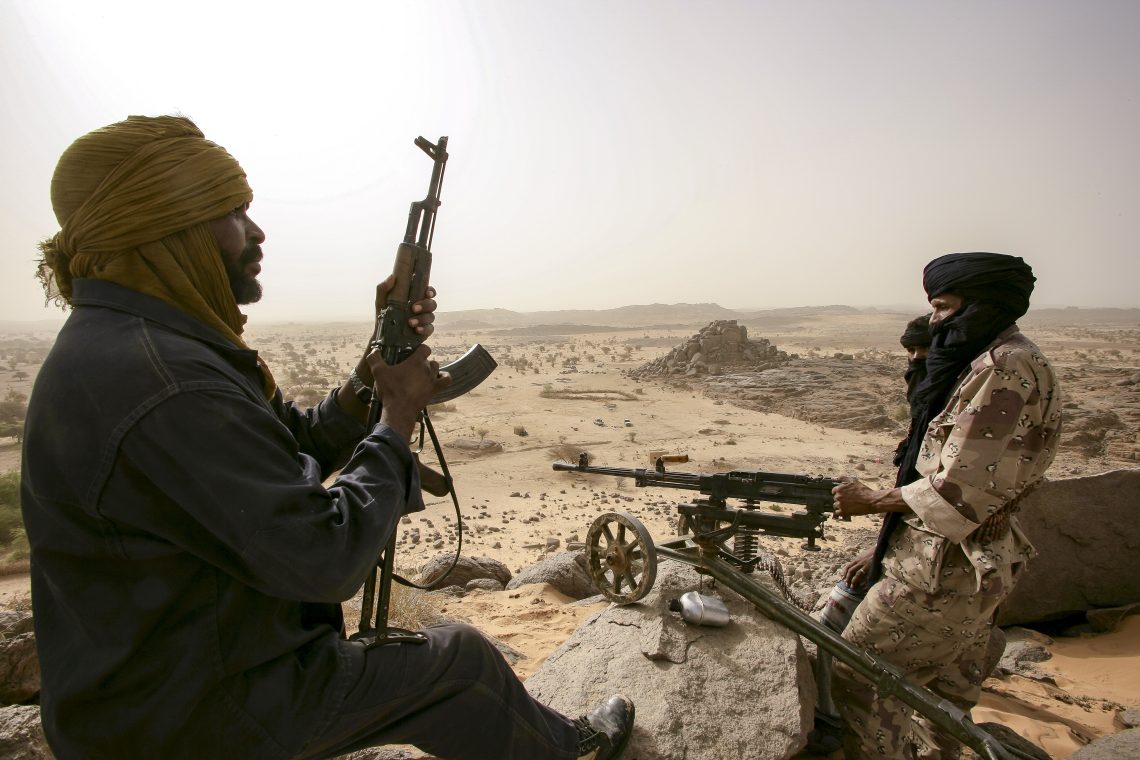
Between 8 and 15 July 2026, reporting indicates continued combat and infrastructure disruption across the central Sahel. Fighting in northern Mali is disrupting supplies to Bamako and has included attacks on power lines, while northern and eastern Burkina Faso continue to see attacks, sometimes using drones. In Niger, attacks have targeted Niamey Diori Hamani airport and a military base in Tahoua. Think‑tank reporting points to a renewed JNIM, FLA campaign, with attacks on 4 July, a repelled Gao convoy on 5 July, and the Anéfis base still besieged on 8 July. Earlier offensives resulted in casualties up to the Malian minister of defence, preceding Assimi Goïta appointing himself defence minister in May. Humanitarian needs remain heavy, with roughly 6.8 million displaced across the Sahel and over 2 million internally displaced in Burkina Faso, and Mali has experienced conflict‑related fuel and electricity shortages. Politically, AES maintains its withdrawal from ECOWAS, anti‑French messaging and an ambition to federalise, though the UK welcomed ECOWAS’s appointment of a chief negotiator to support dialogue. Bamako also moved to ease tensions with Algiers by reopening airspace and restoring ambassadors on 14 July.
Change from previous assessment
Since the 14 July brief, we note: 1) Bamako reopened airspace to Algeria and restored ambassadors on 14 July, slightly easing a bilateral friction point. 2) Reporting details that fighting in northern Mali is disrupting road supply to Bamako and includes attacks on power lines, while northern and eastern Burkina Faso continue to face attacks that at times use drones. 3) Attacks in Niger targeted Niamey Diori Hamani airport and a base in Tahoua. 4) Think‑tank reporting indicates the Anéfis base remains besieged as of 8 July and a Gao convoy was repelled on 5 July; we carry this with medium confidence given sourcing. 5) The UK welcomed steps to open an ECOWAS, AES dialogue channel, though AES positions on withdrawal and federalisation are unchanged. Our confidence on the insurgent campaign’s operational effects remains medium due to mixed sourcing and prior date discrepancies; humanitarian displacement and acute threat judgments remain high confidence.
Key judgments
- Very likely the security threat across Mali, Burkina Faso and Niger remains acute, with coordinated or sophisticated attacks continuing in all three countries, including fighting and road blockades in northern Mali disrupting supplies to Bamako, drone‑enabled attacks in Burkina Faso’s north and east, and strikes on Niamey airport and a base in Tahoua. (Confidence: high · REPORTED)
- I&W: UN or government reporting of additional closures of RN15 or other supply routes into Bamako, or further attacks on power lines north of the capital (0-14 days)
- I&W: Documented drone use in attacks in Burkina Faso’s Sahel or Est regions, or repeat attempts on Niamey Diori Hamani airport (0-14 days)
- Likely the renewed JNIM, FLA campaign has degraded Malian military posture in the north, evidenced by attacks on Sévaré, Kouakourou, Konna, Aguelhok and Anéfis on 4 July, a repelled Gao convoy on 5 July, and the Anéfis base remaining besieged as of 8 July, with earlier offensives causing casualties up to the minister of defence and prompting Assimi Goïta to assume the defence portfolio on 4 May. (Confidence: medium · ASSESSED)
- I&W: Verified loss of, or additional failed resupply attempts to, the Anéfis base reported by Malian authorities or credible observers (0-14 days)
- I&W: Official confirmation that the siege of Anéfis has been lifted and regular Gao, Anéfis resupply convoys are operating (1-3 months)
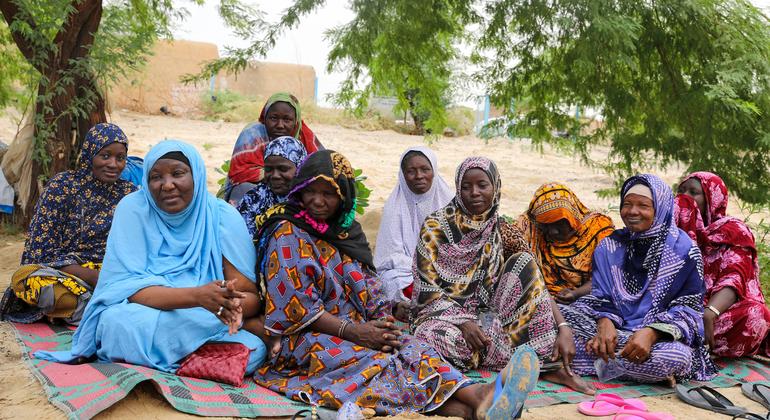
- Almost certainly humanitarian pressures will remain extreme, with approximately 6.8 million people displaced across the Sahel and more than 2 million in Burkina Faso alone, and civilians in Mali facing fuel and electricity shortages linked to conflict‑related road blockades. (Confidence: high · REPORTED)
- I&W: OCHA or government updates maintain or increase Sahel‑wide displacement figures at or above 6.8 million, or Burkina Faso IDPs above 2 million (1-3 months)
- I&W: Sustained restoration of fuel supplies and electricity generation in Bamako with official lifting of road blockades into the capital (0-14 days)
- Likely the Alliance of Sahel States will sustain strategic estrangement from ECOWAS and Western partners while pursuing deeper internal integration, even as a UNOWAS‑facilitated channel for limited dialogue develops. (Confidence: medium · ASSESSED)
- I&W: AES issues a joint roadmap toward federal institutions or further formalises combined defence arrangements (1-3 months)
- I&W: Public announcement of an ECOWAS, AES negotiated framework that pauses or reverses withdrawal steps and restores institutional ties (1-3 months)
- Very likely the 14 July reopening of airspace and restoration of ambassadors between Mali and Algeria will reduce immediate bilateral friction but will not materially alter the tempo of insurgent operations in northern Mali in the near term. (Confidence: medium · ASSESSED)
- I&W: Announcement of Malian, Algerian security coordination or joint border measures resuming (1-3 months)
- I&W: Renewed Malian restrictions on Algerian flights or recall of ambassadors (0-14 days)
- Likely threat vectors will continue to expand toward littoral Gulf of Guinea states while converging with organised crime, heightening risks of cross‑border raids and drug trafficking through coastal corridors. (Confidence: medium · ASSESSED)
- I&W: Benin, Togo or Ghana report new cross‑border attacks or kidnappings attributed to Sahel‑based groups, or announce large drug seizures linked to Sahel routes (1-3 months)
- I&W: Coastal states report a sustained quarter‑on‑quarter decline in Sahel‑linked security incidents and narcotics seizures (3-6 months)
Outlook & scenarios
Protracted insurgent pressure in northern Mali (60%)
JNIM, FLA sustain multi‑axis operations, keeping the Anéfis garrison under pressure and intermittently blocking key supply corridors into Bamako. Power infrastructure remains a target, prolonging fuel and electricity disruptions in urban centres.
Managed estrangement between AES and ECOWAS (40%)
Mali, Burkina Faso and Niger maintain their formal exit from ECOWAS and deepen AES integration, while engaging selectively with ECOWAS via a chief negotiator and UNOWAS. Practical cooperation focuses on counterterrorism and border management without reversing the split.
Southward creep and criminal convergence (30%)
Attack planners push operations into the Gulf of Guinea littoral, testing security along Benin and Togo’s borders as drug trafficking networks expand in coastal states. Maritime and overland interdictions increase but do not fully stem flows.
Wildcard: leadership strike in Bamako triggers snap security changes (15%)
A successful high‑profile attack or plot against senior Malian officials leads to emergency measures, further centralisation of authority and potential purges, disrupting command continuity and complicating coordination with neighbours.
Recommendations
- Maintain daily tracking of the Gao, Anéfis corridor and surrounding localities using open reporting and commercial satellite imagery to validate siege status and convoy activity.
- Compile an incident dataset on unmanned aerial system use in Burkina Faso’s Sahel and Est regions, including munition types, ranges and targeting patterns, to inform force protection and civilian risk assessments.
- Monitor official communiqués and alerts for Niamey Diori Hamani airport and Tahoua military facilities, and map attack timings against known group activity to anticipate recurrence windows.
- Integrate displacement figures from multilateral reporting into a geospatial layer highlighting districts with 6.8 million Sahel‑wide IDPs and over 2 million in Burkina Faso, and overlay aid access constraints and conflict events.
- Track AES statements on institutional integration and defence coordination alongside ECOWAS and UNOWAS readouts to flag any movement toward a formal negotiation framework or, conversely, hardening positions.
- Exploit the Mali, Algeria diplomatic thaw as an indicator set: watch for resumed official flights, border coordination announcements and trade flows to assess whether cross‑border security cooperation is resuming.
- Produce a monthly brief on coastal spillover risk that fuses reporting on Sahel‑linked attacks in Benin and Togo with narcotics seizure trends in coastal states, aligning with warnings about expanding terrorist and criminal networks.
- Flag any UN or government notices on road reopenings into Bamako and power line repairs to reassess humanitarian access and critical infrastructure vulnerability.
Confidence & uncertainty
Multiple independent, reliable sources corroborate the core picture: UN and UK government reporting detail acute threats in the central Sahel and specific incidents in Mali, Burkina Faso and Niger, and multilateral and government statements substantiate displacement levels and the AES, ECOWAS rift. However, several pivotal elements, including the scope and effects of the JNIM, FLA offensive and ministerial casualties, rely on think‑tank reporting with some date inconsistencies across sources. The limited number of primary, on‑the‑ground confirmations for Anéfis and recent command changes, and the forward‑looking nature of political integration assessments, warrant an overall medium confidence rating.
Alternative analysis (red cell)
The reporting largely consists of episodic event reports and high‑level political statements, with several supporting items at C‑level or single‑source B‑level, and aggregate humanitarian figures that appear dated or duplicated. From the same evidence, a restrained estimate is defensible: insurgents have achieved localized tactical successes and caused acute humanitarian strain in pockets, but current reporting does not yet demonstrate systemic collapse of Malian northern forces, an uncontested escalation of humanitarian pressure beyond reported peaks, or established, widespread operational convergence between Sahel insurgents and Gulf of Guinea criminal networks.
Intelligence gaps
- [EEI 1.1 · UNCOVERED] Number, location, and scale of attacks (IEDs, ambushes, complex attacks) per week against towns, military bases, police posts, or convoys, with casualty and equipment-loss counts. Recommended collection: ground/HUMINT
- [EEI 1.2 · UNCOVERED] Observed movement and size of armed columns (vehicle counts, heavy weapons present) along approach routes to population centers or borders documented by imagery, local reporting, or border guards. Recommended collection: imagery/SATCOM
- [EEI 1.3 · UNCOVERED] Reports of occupation, administration, or imposition of checkpoints/taxes by armed groups in named towns, villages, markets, or on specified road segments. Recommended collection: OSINT (local media/social)
- [EEI 1.4 · UNCOVERED] Seizure or acquisition of heavy weapons or air-defense systems (mortars >81mm, artillery, armored vehicles, MANPADS) attributed to specific groups as evidenced by photos, captured weapons inventories, or weapons interdictions. Recommended collection: forensics/field reporting
- [EEI 2.1 · UNCOVERED] Internal security force movements: redeployment of army units, garrison withdrawals, or mass troop movements toward/away from capitals and regional command posts. Recommended collection: imagery/SATCOM
- [EEI 2.2 · UNCOVERED] Detentions, public dismissals, resignations, or public statements by senior military, police, or government officials indicating factional splits (named individuals, ranks, units). Recommended collection: diplomatic/OSINT
- [EEI 2.3 · UNCOVERED] Changes in foreign military footprints or security agreements: arrival/departure of foreign troops, opening/closure of foreign bases, visible presence of private military contractors (identified personnel/vehicles). Recommended collection: OSINT/imagery
- [EEI 2.4 · UNCOVERED] Targeted external support actions: sanctions, suspension of aid, delivery of weapons or logistics from foreign state or non-state actors (documented shipments, bank transfers, public announcements). Recommended collection: financial/diplomatic
- [EEI 3.1 · UNCOVERED] Interdictions or seizures at borders/markets of weapons, ammunition, fuel, or contraband (type/quantity, seizure location, alleged origin/destination). Recommended collection: border/customs
- [EEI 3.2 · UNCOVERED] Recorded movements of known smuggling routes and convoy volumes: counts of commercial/privately registered vehicles and informal river crossings on specific cross-border corridors. Recommended collection: ground/HUMINT
- [EEI 3.3 · UNCOVERED] Monitored financial flows linked to illicit trade: large cash movements, changes in declared gold exports at named mines/ports, or arrests of money couriers with amounts and origins. Recommended collection: financial/forensics
- [EEI 3.4 · UNCOVERED] Observed changes at border security posts: closures, reductions in personnel, destroyed checkpoints, or documented agreements allowing free movement at named crossings. Recommended collection: imagery/OSINT
Cited sources
[1] United Nations · West Africa and the Sahel: Terrorism is changing its face (A) · sha256:b2ef6c13ee57 [2] UK Government · We remain concerned by the deteriorating security and humanitarian situation across West Africa and the Sahel: UK statement at the UN Security Council (A) · sha256:48c2c3fd8ffc [3] fronts.co · Sahel Crisis: Analysis & Reporting (C) · sha256:2252ad119316 [4] gisreportsonline.com · Sahel collapse, Mali conflict – GIS Reports (C) · sha256:11f20f3a0328 [5] Wikipedia · Islamist insurgency in Burkina Faso (B) · sha256:37a360dc174c [6] Wikipedia · Alliance of Sahel States (A) · sha256:54f03dd824e0 [7] Africa Center for Strategic Studies · Africa Media Review for July 14, 2026 (B) · sha256:e66ffa97a4f1
Source content hashes were computed at collection time; the cited text is preserved unmodified for the life of this product.
Red cell review: PARTIAL DISSENT
TLP:CLEAR