TLP:CLEAR · Disclosure is not limited.
Sahel security crisis: Burkina Faso, France rupture and persistent conflict indicators in Mali, late June 2026
Time window: Last 7 days · Audience: General analyst · Type: Situation report · DTG: 2026-06-30 04:13Z · Overall confidence: MEDIUM
BLUF
Burkina Faso has broken diplomatic relations with France, reinforcing the Alliance of Sahel States’ pivot from Western partners, while Mali remains an extreme‑risk environment with likely ongoing hostilities and credible OSINT pointing to cluster munition use in the north. Consular and operating constraints will very likely tighten across the bloc and in Mali’s air and ground domains.
Executive summary
In late June 2026, Ouagadougou severed ties with Paris, capping a multi‑year unravelling of French-Burkinabè relations and aligning with the Alliance of Sahel States’ rejection of ECOWAS timelines and anti‑French posture. Reporting differs on whether the decision fell on 26 or 27 June, but the break is clear, with rapid implications for embassy status and consular access. In Mali, official advisories and restrictions, persistent terrorism and kidnapping risks, and limited medical care continue to make the country an extreme‑risk operating environment. Satellite thermal detections over Mali in the past three days and established patterns of conflict indicate hostilities likely persisted in the north, although heat signatures alone do not identify cause. OSINT indicating unexploded ShOAB‑0.5 submunitions at Tadjmart, set against FAMa’s 17 May airstrikes and Mali’s CCM obligations, very likely means cluster munitions were employed, a point not acknowledged by Bamako.
Change from previous assessment
Since the 28 June brief, Burkina Faso’s severance of relations with France has been confirmed in late June reporting, with minor date discrepancies noted, and immediate embassy and consular impacts now factored into assessments. Additional AES context on rejecting ECOWAS timelines and federalisation aims has been incorporated. For Mali, the latest three‑day NASA snapshot shows 16 thermal detections, fewer than the previously noted 37 over two days, but still consistent with ongoing hostilities; confidence in the cluster‑munition assessment remains medium pending independent verification. Initial assessment of consular‑disruption risks is added.
Key judgments
- Mali almost certainly remains an extreme‑risk operating environment in late June 2026, with ongoing armed conflict, a persistent terrorism and kidnapping threat, widespread violent crime, periodic protests that can turn violent, limited medical care outside major cities, and formal restrictions on official travel and civil aviation. (Confidence: high · REPORTED)
- I&W: U.S. and partner embassies maintain or tighten staff movement bans outside Bamako and reiterate Do Not Travel advisories for Mali (0-14 days)
- I&W: FAA maintains or updates its Mali NOTAM or SFAR restrictions without easing (1-3 months)
- Cluster munitions were very likely employed around Tadjmart, northern Mali, on or around 17 May 2026, contravening Mali’s CCM obligations, although this rests partly on OSINT not acknowledged by Malian authorities. (Confidence: medium · ASSESSED)
- I&W: Independent demining or forensic reports publish technical identification of ShOAB‑0.5 or other submunitions recovered and geolocated in Tadjmart (1-3 months)
- I&W: Authoritative investigations refute cluster munition presence at Tadjmart with verifiable evidence (1-3 months)
- Active hostilities likely persisted in northern Mali in late June 2026, indicated by recent satellite thermal detections consistent with the established pattern of conflict, though thermal signatures register heat, not cause. (Confidence: medium · ASSESSED)
- I&W: New clusters of high-confidence FIRMS detections in northern Mali coincide with official communiqués or geolocated reporting of clashes (0-14 days)
- I&W: A sustained two‑week period with near‑zero anomalies over northern conflict areas and no official reports of operations (0-14 days)
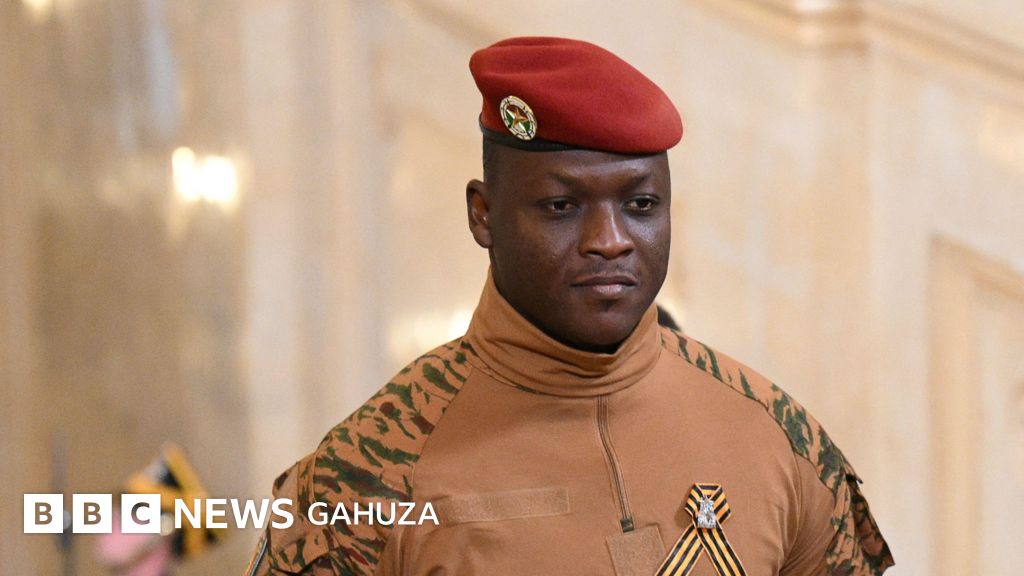
- Burkina Faso has almost certainly severed diplomatic relations with France in late June 2026, reinforcing the Alliance of Sahel States’ broader pivot away from Western partners despite minor discrepancies in reporting on the exact date. (Confidence: high · REPORTED)
- I&W: Formal closure of the French embassy in Ouagadougou within the announced window and cessation of routine consular services (0-14 days)
- I&W: AES leadership signals renewed engagement with ECOWAS or France at ministerial level (1-3 months)
- Civilian risks in Burkina Faso are likely to worsen in the near term given years‑long jihadist violence and credible allegations that security forces have killed more civilians than militants since the 2022 coup. (Confidence: medium · ASSESSED)
- I&W: Further rights‑monitor reporting of civilian mass‑casualty incidents in eastern and northern provinces, including Kompienga and adjacent areas (1-3 months)
- I&W: Documented decrease in both jihadist attacks and state‑linked abuses over a monthly reporting cycle (1-3 months)
- The humanitarian toll across the Sahel remains severe, with reporting of more than 68,933 people killed and about 3 million displaced, figures that likely understate current conditions but come from sources with limited transparency. (Confidence: medium · REPORTED)
- I&W: Updated multi‑source casualty and displacement datasets for the central Sahel equal to or exceeding current tallies (1-3 months)
- I&W: Authoritative downward revisions to casualty or displacement totals by widely cited monitors (1-3 months)
Outlook & scenarios
AES hardens separation and accelerates federalisation (60%)
Burkina Faso’s break with France catalyses deeper Alliance of Sahel States coordination, with additional rejections of ECOWAS overtures and movement toward joint institutions. Formal French representation remains closed, visa access shrinks, and public rhetoric against French influence intensifies.
Prolonged rupture with quiet work‑arounds (30%)
Formal ties stay cut and public positions remain confrontational, but practical work‑arounds emerge via third‑country channels for consular, trade, and limited technical engagement. The AES keeps distance from Western security partners while allowing selective functional cooperation.
Northern Mali escalation and renewed allegations of illicit munitions (40%)
Hostilities in northern Mali intensify, reflected in rising satellite heat detections and official communiqués. Additional geolocated remnants are publicised, prompting fresh allegations of cluster munition use and external censure, without official acknowledgement from Bamako.
Partial diplomatic thaw under economic and mobility pressures (20%)
Consular and mobility frictions prompt limited, transactional re‑engagement between Ouagadougou and European actors, short of full diplomatic normalisation. The AES maintains its strategic distance from ECOWAS but opens specific channels to reduce travel and trade bottlenecks.
Recommendations
- Maintain a no‑travel posture across Mali except for critical movements inside Bamako under strict security management; update duty‑of‑care measures to reflect persistent terrorism, kidnapping and violent crime risks and limited medical care.
- Coordinate all aviation planning for Mali with current FAA Notices to Airmen and Special Federal Aviation Regulations; avoid overflight exposure where risk cannot be mitigated.
- For Burkina Faso portfolios, contingency‑plan for loss of French consular services: identify third‑country consular options, adjust visa strategies for staff, and anticipate document‑processing delays.
- Prioritise collection and verification on the Tadjmart incident: task high‑resolution satellite imagery and geolocation reviews, and catalogue any additional submunition finds against known technical signatures.
- Build an indicator watchlist for AES institutional consolidation and external alignment: track official communiqués on federalisation steps, ECOWAS interactions, and embassy status changes affecting mobility and access.
- Integrate satellite thermal detection monitoring into weekly conflict tracking for northern Mali, paired with ground reporting validation to separate combat activity from non‑conflict heat sources.
Confidence & uncertainty
Overall confidence is medium. Several judgments rest on mutually reinforcing, reliable official and major‑media reporting, including Mali’s extreme‑risk profile and Burkina Faso’s diplomatic break with France. Other judgments, notably on cluster munition use and ongoing hostilities inferred from satellite heat detections, rely on credible OSINT and remote sensing that are probative but not definitive and lack official acknowledgement. Humanitarian loss figures draw on sources with limited transparency. Minor discrepancies in reported dates of key events and the ambiguity of thermal signatures introduce residual uncertainty.
Alternative analysis (red cell)
While the Sahel displays clear instability and humanitarian distress, the provided evidence mixes advisory warnings, single‑source OSINT, thermal anomalies, and low‑transparency aggregates in ways that allow alternate defensible readings. Key inferences — countrywide extreme‑risk characterization for Mali, firm attribution of cluster‑munition use to a specific strike, persistent hostilities inferred solely from thermal detections, a near‑term worsening in Burkina Faso civilian risk, and precise casualty/displacement totals — exceed what the cited claims robustly support. More geolocated incident data, forensic munition analysis, high‑resolution imagery, and transparent methodology for casualty estimates are necessary to confirm or overturn these judgments.
Intelligence gaps
- [EEI 1.1 · PARTIAL] Number, location, and scale of attacks (IEDs, ambushes, complex attacks) per week against towns, military bases, police posts, or convoys, with casualty and equipment-loss counts. Recommended collection: ground/HUMINT
- [EEI 1.2 · PARTIAL] Observed movement and size of armed columns (vehicle counts, heavy weapons present) along approach routes to population centers or borders documented by imagery, local reporting, or border guards. Recommended collection: imagery/SATCOM
- [EEI 1.3 · UNCOVERED] Reports of occupation, administration, or imposition of checkpoints/taxes by armed groups in named towns, villages, markets, or on specified road segments. Recommended collection: OSINT (local media/social)
- [EEI 1.4 · PARTIAL] Seizure or acquisition of heavy weapons or air-defense systems (mortars >81mm, artillery, armored vehicles, MANPADS) attributed to specific groups as evidenced by photos, captured weapons inventories, or weapons interdictions. Recommended collection: forensics/field reporting
- [EEI 2.1 · UNCOVERED] Internal security force movements: redeployment of army units, garrison withdrawals, or mass troop movements toward/away from capitals and regional command posts. Recommended collection: imagery/SATCOM
- [EEI 2.2 · UNCOVERED] Detentions, public dismissals, resignations, or public statements by senior military, police, or government officials indicating factional splits (named individuals, ranks, units). Recommended collection: diplomatic/OSINT
- [EEI 2.4 · UNCOVERED] Targeted external support actions: sanctions, suspension of aid, delivery of weapons or logistics from foreign state or non-state actors (documented shipments, bank transfers, public announcements). Recommended collection: financial/diplomatic
- [EEI 3.2 · PARTIAL] Recorded movements of known smuggling routes and convoy volumes: counts of commercial/privately registered vehicles and informal river crossings on specific cross-border corridors. Recommended collection: ground/HUMINT
- [EEI 3.3 · UNCOVERED] Monitored financial flows linked to illicit trade: large cash movements, changes in declared gold exports at named mines/ports, or arrests of money couriers with amounts and origins. Recommended collection: financial/forensics
- [EEI 3.4 · PARTIAL] Observed changes at border security posts: closures, reductions in personnel, destroyed checkpoints, or documented agreements allowing free movement at named crossings. Recommended collection: imagery/OSINT
Cited sources
[1] U.S. Department of State · Mali Travel Advisory (A) · sha256:0bd28ce550a9 [2] bellingcat.com · Banned Russian Submunitions Found After Mali's Military Announces Airstrikes - bellingcat (A) · sha256:6788d3465fd7 [3] NASA · NASA FIRMS thermal detections — Mali (3d) (A) · sha256:e86036902fb7 [4] Los Angeles Times · Burkina Faso cuts diplomatic relations with France, once a key ally - Los Angeles Times (A) · sha256:baa65fcc9883 [5] lefaso.net · Frédéric Lejeal, auteur du « Le déclin franco-africain » et de « Out of Africa »: « L’un des facteurs invisibles mais déterminants de la perte de légitimité réside dans la parole jugée condescendante et arrogante de la France en Afrique » (B) · sha256:6f803a5a9125 [6] BBC News · Burkina Faso yaciye imigenderanire na France - BBC News Gahuza (A) · sha256:0186ed526c23 [7] lefaso.net · Rupture des relations diplomatiques entre le Burkina et la France: Les peuples ne divorcent pas pour autant, selon Jonas Hien (B) · sha256:91b48d1151bc [8] Wikipedia · Alliance of Sahel States (A) · sha256:2294aee36297 [9] Wikipedia · War in the Sahel (F) · sha256:f934fdb650ad
Source content hashes were computed at collection time; the cited text is preserved unmodified for the life of this product.
Red cell review: PARTIAL DISSENT
TLP:CLEAR