TLP:CLEAR · Disclosure is not limited.
Sahel Security Crisis: Diplomatic Opening, Unverified Casualty Claims
Time window: Last 7 days · Audience: General analyst · Type: Situation report · DTG: 2026-10-19 04:06Z · Overall confidence: MEDIUM
BLUF
ECOWAS and Alliance of Sahel States ministers met on 17 October and agreed to establish working groups, opening a technical channel but not producing a cooperation framework. Separately, ISSP’s claim that it killed more than 400 JNIM fighters in Burkina Faso’s Oudalan province remains unverified and should not be treated as a confirmed casualty figure.
Executive summary
Reporting for 12 to 19 October adds a ministerial meeting between ECOWAS and the AES on 17 October. The parties agreed to form working groups aimed at a cooperation framework. Security reporting is less firm: ISSP claimed more than 400 JNIM fighters were killed in Oudalan on 12 October, but the claim has no independent confirmation in the supplied reporting. Other high-impact accounts, including reported losses at Dioura in Mali and an alleged JNIM-FLA attack in Bamako, also rest on thin sourcing. A separate dispute over a 2025 Malian strike in Zouera remains unresolved.
Change from previous assessment
Since the 18 October prior brief, the clearest update is that ECOWAS and AES ministers met on 17 October and agreed to establish joint thematic working groups, moving beyond the previously scheduled consultations. The current reporting also includes ISSP’s claim of more than 400 JNIM fighters killed in Oudalan on 12 October, but does not independently verify it. No new supplied evidence updates the prior assessment of control in Kidal, Burkina Faso’s flour-export suspension or current humanitarian conditions.
Key judgments
- The 17 October ECOWAS-AES ministerial meeting is likely to sustain technical contact over the next 1 to 3 months, but it did not establish a completed cooperation framework. The reported agreement was to create joint thematic working groups. The chronology also needs care: the AES was formed in September 2023, while the three countries’ ECOWAS withdrawal was reported in January 2025; one account conflates those milestones. (Confidence: medium · ASSESSED)
- I&W: Confirm: ECOWAS and AES announce a first working-group session with named participants and a date. (0-30 days)
- I&W: Break: either side announces that the working groups are suspended or will not proceed. (1-3 months)
- The reported figure of more than 400 JNIM fighters killed in Oudalan on 12 October is unverified. The supplied account attributes the figure to ISSP, and ACLED analyst Heni Nsaibia is quoted only on the consequences if it is confirmed. The reporting does not establish the casualty total. (Confidence: low · REPORTED)
- I&W: Confirm: an independent investigation publishes verifiable casualty evidence from Oudalan that supports a death toll of this scale. (0-14 days)
- I&W: Break: independent reporting identifies the claim as mislocated or finds no evidence of a mass-casualty battle in Oudalan. (0-30 days)
- JNIM and ISSP are likely to continue fighting across the borderlands of Mali, Burkina Faso and Niger over the next 1 to 3 months. A local-media account describes the rivalry as extending into western Niger and north-western Nigeria, and cites ACLED as recording more than 320 battles and about 2,200 deaths from 2019 through September 2026. Those historical figures do not verify the Oudalan claim or establish a recent shift in the balance between the groups. (Confidence: medium · ASSESSED)
- I&W: Confirm: independent reporting or geolocated evidence documents a new JNIM-ISSP clash in Oudalan or near N'Daki. (0-3 months)
- I&W: Break: JNIM and ISSP announce a non-aggression agreement and independent monitoring records no clashes between them. (1-3 months)
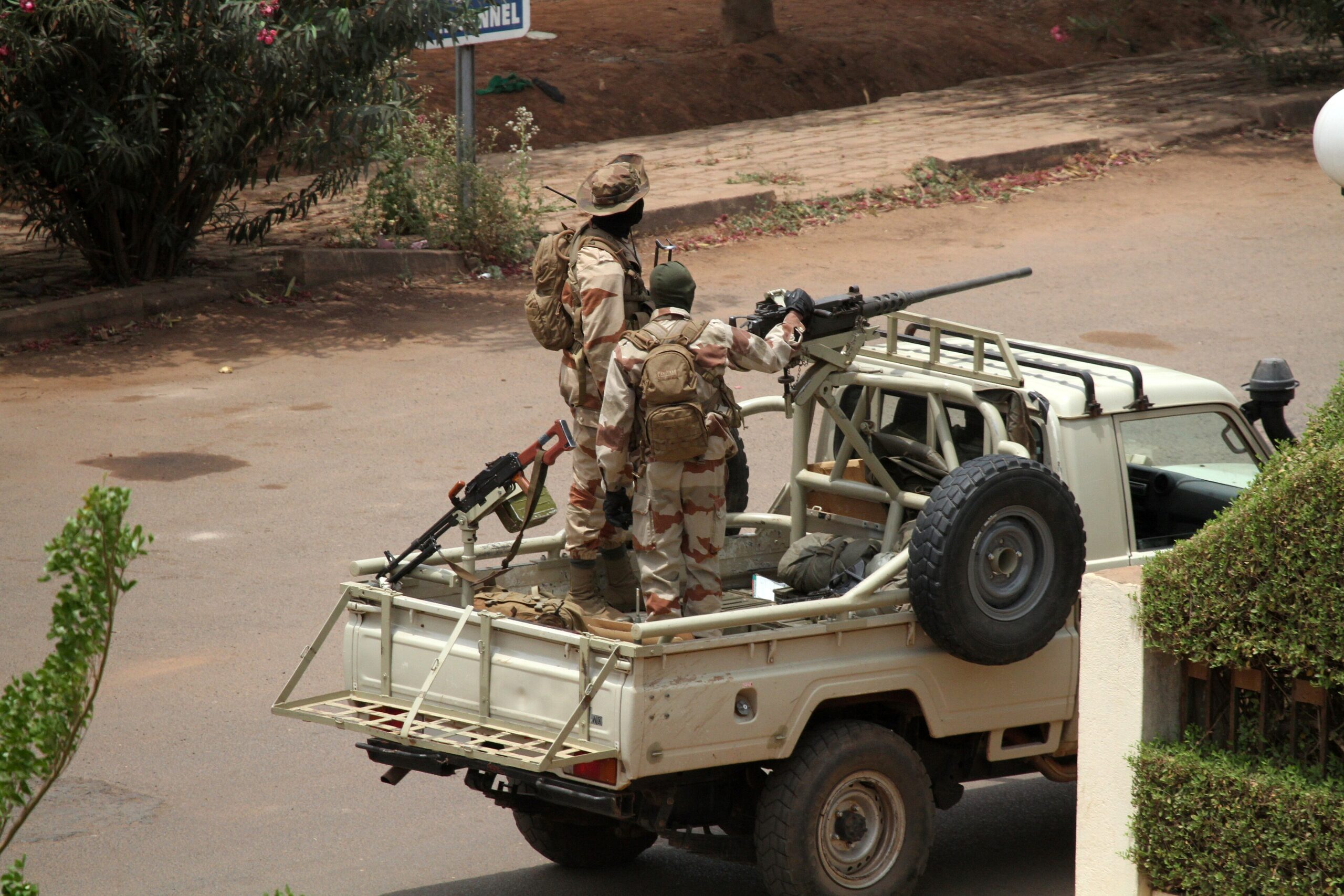
- Reports that an attack on the Dioura military base in Mali killed at least 100 Malian soldiers and five Africa Corps members remain weakly corroborated. The supplied claims derive from social-media reporting and provide no independent verification of the losses. (Confidence: low · REPORTED)
- I&W: Confirm: an official Malian notice or an independent source corroborates casualties at the Dioura base, including the reported Africa Corps losses. (0-30 days)
- I&W: Break: an independent investigation or official record identifies no such attack or materially different casualties at Dioura. (0-30 days)
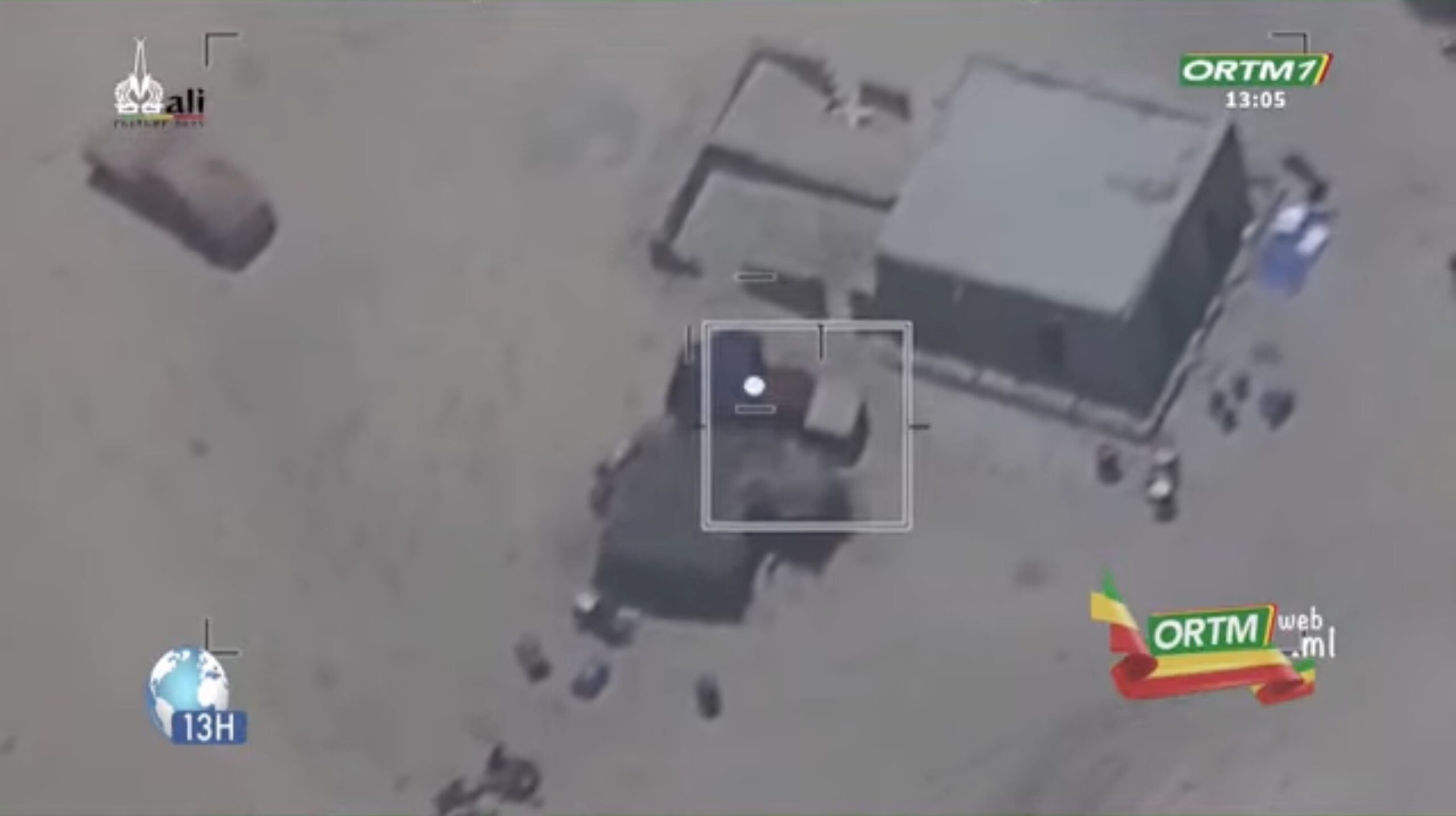
- The supplied record does not resolve what the Malian armed forces struck in Zouera on 8 July 2025. FAMa presented the operation as a strike on a terrorist supply vehicle, while Médecins Sans Frontières reported that a strike on the market killed four people, including three girls, and injured five. These are competing accounts, and the reporting provided does not establish which is correct. (Confidence: low · REPORTED)
- I&W: Confirm the official account: independently verified imagery or records show the supply vehicle was the strike target and do not support the reported market casualties. (1-3 months)
- I&W: Confirm the civilian-casualty account: independently verified medical records, imagery or witness evidence supports the reported market deaths and injuries. (1-3 months)
- The supplied record does not establish that JNIM and the Front for the Liberation of Azawad jointly attacked northern Mali and carried out an incursion into Bamako on 25 April, reportedly killing Defence Minister Sadio Cámara. The allegation appears in one blog account and has no independent corroboration in the claims provided; it is not sufficient evidence of a joint operational alliance. (Confidence: low · ASSESSED)
- I&W: Confirm: independent reporting or verifiable records corroborate the Bamako incursion, the northern attacks and Cámara’s death. (0-30 days)
- I&W: Break: independent reporting establishes that the account misidentified the date, location, perpetrators or reported death. (0-30 days)
Outlook & scenarios
Technical contact continues without full normalisation (55%)
This is the likely near-term course. ECOWAS and AES working groups meet and maintain a channel, but stop short of a comprehensive cooperation framework or reversal of the countries’ departure from ECOWAS.
Working groups produce a formal cooperation framework (25%)
This is unlikely over the next 1 to 3 months. It would require the working groups to meet, settle technical terms and secure public approval from both ECOWAS and AES representatives.
Armed-group rivalry remains the more immediate security pressure (60%)
It is likely that JNIM and ISSP continue competing across the Mali, Burkina Faso and Niger borderlands. Further casualty claims may circulate without independent verification, leaving the scale and local effects of individual clashes uncertain.
Renewed coordinated attacks reach Bamako (5%)
A renewed JNIM-FLA operation involving Bamako is very unlikely but would have high impact. The supplied account of an earlier incursion is uncorroborated, so it provides a warning to verify rather than a firm basis for expecting a repeat.
Recommendations
- For the next 30 days, track whether the ECOWAS-AES working groups hold a first session. Record participants, mandates and any agreed timetable, and distinguish procedural meetings from a signed cooperation framework.
- Keep the ISSP Oudalan claim and the Dioura casualty report marked as unverified. Do not use their reported tolls as confirmed figures without independent reporting or verifiable primary evidence.
- Seek independent corroboration of the alleged 25 April attacks and Bamako incursion, including the reported death of Sadio Cámara, before using the episode to assess JNIM-FLA coordination.
- Keep the competing FAMa and Médecins Sans Frontières accounts of the Zouera strike separate in analysis. Seek independently verified imagery, medical records or witness evidence before assigning the target or casualty total.
- Use separate dates for AES formation and ECOWAS withdrawal in background products, and flag accounts that conflate the two milestones.
Confidence & uncertainty
Overall confidence is medium. The 17 October ECOWAS-AES meeting and its working-group agreement are reported by major media, but the supplied account does not show that the agreement has been implemented. Key security claims rely on a local-media report relaying ISSP’s assertion, social-media reporting on Dioura, or a single blog account. The Zouera reporting contains directly competing descriptions, and the supplied material does not resolve them.
Intelligence gaps
- [EEI 1.2 · PARTIAL] Observed movement and size of armed columns (vehicle counts, heavy weapons present) along approach routes to population centers or borders documented by imagery, local reporting, or border guards. Recommended collection: imagery/SATCOM
- [EEI 1.3 · UNCOVERED] Reports of occupation, administration, or imposition of checkpoints/taxes by armed groups in named towns, villages, markets, or on specified road segments. Recommended collection: OSINT (local media/social)
- [EEI 1.4 · UNCOVERED] Seizure or acquisition of heavy weapons or air-defense systems (mortars >81mm, artillery, armored vehicles, MANPADS) attributed to specific groups as evidenced by photos, captured weapons inventories, or weapons interdictions. Recommended collection: forensics/field reporting
- [EEI 2.1 · PARTIAL] Internal security force movements: redeployment of army units, garrison withdrawals, or mass troop movements toward/away from capitals and regional command posts. Recommended collection: imagery/SATCOM
- [EEI 2.2 · UNCOVERED] Detentions, public dismissals, resignations, or public statements by senior military, police, or government officials indicating factional splits (named individuals, ranks, units). Recommended collection: diplomatic/OSINT
- [EEI 2.3 · PARTIAL] Changes in foreign military footprints or security agreements: arrival/departure of foreign troops, opening/closure of foreign bases, visible presence of private military contractors (identified personnel/vehicles). Recommended collection: OSINT/imagery
- [EEI 3.1 · UNCOVERED] Interdictions or seizures at borders/markets of weapons, ammunition, fuel, or contraband (type/quantity, seizure location, alleged origin/destination). Recommended collection: border/customs
- [EEI 3.2 · UNCOVERED] Recorded movements of known smuggling routes and convoy volumes: counts of commercial/privately registered vehicles and informal river crossings on specific cross-border corridors. Recommended collection: ground/HUMINT
- [EEI 3.3 · UNCOVERED] Monitored financial flows linked to illicit trade: large cash movements, changes in declared gold exports at named mines/ports, or arrests of money couriers with amounts and origins. Recommended collection: financial/forensics
- [EEI 3.4 · UNCOVERED] Observed changes at border security posts: closures, reductions in personnel, destroyed checkpoints, or documented agreements allowing free movement at named crossings. Recommended collection: imagery/OSINT
Red cell review: CONCUR
TLP:CLEAR