TLP:CLEAR · Disclosure is not limited.
Sahel security crisis: extreme risk in Mali and Burkina Faso, cluster‑munition allegations near Tadjmart, and persistent coastal‑frontier threat
Time window: Last 7 days · Audience: General analyst · Type: Situation report · DTG: 2026-06-14 04:09Z · Overall confidence: MEDIUM
BLUF
Operating risk in Mali and Burkina Faso remains extreme under U.S. Do Not Travel advisories, staff movement bans, and fresh NASA thermal detections in Mali. Credible open‑source reporting of unexploded Russian‑made submunitions near Tadjmart after 17 May Malian airstrikes likely invites CCM scrutiny as the Alliance of Sahel States consolidates away from Western partners and jihadist pressure persists along Togo, Benin and Côte d’Ivoire’s northern borders.
Executive summary
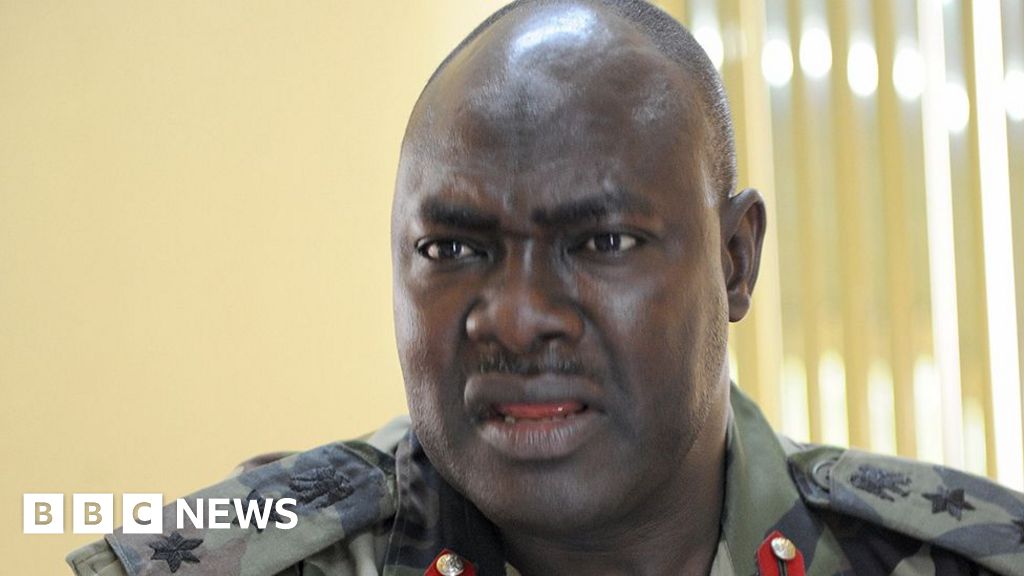
U.S. advisories keep Mali at Do Not Travel and bar official travel outside Bamako, while Burkina Faso maintains a state of emergency in the Sahel and East regions and restricts U.S. staff movement outside Ouagadougou. NASA recorded 11 thermal anomalies in Mali on 13 June using VIIRS, consistent with ongoing conflict activity. Bellingcat geolocated unexploded ShOAB‑0.5 cluster bomblets in Tadjmart after the Malian Armed Forces announced 17 May airstrikes; Mali is a CCM signatory and Russia’s Africa Corps supports Malian operations. Along the coastal frontier, Togo’s Savanes remains under a state of emergency amid documented armed attacks and kidnappings, Benin faces border‑area attacks, and Côte d’Ivoire identifies JNIM as the main threat and has stood up CROAT and a Northern Operational Zone. In Nigeria, the kidnapping and reported death of retired General Rabe Abubakar in Katsina and a pledge of intensified operations reflect acute insecurity in the north, reinforcing cross‑border risk for Niger and Burkina Faso.
Change from previous assessment
Initial assessment of this topic for this run, building on the prior brief’s themes. New elements include NASA’s 11 thermal detections in Mali on 13 June using VIIRS, fresh reporting on the kidnapping and reported death of retired Nigerian General Rabe Abubakar and a pledge of intensified operations, and AES messaging on sovereign communications. The risk posture for Mali and Burkina Faso, the Tadjmart submunition evidence, and coastal‑frontier threat lines remain consistent with the prior brief; confidence levels are unchanged.
Key judgments
- Mali and Burkina Faso remain extreme‑risk operating environments, very likely, given U.S. Do Not Travel guidance and movement bans for U.S. staff, persistent risks of terrorist attack and kidnapping, limited medical care and, in Mali, FAA civil aviation warnings and fresh NASA thermal detections consistent with ongoing conflict activity on 13 June. (Confidence: high · REPORTED)
- I&W: FIRMS shows additional clusters of thermal detections within Mali’s recent bounding area, coinciding with official announcements of operations or clashes. (0-14 days)
- I&W: U.S. embassies in Bamako or Ouagadougou ease current movement bans for staff outside capital areas. (1-3 months)
- Unexploded Russian‑made cluster submunitions around Tadjmart after 17 May Malian airstrikes likely occurred, exposing Bamako to Convention on Cluster Munitions compliance questions despite Russian Africa Corps support to Malian operations. (Confidence: medium · ASSESSED)
- I&W: A CCM state party or relevant body publicly queries Mali over alleged cluster‑munition use or independent field teams publish further identification from Tadjmart or adjacent villages. (1-3 months)
- I&W: Authoritative forensic analysis attributes the bomblets to legacy contamination or non‑state use unrelated to the 17 May strikes. (1-3 months)
- Western military access across the Alliance of Sahel States is likely to remain constrained as the bloc consolidates away from ECOWAS and Western partners, evidenced by Mali’s 2022 termination of defence accords with France, Burkina Faso’s January 2023 end of its French military agreement, Niamey’s July 2023 demand for French withdrawal, the AES’s January 2024 ECOWAS exit and 2024 severing of Western military ties, alongside messaging on sovereign communications. (Confidence: medium · ASSESSED)
- I&W: AES governments announce new expulsions, basing terminations or programme shutdowns affecting Western military or diplomatic missions. (1-3 months)
- I&W: AES publicly resumes security cooperation or training with ECOWAS or a Western partner. (1-6 months)
- Jihadist pressure on coastal West African frontiers is very likely to persist in northern Togo and Benin and along Côte d’Ivoire’s northern border, reflected in Togo’s Savanes state of emergency, recorded armed attacks and kidnappings in Togo’s northern border region, non‑permissive travel advisories and staff restrictions in Togo and Benin, and Ivoirian designation of JNIM as the principal threat with CROAT and a Northern Operational Zone in place. (Confidence: high · REPORTED)
- I&W: U.S. or FCDO advisories escalate for northern departments of Togo or Benin or extend staff restrictions further south. (0-3 months)
- I&W: Togo lifts the Savanes state of emergency and eases U.S. staff restrictions north of Mango and Dapaong. (1-6 months)
- Humanitarian and medical access constraints across the Sahel core are likely to persist, with limited routine and emergency care in Mali and Burkina Faso and displacement in Burkina Faso exceeding 2 million people. (Confidence: medium · ASSESSED)
- I&W: Official reporting records continued service gaps at provincial facilities or rising displacement figures in Burkina Faso. (1-3 months)
- I&W: Announcements of substantial new clinical capacity outside Bamako and Ouagadougou. (3-6 months)
- Insecurity in northern and north‑western Nigeria is likely to remain acute, reinforcing cross‑border risk along the Niger and Burkina Faso frontiers, as evidenced by the abduction and reported death of retired General Rabe Abubakar in Katsina, a Nigerian military pledge to intensify operations, and continuing U.S. Do Not Travel warnings for multiple northern states. (Confidence: medium · ASSESSED)
- I&W: Additional high‑profile abductions in Katsina, Zamfara or Sokoto or a further tightening of U.S. advisories for these states. (0-3 months)
- I&W: Measured easing of U.S. restrictions for the affected northern Nigerian states. (3-6 months)
Outlook & scenarios
AES hardens its break with Western partners and formalises alternative security enablers (50%)
Mali, Burkina Faso and Niger sustain or deepen the 2022-2024 pattern of ending or demanding withdrawal of Western military arrangements and consolidating the AES after its ECOWAS exit, while promoting sovereign communications. This yields constrained Western access, increased reliance on non‑Western support and more difficult channels for security cooperation or evacuation planning.
Cross‑border insurgent activity sustains pressure on coastal frontiers (40%)
Armed groups continue attacks and kidnappings in Togo’s northern border area and strike Benin border departments, while Côte d’Ivoire keeps CROAT and its Northern Operational Zone on a heightened footing against JNIM threats. Travel advisories remain restrictive and staff movement rules stay tight north of Mango and Dapaong.
Cluster‑munition allegations trigger diplomatic friction and compliance questions for Bamako (30%)
Further open‑source evidence from Tadjmart and nearby villages prompts public queries by CCM stakeholders. Mali faces scrutiny over the presence of unexploded Russian‑made bomblets after declared 17 May strikes, complicating international engagement even as Russia’s Africa Corps supports Malian operations.
Recommendations
- Maintain a no‑travel posture for Mali and keep movement outside Bamako prohibited for official personnel; for Burkina Faso, keep movement bans outside Ouagadougou and contingency medevac plans current with limited clinical capacity.
- Route any essential coastal‑state travel well south of Togo’s Savanes and Benin’s border departments; prohibit overnights north of Mango and require senior authorisation for any movement north of Dapaong.
- Task OSINT monitoring of NASA FIRMS for Mali using the specified bounding area and VIIRS detections, and alert when new clustered thermal signatures appear near known contact zones.
- Commission an internal legal review on CCM exposure for any programmes engaging Malian defence entities, including risk triggers from reporting of ShOAB‑0.5 bomblets at Tadjmart.
- Plan for reduced Western access across the AES: map alternative logistical corridors and third‑country support options if ECOWAS channels remain closed and Western training or liaison is curtailed.
- For Nigeria‑adjacent operations, raise kidnap risk controls for personnel and logistics linked to Katsina, Zamfara, Sokoto, Borno, Yobe and neighbouring states; use dedicated secure movement or defer non‑essential trips.
- Engage Côte d’Ivoire counterparts on CROAT and the Northern Operational Zone to refine early‑warning for JNIM activity along the border belt and update trigger‑based escalation protocols.
Confidence & uncertainty
Overall confidence is medium. The core risk picture relies on high‑reliability official travel advisories and NASA detections, and Bellingcat’s geolocation of submunitions is credible but remains open‑source and uncorroborated by official inquiry, which limits confidence on legal attribution. Assertions on AES political‑military alignment and ECOWAS exit draw on sources of mixed reliability, lowering confidence on forward‑leaning inferences. Humanitarian displacement figures for Burkina Faso are from a single secondary source and are treated with caution.
Alternative analysis (red cell)
The evidence supports elevated and enduring risk across parts of the Sahel and neighbouring coastal frontiers, but several key judgments overreach the available sourcing. Thermal anomalies, travel advisories, and isolated forensic finds are consistent with concern but do not by themselves prove recent, region‑wide escalation or definitive attribution of cluster‑munition use. Additional event‑level corroboration, forensic linkage, and time‑series incident data are needed to move these judgments to higher confidence.
Intelligence gaps
- [EEI 1.1 · PARTIAL] Number, location, and scale of attacks (IEDs, ambushes, complex attacks) per week against towns, military bases, police posts, or convoys, with casualty and equipment-loss counts. Recommended collection: ground/HUMINT
- [EEI 1.2 · UNCOVERED] Observed movement and size of armed columns (vehicle counts, heavy weapons present) along approach routes to population centers or borders documented by imagery, local reporting, or border guards. Recommended collection: imagery/SATCOM
- [EEI 1.3 · UNCOVERED] Reports of occupation, administration, or imposition of checkpoints/taxes by armed groups in named towns, villages, markets, or on specified road segments. Recommended collection: OSINT (local media/social)
- [EEI 2.1 · UNCOVERED] Internal security force movements: redeployment of army units, garrison withdrawals, or mass troop movements toward/away from capitals and regional command posts. Recommended collection: imagery/SATCOM
- [EEI 2.2 · UNCOVERED] Detentions, public dismissals, resignations, or public statements by senior military, police, or government officials indicating factional splits (named individuals, ranks, units). Recommended collection: diplomatic/OSINT
- [EEI 2.3 · PARTIAL] Changes in foreign military footprints or security agreements: arrival/departure of foreign troops, opening/closure of foreign bases, visible presence of private military contractors (identified personnel/vehicles). Recommended collection: OSINT/imagery
- [EEI 2.4 · UNCOVERED] Targeted external support actions: sanctions, suspension of aid, delivery of weapons or logistics from foreign state or non-state actors (documented shipments, bank transfers, public announcements). Recommended collection: financial/diplomatic
- [EEI 3.1 · UNCOVERED] Interdictions or seizures at borders/markets of weapons, ammunition, fuel, or contraband (type/quantity, seizure location, alleged origin/destination). Recommended collection: border/customs
- [EEI 3.2 · UNCOVERED] Recorded movements of known smuggling routes and convoy volumes: counts of commercial/privately registered vehicles and informal river crossings on specific cross-border corridors. Recommended collection: ground/HUMINT
- [EEI 3.3 · UNCOVERED] Monitored financial flows linked to illicit trade: large cash movements, changes in declared gold exports at named mines/ports, or arrests of money couriers with amounts and origins. Recommended collection: financial/forensics
- [EEI 3.4 · UNCOVERED] Observed changes at border security posts: closures, reductions in personnel, destroyed checkpoints, or documented agreements allowing free movement at named crossings. Recommended collection: imagery/OSINT
Cited sources
[1] U.S. Department of State · Mali Travel Advisory (A) · sha256:0bd28ce550a9 [2] NASA · NASA FIRMS thermal detections — Mali (2d) (A) · sha256:f64e97d70855 [3] U.S. Department of State · Burkina Faso Travel Advisory | Travel.State.gov (A) · sha256:6dbd8e921100 [4] bellingcat.com · Banned Russian Submunitions Found After Mali's Military Announces Airstrikes - bellingcat (A) · sha256:6788d3465fd7 [5] Wikipedia · Alliance of Sahel States (F) · sha256:feb6a1262fbe [6] lefaso.net · Radio Daandé Liptako: Rimtalba Jean Emmanuel Ouédraogo appelle à porter la voix et les intérêts des peuples de l’AES (B) · sha256:d7be9c556939 [7] U.S. Department of State · Togo Travel Advisory (A) · sha256:1884a876b26f [8] U.S. Department of State · Benin Travel Advisory | Travel.State.gov (A) · sha256:9fb629d0d2d7 [9] U.S. Department of State · Cote d'Ivoire Travel Advisory (A) · sha256:d92eb303ef23 [10] Wikipedia · Islamist insurgency in Burkina Faso (B) · sha256:35c16e56b6bc [11] bbc.com · Rabe Abubakar: Kidnapped Nigerian retired general dies in captivity (A) · sha256:7f6a1c50a019 [12] U.S. Department of State · Nigeria Travel Advisory (A) · sha256:263bf9ff81ac
Source content hashes were computed at collection time; the cited text is preserved unmodified for the life of this product.
Red cell review: PARTIAL DISSENT
TLP:CLEAR