TLP:CLEAR · Disclosure is not limited.
Sahel Security Crisis: Jihadist Pressure and Junta Cohesion
Time window: Last 7 days · Audience: General analyst · Type: Situation report · DTG: 2026-09-18 04:56Z · Overall confidence: MEDIUM
BLUF
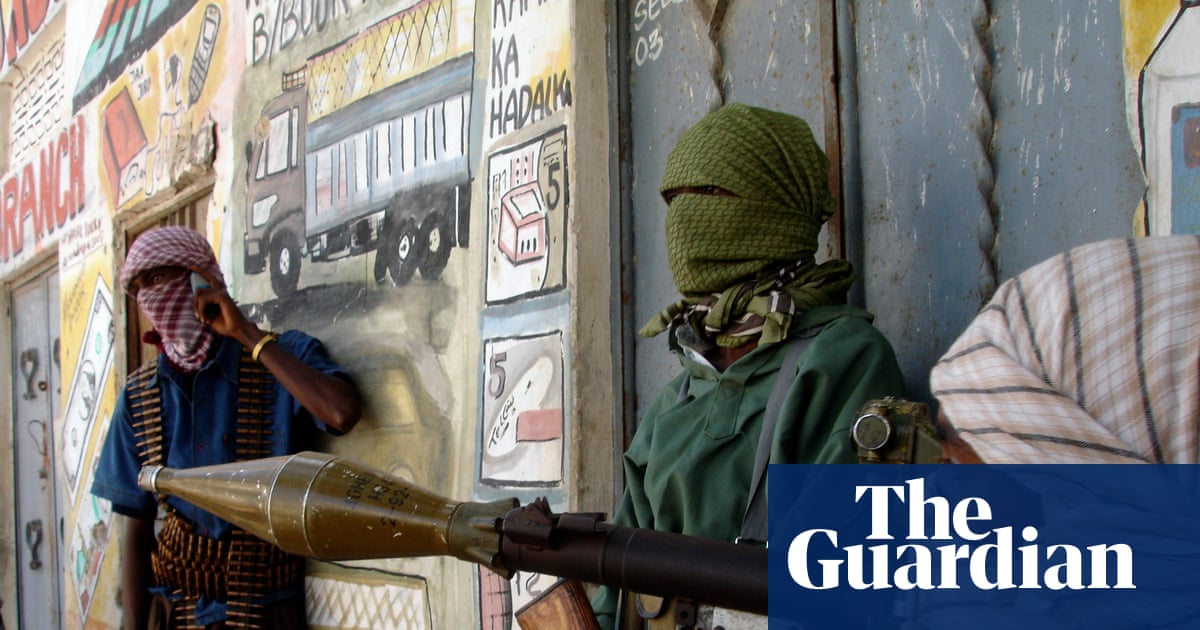
Jihadist violence in Mali, Burkina Faso and Niger is likely to remain high through the next 1-3 months, with 2026 on course to exceed 3,000 incidents. General Abdourahamane Tiani's junta is likely to retain control of Niamey, but the 29 August mutiny exposed a low-confidence, material risk to Nigerien military cohesion.
Executive summary
ACLED recorded 2,145 jihadist-related events in Mali, Burkina Faso and Niger by 16 September 2026 and assessed that the annual total is likely to exceed 3,000 if the current pace continues. JNIM and the Azawad Liberation Front have retained pressure in northern Mali, JNIM has claimed more than 130 attacks in Burkina Faso and at least 17 in Niger, and Islamic State in the Greater Sahara remains more active than JNIM in Niger. Mali's conflict continues to drive displacement towards Mauritania, while reporting on Malian military drone strikes indicates recurring civilian-harm allegations and disputed target attribution. NASA FIRMS recorded only two low-confidence thermal detections in Mali over the three days to 17 September, which does not establish fresh JNIM activity.
Change from previous assessment
Since the 16 September prior brief, the assessment adds a current ACLED count of 2,145 jihadist-related events in Mali, Burkina Faso and Niger and raises the likelihood that the 2026 total will exceed 3,000. It gives greater weight to JNIM's reported activity near Ouagadougou, Islamic State in the Greater Sahara's relative activity in Niger, the April JNIM and FLA offensive in northern Mali, and the civilian-harm evidence concerning Malian drone strikes. The latest NASA FIRMS snapshot shows two detections over three days to 17 September, replacing the earlier snapshot of 19 detections through 15 September, although the periods are not directly comparable. The low-confidence assessment of Nigerien junta stability is retained, as no new reporting resolves the disagreement over the mutiny's outcome or Africa Corps' role.
Key judgments
- Jihadist violence involving groups linked to al-Qaida and Islamic State is likely to remain high across Mali, Burkina Faso and Niger over the next 1-3 months. The 2026 total is likely to exceed 3,000 incidents if the current reporting pace continues. Confidence is medium because the 2,145-event count and projection are reported through multiple outlets, but the reporting appears to rely heavily on the same ACLED dataset. (Confidence: medium · ASSESSED)
- I&W: Confirm: ACLED records at least 120 additional jihadist-related events across Mali, Burkina Faso and Niger during the next 14 days and raises its 2026 projection. (0-14 days)
- I&W: Break: ACLED records fewer than 50 jihadist-related events across the three countries during a subsequent 30-day period. (1-3 months)
- JNIM and the Azawad Liberation Front are likely to sustain pressure on FAMa and Russia's Africa Corps in northern Mali over the next 1-3 months. Their April 2026 offensive, the seizure of Kidal and the reported Africa Corps retreat from Kidal indicate that the Malian state and its Russian partner have not restored uncontested control in the north. Confidence is medium because the main territorial developments date from April and the evidence does not provide a current operational picture. (Confidence: medium · ASSESSED)
- I&W: Confirm: independent reporting records another coordinated JNIM and FLA attack on FAMa or Africa Corps positions in northern Mali, or a further withdrawal from a northern position. (0-14 days)
- I&W: Break: FAMa and Africa Corps publicly and independently establish sustained control of Kidal for 30 days without a new reported assault. (1-3 months)
- Jihadist pressure is likely to persist near Ouagadougou and in Niger, with JNIM retaining a higher operational tempo in Burkina Faso and Islamic State in the Greater Sahara remaining more active than JNIM in Niger. JNIM has claimed more than 130 attacks in Burkina Faso in 2026 and at least 17 in Niger, while its February offensive in Burkina Faso involved more than 30 attacks and over 120 deaths among soldiers, forest guards and Volunteers for the Defense of the Homeland. Confidence is medium because the figures include group claims and reporting based on a UN assessment and ACLED data. (Confidence: medium · ASSESSED)
- I&W: Confirm: JNIM claims another attack within the approaches to Ouagadougou, or ACLED records a new concentration of political violence in Tillabéri. (0-14 days)
- I&W: Break: JNIM reports no further attacks in Burkina Faso or Niger for 30 days and independent reporting records a sustained fall in incidents. (1-3 months)
- General Abdourahamane Tiani's junta is likely to retain control of Niamey over the next 1-3 months, but Nigerien military cohesion is likely to remain vulnerable. The 29 August mutiny reached Air Base 101 after mutineers were repelled from the state broadcaster and Presidential Palace, while reporting disagrees over whether the mutiny simply failed or was halted by Russia's Africa Corps. This is a low-confidence assessment because the accounts come primarily from limited think-tank reporting and contain unresolved differences over the outcome and attribution of the junta's survival. (Confidence: low · ASSESSED)
- I&W: Confirm: credible reporting records renewed clashes between Nigerien units in Niamey, a loss of junta control at Air Base 101, or an open split between the Presidential Guard and other forces. (0-14 days)
- I&W: Break: independent reporting shows General Tiani's junta has consolidated control over Air Base 101 and the Presidential Palace, with no further reported military challenge for 30 days. (1-3 months)
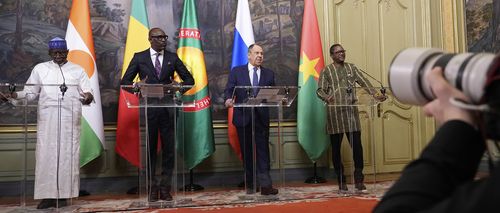
- Mali and Burkina Faso are likely to retain Russian security support over the next 1-3 months, while Niger's junta is likely to continue seeking Africa Corps backing after the August mutiny. Mali hosts about 2,500 Africa Corps personnel and has paid at least $1 billion to Russian mercenaries since 2021; Burkina Faso hosts a Russian contingent of about 300 personnel primarily assigned to protect Captain Ibrahim Traoré. Confidence is medium because the evidence is largely from think-tank reporting and does not establish equivalent day-to-day Russian operations in all three countries. (Confidence: medium · ASSESSED)
- I&W: Confirm: reporting identifies new Africa Corps personnel, equipment or operations supporting FAMa, Burkina Faso's junta or Niger's junta. (1-3 months)
- I&W: Break: reliable reporting documents an Africa Corps withdrawal from Mali or Burkina Faso, or a public decision by Niger's junta to end the security relationship. (1-3 months)
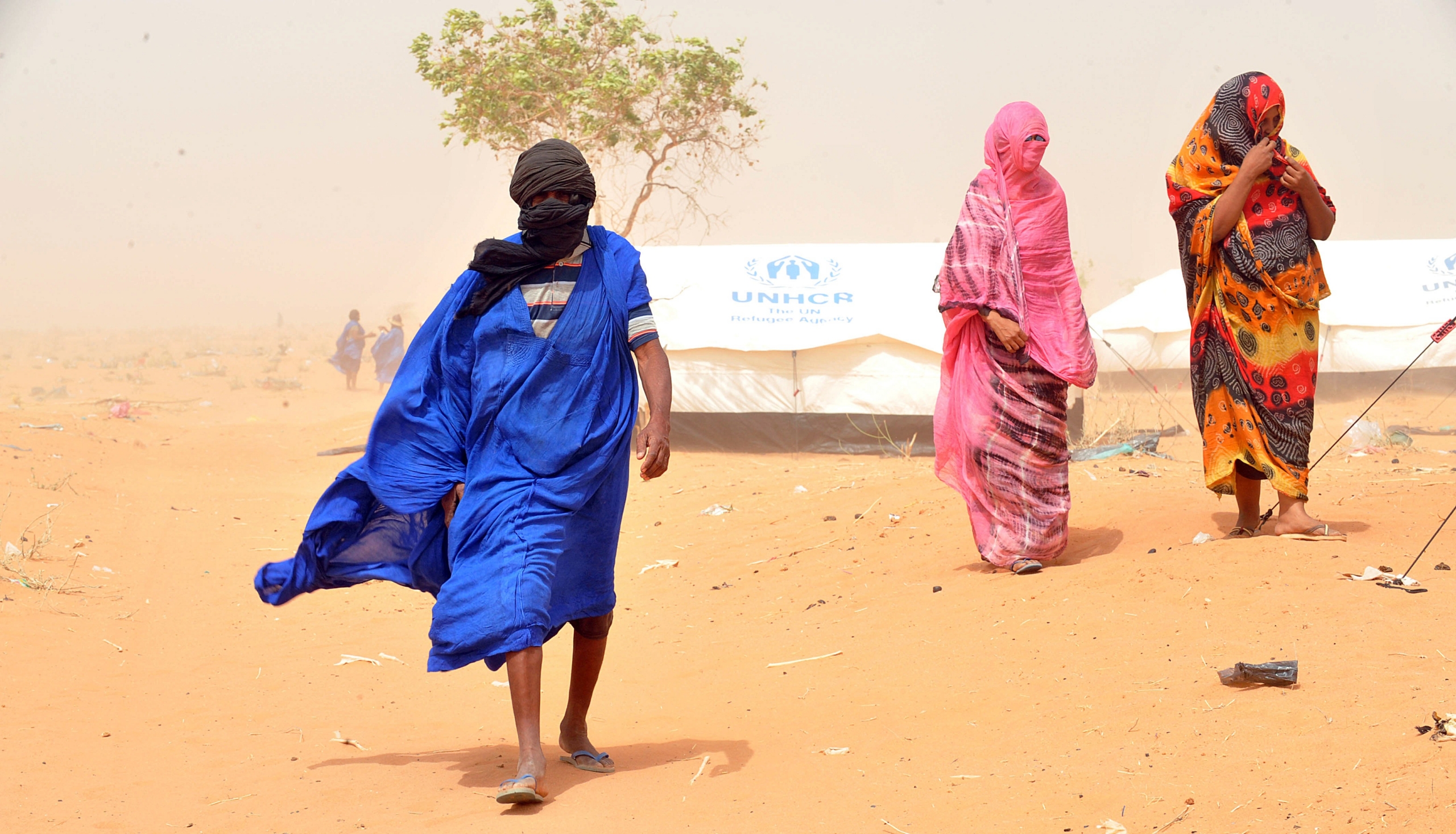
- Conflict-driven displacement from Ségou, Timbuktu and Mopti is very likely to continue, with Mauritania remaining a primary destination for Malian civilians over the next 1-3 months. UNHCR registered 290,000 Malian refugees in Hodh Ech-Chargui in July 2026, while Amnesty International documented village expulsions, forced recruitment attempts and killings attributed to jihadist groups. Confidence is medium because the refugee total is well sourced, but the available reporting provides limited time-series data on new arrivals. (Confidence: medium · ASSESSED)
- I&W: Confirm: UNHCR records additional Malian arrivals in Hodh Ech-Chargui above the July 2026 baseline of 290,000, or Amnesty documents new expulsions from Ségou, Timbuktu or Mopti. (1-3 months)
- I&W: Break: UNHCR reports no new Malian arrivals in Hodh Ech-Chargui and independent reporting records no new village expulsions in the three named regions for 60 days. (1-3 months)
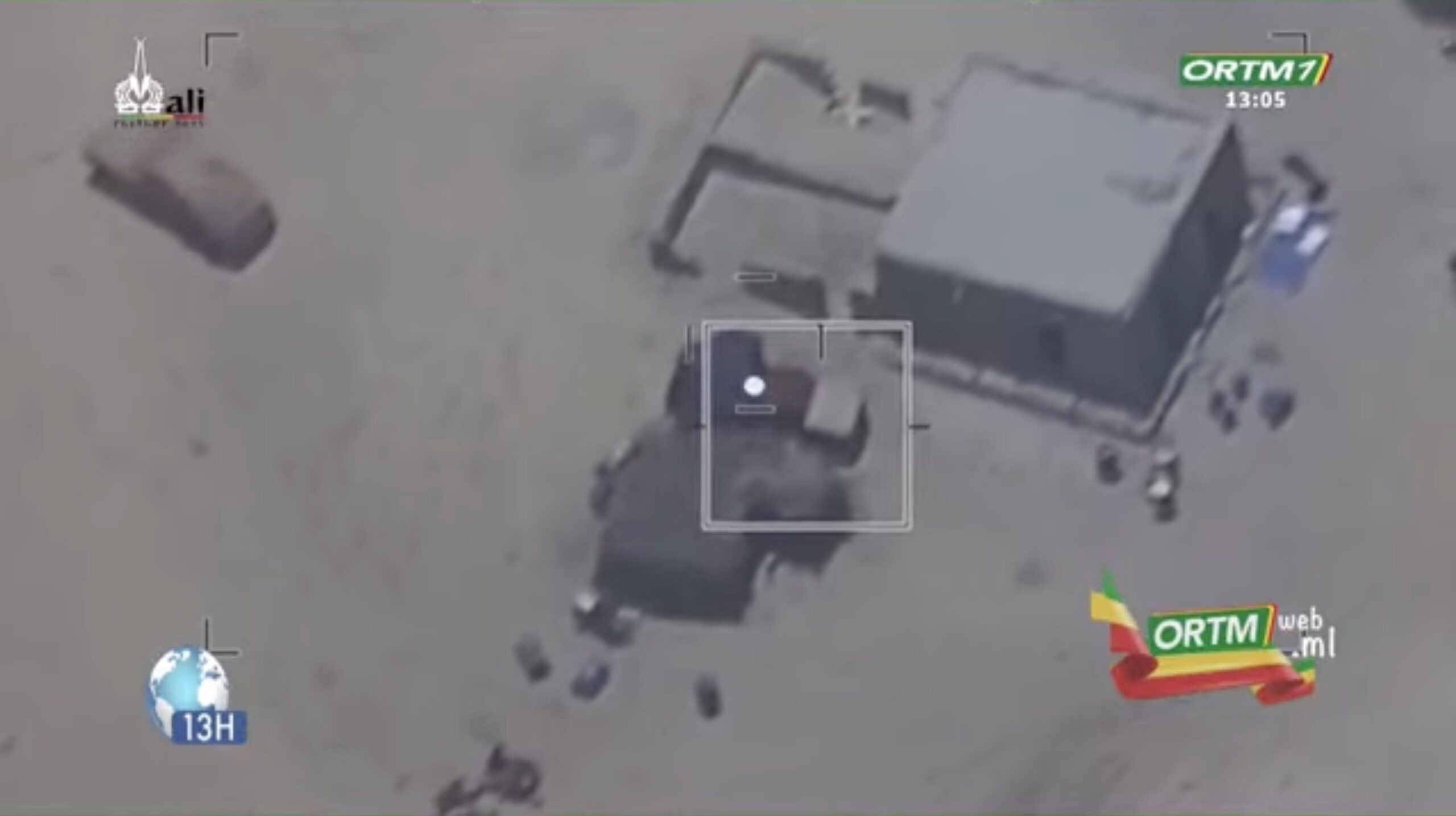
- Civilian-harm allegations concerning Malian military drone strikes are likely to persist over the next 1-3 months, while attribution of individual strikes will remain contested. Bellingcat and Jeune Afrique reported that Malian military strikes frequently occur in civilian areas, while the Zouera strike remains disputed between ORTM1's portrayal of a terrorist supply vehicle and MSF's account of four civilians killed and five injured. Confidence is medium because independent reporting supports the casualty allegations, but much of the underlying evidence concerns strikes in 2024 and 2025. (Confidence: medium · ASSESSED)
- I&W: Confirm: Bellingcat, MSF or Amnesty documents another Malian military drone strike in a civilian area with named casualties and geolocated imagery. (1-3 months)
- I&W: Break: Malian military target coordinates and independent imagery consistently confirm that reported strikes hit identified armed-group vehicles or positions without civilian casualties. (1-3 months)
- NASA FIRMS's two thermal detections over Mali in the three days to 17 September are very unlikely to establish fresh JNIM activity. None was flagged as high-confidence, and the VIIRS data records heat rather than the identity or cause of an incident. Confidence is high for the narrow assessment that the detections do not independently attribute a new attack. (Confidence: high · ASSESSED)
- I&W: Confirm: no high-confidence FIRMS detection is independently linked to a named JNIM attack during the next 14 days. (0-14 days)
- I&W: Break: independent geolocation links either of the two detections to a named JNIM strike or to corroborated militant activity. (0-14 days)
Outlook & scenarios
Persistent insurgent pressure and junta continuity (65%)
Through December 2026, JNIM and the FLA maintain pressure in northern Mali, JNIM continues attacks near Ouagadougou, and Islamic State in the Greater Sahara remains more active than JNIM in Niger. FAMa, the Africa Corps and the three juntas retain control of their capitals, but Russian security support and military operations do not reverse the wider incident trend.
Northern Mali deterioration and wider displacement (25%)
JNIM and the FLA consolidate their position in northern Mali and sustain attacks against FAMa and Africa Corps forces. Malian military drone operations increase, civilian-harm allegations intensify, and displacement from Ségou, Timbuktu and Mopti increases arrivals in Hodh Ech-Chargui, Mauritania.
Renewed Niger military rupture (15%)
A new split among Nigerien forces centred on Air Base 101 or the Presidential Guard challenges General Tiani's control of Niamey. The junta retains Russia's Africa Corps as its principal external support, while Islamic State in the Greater Sahara maintains pressure in Niger.
Wildcard: simultaneous pressure on Mali and Niger (10%)
A coordinated JNIM and FLA offensive in northern Mali coincides with a renewed Nigerien mutiny, forcing FAMa, Africa Corps and Niger's junta to divide limited forces between external insurgent pressure and internal security. This produces a sharp loss of state control in at least one contested area and a rapid rise in cross-border displacement.
Recommendations
- Maintain a 14-day event tracker that separates JNIM, FLA, Islamic State in the Greater Sahara and ISSP activity by country. Flag attacks near Ouagadougou, northern Malian military positions and Tillabéri rather than relying on aggregate Sahel totals alone.
- Treat Niger's 29 August mutiny as unresolved. Seek independent confirmation of control at Air Base 101, the Presidential Palace and the state broadcaster before accepting claims that the junta fully restored authority or that Africa Corps intervention determined the outcome.
- Separate NASA FIRMS thermal detections from attack attribution. Require a named group claim, geolocation or independent casualty reporting before linking a Mali detection to JNIM or another armed group.
- Monitor UNHCR reporting from Hodh Ech-Chargui alongside new displacement accounts from Ségou, Timbuktu and Mopti. Use the July figure of 290,000 registered Malian refugees as the baseline for identifying a renewed inflow.
- Track Russian and Africa Corps personnel, equipment and operational roles separately in Mali, Burkina Faso and Niger. Do not infer comparable operational support across all three states from the AES security partnership alone.
- Continue monitoring Patria, IMO 9159921, through AIS, port-call and draught data, but keep its cargo and final destination unconfirmed unless new evidence directly links a shipment to Africa Corps operations in Mali.
Confidence & uncertainty
Overall confidence is medium. ACLED figures are reported through both major-media and local-media channels, NASA FIRMS provides official satellite data, and Amnesty International and Bellingcat offer high-proximity reporting on displacement and drone strikes. Confidence is reduced by overlapping use of the ACLED dataset, reliance on April 2026 or earlier events for some forward assessments, the limited and contradictory reporting on the Niger mutiny, and the disagreement between ORTM1 and MSF over the Zouera strike. Several logistics and regional spillover claims remain low-confidence and are not central to the headline assessment.
Intelligence gaps
- [EEI 1.1 · PARTIAL] Number, location, and scale of attacks (IEDs, ambushes, complex attacks) per week against towns, military bases, police posts, or convoys, with casualty and equipment-loss counts. Recommended collection: ground/HUMINT
- [EEI 1.2 · UNCOVERED] Observed movement and size of armed columns (vehicle counts, heavy weapons present) along approach routes to population centers or borders documented by imagery, local reporting, or border guards. Recommended collection: imagery/SATCOM
- [EEI 1.3 · PARTIAL] Reports of occupation, administration, or imposition of checkpoints/taxes by armed groups in named towns, villages, markets, or on specified road segments. Recommended collection: OSINT (local media/social)
- [EEI 1.4 · PARTIAL] Seizure or acquisition of heavy weapons or air-defense systems (mortars >81mm, artillery, armored vehicles, MANPADS) attributed to specific groups as evidenced by photos, captured weapons inventories, or weapons interdictions. Recommended collection: forensics/field reporting
- [EEI 2.2 · PARTIAL] Detentions, public dismissals, resignations, or public statements by senior military, police, or government officials indicating factional splits (named individuals, ranks, units). Recommended collection: diplomatic/OSINT
- [EEI 3.1 · UNCOVERED] Interdictions or seizures at borders/markets of weapons, ammunition, fuel, or contraband (type/quantity, seizure location, alleged origin/destination). Recommended collection: border/customs
- [EEI 3.2 · UNCOVERED] Recorded movements of known smuggling routes and convoy volumes: counts of commercial/privately registered vehicles and informal river crossings on specific cross-border corridors. Recommended collection: ground/HUMINT
- [EEI 3.3 · UNCOVERED] Monitored financial flows linked to illicit trade: large cash movements, changes in declared gold exports at named mines/ports, or arrests of money couriers with amounts and origins. Recommended collection: financial/forensics
- [EEI 3.4 · UNCOVERED] Observed changes at border security posts: closures, reductions in personnel, destroyed checkpoints, or documented agreements allowing free movement at named crossings. Recommended collection: imagery/OSINT
Cited sources
[1] Benin Web TV · Sahel: jihadist violence could exceed 3,000 incidents in 2026 (D) · Wed Sep 16 2026 07:38:15 GMT+0000 (Coordinated Universal Time) · sha256:d6d1e8c7782f [2] The Guardian · Al-Qaida and IS-linked violence in Africa’s Sahel belt set to hit record levels this year (A) · Wed Sep 16 2026 06:00:12 GMT+0000 (Coordinated Universal Time) · sha256:04fafb12d131 [3] Bellingcat · “A Recurring Pattern”: Civilians Paying the Price in Mali’s Drone Campaign - bellingcat (B) · Wed Sep 16 2026 16:04:19 GMT+0000 (Coordinated Universal Time) · sha256:240eaaf5fb84 [4] International Politics and Society (IPS Journal) · The Sahel’s new dependency (C) · Fri Sep 11 2026 08:30:05 GMT+0000 (Coordinated Universal Time) · sha256:2c35d9757838 [5] Amnesty International · “They told us to leave and never to come back” - The Malian survivors of the conflict who have been forced into exile by armed groups (B) · Tue Sep 15 2026 05:47:17 GMT+0000 (Coordinated Universal Time) · sha256:2e598d77cfc9 [6] NASA FIRMS (NASA/LANCE) · NASA FIRMS thermal detections — Mali (3d) (A) · sha256:0e68b1e77dae
Source content hashes were computed at collection time; the cited text is preserved unmodified for the life of this product.
TLP:CLEAR