TLP:CLEAR · Disclosure is not limited.
Sahel security crisis: JNIM, FLA step up in Mali as AES cements break with Western partners; operating risk remains high
Time window: Last 7 days · Audience: General analyst · Type: Situation report · DTG: 2026-07-07 04:11Z · Overall confidence: MEDIUM
BLUF
Insurgent operations in Mali have likely intensified with a renewed JNIM, FLA push in the north and centre, while the Alliance of Sahel States continues to distance itself from Western security frameworks. The operating environment for Westerners in Mali remains high risk, with kidnapping and violent crime threats acute and official travel restricted to Bamako.
Executive summary
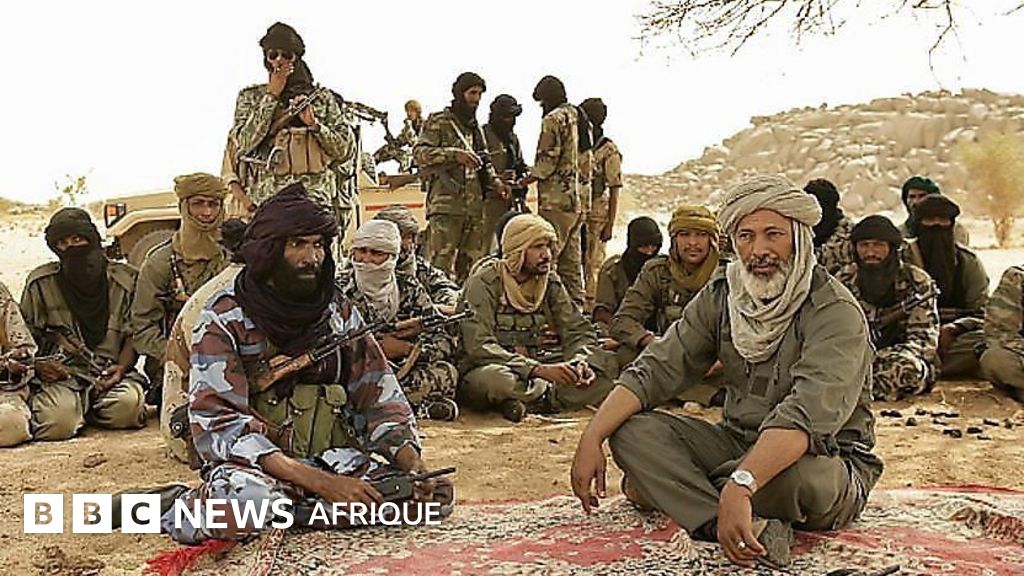
Reporting indicates the Front for the Liberation of Azawad has allied with Jama'at Nusrat al‑Islam wal‑Muslimin and likely restarted coordinated operations across northern and central Mali by 6 July 2026, despite Malian army claims of regaining Kidal after April attacks. The Alliance of Sahel States continues to consolidate away from Western security partnerships after successive breaks with France, the expulsion of U.S. military presence, and withdrawal from ECOWAS. For Mali, official advisories point to persistent high kidnapping and violent crime risks, unrest potential, and civil aviation hazards, with U.S. personnel barred from travel outside Bamako. Satellite thermal detections across Mali on 6 July require corroboration before linking to conflict activity. Outside the Sahel core, Moroccan authorities disrupted a cell loyal to Islamic State’s Sahel branch, suggesting the network’s enabling nodes extend beyond the tri-border theatre.
Change from previous assessment
New reporting indicates a likely renewed JNIM, FLA offensive in northern and central Mali as of 6 July 2026 and highlights NASA thermal detections across Mali that require corroboration. The brief also captures Moroccan arrests linked to Islamic State’s Sahel branch, adding a transregional dimension to the threat picture. The trajectory of the Alliance of Sahel States’ separation from Western security frameworks remains consistent with prior assessments. The earlier territorial‑control estimate for Burkina Faso and references to cross‑border JNIM operations into Benin are retired in this run due to lack of sourcing in the current window.
Key judgments
- JNIM and the Front for the Liberation of Azawad likely escalated a second offensive across northern and central Mali by 6 July 2026, despite the Malian army’s claim to have regained Kidal after the 25 April attacks, indicating fluid control in the north. (Confidence: medium · ASSESSED)
- I&W: Geolocated claims or imagery of joint JNIM, FLA attacks in Gao, Timbuktu or Mopti reported by Malian or regional outlets. (0-14 days)
- I&W: Sustained absence of JNIM, FLA attack claims in northern and central Mali combined with corroborated army consolidation in Kidal and nearby communes. (1-3 months)
- The operating environment in Mali remains high risk for Westerners, with a high kidnapping threat, widespread violent crime, periodic unrest, and U.S. restrictions confining official travel to Bamako. (Confidence: high · REPORTED)
- I&W: Public reporting of a kidnapping of foreign nationals in Mali. (0-14 days)
- I&W: U.S. mission guidance easing restrictions on official travel outside Bamako. (1-3 months)
- The Alliance of Sahel States is very likely to continue distancing from Western security partnerships in the near term, given Mali’s 2022 termination of defence accords with France, Burkina Faso’s January 2023 termination, Niger’s July 2023 demand that France withdraw 1,500 troops, the expulsion of U.S. military presence from all three AES members in 2024-2025, their 28 January 2024 withdrawal from ECOWAS, and expulsions of Western ambassadors in 2024. (Confidence: medium · ASSESSED)
- I&W: Joint AES communiqué announcing new joint security structures or force coordination mechanisms. (1-3 months)
- I&W: Public signals of rapprochement with ECOWAS or acceptance of Western training or advisory missions. (1-3 months)
- Risk to civil aviation operating within or near Mali is likely to remain elevated in the near term, as reflected by the Federal Aviation Administration’s restrictions. (Confidence: medium · ASSESSED)
- I&W: FAA maintains or renews its NOTAM or Special Federal Aviation Regulation for Mali’s airspace. (1-3 months)
- I&W: FAA rescinds or materially downgrades restrictions tied to Mali. (1-3 months)
- Satellite detections of 23 thermal anomalies across Mali on 6 July are insufficient to attribute to conflict activity without corroboration, since thermal signatures record heat, not cause. (Confidence: high · ASSESSED)
- I&W: Independent, geolocated reporting links specific hotspots to clashes or strikes in named localities. (0-14 days)
- I&W: Official wildfire or agricultural burn notifications align with the detected hotspots. (0-14 days)
- Islamic State’s Sahel branch likely maintains facilitation or support nodes beyond the central Sahel, as suggested by Moroccan arrests of 10 suspects loyal to the branch and seizures of chemicals, bomb components, and a modified vehicle. (Confidence: medium · ASSESSED)
- I&W: Further Maghreb arrests explicitly citing operational or logistical links to IS Sahel. (1-3 months)
- I&W: Authoritative clarification that detained Moroccan suspects lacked operational ties to IS Sahel. (0-14 days)
Outlook & scenarios
FLA, JNIM sustain multi‑pronged operations across northern and central Mali (60%)
Building on reported coordination in April and a renewed push by 6 July 2026, insurgent action persists against Malian forces in the north and centre. Localised control remains fluid around key northern localities. Security incidents keep overland movement risky and complicate any near‑term stabilisation.
AES further entrenches separation from Western security frameworks (50%)
Following terminations of French defence ties, demands for French withdrawal from Niger, expulsion of U.S. military presence, and withdrawal from ECOWAS, AES members formalise joint security coordination. Western military access and influence remain limited, constraining external crisis response options.
Status quo security degradation persists in Mali without decisive territorial shifts (70%)
Kidnapping risk and violent crime remain high, protests recur sporadically, and airspace restrictions persist. Insurgent activity flares episodically, but neither side achieves decisive control in contested northern areas. Thermal anomaly spikes occur intermittently without consistent attribution to fighting.
Wildcard: Transregional pressure on IS Sahel facilitation networks (20%)
Regional counterterrorism actions, including in the Maghreb, disrupt IS Sahel‑linked cells and logistics. Short‑term plotting is degraded, but network adaptation leads to displacement of facilitation routes rather than sustained suppression.
Recommendations
- Maintain a standing indicator ledger on JNIM, FLA activity and Malian force posture, and prioritise collection of geolocated evidence from French and Arabic‑language local outlets to validate claims of attacks and control shifts.
- Cue daily checks of NASA FIRMS for Mali within the 13.87, −4.79 to 18.87, 0.21 bounding box and task follow‑on collection only when corroborated by imagery or credible local reporting to avoid false attribution from agricultural burns.
- Track U.S. and allied travel advisories and mission directives for Mali and update risk posture when restrictions on movement outside Bamako change.
- Monitor AES member communiqués and official channels for announcements on joint security structures or policy shifts affecting cooperation with ECOWAS, France, or the United States.
- Maintain an airspace risk watch on FAA NOTAM and SFAR actions pertaining to Mali and brief aviation stakeholders ahead of any routing or altitude changes.
- Exploit judicial and CT reporting from Morocco’s BCIJ and peer agencies for references to Islamic State Sahel linkages, and map any identified facilitation nodes to inform interdiction priorities.
- Prepare kidnap prevention and incident response guidance for personnel movement in Mali, including route planning, communications discipline, and immediate action drills aligned to current threat advisories.
Confidence & uncertainty
Overall confidence is medium. Several core elements rest on high‑reliability official advisories and restrictions that corroborate one another for Mali’s threat environment and airspace risk. The assessment of a renewed JNIM, FLA offensive is supported by multiple, but largely single‑stream media reports and juxtaposed with Malian army claims, which introduces uncertainty over control and tempo. Satellite thermal detections are robust but non‑attributive without corroboration. Reporting on AES policy distancing is consistent across multiple items, but forward‑looking implications remain inferential. These factors collectively support a medium confidence headline.
Alternative analysis (red cell)
The available reporting does not definitively demonstrate a coordinated, theater-wide second offensive in July 2026; the evidence better supports localized attacks or probing actions. AES historical distancing from Western partners is clear, but retrospective measures (296f99cc; 6e2b4df3; 1e91f419; d2129f3a) do not preclude near-term pragmatic re-engagement by individual members. Moroccan arrests (51e92189 et al.) show a disruption, yet without forensic links they do not alone establish an IS Sahel facilitation network operating beyond the central Sahel.
Intelligence gaps
- [EEI 1.2 · PARTIAL] Observed movement and size of armed columns (vehicle counts, heavy weapons present) along approach routes to population centers or borders documented by imagery, local reporting, or border guards. Recommended collection: imagery/SATCOM
- [EEI 1.4 · UNCOVERED] Seizure or acquisition of heavy weapons or air-defense systems (mortars >81mm, artillery, armored vehicles, MANPADS) attributed to specific groups as evidenced by photos, captured weapons inventories, or weapons interdictions. Recommended collection: forensics/field reporting
- [EEI 2.3 · UNCOVERED] Changes in foreign military footprints or security agreements: arrival/departure of foreign troops, opening/closure of foreign bases, visible presence of private military contractors (identified personnel/vehicles). Recommended collection: OSINT/imagery
- [EEI 2.4 · UNCOVERED] Targeted external support actions: sanctions, suspension of aid, delivery of weapons or logistics from foreign state or non-state actors (documented shipments, bank transfers, public announcements). Recommended collection: financial/diplomatic
- [EEI 3.2 · UNCOVERED] Recorded movements of known smuggling routes and convoy volumes: counts of commercial/privately registered vehicles and informal river crossings on specific cross-border corridors. Recommended collection: ground/HUMINT
- [EEI 3.3 · PARTIAL] Monitored financial flows linked to illicit trade: large cash movements, changes in declared gold exports at named mines/ports, or arrests of money couriers with amounts and origins. Recommended collection: financial/forensics
- [EEI 3.4 · UNCOVERED] Observed changes at border security posts: closures, reductions in personnel, destroyed checkpoints, or documented agreements allowing free movement at named crossings. Recommended collection: imagery/OSINT
Cited sources
[1] BBC News Afrique · Qui sont les Touaregs et les Arabes maliens qui cherchent à obtenir l'indépendance dans le nord ? - BBC News Afrique (A) · sha256:50f1e3aa970a [2] U.S. Department of State · Mali Travel Advisory | Travel.State.gov (A) · sha256:f88171157722 [3] Wikipedia · Alliance of Sahel States (A) · sha256:54f03dd824e0 [4] NASA · NASA FIRMS thermal detections — Mali (2d) (A) · sha256:6a3b9040e580 [5] Jerusalem Post · Morocco prevents attacks by cell loyal to Islamic State in Sahel (B) · sha256:3ae67882be2b
Source content hashes were computed at collection time; the cited text is preserved unmodified for the life of this product.
Red cell review: PARTIAL DISSENT
TLP:CLEAR