TLP:CLEAR · Disclosure is not limited.
Sahel Security Crisis: JNIM Pressure, AES Continuity and Resource Finance
Time window: Last 7 days · Audience: General analyst · Type: Situation report · DTG: 2026-08-23 04:05Z · Overall confidence: HIGH
BLUF
JNIM is very likely to continue pressuring Malian security forces, while Islamic groups are very likely to retain large areas of Burkina Faso and sustain severe humanitarian stress. Burkina Faso, Mali and Niger are likely to preserve Alliance of Sahel States alignment and Burkina Faso is likely to retain security cooperation with Mali, Niger and Russia.
Executive summary
The supplied reporting indicates persistent insurgent pressure rather than a new, clearly dated operation in Mali, Burkina Faso or Niger during 16 to 23 August. JNIM has a documented regional record and conducted a major offensive in Mali in April 2026. Islamic groups retain large areas of Burkina Faso, where the insurgency has displaced more than 2 million people, killed at least 20,000 civilians and combatants, and contributed to severe food insecurity. Bellingcat reporting supports the employment of Shahed-136 type drones in Mali, but does not establish Russian manufacture or operational control. A lower-confidence reporting stream also links jihadist groups to informal lithium-mining networks in Burkina Faso.
Change from previous assessment
Since the 22 August prior brief, the core assessment is unchanged: JNIM is very likely to pressure Malian forces, Islamic groups are very likely to retain substantial control and humanitarian impact in Burkina Faso, AES alignment is likely to persist, and Mali drone employment remains likely. This brief adds a low-confidence assessment that jihadist groups use informal lithium-mining networks in Burkina Faso and that armed groups tax miners and control mining access across the Sahel. The supplied material for 16 to 23 August does not add a new clearly dated attack in Mali, Burkina Faso or Niger.
Key judgments
- Very likely JNIM will continue pressuring Malian security forces over the next 1 to 3 months. The assessment draws on reporting that JNIM was responsible for more than half of violent events across the Sahel from 2017 to 2023, that JNIM and Tuareg separatists mounted the largest offensive of the war in Mali in April 2026, and that JNIM militants killed at least 154 civilians and 15 Malian soldiers in attacks at Bamba and Gourma-Rharous on 7 September 2023. This is medium confidence because the event-share estimate and the account of the April 2026 offensive are not independently corroborated in the supplied material, and the reporting does not establish the current attack tempo. (Confidence: medium · ASSESSED)
- I&W: Confirm: Within 0 to 14 days, independent reporting attributes an attack on a Malian military position to JNIM in Mali. (0-14 days)
- I&W: Break: Over 30 to 60 days, reporting identifies no JNIM attack against Malian security forces and documents sustained government access across previously contested areas. (1-2 months)
- Very likely Islamic groups will retain control of large areas of Burkina Faso and sustain humanitarian pressure over the next 1 to 3 months. Direct reporting states that Islamic groups continue to control large areas, that the insurgency has displaced over 2 million people and caused at least 20,000 civilian and combatant deaths, and that large areas face severe food insecurity. This is medium confidence because the territorial-control and humanitarian measures are broad, use unspecified timeframes, and do not establish the current operational tempo, although several high-confidence claims from major media support the overall assessment. (Confidence: medium · ASSESSED)
- I&W: Confirm: Within 1 to 3 months, humanitarian reporting records additional displacement above the reported 2 million baseline or worsening severe food insecurity in areas where Islamic groups retain control. (1-3 months)
- I&W: Break: Independent reporting documents sustained government access and the loss of Islamic-group control across named Burkinabè districts. (1-3 months)
- Likely Burkina Faso, Mali and Niger will preserve Alliance of Sahel States alignment through the next 3 months, while Burkina Faso will retain security cooperation with Mali, Niger and Russia. The AES includes the three states, was established on 6 July 2024, and its members left ECOWAS in 2025. Burkina Faso has strengthened security cooperation with Mali, Niger and Russia, while the AES has stated an aim to federalise into a single sovereign state. This is medium confidence because the claims establish institutional alignment and prior policy direction, but do not show a new coordination decision during the reporting period. (Confidence: medium · ASSESSED)
- I&W: Confirm: Within 0 to 90 days, an AES communiqué records a joint policy decision or coordinated military activity by Burkina Faso, Mali and Niger. (0-3 months)
- I&W: Break: Any AES member announces withdrawal from the alliance or restores formal military relations with a Western power. (0-3 months)
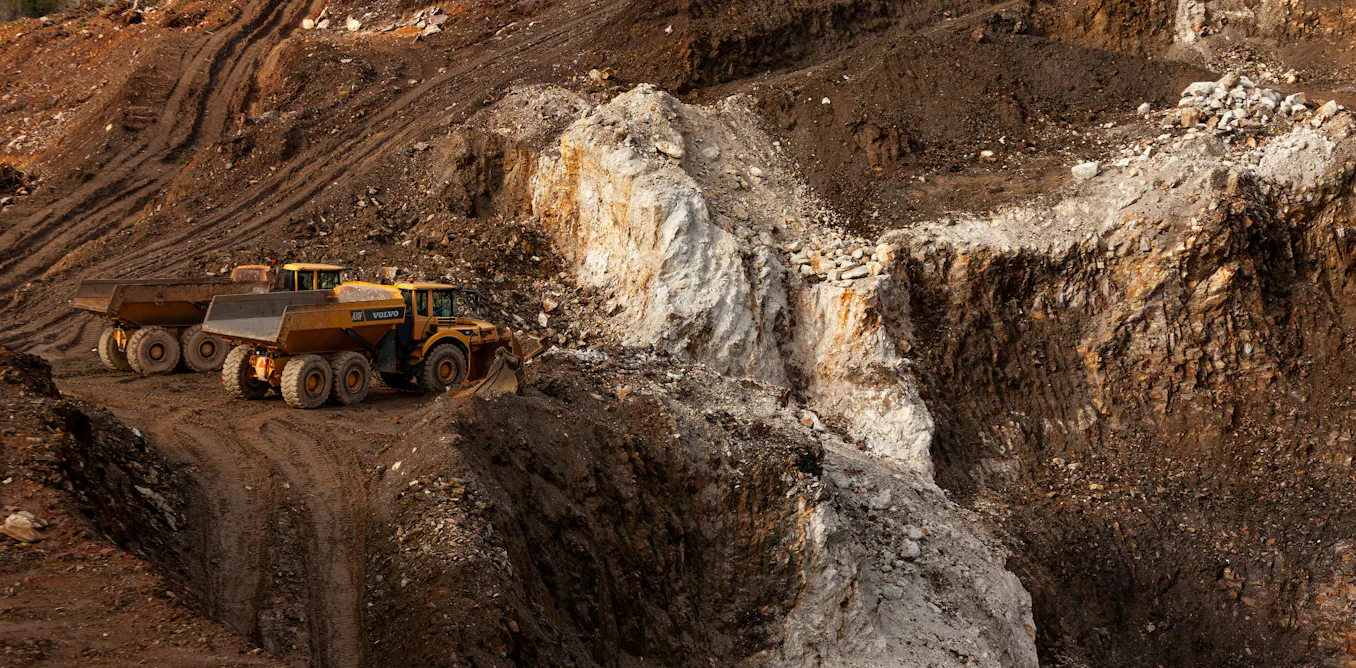
- Likely jihadist groups will continue using informal mining networks in Burkina Faso to generate revenue and local influence, while armed groups will continue taxing miners and controlling access to mining sites across the Sahel over the next 1 to 3 months. This is low confidence because the supplied evidence comes from think-tank reporting, lacks independent corroboration, and does not identify a specific mining site or quantify revenue flows. (Confidence: low · ASSESSED)
- I&W: Confirm: Within 1 to 3 months, reporting from Burkina Faso identifies JNIM or another named jihadist group collecting payments from miners or controlling access at a named lithium site. (1-3 months)
- I&W: Break: Burkinabè authorities and independent reporting document state-monitored access at previously informal mining sites and no armed-group taxation. (1-3 months)
- Likely Africa Corps and FAMa have employed Shahed-136 type drones in Mali, including the two Bellingcat-verified strikes at Inafarak on 12 July 2026 and Talahandak on 17 July 2026. Bellingcat geolocated footage showing the drones in operation, and a drone expert assessed that the platform provides Africa Corps and FAMa with a long-range strike capability. Experts assessed that the drones were likely manufactured in Russia, but this remains unconfirmed and the supplied reporting does not establish the operational chain of command. This is medium confidence for operational employment and lower confidence for manufacture and control. (Confidence: medium · ASSESSED)
- I&W: Confirm: Within 0 to 30 days, geolocated footage shows another Shahed-136 type platform conducting a strike in Mali and links the operation to Africa Corps or FAMa. (0-30 days)
- I&W: Break: Technical analysis identifies the platform as another type or geolocates the relevant footage outside Mali. (0-30 days)
Outlook & scenarios
Persistent insurgent pressure and AES continuity (60%)
Likely baseline over the next 3 months. JNIM continues pressure on Malian forces, Islamic groups retain areas in Burkina Faso, humanitarian stress remains high, and Burkina Faso, Mali and Niger preserve AES alignment and Russia-oriented security cooperation.
Renewed large-scale offensive (25%)
Unlikely escalation over the next 3 months. JNIM and allied Tuareg forces mount another major operation in Mali, or Islamic groups expand control in Burkina Faso. The result is a new displacement surge and greater pressure on Malian and Burkinabè security forces.
AES political or security rupture (10%)
Very unlikely but high impact. One AES member announces withdrawal, restores formal military relations with a Western power, or rejects the bloc's stated integration path. The rupture would weaken the current regional alignment and complicate security cooperation among Burkina Faso, Mali and Niger.
Recommendations
- Maintain a 0 to 14 day watch for JNIM claims, geolocated imagery and independent reporting on attacks against Malian military positions, with particular attention to whether activity resembles the April 2026 offensive rather than isolated incidents.
- Separate confirmed territorial-control and humanitarian reporting in Burkina Faso from estimates of current insurgent tempo. Update the assessment only when reporting identifies named districts, changes in access or new displacement figures.
- Track AES communiqués and official decisions for evidence of joint military coordination, progress towards the stated federalisation objective, or any member state's withdrawal from the alliance.
- Treat the lithium-finance assessment as a collection priority. Seek independent reporting from Burkina Faso that names mining sites, identifies armed-group taxation or access controls, and quantifies payments or production affected.
- Preserve technical collection on the Mali drone reporting. Require geolocation, platform identification and evidence linking an operation to Africa Corps or FAMa before assessing Russian manufacture or command responsibility.
- Use the 12 July Inafarak and 17 July Talahandak strikes as reference points for imagery comparison, while avoiding the attribution of future thermal or strike signatures without corroborating evidence.
Confidence & uncertainty
Overall confidence is high because the principal conditions are supported by corroborated, high-confidence reporting from multilateral sources, major media and Bellingcat. The strongest evidence concerns Islamic-group control and humanitarian harm in Burkina Faso, the institutional existence of the AES, and the geolocation of Shahed-136 type drone activity in Mali. The main uncertainties concern current operational tempo, the precise extent of territory controlled, the implementation of AES policy, and the drones' manufacture and chain of command.
Intelligence gaps
- [EEI 1.1 · PARTIAL] Number, location, and scale of attacks (IEDs, ambushes, complex attacks) per week against towns, military bases, police posts, or convoys, with casualty and equipment-loss counts. Recommended collection: ground/HUMINT
- [EEI 1.2 · UNCOVERED] Observed movement and size of armed columns (vehicle counts, heavy weapons present) along approach routes to population centers or borders documented by imagery, local reporting, or border guards. Recommended collection: imagery/SATCOM
- [EEI 1.3 · PARTIAL] Reports of occupation, administration, or imposition of checkpoints/taxes by armed groups in named towns, villages, markets, or on specified road segments. Recommended collection: OSINT (local media/social)
- [EEI 1.4 · UNCOVERED] Seizure or acquisition of heavy weapons or air-defense systems (mortars >81mm, artillery, armored vehicles, MANPADS) attributed to specific groups as evidenced by photos, captured weapons inventories, or weapons interdictions. Recommended collection: forensics/field reporting
- [EEI 2.1 · PARTIAL] Internal security force movements: redeployment of army units, garrison withdrawals, or mass troop movements toward/away from capitals and regional command posts. Recommended collection: imagery/SATCOM
- [EEI 2.2 · UNCOVERED] Detentions, public dismissals, resignations, or public statements by senior military, police, or government officials indicating factional splits (named individuals, ranks, units). Recommended collection: diplomatic/OSINT
- [EEI 3.1 · UNCOVERED] Interdictions or seizures at borders/markets of weapons, ammunition, fuel, or contraband (type/quantity, seizure location, alleged origin/destination). Recommended collection: border/customs
- [EEI 3.2 · UNCOVERED] Recorded movements of known smuggling routes and convoy volumes: counts of commercial/privately registered vehicles and informal river crossings on specific cross-border corridors. Recommended collection: ground/HUMINT
- [EEI 3.3 · UNCOVERED] Monitored financial flows linked to illicit trade: large cash movements, changes in declared gold exports at named mines/ports, or arrests of money couriers with amounts and origins. Recommended collection: financial/forensics
- [EEI 3.4 · PARTIAL] Observed changes at border security posts: closures, reductions in personnel, destroyed checkpoints, or documented agreements allowing free movement at named crossings. Recommended collection: imagery/OSINT
Cited sources
[1] Wikipedia · Jama'at Nusrat al-Islam wal-Muslimin (F) · sha256:4c56269c2835 [2] Atlantic Council · How to push back against Mali's propagandists? Help factual creators go viral. (D) · sha256:fc915ab7ca87 [3] bellingcat.com · Shahed-Type Drones Filmed During Mali Village Attacks - bellingcat (A) · sha256:83cab117dd5c [4] Wikipedia · Islamist insurgency in Burkina Faso (B) · sha256:f41ca0e4d597 [5] Wikipedia · Alliance of Sahel States (A) · sha256:c4c15ca3bf5c [6] theconversation.com · Lithium in the Sahel: how armed groups are exploiting the global scramble for the critical mineral (C) · sha256:4df1c64045ed
Source content hashes were computed at collection time; the cited text is preserved unmodified for the life of this product.
TLP:CLEAR