TLP:CLEAR, Disclosure is not limited.
Sahel Security Crisis: Mali, Burkina Faso, Niger Situation Report (5-12 June 2026)
Time window: Last 7 days · Audience: General analyst · Type: Situation report · DTG: 2026-06-12 08:26Z · Overall confidence: MEDIUM
BLUF
Operating environments in Mali and Burkina Faso remain extreme‑risk, with U.S. movement bans, persistent terrorism/kidnapping threats, and strained civil aviation. Credible OSINT places unexploded cluster submunitions at Tadjmart after Malian airstrikes, raising legal and civilian‑harm exposure for Bamako as the Alliance of Sahel States further distances itself from Western partners.
Executive summary
U.S. advisories continue to rate Mali and Burkina Faso as Do Not Travel environments with severe terrorism, kidnapping, and violent crime risks; U.S. government personnel are confined to Bamako and Ouagadougou. In Mali, authorities escalated counterinsurgency measures, announcing a $3.5 million bounty on JNIM’s Iyad Ag Ghaly and restricting motorcycles, while a 765‑tanker fuel convoy required heavy escort to reach Bamako, underscoring contested lines of communication. Bellingcat‑documented, Russian‑made cluster submunitions were geolocated in Tadjmart following 17 May FAMa airstrikes, implicating prohibited weapons and potential CCM exposure. Across the AES (Mali, Niger, Burkina Faso), prior terminations of French defense ties and withdrawal from ECOWAS reinforce a sustained pivot away from Western partners. Humanitarian strains persist amid mass displacement and limited medical services; spillover pressure endures on Côte d’Ivoire and Togo’s northern border regions, where JNIM/AQIM threats continue to shape security posture.
Change from previous assessment
New since the prior brief: Mali publicly announced a $3.5 million bounty targeting JNIM leader Iyad Ag Ghaly and named additional wanted figures, alongside new exclusion zones and motorcycle restrictions/suspensions; a 765‑tanker convoy reached Bamako under heavy escort, highlighting supply‑line vulnerability. Reporting on Burkina Faso shows expanded pressure on Islamic associations and clerics. NASA now shows 18 thermal detections in Mali over 11-12 June (previously 17). The assessment that alleged cluster submunitions were present near Tadjmart after 17 May FAMa airstrikes is retained with similar confidence, pending independent forensic verification.
Key judgments
- It is very likely Mali remains an extreme‑risk operating environment: the United States advises Do Not Travel, bars U.S. employees from leaving Bamako, flags violent crime, terrorism, and kidnapping risks nationwide, and the FAA warns of hazards to civil aviation; NASA recorded 18 thermal detections in Mali on 11-12 June consistent with ongoing conflict or fires. (Confidence: high · REPORTED)
- I&W: U.S. advisory maintains Do Not Travel rating and the Bamako movement ban for U.S. personnel. (1-3 months)
- I&W: Sustained daily NASA VIIRS thermal detections clustered along known conflict axes in central/northern Mali. (0-14 days)
- It is very likely Burkina Faso’s threat environment remains acute: a state of emergency covers the Sahel and East regions; U.S. personnel are confined to Ouagadougou; terrorism, kidnapping of Westerners, and violent crime are widespread; French authorities formally discourage all travel, rate terrorism risk as very high, and warn that night movement is particularly dangerous; displacement exceeds two million with limited medical services. (Confidence: high · REPORTED)
- I&W: Renewal/expansion of the state of emergency in the Sahel and East regions by Ouagadougou. (1-3 months)
- I&W: Persistent U.S. and France Diplomatie guidance discouraging all travel beyond Ouagadougou. (1-3 months)
- It is likely banned cluster submunitions were present around Tadjmart, northern Mali, following 17 May 2026 FAMa airstrikes, Bellingcat geolocated unexploded Russian‑made ShOAB‑0.5‑type bomblets and a local armed group publicly condemned their use, creating potential Convention on Cluster Munitions exposure for Bamako; Russia’s Africa Corps support to FAMa complicates provenance attribution. (Confidence: medium · ASSESSED)
- I&W: Independent demining or forensic teams publish technical reports confirming submunition types recovered at Tadjmart. (1-3 months)
- I&W: Government or third‑party statements credibly refute geolocation or identify alternative sources for the bomblets. (1-3 months)
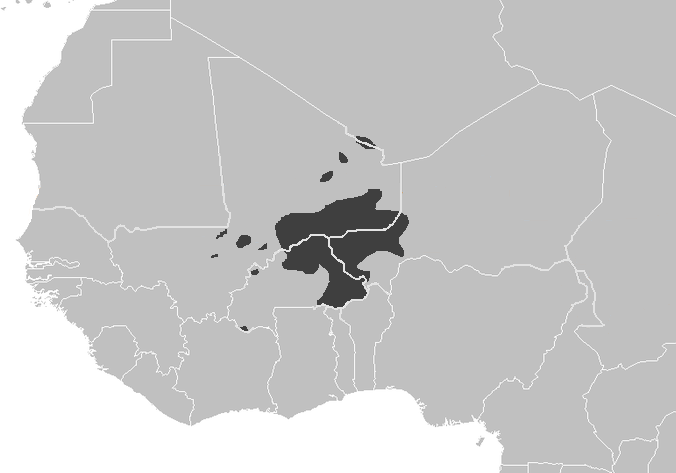
- Western military access across the Alliance of Sahel States is likely to remain constrained as the bloc consolidates away from ECOWAS and Western partners: Mali terminated defense pacts with France (2022), Burkina Faso ended its French agreement (January 2023), Niger demanded French troop withdrawal (July 2023), the AES cut military ties with Western powers in 2024, and withdrew from ECOWAS that January; Russia’s Africa Corps supports Malian operations. (Confidence: medium · ASSESSED)
- I&W: Publicized AES security agreements or exercises with Russia’s Africa Corps or other non‑Western partners. (1-3 months)
- I&W: Reinstatement of Western defense agreements or AES re‑engagement with ECOWAS mechanisms. (1-3 months)
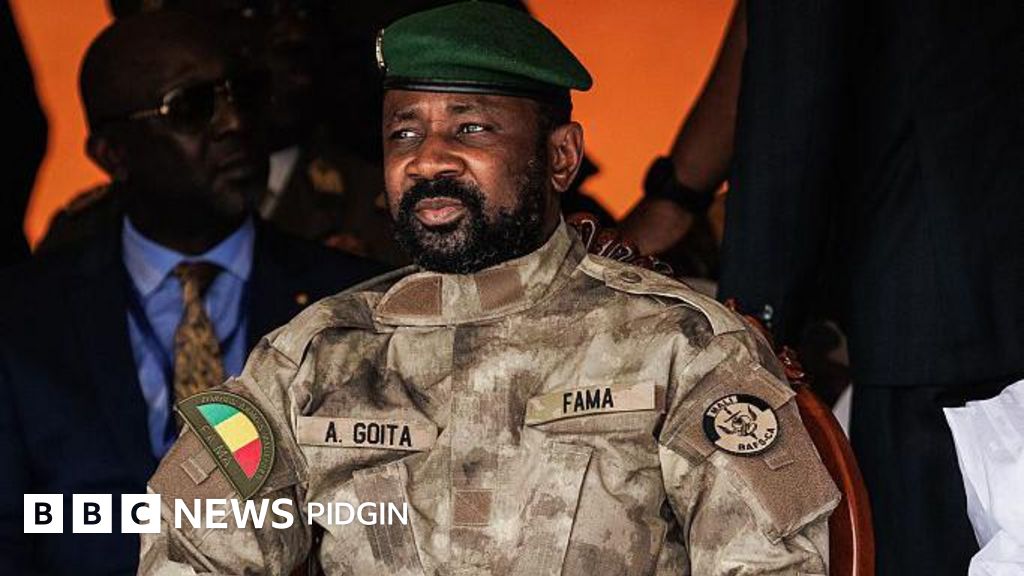
- Mali’s intensified crackdown, including a $3.5 million bounty on JNIM leader Iyad Ag Ghaly, new military exclusion zones, and broad restrictions on motorcycle use and imports, is likely to pressure insurgent networks while also disrupting civilian mobility and trade; the 765‑tanker convoy that reached Bamako only under heavy military escort signals vulnerable supply lines and contested territory. (Confidence: medium · ASSESSED)
- I&W: Additional large fuel or goods convoys to Bamako/Sahel corridors require heavy escort or are interdicted. (0-2 months)
- I&W: Easing or repeal of nationwide motorcycle restrictions and import suspensions. (1-3 months)
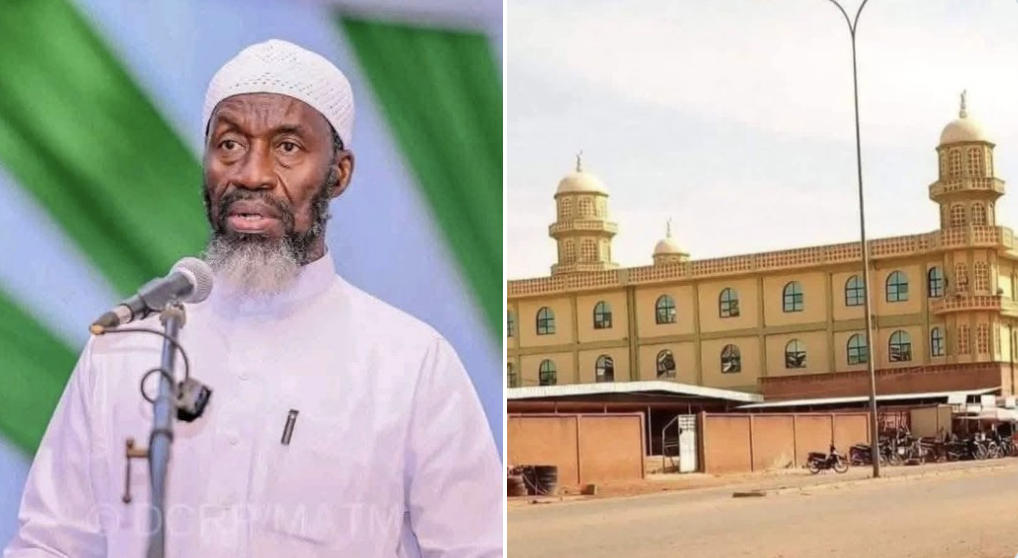
- Government pressure on Islamic civic space in Burkina Faso, including suspension of the Coordination of Muslim Youth and the arrest of the Grand Mosque imam in Ouagadougou, will likely complicate community relations and, as regional specialists warn, could indirectly benefit jihadist recruitment narratives; allegations of forced VDP integration further risk alienating segments of the population. (Confidence: medium · ASSESSED)
- I&W: JNIM/ISGS propaganda or local reporting cites mosque/association restrictions to spur recruitment. (1-3 months)
- I&W: Authorities formally reverse suspensions or partner with moderate Islamic associations in outreach. (1-3 months)
- Humanitarian burdens across the Sahel core remain severe and response capacity limited: the conflict has caused tens of thousands of deaths and millions displaced region‑wide, with hundreds of thousands of refugees linked to Mali’s conflict and more than two million uprooted in Burkina Faso; medical services are limited in both countries, especially outside major cities. (Confidence: medium · ASSESSED)
- I&W: Continued official advisories and humanitarian reporting cite constrained medical capacity in Mali/Burkina Faso. (1-3 months)
- I&W: Verified increases in IDP/refugee figures in Burkina Faso or Mali over baseline estimates. (1-3 months)
- Spillover pressure on coastal states is likely to persist: the U.S. advises against travel to northern border regions of Côte d’Ivoire and Togo due to terrorism/crime; Abidjan identifies JNIM as the principal threat, has recorded AQIM attacks in the north, and has stood up the Northern Operational Zone and the Counterterrorism Operational Intelligence Center to harden border defenses. (Confidence: high · ASSESSED)
- I&W: Côte d’Ivoire/Togo maintain or tighten restrictions and force posture in northern border departments. (1-3 months)
- I&W: De‑escalation in advisories for northern Côte d’Ivoire/Togo or restructuring of ZON/CROAT mandates. (1-3 months)
Outlook & scenarios
Protracted high-tempo insurgency, counterinsurgency stalemate in Mali and Burkina Faso, 60%
JNIM and aligned networks sustain attack tempo while state forces intensify sweeps and movement controls. U.S. advisories and movement bans remain in place, NASA thermal detections continue intermittently, and historical attack patterns reoccur, with periodic FAMa claims of militant neutralizations amid persistent civilian risk.
Cluster-munition controversy escalates diplomatic and legal pressure on Bamako, 40%
Further open-source documentation from Tadjmart and potentially other sites spurs international scrutiny of alleged submunition use after FAMa airstrikes, raising CCM compliance questions. Mali leans further into non‑Western security partners as Western engagement narrows.
Supply-chain fragility drives heavier escorts and episodic shortages in Mali, 30%
Large convoys like the 765‑tanker movement to Bamako become routine under heavy escort; motorcycle restrictions and import suspensions complicate rural trade and aid access. The Conakry, Bamako corridor’s importance grows for both military materiel and fuel, heightening interdiction risks.
Coastal containment holds but pressure persists on Côte d’Ivoire and Togo’s north, 35%
Abidjan’s ZON and CROAT posture, alongside Togo’s restrictions, limit deep insurgent penetration, but continued U.S. ‘Do Not Travel’ warnings for northern border regions reflect ongoing plots by JNIM/AQIM cells and sporadic cross‑border activity.
Recommendations
- Prioritize collection to verify Tadjmart submunition findings: acquire additional high-resolution imagery, demining reports, and geolocated media; maintain a standing evidence matrix against CCM criteria to inform legal/advocacy risk assessments.
- Map and monitor Mali’s motorcycle restrictions, import suspensions, and declared military exclusion zones; assess impacts on humanitarian access and rural markets, and flag districts at heightened mobility risk for U.S. personnel and implementing partners.
- Track logistics along the Conakry, Bamako axis and other vital corridors; fuse convoy reporting with NASA VIIRS thermal alerts to detect interdictions or route changes that could presage fuel and goods shortages in Bamako.
- Sustain structured monitoring of JNIM/AQIM messaging and local-language discourse referencing mosque/association restrictions in Burkina Faso; cue community‑level indicators of alienation and potential recruitment surges.
- Maintain close watch on Côte d’Ivoire’s ZON and CROAT posture and on Togo’s northern restrictions; integrate U.S. advisory changes into cross‑border movement risk models for personnel and cargo transiting to/from Sahel hubs.
- Reinforce medical contingency planning for Mali and Burkina Faso postings: confirm medevac options and pre‑position critical supplies given documented limits on routine and emergency care in both countries.
Confidence & uncertainty
Overall confidence is medium. Core threat characterizations for Mali and Burkina Faso rest on high‑reliability official advisories. The cluster‑submunition finding is credible OSINT (geolocation and imagery) but lacks official forensic confirmation, reducing confidence. Reporting on Mali’s motorcycle measures varies between outright bans and broad restrictions, and Burkina Faso civic‑space pressure relies on local media with limited independent corroboration. Humanitarian figures derive from secondary compilations and may carry definitional or temporal variance.
Alternative analysis (red cell)
The claims collectively show serious, regionally concentrated threats across the Sahel and bordering coastal regions, but the existing reporting is heterogeneous, contains unresolved contradictions (see tradecraft lint 'contradiction_unaddressed'), and often relies on advisory or single‑incident sources. Several analytic leaps, attributing thermal detections uniquely to combat, generalizing national conditions from policy advisories, and asserting clear causal effects of security measures, outrun the evidence. A more cautious, disaggregated estimate that prioritizes independent on‑the‑ground verification (for UXO forensics, reconciled casualty/displacement tallies, and incident trend data) is warranted.
Intelligence gaps
- [EEI 1.2 · PARTIAL] Observed movement and size of armed columns (vehicle counts, heavy weapons present) along approach routes to population centers or borders documented by imagery, local reporting, or border guards, recommended collection: imagery/SATCOM
- [EEI 1.3 · UNCOVERED] Reports of occupation, administration, or imposition of checkpoints/taxes by armed groups in named towns, villages, markets, or on specified road segments, recommended collection: OSINT (local media/social)
- [EEI 1.4 · UNCOVERED] Seizure or acquisition of heavy weapons or air-defense systems (mortars >81mm, artillery, armored vehicles, MANPADS) attributed to specific groups as evidenced by photos, captured weapons inventories, or weapons interdictions, recommended collection: forensics/field reporting
- [EEI 2.1 · PARTIAL] Internal security force movements: redeployment of army units, garrison withdrawals, or mass troop movements toward/away from capitals and regional command posts, recommended collection: imagery/SATCOM
- [EEI 2.2 · UNCOVERED] Detentions, public dismissals, resignations, or public statements by senior military, police, or government officials indicating factional splits (named individuals, ranks, units), recommended collection: diplomatic/OSINT
- [EEI 2.4 · UNCOVERED] Targeted external support actions: sanctions, suspension of aid, delivery of weapons or logistics from foreign state or non-state actors (documented shipments, bank transfers, public announcements), recommended collection: financial/diplomatic
- [EEI 3.1 · UNCOVERED] Interdictions or seizures at borders/markets of weapons, ammunition, fuel, or contraband (type/quantity, seizure location, alleged origin/destination), recommended collection: border/customs
- [EEI 3.3 · UNCOVERED] Monitored financial flows linked to illicit trade: large cash movements, changes in declared gold exports at named mines/ports, or arrests of money couriers with amounts and origins, recommended collection: financial/forensics
- [EEI 3.4 · UNCOVERED] Observed changes at border security posts: closures, reductions in personnel, destroyed checkpoints, or documented agreements allowing free movement at named crossings, recommended collection: imagery/OSINT
Cited sources
[1] U.S. Department of State, Mali Travel Advisory (A) · sha256:0bd28ce550a9 [2] NASA, NASA FIRMS thermal detections, Mali (2d) (A) · sha256:df88d183d9f9 [3] U.S. Department of State, Burkina Faso Travel Advisory | Travel.State.gov (A) · sha256:6dbd8e921100 [4] France Diplomatie, Burkina-Faso - Sécurité | France Diplomatie (A) · sha256:b86b03c2c943 [5] Wikipedia, Islamist insurgency in Burkina Faso (B) · sha256:35c16e56b6bc [6] bellingcat.com, Banned Russian Submunitions Found After Mali's Military Announces Airstrikes - bellingcat (A) · sha256:6788d3465fd7 [7] Wikipedia, Alliance of Sahel States (A) · sha256:feb6a1262fbe [8] bbc.com, Mali: Junta govment offer $3.5 million bounty to capture JNIM leader Iyad Ag Ghaly wit six odas as dem ban motorcycles - BBC News Pidgin (A) · sha256:bd9147793bf3 [9] Firstpost, Mali's military government has announced rewards worth $3.5 million for information leading to the capture of senior Al Qaeda-linked terrorists and separatist leaders. The move follows a wave of coordinated attacks that exposed growing security challenges across the country. Authorities have also introduced new security measures, including military exclusion zones and restrictions on motorcycle use in conflict-affected regions. Bamako says the crackdown is aimed at disrupting armed groups, protecting strategic territory and restoring state control. The bounty targets leaders linked to JNIM, Al Qaeda's main affiliate in the Sahel, as Mali intensifies its campaign against insurgent networks. #FirstpostAfrica | Firstpost (E) · sha256:e56809e6d663 [10] Timbuktu Institute, Mali: l'insécurité chronique, entre défaillances internes et rivalités de puissances (C) · sha256:8e46173ccc1f [11] africanperceptions.org, Burkina Faso: Quand la pression sécuritaire s’étend aux mosquées et aux associations islamiques (D) · sha256:beeff0a469f3 [12] Wikipedia, War in the Sahel (F) · sha256:42d932370d06 [13] Wikipedia, Guerre du Mali (B) · sha256:be023485f3a2 [14] U.S. Department of State, Cote d'Ivoire Travel Advisory (A) · sha256:d92eb303ef23 [15] U.S. Department of State, Togo Travel Advisory (A) · sha256:1884a876b26f
Source content hashes were computed at collection time; the cited text is preserved unmodified for the life of this product.
Red cell review: PARTIAL DISSENT
TLP:CLEAR