TLP:CLEAR · Disclosure is not limited.
Sahel security crisis: Mali evidence remains limited
Time window: Last 7 days · Audience: General analyst · Type: Situation report · DTG: 2026-10-13 04:05Z · Overall confidence: LOW
BLUF
The supplied evidence does not establish a change in territorial control in northern Mali during 6-13 October 2026, or provide current incident detail for Burkina Faso and Niger. NASA recorded 26 thermal detections over Mali in the two-day period ending 12 October, but none was classified as high-confidence and the data do not identify a cause. Older reporting of civilian harm from Malian drone strikes remains contested and does not establish a pattern for the current week.
Executive summary
The available material is mainly about Mali. A low-confidence account describes FLA and JNIM advances in northern Mali during 2026, but gives no locality-level update for this reporting week. NASA FIRMS recorded 26 VIIRS thermal detections over Mali in the two-day period ending 12 October; none was high-confidence. Separate reporting describes civilian casualties in earlier Malian drone strikes at Zouera and Amasrakad, but the supplied material includes disputed accounts and unresolved dating. Overall confidence is low because the conflict reporting is weakly corroborated and does not provide a current operational picture.
Change from previous assessment
Compared with the 12 October brief, the supplied material does not add follow-up evidence on the reported Malian re-entry into Kidal, fuel disruption on the Kayes to Bamako route, displacement or alleged civilian-site strikes near Kidal. Those judgements remain untested by this update, not reversed. This update adds a 12 October NASA FIRMS snapshot and contextual reporting on earlier Malian drone strikes, but no new locality-level evidence on control in northern Mali.
Key judgments
- The supplied evidence is insufficient to establish whether FLA, JNIM or Malian forces changed territorial control in northern Mali during 6-13 October 2026. The only specific account says FLA and JNIM seized parts of northern Mali in coordinated attacks during 2026, but gives no locality-level follow-up for this reporting week; the account is itself low-confidence. (Confidence: low · ASSESSED)
- I&W: Breaks this assessment: a dated, independently geolocated report names a northern Mali locality and documents a change in FLA, JNIM or FAMa presence. (0-14 days)
- I&W: Confirms this assessment: no independently corroborated, locality-level update on control appears in a northern Mali situation report by 27 October 2026. (0-14 days)
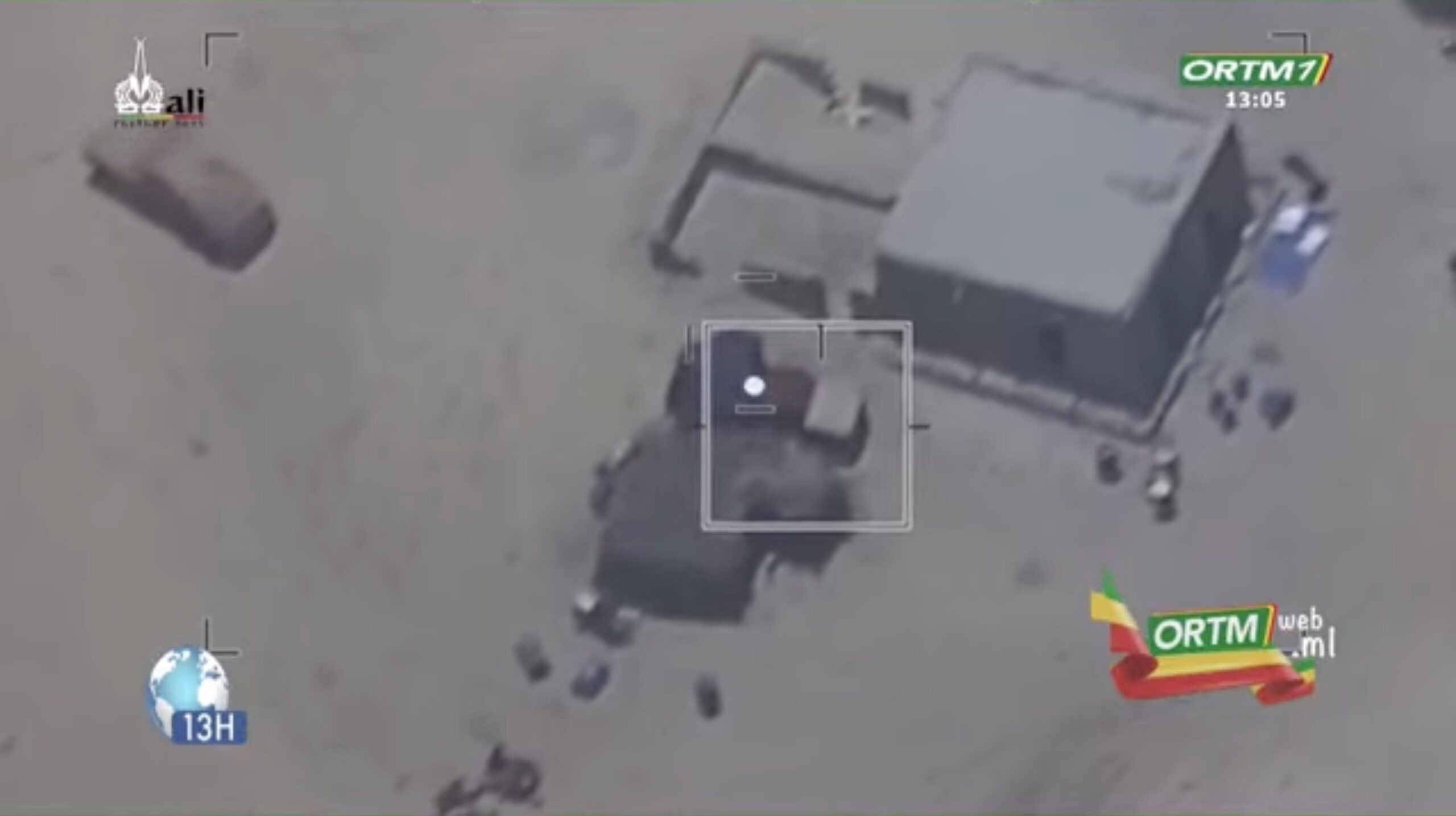
- The available record supports continued scrutiny of FAMa drone operations, but does not establish whether strikes or civilian casualties occurred during this reporting week. FAMa presented a strike at Zouera on 8 July 2025 as an attack on a terrorist supply vehicle; MSF reported four people killed, including three young girls, and five injured. For Amasrakad, Amnesty International reported at least 13 civilians killed, including seven children, but the supplied accounts do not resolve the strike date. These accounts are low-confidence and the Zouera descriptions differ on civilian harm. (Confidence: low · ASSESSED)
- I&W: Confirms current activity: a dated FAMa release identifies a drone strike, its location and target, and independent imagery corroborates the event. (0-14 days)
- I&W: Breaks the reported casualty account: a primary-source review of the Zouera or Amasrakad incidents finds the casualty reports were misattributed or the strike identification was incorrect. (1-3 months)
- The 12 October thermal data do not establish conflict-related fires or attacks in Mali. NASA FIRMS recorded 26 VIIRS active fire or thermal detections over the preceding two-day period, and classified none as high-confidence. (Confidence: medium · ASSESSED)
- I&W: Breaks the non-attribution assessment: independent, dated imagery or local reporting ties a specific detection location to armed activity. (0-14 days)
- I&W: Confirms the limited evidential value of the detections: a subsequent NASA FIRMS retrieval continues to classify the relevant detections below high-confidence. (0-14 days)
Outlook & scenarios
Reporting remains incomplete (60%)
The most likely near-term outcome is continued uncertainty in the public evidence: no well-corroborated account establishes a new territorial shift in northern Mali, and thermal data remain non-diagnostic. This is a forecast about the evidence available to analysts, not an assessment that territorial control is static.
Renewed pressure in northern Mali (30%)
A renewed FLA and JNIM push against Malian forces is unlikely but remains the main adverse territorial scenario. The supplied account of coordinated attacks and territorial gains during 2026 is weakly sourced and does not confirm current operations.
Verified civilian harm from a new drone strike (10%)
A new FAMa drone strike with independently verified civilian casualties is a very unlikely, high-impact scenario. Such evidence would materially change the assessment of current civilian risk and reinforce scrutiny of the earlier Zouera and Amasrakad reports.
Recommendations
- Track northern Mali territorial control separately from the prior brief's Kidal, fuel-route and displacement assessments. Do not carry those earlier judgements forward as newly confirmed developments without fresh reporting.
- For any claimed change in northern Mali control, require a dated locality, identification of the actor present and independent geolocation or corroboration before updating the assessment.
- Treat the 26 NASA VIIRS detections as thermal anomalies, not conflict incidents. Seek high-confidence classifications and independent, location-matched reporting before attributing them to armed activity.
- Maintain separate incident records for Zouera and Amasrakad. Record the source, event date, casualty count and official account for each, and flag the unresolved date and casualty discrepancies when reporting on Malian drone operations.
Confidence & uncertainty
Overall confidence is low because the conflict-specific claims are weakly corroborated, include single-source reporting and refer largely to incidents in 2024 and 2025. Accounts of the Zouera strike differ on civilian harm, and the supplied Amasrakad reporting does not resolve the strike date. NASA FIRMS provides a direct record of the detection count, but none of the detections was high-confidence and the data do not identify a cause.
Intelligence gaps
- [EEI 1.1 · PARTIAL] Number, location, and scale of attacks (IEDs, ambushes, complex attacks) per week against towns, military bases, police posts, or convoys, with casualty and equipment-loss counts. Recommended collection: ground/HUMINT
- [EEI 1.2 · UNCOVERED] Observed movement and size of armed columns (vehicle counts, heavy weapons present) along approach routes to population centers or borders documented by imagery, local reporting, or border guards. Recommended collection: imagery/SATCOM
- [EEI 1.3 · PARTIAL] Reports of occupation, administration, or imposition of checkpoints/taxes by armed groups in named towns, villages, markets, or on specified road segments. Recommended collection: OSINT (local media/social)
- [EEI 1.4 · UNCOVERED] Seizure or acquisition of heavy weapons or air-defense systems (mortars >81mm, artillery, armored vehicles, MANPADS) attributed to specific groups as evidenced by photos, captured weapons inventories, or weapons interdictions. Recommended collection: forensics/field reporting
- [EEI 2.1 · UNCOVERED] Internal security force movements: redeployment of army units, garrison withdrawals, or mass troop movements toward/away from capitals and regional command posts. Recommended collection: imagery/SATCOM
- [EEI 2.2 · UNCOVERED] Detentions, public dismissals, resignations, or public statements by senior military, police, or government officials indicating factional splits (named individuals, ranks, units). Recommended collection: diplomatic/OSINT
- [EEI 2.3 · PARTIAL] Changes in foreign military footprints or security agreements: arrival/departure of foreign troops, opening/closure of foreign bases, visible presence of private military contractors (identified personnel/vehicles). Recommended collection: OSINT/imagery
- [EEI 3.1 · UNCOVERED] Interdictions or seizures at borders/markets of weapons, ammunition, fuel, or contraband (type/quantity, seizure location, alleged origin/destination). Recommended collection: border/customs
- [EEI 3.2 · UNCOVERED] Recorded movements of known smuggling routes and convoy volumes: counts of commercial/privately registered vehicles and informal river crossings on specific cross-border corridors. Recommended collection: ground/HUMINT
- [EEI 3.3 · UNCOVERED] Monitored financial flows linked to illicit trade: large cash movements, changes in declared gold exports at named mines/ports, or arrests of money couriers with amounts and origins. Recommended collection: financial/forensics
- [EEI 3.4 · UNCOVERED] Observed changes at border security posts: closures, reductions in personnel, destroyed checkpoints, or documented agreements allowing free movement at named crossings. Recommended collection: imagery/OSINT
Cited sources
[1] bellingcat.com · “A Recurring Pattern”: Civilians Paying the Price in Mali’s Drone Campaign - bellingcat (F) · 16 September 2026 · sha256:240eaaf5fb84 [2] NASA FIRMS · NASA FIRMS thermal detections — Mali (2d) (A) · sha256:743fe0479164
Source content hashes were computed at collection time; the cited text is preserved unmodified for the life of this product.
Red cell review: CONCUR
TLP:CLEAR