TLP:CLEAR · Disclosure is not limited.
Sahel Security Crisis: Mali Remains the Main Reporting Focus
Time window: Last 7 days · Audience: General analyst · Type: Situation report · DTG: 2026-10-06 04:07Z · Overall confidence: LOW
BLUF
Reporting points to continued JNIM pressure around Bamako and persistent civilian-harm risks from Malian military drone strikes, but the scale of the fuel disruption and territorial changes in northern Mali remains unclear. The supplied claims provide no new incident-level update for Niger or Burkina Faso, so they do not support a revised assessment of pressure in those countries.
Executive summary
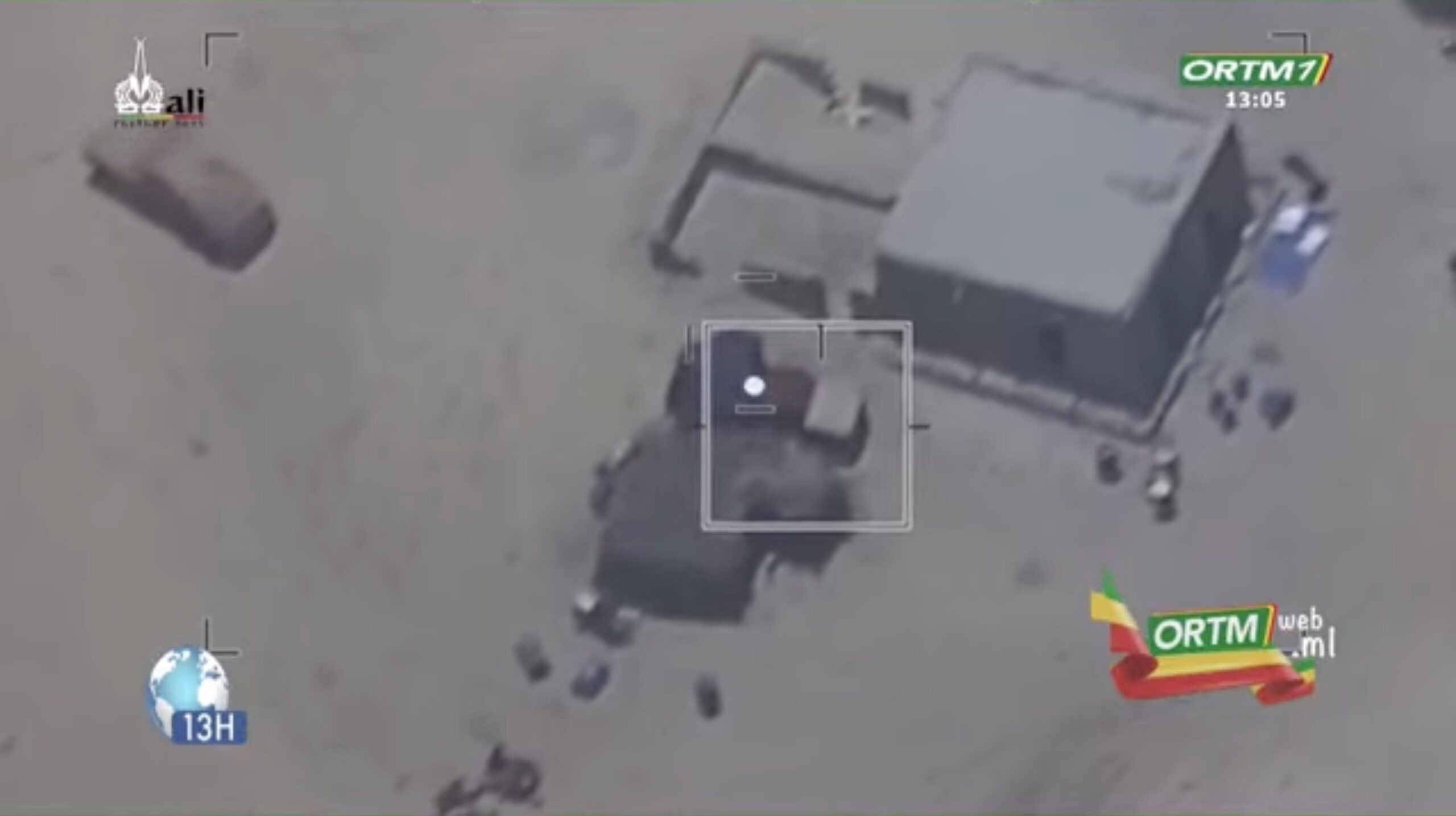
The supplied reporting is centred on Mali. A 2026 account says JNIM expanded territorial control and imposed a fuel blockade around Bamako, but it does not establish current route-level effects or the blockade’s duration. A Bellingcat and Jeune Afrique investigation describes Malian military drone strikes in civilian areas; accounts of the 8 July 2025 strike at Zouera conflict, with the Malian armed forces describing a strike on a supply vehicle and Médecins Sans Frontières reporting civilian deaths and injuries. A separate account reports coordinated FLA and JNIM attacks in northern Mali, but the extent and durability of their territorial gains are not established. The supplied claims contain no new incident-level reporting for Niger or Burkina Faso.
Change from previous assessment
There is no material change to the prior assessment of JNIM’s reported pressure around Bamako: confidence remains low because the supplied claims do not establish the blockade’s present scale or route-level effects. This brief adds a judgment on civilian-harm risks from Malian military drone strikes and records a report of coordinated FLA and JNIM territorial gains in northern Mali, both with limits on verification. The supplied claims do not update the prior assessments of Niger’s security pressure or Africa Corps activity.
Key judgments
- JNIM is likely to sustain pressure on fuel access around Bamako over the next 1-3 months, but the scale and current route-level effects of the reported blockade remain unverified. The available account attributes the blockade and expanding territorial control to 2026 UN reporting, without specifying affected routes, duration or current fuel availability. (Confidence: low · ASSESSED)
- I&W: Confirm: dated UN or Malian reporting identifies a fuel convoy interdiction or a closed supply route into Bamako attributed to JNIM. (0-30 days)
- I&W: Break: published market checks show fuel available in Bamako and named supply routes open for two successive weeks, with no reported JNIM interdictions. (0-30 days)
- Malian military drone strikes are likely to continue posing a civilian-harm risk when conducted in populated areas. Bellingcat and Jeune Afrique describe strikes in civilian areas; Amnesty International reported at least 13 deaths, including seven children, in the 2024 Amasrakad strikes. For Zouera on 8 July 2025, the Malian armed forces described a strike on a terrorist supply vehicle, while Médecins Sans Frontières reported four people killed, including three young girls, and five injured. The conflicting accounts limit confidence in the specific Zouera targeting claim. (Confidence: medium · ASSESSED)
- I&W: Confirm: an independent investigation geolocates a new Malian military drone strike in a populated settlement and reports civilian casualties. (1-3 months)
- I&W: Break: independent review of newly documented strikes verifies military targets and finds no civilian casualties in the cases examined. (1-3 months)
- A major-media account reports that the Azawad Liberation Front and JNIM seized parts of northern Mali in coordinated attacks during 2026, but the supplied reporting does not establish which areas they hold or whether that control has persisted. This territorial claim remains thinly corroborated. (Confidence: low · REPORTED)
- I&W: Confirm: independent geolocation or local reporting identifies FLA or JNIM checkpoints, administration or newly seized security positions in named northern Malian localities. (0-30 days)
- I&W: Break: independent reporting verifies government recapture of areas reported seized and finds no continuing FLA or JNIM presence there. (1-3 months)
Outlook & scenarios
Continued JNIM pressure, without verified major territorial change (55%)
JNIM maintains pressure on fuel access around Bamako, while available reporting continues to describe the blockade without establishing route-by-route disruption. Reports of FLA and JNIM control in northern Mali remain difficult to verify. Malian drone operations continue to draw scrutiny where civilian casualty accounts conflict with official targeting descriptions.
Fuel access improves and territorial claims remain unconfirmed (38%)
Fuel availability around Bamako improves, and follow-up reporting does not verify sustained JNIM interdictions or durable FLA and JNIM control of additional northern localities. The reported drone-strike cases remain the main evidence of civilian-harm risk from Malian military operations.
Wildcard: further coordinated gains in northern Mali (7%)
The Azawad Liberation Front and JNIM mount further coordinated attacks and expand control beyond the parts of northern Mali reported seized in 2026, while fuel restrictions around Bamako persist. This low-probability, high-impact path would widen the reported pressure on Malian forces and supply access, but the current evidence does not establish that it is imminent.
Recommendations
- Track fuel availability and access around Bamako against dated, route-specific reporting. Record which routes, convoys and markets are affected, and distinguish confirmed interdictions from general claims of a blockade.
- For Malian drone-strike reporting, compare geolocated evidence and casualty accounts from Bellingcat, Jeune Afrique, Amnesty International and Médecins Sans Frontières with Malian armed forces statements. Do not treat a stated target as independently verified when accounts conflict.
- Treat reported FLA and JNIM territorial gains in northern Mali as unconfirmed until independent reporting identifies specific localities and verifies continuing control.
- Do not revise Niger or Burkina Faso incident assessments on the basis of this reporting set alone. Seek fresh, dated incident reporting before drawing a conclusion about changes in pressure in either country.
Confidence & uncertainty
Overall confidence is low because the relevant reporting is concentrated in a small number of accounts, including a think-tank summary of UN reporting and a single major-media account of coordinated territorial gains. The drone-strike evidence includes investigation and humanitarian reporting, but the Zouera target description conflicts with the reported civilian casualties. The blockade’s current extent and the status of claimed territorial gains are not independently established, and the supplied claims do not provide current incident-level reporting for Niger or Burkina Faso.
Intelligence gaps
- [EEI 1.2 · UNCOVERED] Observed movement and size of armed columns (vehicle counts, heavy weapons present) along approach routes to population centers or borders documented by imagery, local reporting, or border guards. Recommended collection: imagery/SATCOM
- [EEI 1.3 · PARTIAL] Reports of occupation, administration, or imposition of checkpoints/taxes by armed groups in named towns, villages, markets, or on specified road segments. Recommended collection: OSINT (local media/social)
- [EEI 2.1 · PARTIAL] Internal security force movements: redeployment of army units, garrison withdrawals, or mass troop movements toward/away from capitals and regional command posts. Recommended collection: imagery/SATCOM
- [EEI 2.2 · UNCOVERED] Detentions, public dismissals, resignations, or public statements by senior military, police, or government officials indicating factional splits (named individuals, ranks, units). Recommended collection: diplomatic/OSINT
- [EEI 2.3 · PARTIAL] Changes in foreign military footprints or security agreements: arrival/departure of foreign troops, opening/closure of foreign bases, visible presence of private military contractors (identified personnel/vehicles). Recommended collection: OSINT/imagery
- [EEI 3.1 · UNCOVERED] Interdictions or seizures at borders/markets of weapons, ammunition, fuel, or contraband (type/quantity, seizure location, alleged origin/destination). Recommended collection: border/customs
- [EEI 3.2 · UNCOVERED] Recorded movements of known smuggling routes and convoy volumes: counts of commercial/privately registered vehicles and informal river crossings on specific cross-border corridors. Recommended collection: ground/HUMINT
- [EEI 3.3 · PARTIAL] Monitored financial flows linked to illicit trade: large cash movements, changes in declared gold exports at named mines/ports, or arrests of money couriers with amounts and origins. Recommended collection: financial/forensics
- [EEI 3.4 · UNCOVERED] Observed changes at border security posts: closures, reductions in personnel, destroyed checkpoints, or documented agreements allowing free movement at named crossings. Recommended collection: imagery/OSINT
Cited sources
[1] Small Wars Journal · Al-Qaeda Twenty-Five Years After 9/11: A Changing Network, a Changing Security Challenge (C) · Tue Sep 29 2026 06:00:25 GMT+0000 (Coordinated Universal Time) · sha256:dbe10ea81026 [2] Bellingcat · “A Recurring Pattern”: Civilians Paying the Price in Mali’s Drone Campaign - bellingcat (A) · Wed Sep 16 2026 16:04:19 GMT+0000 (Coordinated Universal Time) · sha256:240eaaf5fb84
Source content hashes were computed at collection time; the cited text is preserved unmodified for the life of this product.
TLP:CLEAR