TLP:CLEAR · Disclosure is not limited.
Sahel Security Crisis: Mali Supply Pressure and Jihadist Competition
Time window: Last 7 days · Audience: General analyst · Type: Situation report · DTG: 2026-09-23 04:08Z · Overall confidence: MEDIUM
BLUF
JNIM is likely to sustain intermittent pressure on Mali's petroleum routes and keep Bamako reliant on armed convoy escorts over the next 1-3 months. FLA and JNIM are also likely to retain pressure on FAMa and Russia's Africa Corps in northern Mali, while Russia is likely to remain a central external security partner for the Alliance of Sahel States. Confidence is medium because the fuel-blockade chronology is internally inconsistent and several regional assessments rely on single-source reporting.
Executive summary
JNIM's campaign against petroleum routes linking Mali with Senegal and Côte d'Ivoire remains the main near-term risk to Bamako's supply access. The most defensible timeline is a blockade declared on 3 September 2025 and reimposed on 28 April 2026, rather than a single uninterrupted six-month operation. Current reporting also states that the Azawad Liberation Front and JNIM seized parts of northern Mali in coordinated attacks against FAMa and Russia's Africa Corps. In Burkina Faso, ACLED flagged a potentially record-deadly JNIM-ISSP battle on 17 September. Bellingcat, Jeune Afrique and MSF reporting supports continued scrutiny of Malian drone operations and alleged civilian harm, but individual-strike attribution remains contested.
Change from previous assessment
Since the 22 September brief, the core assessment has not changed: JNIM pressure on Mali's supply routes and the FLA-JNIM campaign in northern Mali remain likely. The fuel assessment is now more explicitly framed as an episodic blockade, with lower confidence in the reported six-month duration because it conflicts with the separate September 2025 declaration and April 2026 reimposition timeline. This update adds a low-confidence judgement on JNIM-ISSP rivalry in Burkina Faso and retains the prior caution over civilian-harm attribution. The prior Niger military-cohesion judgement is not updated because the approved reporting for this period provides no new Niger mutiny evidence.
Key judgments
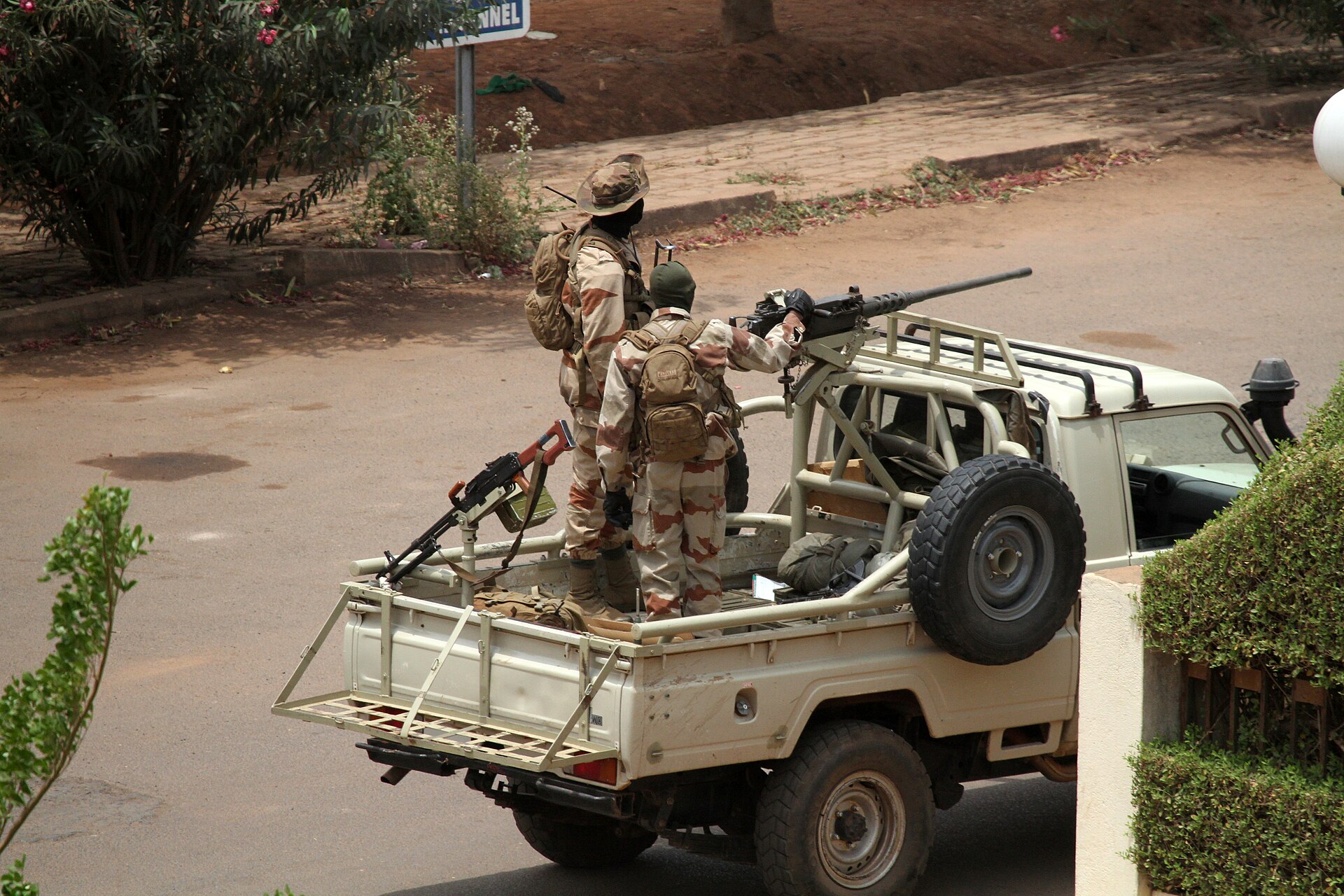
- JNIM is likely to sustain intermittent attacks and access constraints on petroleum routes linking Mali with Senegal and Côte d'Ivoire over the next 1-3 months, keeping Bamako dependent on armed convoy escorts. The reporting supports an episodic blockade: JNIM declared it on 3 September 2025 and reimposed a full blockade on 28 April 2026, while the separate six-month description is unverified and conflicts with that timeline. Confidence is medium because route disruption and convoy attacks are repeatedly reported, but the chronology and claim that more than 300 tankers were destroyed are not independently corroborated. (Confidence: medium · ASSESSED)
- I&W: Confirmation: independently documented attacks on fuel tankers or military-escorted convoys on routes linking Mali to Senegal or Côte d'Ivoire, or a renewed full blockade of Bamako. (0-30 days)
- I&W: Break: 21 consecutive days of fuel deliveries into Bamako without reported attacks on the convoy route, accompanied by evidence that armed escorts are no longer required. (0-60 days)
- The Azawad Liberation Front and JNIM are likely to retain territorial and operational pressure on FAMa and Russia's Africa Corps in northern Mali over the next 1-3 months. Current reporting states that the two groups seized parts of northern Mali in coordinated attacks, but does not establish the size, permanence or exact boundaries of those gains. Confidence is medium, lowered because this assessment rests primarily on one NGO investigation rather than independently corroborated current territorial reporting. (Confidence: medium · ASSESSED)
- I&W: Confirmation: independently geolocated reporting of FLA and JNIM attacks that overrun or isolate FAMa or Africa Corps positions in northern Mali. (0-30 days)
- I&W: Break: FAMa and Africa Corps reopen and hold access to areas previously reported seized, with no further coordinated FLA-JNIM territorial gains. (1-3 months)
- JNIM and ISSP are likely to continue competing violently in Burkina Faso over the next 1-3 months, creating a separate jihadist pressure line in the country. ACLED flagged on 17 September a battle it assessed as potentially the deadliest recorded confrontation between the two groups in a remote region of Burkina Faso; separate reporting places an Islamic State presence in Burkina Faso and Niger. Confidence is low because the battle assessment is single-source, qualified, and does not establish the scale or follow-on activity. (Confidence: low · ASSESSED)
- I&W: Confirmation: independent reports of further JNIM-ISSP clashes, defections or territorial contests in Burkina Faso. (0-60 days)
- I&W: Break: credible reporting of a sustained JNIM-ISSP ceasefire or coordinated operations in Burkina Faso. (1-3 months)
- Russia is likely to retain a central security role in Mali, Burkina Faso and Niger through Africa Corps over the next 1-3 months, while AES governments are likely to continue distancing themselves from ECOWAS and French security ties. Reporting describes Russian security guarantees enforced by Africa Corps in exchange for mining rights and records the AES creation, rejection of ECOWAS authority and withdrawal of French forces. Confidence is medium because the supporting material is principally think-tank and background reporting and does not measure current Africa Corps deployments. (Confidence: medium · ASSESSED)
- I&W: Confirmation: official statements or credible reporting of a new Africa Corps deployment, security guarantee or mining arrangement involving Mali, Burkina Faso or Niger. (1-3 months)
- I&W: Break: AES authorities announce a formal shift away from Africa Corps security cooperation. (1-3 months)
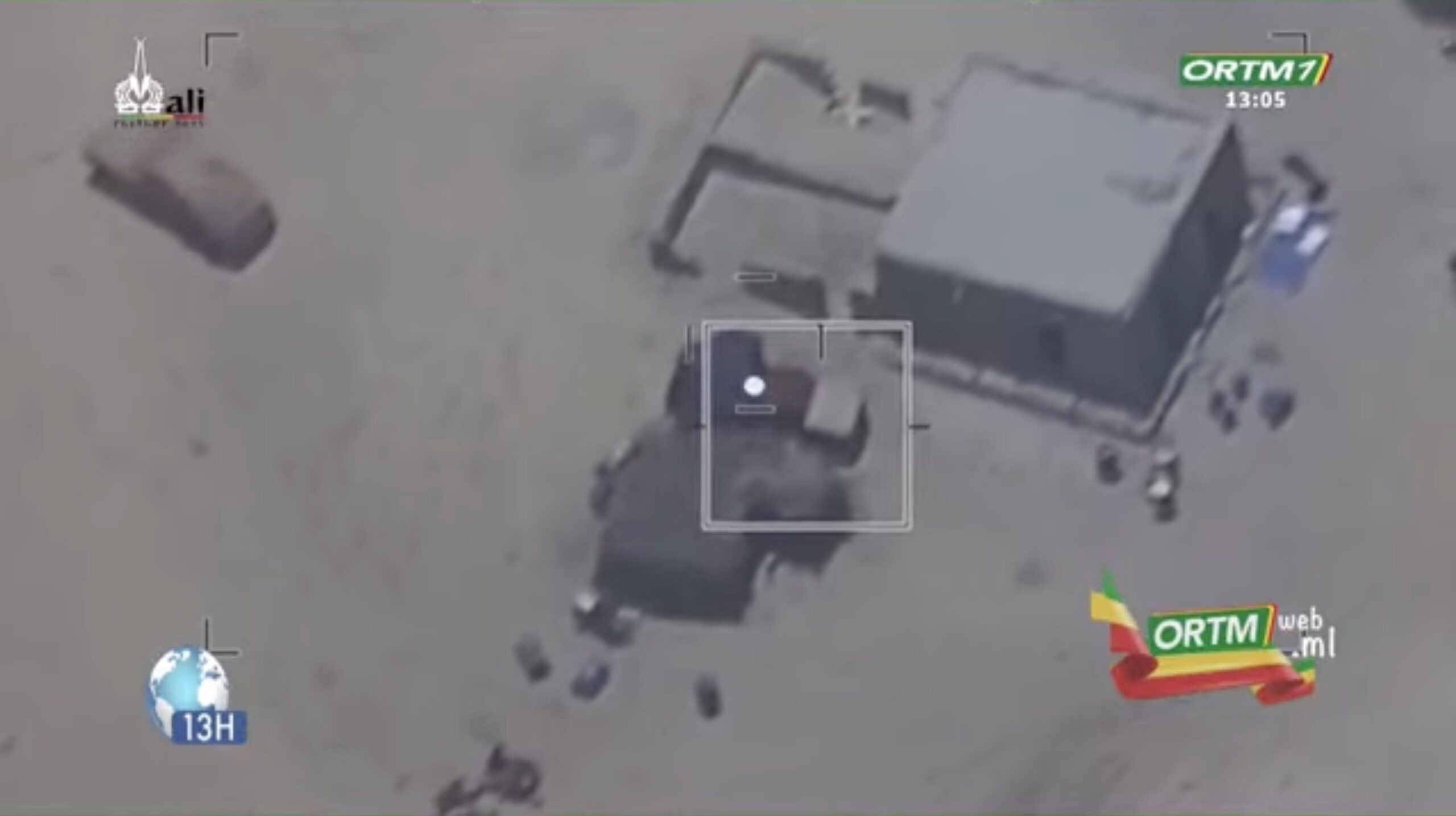
- Malian military drone operations are likely to continue over the next 1-3 months, and allegations of civilian harm are likely to persist in public reporting. Mali acquired Bayraktar TB2 drones in late 2022; Bellingcat and Jeune Afrique found that Malian military strikes frequently occurred in civilian areas, while MSF reported four people killed and five injured in the Zouera strike and Amnesty International reported at least 13 civilians killed in Amasrakad. The evidence is historical rather than a new event in this reporting week, and attribution of individual strikes remains contested. Confidence is medium because NGO, geolocation and medical reporting provide partial corroboration, but the cases are dated and the competing accounts do not establish responsibility for every strike. (Confidence: medium · ASSESSED)
- I&W: Confirmation: a new FAMa or ORTM1 announcement of a drone strike is followed by independent geolocation placing the strike in a civilian area or by casualty reporting from MSF or another field source. (0-60 days)
- I&W: Break: FAMa publicly suspends drone operations, with no independently reported civilian-area strike or new civilian casualty allegation. (1-3 months)
Outlook & scenarios
Managed but persistent fuel pressure (55%)
JNIM is likely to continue attacking or disrupting petroleum routes from Senegal and Côte d'Ivoire, while Malian military escorts keep some fuel moving into Bamako. Supply access remains vulnerable, but the available reporting does not indicate an immediate loss of access to the capital.
Northern Mali contest consolidates (35%)
The FLA and JNIM retain parts of northern Mali and sustain attacks against FAMa and Africa Corps positions. The resulting contest prolongs pressure on the Malian military and increases reliance on Russia's security role.
Burkina Faso jihadist rivalry intensifies (30%)
JNIM and ISSP conduct further clashes in Burkina Faso after the battle reported on 17 September. The rivalry becomes a distinct driver of insecurity alongside the groups' pressure on state authority elsewhere in the Sahel.
Wildcard: regional trade-route shock (15%)
JNIM and ISSP activity expands from Mali and Burkina Faso into a wider crisis affecting trade routes and frontiers involving Benin, Côte d'Ivoire, Ghana, Mauritania, Senegal and Togo. This low-probability, high-impact outcome would widen the security and supply consequences beyond the AES states.
Recommendations
- Build a weekly route-security and fuel-access tracker covering petroleum routes linking Mali with Senegal and Côte d'Ivoire, attacks on tankers, military escorts, reported deliveries into Bamako and any evidence that armed escorts are no longer required.
- Maintain separate timelines for the JNIM blockade declared on 3 September 2025, its reported reimposition on 28 April 2026 and the unverified six-month description. Do not use the six-month figure as a settled measure of campaign duration.
- Separate FLA-JNIM activity in northern Mali from JNIM-ISSP clashes in Burkina Faso. Record the actors, locations, objectives and territorial effects of each incident before assessing coordination or wider campaign links.
- Prioritise independent geolocation and medical corroboration for Malian drone incidents. Compare FAMa and ORTM1 descriptions with Bellingcat findings, MSF casualty reporting and local evidence before assigning responsibility for civilian harm.
- Track official AES statements and reliable reporting for Africa Corps deployments, Russian security guarantees, mining arrangements and any formal shift away from Africa Corps cooperation. Treat claims about current deployments as unconfirmed unless they include recent, location-specific evidence.
Confidence & uncertainty
Overall confidence is medium because the evidence combines strong geolocation and medical reporting with NGO, blog and think-tank material of uneven reliability. The Mali fuel and drone assessments have partial corroboration, but the blockade chronology conflicts and responsibility for individual strikes remains disputed. The Burkina Faso JNIM-ISSP battle and the current extent of Russia's Africa Corps role rely largely on single-source or contextual reporting. The available claims do not establish exact territorial boundaries in northern Mali or current Africa Corps force levels.
Intelligence gaps
- [EEI 1.2 · PARTIAL] Observed movement and size of armed columns (vehicle counts, heavy weapons present) along approach routes to population centers or borders documented by imagery, local reporting, or border guards. Recommended collection: imagery/SATCOM
- [EEI 1.3 · PARTIAL] Reports of occupation, administration, or imposition of checkpoints/taxes by armed groups in named towns, villages, markets, or on specified road segments. Recommended collection: OSINT (local media/social)
- [EEI 1.4 · PARTIAL] Seizure or acquisition of heavy weapons or air-defense systems (mortars >81mm, artillery, armored vehicles, MANPADS) attributed to specific groups as evidenced by photos, captured weapons inventories, or weapons interdictions. Recommended collection: forensics/field reporting
- [EEI 2.1 · PARTIAL] Internal security force movements: redeployment of army units, garrison withdrawals, or mass troop movements toward/away from capitals and regional command posts. Recommended collection: imagery/SATCOM
- [EEI 2.2 · UNCOVERED] Detentions, public dismissals, resignations, or public statements by senior military, police, or government officials indicating factional splits (named individuals, ranks, units). Recommended collection: diplomatic/OSINT
- [EEI 3.1 · UNCOVERED] Interdictions or seizures at borders/markets of weapons, ammunition, fuel, or contraband (type/quantity, seizure location, alleged origin/destination). Recommended collection: border/customs
- [EEI 3.2 · PARTIAL] Recorded movements of known smuggling routes and convoy volumes: counts of commercial/privately registered vehicles and informal river crossings on specific cross-border corridors. Recommended collection: ground/HUMINT
- [EEI 3.3 · PARTIAL] Monitored financial flows linked to illicit trade: large cash movements, changes in declared gold exports at named mines/ports, or arrests of money couriers with amounts and origins. Recommended collection: financial/forensics
- [EEI 3.4 · UNCOVERED] Observed changes at border security posts: closures, reductions in personnel, destroyed checkpoints, or documented agreements allowing free movement at named crossings. Recommended collection: imagery/OSINT
Cited sources
[1] NATO Association of Canada · The Sahel’s Security Imperative: How Resurgent Jihadist Violence Challenges Africa’s and the West’s Economic Potential (C) · Tue Sep 22 2026 17:58:55 GMT+0000 (Coordinated Universal Time) · sha256:a0f0b6e1a3d8 [2] Ujasusi · Africa Terrorism Monitor: 1 Aug – 13 Sep 2026 | Ujasusi (D) · Mon Sep 21 2026 07:02:40 GMT+0000 (Coordinated Universal Time) · sha256:b5c8abde23f4 [3] Modern Tokyo Times · Sahel Region and Crisis in Mali: Military Rule, Islamist Insurgency, and Fragmentation – Modern Tokyo Times (E) · sha256:5b7a9f6f6152 [4] Bellingcat · “A Recurring Pattern”: Civilians Paying the Price in Mali’s Drone Campaign - bellingcat (B) · Wed Sep 16 2026 16:04:19 GMT+0000 (Coordinated Universal Time) · sha256:240eaaf5fb84
Source content hashes were computed at collection time; the cited text is preserved unmodified for the life of this product.
TLP:CLEAR