TLP:CLEAR · Disclosure is not limited.
Sahel security crisis: Niamey airport assault elevates capital risk as Mali conflict persists and Burkina Faso’s insurgency endures
Time window: Last 7 days · Audience: General analyst · Type: Situation report · DTG: 2026-06-19 04:10Z · Overall confidence: MEDIUM
BLUF
An armed assault on Niamey’s Diori Hamani International Airport on 18 June highlights a high-threat operating picture in Niger’s capital, while Mali remains a near‑term high‑risk theatre and Burkina Faso’s jihadist insurgency continues to exact a heavy toll. Movement, consular and aviation constraints for Western personnel are severe in Mali and Niger.
Executive summary
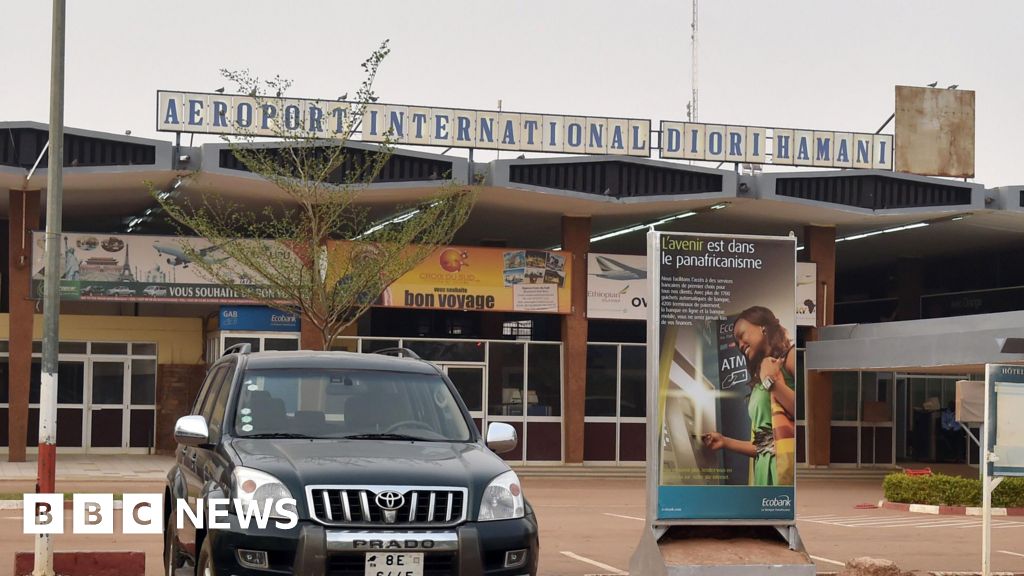
Gunmen attacked Niamey’s Diori Hamani International Airport on 18 June, prompting a temporary closure and lockdown around one of Niger’s most sensitive dual‑use facilities. Reporting diverges on fatalities, with figures ranging from at least 13 to 35, and security forces launched a manhunt after the assault. Official guidance warns of an ongoing high risk of terrorist attacks in Niger, with the UK advising against all travel and highlighting severely limited consular support. In Mali, official advisories cite common armed conflict, violent crime, kidnapping and protest volatility, with U.S. personnel restricted to Bamako, the U.S. embassy on heightened security and an FAA notice warning civil aviation of elevated risk. Credible open‑source reporting indicates Russian‑made cluster submunitions were present at Tadjmart after Malian airstrikes on 17 May, placing Bamako under potential Convention on Cluster Munitions compliance scrutiny. Burkina Faso’s Islamist insurgency, active since 2015, has killed at least 20,000 people, with a record of mass‑casualty attacks in Ouagadougou and a 2023 break with French security ties.
Change from previous assessment
New: The 18 June armed assault on Niamey’s Diori Hamani International Airport and resulting lockdown elevate assessed capital‑area risk in Niger; casualty reporting remains inconsistent, so confidence on totals is reduced. Maintained: Mali remains assessed as a high‑threat operating environment with continued movement and aviation constraints and credible OSINT indicating cluster submunitions at Tadjmart after 17 May airstrikes. Burkina Faso’s outlook is unchanged, with the insurgency likely to persist. Initial assessment of AES access constraints is added in light of reported breaks with Western partners.
Key judgments
- Niamey’s Diori Hamani International Airport was very likely attacked on 18 June, forcing a temporary closure and lockdown, and Nigerien forces are very likely pursuing surviving assailants; the risk of further attacks in Niamey remains high over the next 30 days. (Confidence: high · REPORTED)
- I&W: Official communiqués announce additional arrests or operations linked to the 18 June cell in Niamey (0-14 days)
- I&W: Public notice of restored normal airport operations with no new security alerts in Niamey (0-14 days)
- Reported fatalities from the Niamey airport assault likely number at least 13, though some official reporting cites 35 including 22 assailants, reflecting unresolved casualty accounting. (Confidence: medium · REPORTED)
- I&W: Niger’s Defence Ministry issues a single consolidated casualty toll for the 18 June attack (0-14 days)
- I&W: Subsequent authoritative tallies diverge further or retract earlier figures (0-14 days)
- Mali will almost certainly remain a high‑threat operating environment over the next quarter, with persistent armed conflict, violent crime and kidnapping, protest volatility, restrictions on U.S. personnel movement, enhanced embassy security, and FAA warnings for civil aviation. (Confidence: high · ASSESSED)
- I&W: Continuation of U.S. movement restrictions for Mali‑based staff and maintenance of ‘Do Not Travel’ advisories (1-3 months)
- I&W: Official easing of movement restrictions for U.S. personnel in Mali (1-3 months)
- Russian‑made cluster submunitions were likely present at Tadjmart after 17 May Malian Armed Forces airstrikes, exposing Bamako to Convention on Cluster Munitions compliance scrutiny, though the user remains unconfirmed from available reporting. (Confidence: medium · ASSESSED)
- I&W: Independent field verification by a reputable organisation of ShOAB‑0.5 remnants at or near Tadjmart (1-3 months)
- I&W: Credible third‑party forensic assessment disputing the presence of cluster submunitions at Tadjmart (1-3 months)
- Burkina Faso is very likely to remain highly insecure over the next quarter, with an Islamist insurgency active since 2015 and at least 20,000 killed, a record of mass‑casualty attacks in Ouagadougou, and a 2023 break with French security ties. (Confidence: high · ASSESSED)
- I&W: New large‑scale attack or multi‑fatality incident reported in Ouagadougou or northern/eastern provinces (1-3 months)
- I&W: Credible reports of sustained reduction in attack rates or formal ceasefire announcements by JNIM or Ansarul Islam (1-3 months)
- Western security access across the Alliance of Sahel States is likely to remain constrained as AES members distance themselves from France and the United States and formalise alternative alignments. (Confidence: medium · ASSESSED)
- I&W: Additional expulsions or restrictions on Western military missions, or announcements of new AES‑aligned security agreements (1-3 months)
- I&W: Public AES moves to reopen structured security cooperation with ECOWAS or Western partners (1-3 months)
Outlook & scenarios
Recurrent plots in Niamey target aviation and security sites (45%)
Cells attempt follow‑on attacks against Diori Hamani International Airport and nearby security installations, prompting intermittent closures and curfews and reinforcing no‑travel advisories. Arrests continue but do not fully disrupt attack planning.
Containment in Niamey, airport operations stabilise (50%)
Security forces neutralise or detain remaining perpetrators and harden key sites. The airport reopens on a sustained basis and fewer alerts are issued in the capital, though the national threat level remains high.
Mali faces heightened scrutiny over alleged cluster munition use (30%)
Further open‑source or third‑party verification of submunition remnants at Tadjmart spurs compliance queries under the Convention on Cluster Munitions. Bamako contests attribution while maintaining an elevated internal security posture.
Burkina Faso insurgency persists with periodic high‑profile attacks (35%)
Insurgent activity continues across the periphery with occasional large‑scale incidents against urban or symbolic targets, sustaining a high kidnapping and terrorism risk and limiting options for external security cooperation.
Recommendations
- Niger: Suspend non‑essential movements in Niamey and avoid Diori Hamani International Airport until official notices indicate stable operations; require dynamic route planning and real‑time check‑ins for any critical movements.
- Niger: Plan against consular constraints by pre‑positioning remote support and validated commercial medevac options; do not assume UK or other government evacuation assistance will be available.
- Mali: Maintain a no‑travel posture outside Bamako for official personnel and enforce kidnapping‑risk protocols, including secure accommodation, movement by vetted providers and strict communications discipline.
- Mali: For any overflight or charter planning, incorporate the FAA aviation risk notices into routing decisions and establish abort criteria for deteriorating security conditions.
- Mali: Task OSINT and liaison channels to collect and preserve imagery and munition‑remnant reporting from Tadjmart to support independent verification and legal‑policy assessments.
- Burkina Faso: Treat travel outside controlled urban hubs as high risk; develop contingency plans for temporary safe havens and rapid extraction in the event of mass‑casualty incidents.
- Regional posture: Map AES political‑military alignment trends and Russian engagement to anticipate access constraints; prioritise remote support models and partner de‑risking where Western presence is curtailed.
Confidence & uncertainty
Overall confidence is medium. Judgments on the Niamey attack and the high‑threat environment in Mali rest on multiple official and major‑media reports and government advisories, which are typically reliable. Casualty figures for the 18 June assault diverge across credible outlets, lowering confidence on totals. The assessment of cluster submunitions at Tadjmart relies on geolocated open‑source reporting and photographic evidence that are credible but not yet independently verified on the ground. Regional alignment dynamics within the Alliance of Sahel States draw on medium‑reliability sources, tempering confidence in forward‑looking access implications.
Alternative analysis (red cell)
The ledger indicates a security event at Niamey airport and credible baseline insecurity across the Sahel, but heavy reliance on a single reporting cluster (origin_cluster_id "1fc79e70") and several A6 technical OSINT items leave key elements unconfirmed. Alternative readings — that the Niamey incident was a localized military clash or that casualty and munition identifications are preliminary or misattributed — are defensible until independent forensic, medical, and multi‑source reporting resolve the discrepancies. Additional independent field verification and documentary evidence are required to solidify the stronger judgments.
Intelligence gaps
- [EEI 1.2 · PARTIAL] Observed movement and size of armed columns (vehicle counts, heavy weapons present) along approach routes to population centers or borders documented by imagery, local reporting, or border guards. Recommended collection: imagery/SATCOM
- [EEI 1.3 · UNCOVERED] Reports of occupation, administration, or imposition of checkpoints/taxes by armed groups in named towns, villages, markets, or on specified road segments. Recommended collection: OSINT (local media/social)
- [EEI 1.4 · PARTIAL] Seizure or acquisition of heavy weapons or air-defense systems (mortars >81mm, artillery, armored vehicles, MANPADS) attributed to specific groups as evidenced by photos, captured weapons inventories, or weapons interdictions. Recommended collection: forensics/field reporting
- [EEI 2.1 · PARTIAL] Internal security force movements: redeployment of army units, garrison withdrawals, or mass troop movements toward/away from capitals and regional command posts. Recommended collection: imagery/SATCOM
- [EEI 2.2 · PARTIAL] Detentions, public dismissals, resignations, or public statements by senior military, police, or government officials indicating factional splits (named individuals, ranks, units). Recommended collection: diplomatic/OSINT
- [EEI 2.3 · PARTIAL] Changes in foreign military footprints or security agreements: arrival/departure of foreign troops, opening/closure of foreign bases, visible presence of private military contractors (identified personnel/vehicles). Recommended collection: OSINT/imagery
- [EEI 2.4 · UNCOVERED] Targeted external support actions: sanctions, suspension of aid, delivery of weapons or logistics from foreign state or non-state actors (documented shipments, bank transfers, public announcements). Recommended collection: financial/diplomatic
- [EEI 3.2 · UNCOVERED] Recorded movements of known smuggling routes and convoy volumes: counts of commercial/privately registered vehicles and informal river crossings on specific cross-border corridors. Recommended collection: ground/HUMINT
- [EEI 3.3 · UNCOVERED] Monitored financial flows linked to illicit trade: large cash movements, changes in declared gold exports at named mines/ports, or arrests of money couriers with amounts and origins. Recommended collection: financial/forensics
- [EEI 3.4 · UNCOVERED] Observed changes at border security posts: closures, reductions in personnel, destroyed checkpoints, or documented agreements allowing free movement at named crossings. Recommended collection: imagery/OSINT
Cited sources
[1] Foreign, Commonwealth & Development Office (FCDO) · Niger travel advice (A) · sha256:4916436f4c22 [2] bbc.com · Niger airport attack: Thirty-five die in attack on Niamey airport (A) · sha256:39348249f8c8 [3] Los Angeles Times · Gunmen kill 11 soldiers, 2 civilians at Niger airport, officials say - Los Angeles Times (A) · sha256:5aec6620ae3f [4] U.S. Department of State · Mali Travel Advisory (A) · sha256:0bd28ce550a9 [5] bellingcat.com · Banned Russian Submunitions Found After Mali's Military Announces Airstrikes - bellingcat (A) · sha256:6788d3465fd7 [6] Wikipedia · Islamist insurgency in Burkina Faso (B) · sha256:35c16e56b6bc [7] Wikipedia · Alliance of Sahel States (F) · sha256:3cdcb5ce56e2
Source content hashes were computed at collection time; the cited text is preserved unmodified for the life of this product.
Red cell review: PARTIAL DISSENT
TLP:CLEAR