TLP:CLEAR · Disclosure is not limited.
Sahel security crisis: Niamey airport assault, Mali airstrike fallout, and persistent insecurity in Burkina Faso
Time window: Last 7 days · Audience: General analyst · Type: Situation report · DTG: 2026-06-19 13:35Z · Overall confidence: MEDIUM
BLUF
A lethal assault at Niamey’s Diori Hamani International Airport underlines a high-threat environment in Niger’s capital, while Mali remains an almost certainly high‑risk theatre and Burkina Faso’s jihadist insurgency and state of emergency continue to strain security and humanitarian systems. Western diplomatic and operational access across junta-led Sahel states remains tightly constrained.
Executive summary
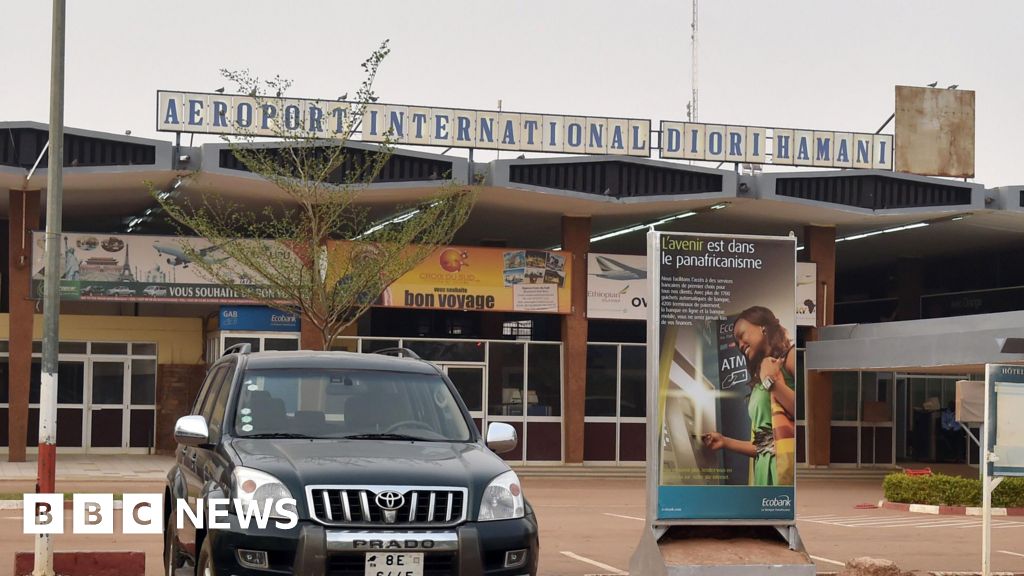
Gunmen attacked Niamey’s main airport, with authorities reporting 11 soldiers and two civilians killed and 22 assailants dead, followed by arrests and the seizure of RPGs, AK‑47s and munitions. Reporting on the airport’s operational status diverged after the assault. Advisories and alerts indicate a sustained high threat in Niger, including kidnap risk in Niamey. In Mali, official advisories, a U.S. FAA notice to airmen, and continued armed conflict point to an enduring high‑risk operating picture. OSINT has geolocated unexploded Russian‑made submunitions at Tadjmart after Malian airstrikes, raising compliance scrutiny under the Convention on Cluster Munitions. Burkina Faso remains highly insecure under a state of emergency, with persistent terrorist activity, high kidnap risk and large‑scale displacement. Regional spillover pressures are visible along Mauritania’s frontier and into northern Côte d’Ivoire, while UN figures depict a severe and underfunded humanitarian crisis across the Sahel.
Change from previous assessment
New reporting provides a fuller picture of the Niamey airport assault, including a detailed casualty breakdown, 20 arrests, and seizure of RPG‑7s, AK‑47s and ammunition, alongside official condemnation and attribution to ‘armed mercenaries’. Reporting diverged on whether the airport subsequently closed or resumed normal operations. OSINT remains consistent on unexploded ShOAB‑0.5 bomblets at Tadjmart after 17 May Malian airstrikes, sustaining compliance scrutiny under the Convention on Cluster Munitions. Humanitarian warnings across the Sahel continue to point to severe and underfunded needs. Overall threat judgments are unchanged from the prior brief, with refined confidence levels around the Niamey incident.
Key judgments
- Gunmen very likely conducted a lethal assault at Niamey’s Diori Hamani International Airport, killing at least 13 soldiers and civilians and 22 attackers, after which Nigerien forces launched a manhunt, made arrests, and seized heavy weapons; the target’s strategic value heightens concern despite conflicting reports on the airport’s operating status. (Confidence: medium · REPORTED)
- I&W: Niger’s defence ministry publishes an after‑action report with final casualty rolls and details of seized materiel. (0-14 days)
- I&W: Official retraction or material revision of the reported casualty figures by Nigerien authorities. (0-14 days)
- There is likely a sustained high risk of further attacks or kidnap attempts in Niamey over the next 30 days, despite increased security measures at the airport. (Confidence: medium · ASSESSED)
- I&W: Public reporting by Nigerien authorities of a disrupted plot or additional attack attempt in Niamey. (0-14 days)
- I&W: Downward revision of UK FCDO or US Embassy threat posture for Niamey. (1-3 months)
- Mali will almost certainly remain a high‑threat operating environment this quarter, with common violent crime, a persistent terrorism and kidnap risk, periodic unrest, ongoing armed conflict, and elevated aviation hazards flagged by the FAA. (Confidence: high · REPORTED)
- I&W: Renewal or expansion of FAA notices or Malian government advisories restricting routes or altitudes for civil aviation. (1-3 months)
- I&W: US Department of State downgrades its Mali advisory and eases US staff movement restrictions. (1-3 months)
- Russian‑linked support to Malian operations and the discovery of unexploded ShOAB‑0.5 submunitions at Tadjmart after 17 May airstrikes very likely increase Bamako’s legal and reputational exposure under the Convention on Cluster Munitions, though end‑user attribution remains unconfirmed from open sources. (Confidence: medium · ASSESSED)
- I&W: Malian authorities or CCM bodies announce an investigation or issue findings on submunition use at Tadjmart. (1-3 months)
- I&W: Independent technical analysis attributes remnants to legacy contamination unrelated to the 17 May strikes. (1-3 months)
- Burkina Faso is very likely to remain highly insecure over the next quarter, with a declared state of emergency, ongoing terrorist activity, high kidnap risk, common violent crime, and large‑scale displacement set against limited medical capacity. (Confidence: high · REPORTED)
- I&W: Burkinabè authorities extend the state of emergency or expand it to additional regions. (1-3 months)
- I&W: US government eases movement restrictions for its personnel in Burkina Faso. (1-3 months)
- Spillover pressures are likely to intensify along Mauritania’s eastern frontier and into northern Côte d’Ivoire, given refugee flows to Mbera, Mauritania’s heightened border security posture, and documented cross‑border operations by JNIM into Ivoirian territory. (Confidence: medium · ASSESSED)
- I&W: Mauritania announces interdictions of armed infiltrators or UN reporting shows increased arrivals at Mbera camp. (1-3 months)
- I&W: Ivoirian security reporting shows no cross‑border incidents and authorities scale back the Northern Operational Zone posture. (1-3 months)
- The Sahel’s humanitarian burden is already severe and is likely to deteriorate further this quarter due to persistent violence and funding gaps, with tens of millions in need and warnings of worsening food insecurity. (Confidence: medium · ASSESSED)
- I&W: UN agencies raise appeals or report growth in IPC Phase 3+ populations in Burkina Faso, Mali or Niger. (1-3 months)
- I&W: Major donor disbursements close funding gaps and agency updates show reduced IPC caseloads. (1-3 months)
Outlook & scenarios
Status quo high threat across junta‑led Sahel with tighter Western access (60%)
Mali, Niger and Burkina Faso maintain hard security postures while distancing from France and the United States, keeping Western movements restricted and advisories elevated. Russia’s Africa Corps continues to back Malian operations, reinforcing Bamako’s kinetic approach. Outcome: persistent elevated attack and kidnap risk in capitals and along border zones, limited diplomatic and programme access.
Repeat urban targeting in Niamey (40%)
Cells attempt another complex attack or kidnap in Niamey within 30-60 days, probing airport or security installations. Heightened patrols and checkpoints disrupt some plots but generate intermittent travel and aviation disruption. Outcome: continued no‑travel posture and contingency triggers for rapid drawdown or shelter‑in‑place.
Border spillover intensifies into Mauritania and northern Côte d’Ivoire (35%)
Refugee inflows to Mbera camp rise as clashes in Mali’s north and centre persist, while JNIM conducts intermittent cross‑border actions into Ivoirian departments abutting Burkina Faso. Outcome: Mauritania sustains reinforced border surveillance and Côte d’Ivoire keeps its Northern Operational Zone at high readiness.
Localised de‑escalation in one theatre (20%)
Focused security operations degrade one or more jihadist cells, reducing incident tempo around a key town or corridor for a quarter. Outcome: marginal improvement in movement conditions locally, without altering the broader regional threat.
Recommendations
- Maintain a no‑travel posture for non‑essential movements in Niger and keep evacuation and shelter‑in‑place trigger matrices calibrated to airport or city‑wide incidents in Niamey.
- Direct posts to review and drill kidnap risk protocols for Niamey, including hardened residence movements, GSM discipline, and immediate action checklists.
- Sustain Mali airspace avoidance and routing controls in line with the FAA NOTAM; require carriers and contractors to validate flight plans and alternates before release.
- Task OSINT and imagery teams to collect, archive and geolocate additional Tadjmart‑area munition evidence and blast signatures to support legal and policy review on cluster munition exposure.
- For Burkina Faso, keep restrictions on travel outside Ouagadougou and ensure duty of care measures: vetted escorts, HEAT‑level training currency, and pre‑arranged medevac.
- Prioritise liaison with Mauritanian defence and border units on Hodh surveillance feeds and with Ivoirian Northern Operational Zone on cross‑border tripwires; fuse with refugee arrival data from Mbera for early warning.
- Align humanitarian planning with UN projections: target contingency stocks and access negotiations along Sahel corridors where funding shortfalls and insecurity are most acute.
Confidence & uncertainty
This assessment draws on multiple official government advisories, UN reporting, and major‑media accounts that corroborate a high‑threat picture in Mali, Burkina Faso and Niger, and provide detailed accounts of the Niamey airport assault and its aftermath. Some elements remain contested, including divergent reporting on the airport’s operational status and casualty accounting in Niamey, and open‑source allegations regarding submunitions in Mali that lack formal adjudication. These contradictions and forward‑looking judgments on near‑term attack likelihoods reduce confidence to medium overall.
Alternative analysis (red cell)
Alternative readings are defensible where reporting is clustered or lacks chain‑of‑custody. The Niamey airport incident reporting shows single‑cluster sourcing and conflicting casualty and operational‑status claims, so the event’s detailed casualty/seizure narrative and immediate operational implications are less certain than presented. Similarly, finding Russian‑made bomblets at Tadjmart and evidence of Russian‑linked actors in Mali do not, by themselves, demonstrate Malian state employment of those munitions or establish legal exposure without forensic delivery and chain‑of‑custody evidence.
Intelligence gaps
- [EEI 1.2 · PARTIAL] Observed movement and size of armed columns (vehicle counts, heavy weapons present) along approach routes to population centers or borders documented by imagery, local reporting, or border guards. Recommended collection: imagery/SATCOM
- [EEI 1.3 · UNCOVERED] Reports of occupation, administration, or imposition of checkpoints/taxes by armed groups in named towns, villages, markets, or on specified road segments. Recommended collection: OSINT (local media/social)
- [EEI 1.4 · PARTIAL] Seizure or acquisition of heavy weapons or air-defense systems (mortars >81mm, artillery, armored vehicles, MANPADS) attributed to specific groups as evidenced by photos, captured weapons inventories, or weapons interdictions. Recommended collection: forensics/field reporting
- [EEI 2.1 · PARTIAL] Internal security force movements: redeployment of army units, garrison withdrawals, or mass troop movements toward/away from capitals and regional command posts. Recommended collection: imagery/SATCOM
- [EEI 2.2 · UNCOVERED] Detentions, public dismissals, resignations, or public statements by senior military, police, or government officials indicating factional splits (named individuals, ranks, units). Recommended collection: diplomatic/OSINT
- [EEI 2.3 · PARTIAL] Changes in foreign military footprints or security agreements: arrival/departure of foreign troops, opening/closure of foreign bases, visible presence of private military contractors (identified personnel/vehicles). Recommended collection: OSINT/imagery
- [EEI 2.4 · UNCOVERED] Targeted external support actions: sanctions, suspension of aid, delivery of weapons or logistics from foreign state or non-state actors (documented shipments, bank transfers, public announcements). Recommended collection: financial/diplomatic
- [EEI 3.1 · PARTIAL] Interdictions or seizures at borders/markets of weapons, ammunition, fuel, or contraband (type/quantity, seizure location, alleged origin/destination). Recommended collection: border/customs
- [EEI 3.2 · UNCOVERED] Recorded movements of known smuggling routes and convoy volumes: counts of commercial/privately registered vehicles and informal river crossings on specific cross-border corridors. Recommended collection: ground/HUMINT
- [EEI 3.3 · UNCOVERED] Monitored financial flows linked to illicit trade: large cash movements, changes in declared gold exports at named mines/ports, or arrests of money couriers with amounts and origins. Recommended collection: financial/forensics
- [EEI 3.4 · PARTIAL] Observed changes at border security posts: closures, reductions in personnel, destroyed checkpoints, or documented agreements allowing free movement at named crossings. Recommended collection: imagery/OSINT
Cited sources
[1] Associated Press · Gunmen attack Niger airport, killing 11 soldiers and 2 civilians, officials say (A) · sha256:93cd8314e3df [2] bbc.com · Niger airport attack: Thirty-five die in attack on Niamey airport (A) · sha256:8d0032921923 [3] Foreign, Commonwealth & Development Office (FCDO) · Niger travel advice (A) · sha256:4916436f4c22 [4] Los Angeles Times · Gunmen kill 11 soldiers, 2 civilians at Niger airport, officials say - Los Angeles Times (A) · sha256:5aec6620ae3f [5] U.S. Department of State · Mali Travel Advisory (A) · sha256:0bd28ce550a9 [6] NASA · NASA FIRMS thermal detections — Mali (2d) (A) · sha256:0ac65fde83ac [7] bellingcat.com · Banned Russian Submunitions Found After Mali's Military Announces Airstrikes - bellingcat (A) · sha256:6788d3465fd7 [8] U.S. Department of State · Burkina Faso Travel Advisory | Travel.State.gov (A) · sha256:6dbd8e921100 [9] Wikipedia · Islamist insurgency in Burkina Faso (B) · sha256:35c16e56b6bc [10] Afrique Confidentielle · La Mauritanie face au débordement du conflit sahélien: enjeux et fragilités - Afrique Confidentielle (B) · sha256:132d49d7c346 [11] U.S. Department of State · Cote d'Ivoire Travel Advisory (A) · sha256:d92eb303ef23 [12] Le Journal du Pays · L’ONU alerte sur une aggravation de la crise humanitaire, 24,3 millions de personnes en détresse – Le Journal du Pays (B) · sha256:4148a99df662
Source content hashes were computed at collection time; the cited text is preserved unmodified for the life of this product.
Red cell review: PARTIAL DISSENT
TLP:CLEAR