TLP:CLEAR · Disclosure is not limited.
Sahel Security Crisis: Niamey Mutiny and Persistent Regional Pressure
Time window: Last 7 days · Audience: General analyst · Type: Situation report · DTG: 2026-08-30 04:06Z · Overall confidence: MEDIUM
BLUF
The Nigerien military regime likely restored control over key sites in Niamey after the reported 29 August mutiny, but the organisers and full sequence remain unresolved. Islamist pressure in Burkina Faso and Mali, along with weakly evidenced AES military integration, will remain the main regional security concerns over the next three months.
Executive summary
Reporting during this period centres on an armed disturbance at Diori Hamani International Airport, Base 101 and the Presidential Palace in Niamey. Nigerien authorities reported that security forces contained the mutiny and retook seized sites, while other accounts placed mutineers at the airport and attributed the incident variously to young Nigerien soldiers, a counter-coup attempt or unidentified attackers. The Alliance of Sahel States is likely to retain political cohesion, but the record does not establish a dependable joint military command. In Mali, geolocated reporting supports continued Shahed-136 type drone use, although the operator and Russian supply chain remain unconfirmed. Islamic groups continue to control large areas of Burkina Faso, where displacement and severe food insecurity remain acute.
Change from previous assessment
Assessment is broadly unchanged from the 29 August brief. The Niamey mutiny remains the central development, with medium confidence retained because reporting still conflicts on control and attribution. The AES political-alignment judgement is retained, while the assessment of reliable AES-wide military integration remains low confidence. The prior brief's prisoner-exchange judgement is retired because the current approved record provides no supporting claim for it. No new negotiation judgement is added.
Key judgments
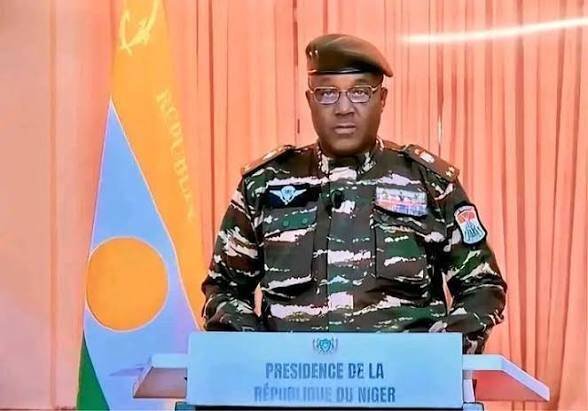
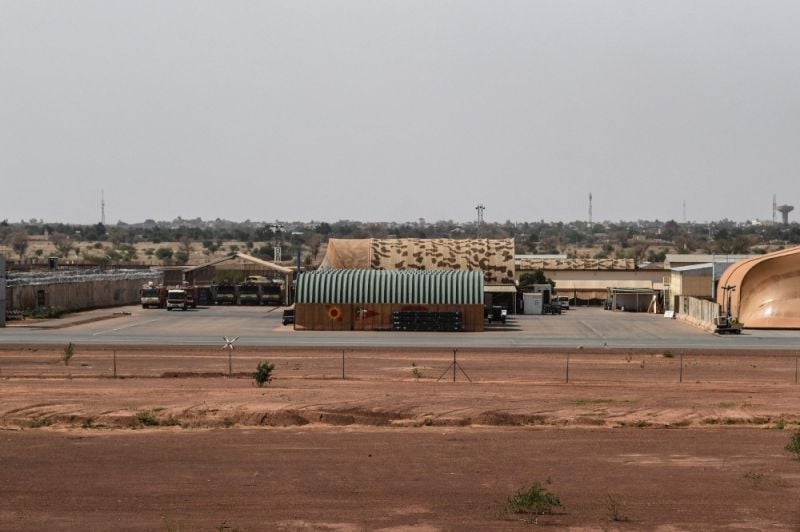
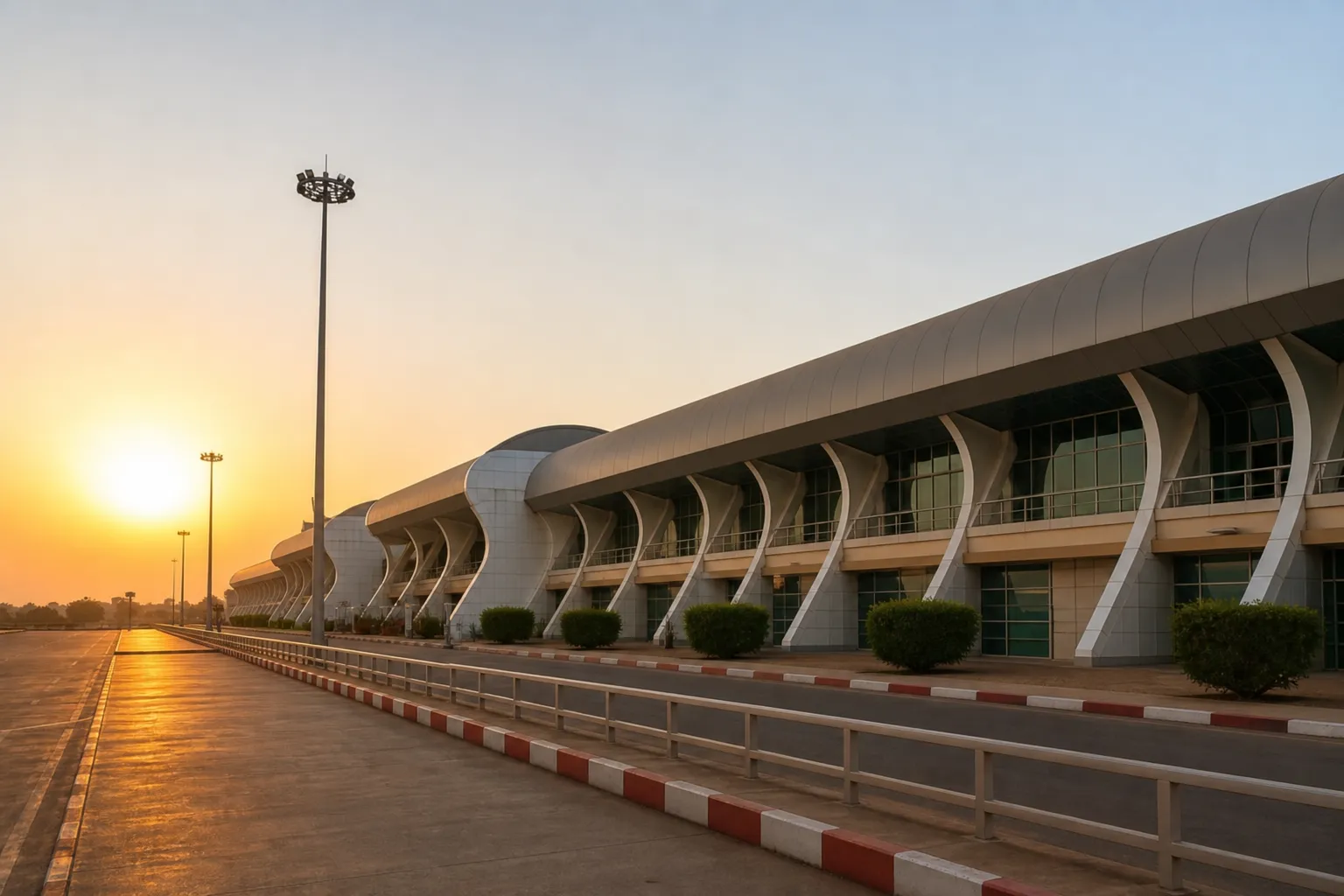
- The Nigerien military regime likely restored control over the Presidential Palace, Diori Hamani International Airport and Base 101 after the reported 29 August mutiny, but attribution and the sequence of events remain unresolved. Reports identify mutinous soldiers or young members of Niger's Defence and Security Forces, while another account described an attempted counter-coup and other reporting left the attackers unidentified. Niger's Defence Minister General Salifou Mody and the presidential guard said forces had contained or retaken sites, but security sources also placed mutineers at the airport later that day. Confidence is medium because official and major-media reporting supports the incident and containment claims, while local and single-source reports conflict on control and attribution. (Confidence: medium · ASSESSED)
- I&W: Confirm: Niger's Ministry of Defence or General Salifou Mody publicly confirms that the presidential guard and armed forces hold all three sites, with no further reports of mutineers at the airport. (0-14 days)
- I&W: Break: New reporting places mutineers inside Base 101 or Diori Hamani International Airport, or records renewed fighting around the Presidential Palace. (0-14 days)
- Niger is likely to remain exposed to Islamist attacks as the Niamey disturbance diverts security resources from the fight against Islamist insurgents. Official reporting identifies an ongoing terrorist attack risk throughout Niger, including Niamey, while major-media reporting assesses that the mutiny diverts military resources and can make jihadists the principal beneficiaries of the disruption. Confidence is medium because the underlying terrorist-risk reporting is high confidence, but the link between the mutiny and future attack levels is an analytic inference. (Confidence: medium · ASSESSED)
- I&W: Confirm: Security forces remain deployed across key parts of Niamey and access restrictions continue around strategic installations after the immediate disturbance. (0-14 days)
- I&W: Break: Nigerien authorities report a full return of forces to anti-insurgent operations outside Niamey and no further internal-security incident occurs. (0-14 days)
- The Alliance of Sahel States is very likely to preserve political alignment among Burkina Faso, Mali and Niger through November 2026. The three states remain the AES members, left ECOWAS in 2025, and have maintained political and security links, including Burkina Faso's reported cooperation with Mali, Niger and Russia. The record is inconsistent on whether the AES was created in September 2023 or established in July 2024, and this reduces confidence in judgements about its institutional depth. Confidence is medium because membership and the broad political alignment are supported by multiple sources, while coordination evidence is thinner and partly based on think-tank reporting. (Confidence: medium · ASSESSED)
- I&W: Confirm: Burkina Faso, Mali and Niger issue a joint political statement or adopt a coordinated policy under the AES during the next three months. (1-3 months)
- I&W: Break: Any AES government publicly suspends its participation in the alliance or announces a return to military relations with Western powers. (1-3 months)
- A dependable AES-wide joint military command or reinforcement is unlikely over the next three months. The approved record shows AES membership, political commitments and Burkina Faso's strengthened security cooperation with Mali, Niger and Russia. It also records a 2025 Moscow defence summit whose concrete results observers judged thin. No corroborated claim establishes a common command, an alliance-wide deployment or a joint operation. Confidence is low because the assessment rests partly on the absence of operational reporting and the available coordination evidence is limited. (Confidence: low · ASSESSED)
- I&W: Confirm: Burkina Faso, Mali and Niger announce a named joint operation with identified units, locations and a shared command structure. (0-3 months)
- I&W: Break: AES defence authorities publish a common command arrangement or report an alliance-wide deployment in response to an insurgent attack. (0-3 months)
- Shahed-136 type drones are likely to be used again in Mali within the next one to three months. Bellingcat geolocated footage showing the drones in operation and verified strikes at Inafarak on 12 July and Talahandak on 17 July. Experts assess that the drones are likely manufactured in Russia, while reporting describes a long-range strike capability for Africa Corps and FAMa. The operator and Russian supply chain remain unconfirmed. Confidence is medium because the evidence is concentrated in one investigative source and the individual strike details include low-confidence casualty and target reporting. (Confidence: medium · ASSESSED)
- I&W: Confirm: New geolocated footage, wreckage or imagery identifies a Shahed-136 type platform at a Mali site and links it to a further strike. (1-3 months)
- I&W: Break: Technical examination identifies a different platform in subsequent Mali strike reporting and no further Shahed-136 type evidence appears. (1-3 months)
- Islamic groups are very likely to retain control of large areas of Burkina Faso over the next one to three months. The Islamist insurgency began in August 2015, intensified after large-scale attacks by Ansarul Islam in northern Burkina Faso, and remains active despite military offensives and mobilisation of the Volunteers for the Defence of the Homeland. Confidence is medium because the current control assessment is sourced reporting on a persistent condition rather than a new operation during this reporting period. (Confidence: medium · REPORTED)
- I&W: Confirm: New reporting records Islamic groups holding additional towns or large rural areas in Burkina Faso despite government operations. (1-3 months)
- I&W: Break: Burkina Faso's government demonstrates sustained control over areas previously reported as controlled by Islamic groups and reports a durable reduction in insurgent activity. (1-3 months)
- Humanitarian strain in Burkina Faso is very likely to persist over the next one to three months. The Islamist insurgency is reported to have displaced over 2 million people, caused at least 20,000 civilian and combatant deaths, and left large areas suffering from severe food insecurity. Confidence is medium because the figures are cumulative and the approved record lacks a week-specific humanitarian survey. (Confidence: medium · REPORTED)
- I&W: Confirm: Humanitarian reporting records displacement above 2 million and continued severe food insecurity in large areas of Burkina Faso. (1-3 months)
- I&W: Break: A new humanitarian assessment records sustained access to affected areas and a clear reduction in displacement or food insecurity. (1-3 months)
Outlook & scenarios
Niamey containment, persistent insurgent pressure (50%)
Nigerien security forces consolidate control over the Presidential Palace, Diori Hamani International Airport and Base 101. The political system remains unstable, and Islamist insurgents continue to benefit from diverted security resources. AES political alignment holds, but operational military integration remains limited.
Renewed military rupture in Niger (20%)
A further mutiny or counter-coup attempt in Niamey is unlikely but high impact. It would reopen uncertainty over control of the Presidential Palace, airport and Base 101, divert additional forces from Islamist insurgents and increase pressure on General Abdourahamane Tiani's rule.
AES cohesion without an integrated force (55%)
Burkina Faso, Mali and Niger preserve their political alignment and opposition to French influence while continuing separate or bilateral security activity. The AES does not establish a reliable common command, leaving each government dependent on its own forces and external security relationships.
Northern Mali escalation and wider regional pressure (15%)
Fighting in northern Mali intensifies as rebels retain the initiative against FAMa and Africa Corps, while Shahed-136 type drones support additional long-range strikes. This low-probability, high-impact outcome would increase pressure on AES cohesion and intensify humanitarian strain across the Sahel.
Recommendations
- Maintain a two-track Niamey assessment that separates confirmed site control from unresolved attribution. Update the status of the Presidential Palace, Diori Hamani International Airport and Base 101 separately.
- Prioritise collection on Nigerien Defence Ministry statements, General Salifou Mody, the presidential guard, Operation ALMAHAOU movements and any new reporting on mutineers at the airport.
- Build separate incident timelines for the 29 August gunfire, reported clashes, security-force retaking of sites and the later report of mutineers at the airport. Do not merge these accounts until their timing is reconciled.
- Track AES political statements and defence activity separately. Treat a named joint operation, shared command order or alliance-wide deployment as the threshold for raising confidence in AES military integration.
- Maintain a Mali drone watchlist covering Shahed-136 type imagery, wreckage, strike locations, Africa Corps and FAMa activity. Record the platform identification, operator attribution and Russian manufacturing assessment as separate confidence judgements.
- Use cumulative Burkina Faso displacement, death and food-insecurity figures as baseline indicators rather than week-specific measures. Seek updated reporting before assessing any change in humanitarian conditions.
- For analysis involving British nationals in Niger, retain the reported all-travel warning and the absence of in-person assistance as planning constraints until official guidance changes.
Confidence & uncertainty
Overall confidence is medium. High-confidence official government and multilateral reporting supports the basic risk picture in Niger, including the terrorist threat and the reported containment claims. Major-media reporting and local accounts corroborate the Niamey disturbance but conflict on control, attribution and timing. The AES assessment relies partly on medium-confidence think-tank and major-media reporting, while the Mali drone assessment depends heavily on one investigative source and includes low-confidence strike details. The main uncertainties concern the depth of AES military coordination, the identity of the Niamey attackers and the operational status of the drone capability.
Intelligence gaps
- [EEI 1.1 · PARTIAL] Number, location, and scale of attacks (IEDs, ambushes, complex attacks) per week against towns, military bases, police posts, or convoys, with casualty and equipment-loss counts. Recommended collection: ground/HUMINT
- [EEI 1.2 · UNCOVERED] Observed movement and size of armed columns (vehicle counts, heavy weapons present) along approach routes to population centers or borders documented by imagery, local reporting, or border guards. Recommended collection: imagery/SATCOM
- [EEI 1.3 · UNCOVERED] Reports of occupation, administration, or imposition of checkpoints/taxes by armed groups in named towns, villages, markets, or on specified road segments. Recommended collection: OSINT (local media/social)
- [EEI 1.4 · UNCOVERED] Seizure or acquisition of heavy weapons or air-defense systems (mortars >81mm, artillery, armored vehicles, MANPADS) attributed to specific groups as evidenced by photos, captured weapons inventories, or weapons interdictions. Recommended collection: forensics/field reporting
- [EEI 2.1 · PARTIAL] Internal security force movements: redeployment of army units, garrison withdrawals, or mass troop movements toward/away from capitals and regional command posts. Recommended collection: imagery/SATCOM
- [EEI 2.4 · PARTIAL] Targeted external support actions: sanctions, suspension of aid, delivery of weapons or logistics from foreign state or non-state actors (documented shipments, bank transfers, public announcements). Recommended collection: financial/diplomatic
- [EEI 3.1 · UNCOVERED] Interdictions or seizures at borders/markets of weapons, ammunition, fuel, or contraband (type/quantity, seizure location, alleged origin/destination). Recommended collection: border/customs
- [EEI 3.2 · UNCOVERED] Recorded movements of known smuggling routes and convoy volumes: counts of commercial/privately registered vehicles and informal river crossings on specific cross-border corridors. Recommended collection: ground/HUMINT
- [EEI 3.3 · UNCOVERED] Monitored financial flows linked to illicit trade: large cash movements, changes in declared gold exports at named mines/ports, or arrests of money couriers with amounts and origins. Recommended collection: financial/forensics
- [EEI 3.4 · UNCOVERED] Observed changes at border security posts: closures, reductions in personnel, destroyed checkpoints, or documented agreements allowing free movement at named crossings. Recommended collection: imagery/OSINT
Cited sources
[1] Foreign, Commonwealth & Development Office (FCDO) · Niger travel advice (A) · sha256:17f57182db04 [2] nigerianbulletin.com · Niger Mutineers Attack Airport, Presidency in Niamey (B) · sha256:7dd27e8d03c8 [3] ua.news · Gunfire and explosions heard in Niger’s capital (B) · sha256:3043933be64c [4] zagazola.org · UPDATE: Heavy gunfire, explosions rock Niamey as reports of military mutiny emerge (D) · sha256:068139bd069f [5] lorientlejour.com · Niger: le régime militaire affirme reprendre le contrôle face à un « mouvement d'humeur » de mutins (A) · sha256:bf6d2f162080 [6] Wikipedia · Alliance of Sahel States (A) · sha256:b115e2b543d7 [7] moderndiplomacy.eu · Can Russia's Security-for-Resources Model Defeat Terrorism in West Africa? (C) · sha256:a7143c12ea7d [8] Wikipedia · Islamist insurgency in Burkina Faso (B) · sha256:efa8a530d27f [9] BBC · Somali piracy surges as the impact of the US-Iran war ripples outwards (A) · sha256:056a8ae1ed11 [10] bellingcat.com · Shahed-Type Drones Filmed During Mali Village Attacks - bellingcat (A) · sha256:83cab117dd5c [11] Wikipedia · Jama'at Nusrat al-Islam wal-Muslimin (F) · sha256:4c56269c2835
Source content hashes were computed at collection time; the cited text is preserved unmodified for the life of this product.
Red cell review: CONCUR WITH COMMENT
TLP:CLEAR