TLP:CLEAR · Disclosure is not limited.
Sahel security crisis: Niger-EU dispute and contested Ukraine allegations, 13 November 2026
Time window: Last 7 days · Audience: General analyst · Type: Situation report · DTG: 2026-11-13 04:08Z · Overall confidence: LOW
BLUF
Niger's reported summons of the EU acting chargé d'affaires sharpens a dispute over Algeria's troop deployment, which reporting places in Arlit but does not define by size or tasking. Ukrainian assistance to Tuareg rebels in northern Mali remains unresolved: journalistic reports and Russian allegations conflict with Ukraine's denial, and the available claims do not settle attribution.
Executive summary
The reporting records an Algerian military convoy reaching Arlit on 30 October and a dispute in which the EU sought details of the deployment's scope and legal basis. Niger summoned the EU acting chargé d'affaires and rejected Brussels' scrutiny as interference in its sovereignty. Separate claims about Ukrainian assistance to Tuareg rebels in northern Mali remain contested, with reports of specialist support and drone training alongside Ukraine's denial and a statement by its military intelligence spokesman about rebels receiving necessary information. UNHCR published its Niger Factsheet for January to September 2026 on 10 November; the available claims describe Niger as facing crises in the Lake Chad Basin, Central Sahel and north-western Nigeria but provide no updated displacement figures.
Change from previous assessment
Since the prior brief on 12 November, this assessment adds the reported summons of EU acting chargé d'affaires Olai Voionmaa and the more specific Russian allegations of Ukrainian drone training in the Sahel and Mali. The assessment of Algeria's deployment remains that its presence is reported but its size and tasking are unclear. The assessment of Ukrainian involvement remains unresolved. The current claim set provides no new displacement figures, so the prior humanitarian assessment is not updated.
Key judgments
- Algeria has likely deployed army units to northern Niger. Reporting says Niger requested the mission and Reuters reported that the first convoy reached Arlit on 30 October. The available claims do not specify the force's size, positions beyond Arlit or operational tasking. (Confidence: medium · REPORTED)
- I&W: A Nigerien or Algerian statement naming troop numbers, units or positions in Arlit would confirm details of the reported deployment. (0-14 days)
- I&W: An official withdrawal statement or independently reported return of the convoy from Arlit would break the assessment that Algerian units remain deployed there. (0-14 days)
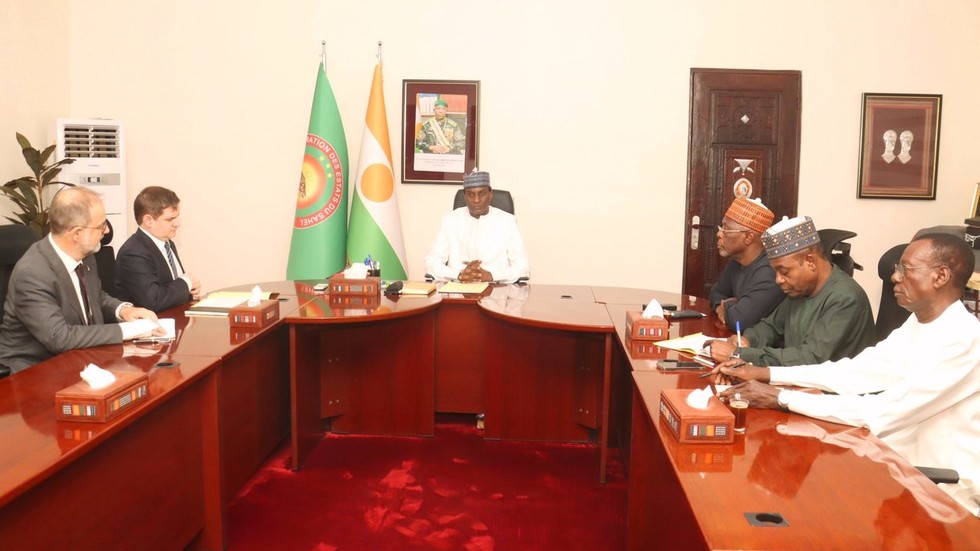
- Niger-EU friction over Algeria's deployment is likely to remain public in the near term. Niger reportedly summoned EU acting chargé d'affaires Olai Voionmaa to Prime Minister Ali Mahamane Lamine Zeine's office in Niamey after EU spokesman Anouar El Anouni sought details of the deployment's scope, objectives and legal basis. Niger called the remarks condescending and unacceptable and said it did not need permission from Brussels to exercise its sovereignty. The summons is reported through one major-media account, so confidence in the event and its details is low. (Confidence: low · ASSESSED)
- I&W: A further formal Nigerien protest over EU comments on the deployment, or a renewed EU request for its legal basis, would confirm continued public friction. (0-14 days)
- I&W: A joint Niger-EU statement setting out an agreed process for clarifying the deployment and ending the public exchange would break the assessment of continued friction. (1-3 months)
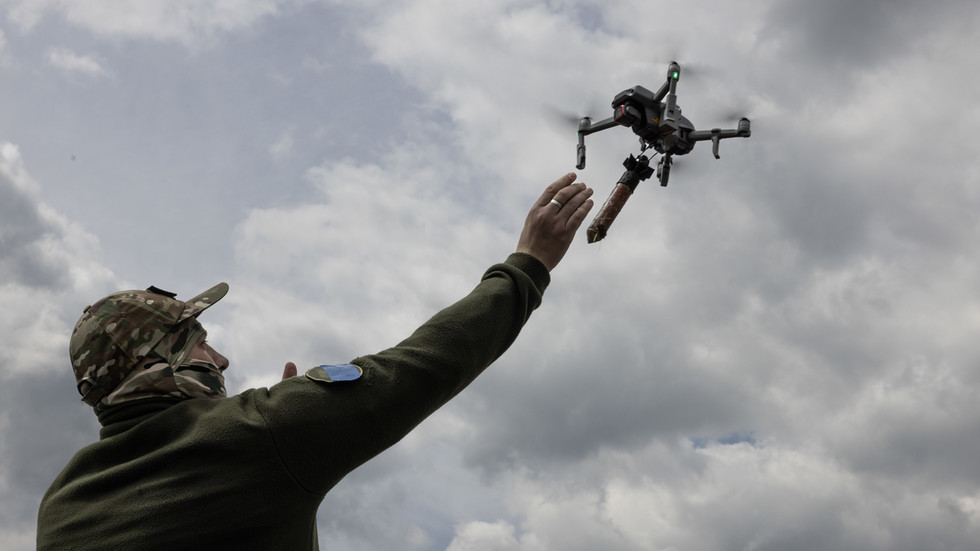
- It is roughly even chance that Ukrainian specialists or military intelligence provided some form of assistance to Tuareg rebels in northern Mali, but the available reporting does not establish whether that involved drone training, information-sharing or remote direction of missions. CNN reported that around 15 Ukrainian specialists assisted Tuareg rebels with drones, and Le Monde reported earlier cooperation and training. Ukrainian military intelligence spokesman Andrey Yusov said rebels had received necessary information enabling the Tinzaouaten attack, but the reported wording did not identify who provided it. Russian officials alleged Ukrainian drone training, while Ukraine's Foreign Ministry denied that the accusations were supported by credible evidence; Mali, Niger and Burkina Faso filed a complaint with the UN Security Council. The inference rests on conflicting, largely attributed reporting without independently verified operational evidence. (Confidence: low · ASSESSED)
- I&W: Publication of an independently authenticated record or a named Tuareg participant's corroborated account confirming Ukrainian training or operational information would strengthen the assessment of assistance. (1-3 months)
- I&W: A formal correction by CNN or Le Monde, or an independently documented finding that the reported specialists were misidentified, would weaken the assessment. (1-3 months)
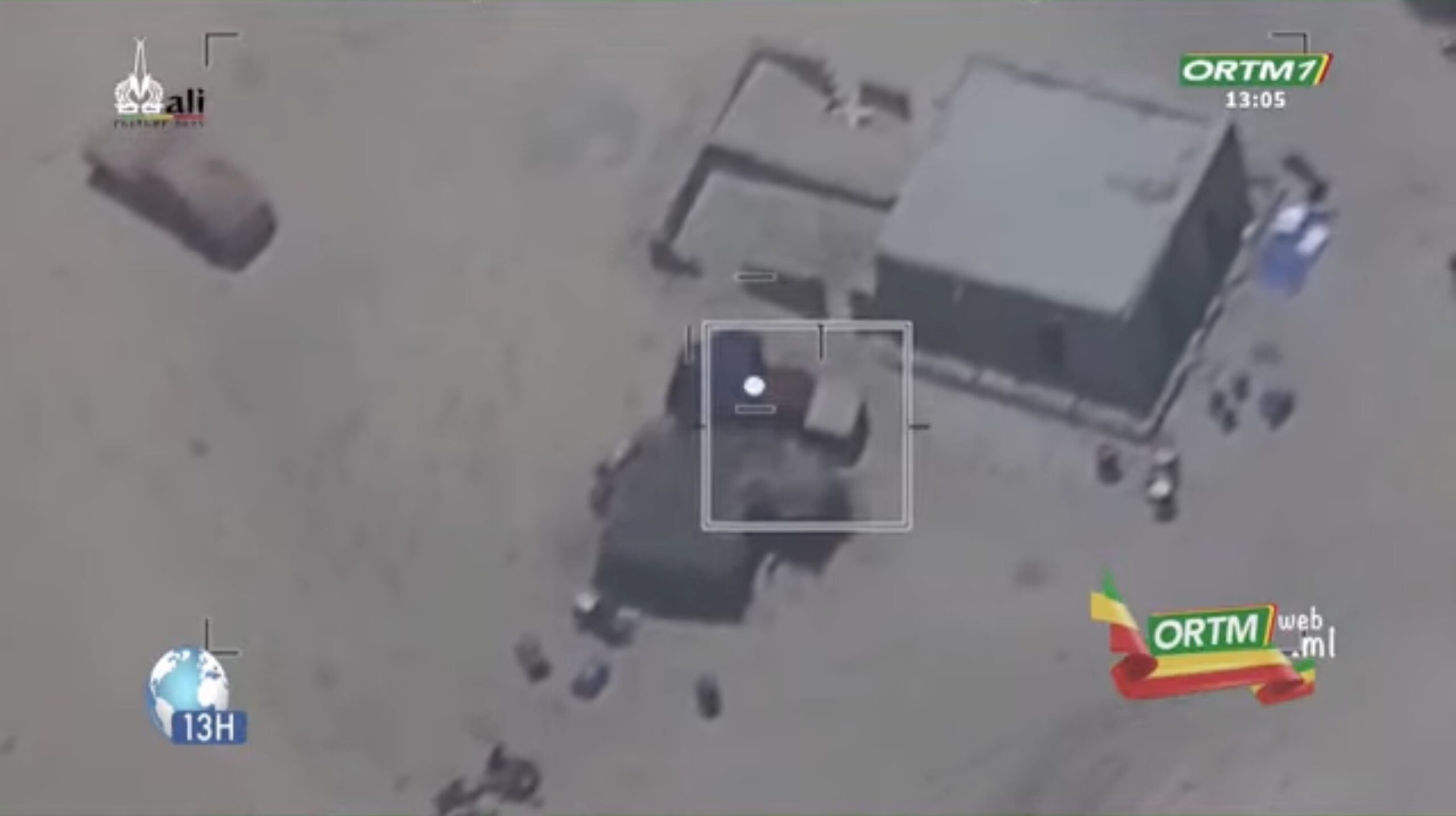
- Reports indicate civilian casualties from Malian military drone strikes in Amasrakad in March 2024 and Zouera on 8 July 2025. Médecins Sans Frontières reported four people killed and five injured at Zouera. The Amasrakad death toll remains disputed: Amnesty International reported at least 13 civilians killed across the strikes, while witness testimony reported by Jeune Afrique attributed 13 deaths to the second strike alone. These are historical incidents, not evidence of a new strike during this reporting period. (Confidence: medium · REPORTED)
- I&W: An independently verified casualty list or fact-finding inquiry corroborating civilian deaths at both sites would strengthen the reporting; a formal correction by MSF or Amnesty International withdrawing either incident would weaken it. (1-3 months)
Outlook & scenarios
Managed Niger-EU dispute (55%)
The most likely near-term path is continued public disagreement without a confirmed change in Algeria's operational posture. Niger continues to describe the mission as invited, while the EU seeks details on its scope and legal basis. The available claims do not establish a larger force or new operational activity.
Public accusations and denials continue (30%)
It is unlikely that the current record alone resolves the dispute over Ukrainian assistance. Russian officials repeat allegations of drone training, Ukraine maintains its denial, and Mali, Niger and Burkina Faso continue to press their existing accusation. Further statements would deepen diplomatic friction but would not, by themselves, establish operational support.
Authenticated evidence changes the attribution picture (10%)
It is very unlikely that independently authenticated evidence of Ukrainian operational assistance emerges in the near term. This is a low-probability, high-impact wildcard: if such evidence appears, it would strengthen the basis for the Sahel states' accusations and increase pressure for official responses from Ukraine and the states involved.
Recommendations
- Prioritise collection on Algeria's deployment footprint: seek official Nigerien and Algerian details on unit numbers, locations, mandate and legal basis, and distinguish Niger's account that it requested the mission from independently verified deployment details.
- Maintain a source-by-source record of the Ukraine allegations. Separate CNN and Le Monde reporting, Yusov's statement, Russian officials' accusations, the Sahel states' complaint and Ukraine's denial; do not treat official accusations as proof of operational assistance.
- Track Malian drone-strike reporting at Amasrakad and Zouera separately. Preserve the distinction between Malian military descriptions of targets, geolocation evidence and casualty reporting, and do not resolve the disputed Amasrakad tally without further corroboration.
- Use UNHCR's 10 November factsheet as a baseline, and seek updated registration and displacement figures before making claims about current humanitarian trends in Niger.
Confidence & uncertainty
Overall confidence is low because the main current developments are reported through a limited set of major-media accounts and attributed official statements, with little independent corroboration of the Algerian deployment's scale or the Ukraine allegations. The Ukraine claims are directly contested, and the Amasrakad casualty figures differ across accounts. Several lede-only or low-reliability background claims do not provide additional corroboration and are not the sole support for any key judgment.
Alternative analysis (red cell)
The ledger supports a reported Niger-EU exchange, but not a forecast that the dispute will remain public. The episode may have been an isolated response to EU questioning, and the unresolved identification of the officials in f754e498-5de9-4026-9517-2caa6ea9f062 and ebe3d013-a379-40c5-ac53-486d14c9e7ac further weakens the inference of sustained friction. Subsequent statements or actions would be needed to distinguish durable friction from a one-time diplomatic protest.
Intelligence gaps
- [EEI 1.1 · PARTIAL] Number, location, and scale of attacks (IEDs, ambushes, complex attacks) per week against towns, military bases, police posts, or convoys, with casualty and equipment-loss counts. Recommended collection: ground/HUMINT
- [EEI 1.2 · UNCOVERED] Observed movement and size of armed columns (vehicle counts, heavy weapons present) along approach routes to population centers or borders documented by imagery, local reporting, or border guards. Recommended collection: imagery/SATCOM
- [EEI 1.3 · PARTIAL] Reports of occupation, administration, or imposition of checkpoints/taxes by armed groups in named towns, villages, markets, or on specified road segments. Recommended collection: OSINT (local media/social)
- [EEI 1.4 · UNCOVERED] Seizure or acquisition of heavy weapons or air-defense systems (mortars >81mm, artillery, armored vehicles, MANPADS) attributed to specific groups as evidenced by photos, captured weapons inventories, or weapons interdictions. Recommended collection: forensics/field reporting
- [EEI 2.1 · PARTIAL] Internal security force movements: redeployment of army units, garrison withdrawals, or mass troop movements toward/away from capitals and regional command posts. Recommended collection: imagery/SATCOM
- [EEI 2.2 · UNCOVERED] Detentions, public dismissals, resignations, or public statements by senior military, police, or government officials indicating factional splits (named individuals, ranks, units). Recommended collection: diplomatic/OSINT
- [EEI 3.1 · UNCOVERED] Interdictions or seizures at borders/markets of weapons, ammunition, fuel, or contraband (type/quantity, seizure location, alleged origin/destination). Recommended collection: border/customs
- [EEI 3.2 · UNCOVERED] Recorded movements of known smuggling routes and convoy volumes: counts of commercial/privately registered vehicles and informal river crossings on specific cross-border corridors. Recommended collection: ground/HUMINT
- [EEI 3.3 · UNCOVERED] Monitored financial flows linked to illicit trade: large cash movements, changes in declared gold exports at named mines/ports, or arrests of money couriers with amounts and origins. Recommended collection: financial/forensics
- [EEI 3.4 · UNCOVERED] Observed changes at border security posts: closures, reductions in personnel, destroyed checkpoints, or documented agreements allowing free movement at named crossings. Recommended collection: imagery/OSINT
Red cell review: PARTIAL DISSENT
TLP:CLEAR