TLP:CLEAR · Disclosure is not limited.
Sahel Security Crisis: Northern Mali Setback and Persistent Regional Fragility
Time window: Last 7 days · Audience: General analyst · Type: Situation report · DTG: 2026-09-21 04:05Z · Overall confidence: MEDIUM
BLUF
Jihadist and separatist pressure is likely to remain high in northern Mali and Burkina Faso over the next 1-3 months. The reported seizure of parts of northern Mali by the Azawad Liberation Front and JNIM is the most immediate battlefield concern, while Niger's unresolved mutiny continues to expose military cohesion risks.
Executive summary
Current reporting indicates that the Azawad Liberation Front and JNIM have seized parts of northern Mali in coordinated attacks against FAMa and Russia's Africa Corps. Burkina Faso's territorial-control picture remains contested: government claims of 74.53% state control conflict with ACAPS estimates that non-state armed groups control roughly 40% of the country, while Human Rights Watch reports around 40 blockaded localities affecting up to two million people. Bamako's fuel availability reportedly improved in early September after army-escorted convoys, but a low-confidence report attributes the destruction of more than 300 tankers to the JNIM blockade. In Niger, the government has acknowledged the August mutiny and civilian victims, while reporting of arrests of dozens to hundreds of soldiers remains uncorroborated. The AES is consolidating its political structures as ECOWAS keeps negotiations open.
Change from previous assessment
The core assessment is unchanged: armed pressure remains the main security risk, JNIM pressure on Mali's fuel system remains an immediate concern, and Nigerien military cohesion remains vulnerable. This update gives greater prominence to the reported FLA and JNIM seizure of parts of northern Mali, adds the AES confederal parliament as evidence of institutional consolidation, and tempers the fuel-disruption assessment with reporting that Bamako's supply recovered in early September. The Burkina Faso territorial-control judgement remains contested rather than resolved. The Niger judgement remains low confidence, and the Malian drone-harm judgement is retained with attribution still disputed.
Key judgments
- Armed pressure is likely to remain high in northern Mali and Burkina Faso over the next 1-3 months, while humanitarian stress is likely to persist across the Sahel. A major-media report states that the Azawad Liberation Front and JNIM seized parts of northern Mali in coordinated attacks against FAMa and Russia's Africa Corps. In Burkina Faso, ACAPS estimates that non-state armed groups control roughly 40% of the country and that 800,000 people are cut off inside besieged towns, while Human Rights Watch counts around 40 blockaded localities affecting up to two million people. The differing territorial and humanitarian estimates lower confidence. (Confidence: medium · ASSESSED)
- I&W: Confirmation within 0-14 days of FLA or JNIM control over additional named positions in northern Mali, or renewed coordinated attacks on FAMa and Russia's Africa Corps, would confirm the assessment. (0-14 days)
- I&W: Independent reporting within 1-3 months of sustained reopening of Burkina Faso's blockaded localities and a clear reduction in non-state armed group territorial control would break the assessment. (1-3 months)
- JNIM is likely to sustain pressure on Mali's fuel system over the next 1-3 months, although army-escorted convoys are likely to keep Bamako supplied in the near term. A low-confidence report attributes the destruction of more than 300 fuel tankers since 3 September 2025 to the JNIM blockade and states that Mali imports about 95% of its fuel by road from Senegal and Côte d'Ivoire. Separate reporting says fuel was again available in Bamako from early September 2026 and that army-escorted convoys had moved about 940 tankers on the Kayes-Bamako axis in early July. This judgement rests on thin and partly uncorroborated reporting. (Confidence: low · ASSESSED)
- I&W: New attacks on fuel tankers or renewed fuel shortages at Bamako stations within 0-30 days would confirm sustained JNIM pressure. (0-30 days)
- I&W: Continued availability of fuel in Bamako alongside repeated army-escorted tanker movements on the Kayes-Bamako axis for 30 days would break the near-term disruption assessment. (0-30 days)
- The Burkina Faso government is unlikely to have restored uncontested control over the country over the next 1-3 months. The government reported that 74.53% of territory was under state control as of 30 June 2026, while ACAPS estimated that non-state armed groups controlled roughly 40% of the country. Earlier government figures also differed from independent estimates, and Human Rights Watch reported around 40 blockaded localities affecting up to two million people. The conflicting methodologies and source interests support a medium-confidence judgement rather than acceptance of either territorial-control figure as definitive. (Confidence: medium · ASSESSED)
- I&W: Independent monitoring within 1-3 months that verifies government access to previously blockaded localities and sustained state administration across those areas would break the assessment. (1-3 months)
- I&W: New reporting within 0-30 days of attacks disrupting access to named towns, renewed blockades, or non-state armed group control of additional territory would confirm it. (0-30 days)
- The Nigerien government is likely to retain control of Niamey over the next 1-3 months, but Nigerien military cohesion is likely to remain vulnerable. A low-confidence report says a mutiny targeted the presidency, airport and national television in Niamey on 28-29 August before being suppressed. The government later described the incident as a destabilisation attempt involving elements of the special intelligence battalion at Air Base 101 and acknowledged civilian victims. A regional security source reported that dozens or even hundreds of soldiers were arrested on 5-6 September, with no official toll published. The judgement is low confidence because the reporting is limited, partly single-source and includes no independently verified arrest figure. (Confidence: low · ASSESSED)
- I&W: Further arrests of Nigerien special-forces personnel or official disclosures of command changes within 0-30 days would confirm continuing cohesion problems. (0-30 days)
- I&W: A sustained absence of new mutiny-related arrests, official security restrictions or competing claims to authority in Niamey for 30-90 days would weaken the vulnerability assessment. (30-90 days)
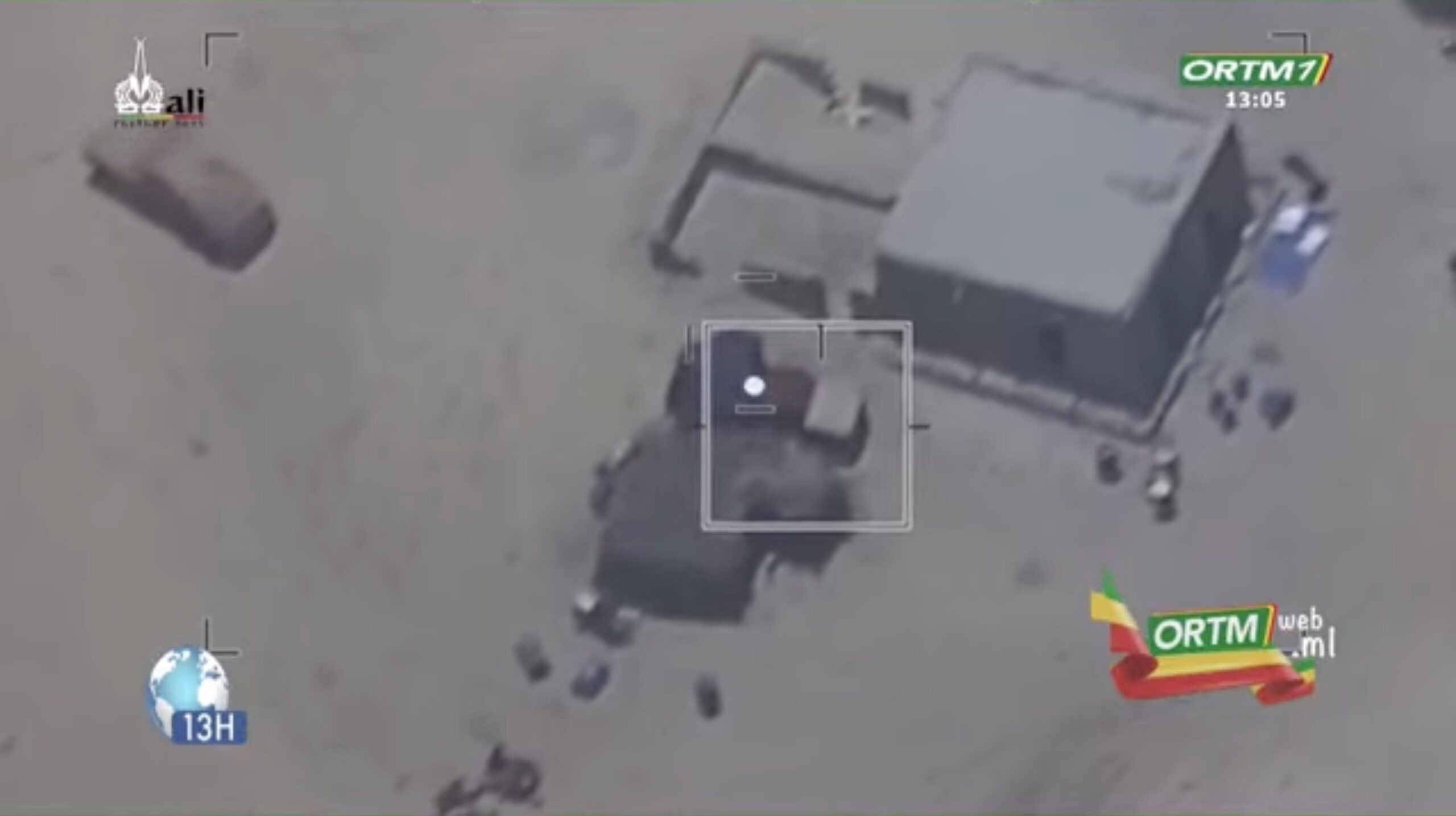
- Malian military drone operations are likely to continue over the next 1-3 months, and allegations of civilian harm are likely to persist while attribution remains contested. Bellingcat geolocated Shahed-136 type drones operating in Mali and, with Jeune Afrique, examined repeated strikes in civilian areas. Reporting on the Amasrakad strikes includes footage released by the Malian military, Amnesty International's account of at least 13 civilian deaths including seven children, and witness testimony of 13 deaths. In the Zouera case, FAMa presented the strike as an attack on a terrorist supply vehicle, while MSF reported four deaths including three young girls and five injuries. The combination of geolocation, satellite imagery and casualty reporting supports the operational assessment, but the conflicting accounts lower confidence in individual-strike attribution. (Confidence: medium · ASSESSED)
- I&W: New geolocated footage, satellite imagery or recoverable drone components linked to Malian military strikes within 1-3 months would confirm continued operations. (1-3 months)
- I&W: Independent evidence that specific reported strikes did not occur, or that recurring civilian-area strike allegations are disproven through geolocation and casualty checks, would weaken the assessment. (1-3 months)
- The AES is likely to deepen institutional cooperation over the next 3 months, while ECOWAS-AES negotiations are likely to remain open without restoring the three states' membership. Burkina Faso, Mali and Niger have formally left ECOWAS, deepened cooperation through the AES, and held the inaugural AES confederal parliament session in Niamey with 45 deputies. ECOWAS has extended Lansana Kouyaté's mandate as chief negotiator through December 2026 and asked member states to avoid separate bilateral agreements. The parliamentary reporting comes from an unknown source, so confidence is medium. (Confidence: medium · ASSESSED)
- I&W: A further AES parliamentary session or formal joint policy decision within 0-90 days would confirm institutional consolidation. (0-90 days)
- I&W: A formal ECOWAS-AES agreement on restored membership within 1-3 months would break the assessment that negotiations will not restore membership in the near term. (1-3 months)
Outlook & scenarios
Continued fragmented pressure (55%)
The most likely path is continued FLA and JNIM pressure in northern Mali, persistent blockades and insecurity in Burkina Faso, and a contained but unresolved Nigerien military-cohesion problem. Bamako retains fuel availability through army-escorted convoys, while the AES expands its political coordination and ECOWAS maintains negotiations.
Malian operational push with civilian-harm backlash (25%)
The Malian military and Russia's Africa Corps intensify efforts to recover ground in northern Mali, supported by further drone operations. Tactical pressure on FLA and JNIM increases, but additional strikes in civilian areas generate new allegations, complicating the government's claims of operational success.
Nigerien command crisis (15%)
The August mutiny's aftermath widens through further arrests or command disputes in Niamey. The Nigerien government retains formal authority but diverts attention from security operations, increasing pressure on its ability to manage the country's wider security environment.
Renewed armed challenge in Niamey (5%)
A renewed mutiny or coordinated challenge to Nigerien authorities coincides with armed pressure on security positions. This low-probability, high-impact outcome would test the government's control of Niamey and place additional strain on AES cohesion.
Recommendations
- Maintain a 0-14 day watchlist for named northern Malian positions, FLA and JNIM activity, attacks involving FAMa or Russia's Africa Corps, and any change in control around Bamako's fuel supply routes.
- Track Burkina Faso using separate government and independent baselines. Do not present the 74.53% state-control figure, the ACAPS estimate of roughly 40% non-state control, or the Human Rights Watch blockade figure without attribution and definitions.
- Treat Nigerien mutiny reporting as low confidence until official arrest figures, command changes or independently corroborated evidence emerge. Prioritise indicators involving the special intelligence battalion, Air Base 101 and senior military personnel in Niamey.
- For Malian drone incidents, require geolocation, satellite-image comparison, wreckage or engine analysis and casualty reporting before assigning responsibility or accepting the stated target. Keep FAMa claims separate from Bellingcat, Amnesty International and MSF findings.
- Monitor AES institutional activity, including follow-on confederal parliament sessions, alongside ECOWAS negotiations led by Lansana Kouyaté through December 2026. Use the UNOWAS strategic review due by 30 September 2026 as a policy milestone for assessing external diplomatic engagement.
- Separate battlefield reporting from humanitarian indicators in future briefs. Track Burkina Faso's blockaded localities, besieged populations, school and health-facility access, and displacement alongside territorial-control claims.
Confidence & uncertainty
Overall confidence is medium because several core developments are supported by high-reliability or methodologically strong reporting, including Bellingcat geolocation, major-media reporting on northern Mali, ACAPS and Human Rights Watch assessments on Burkina Faso, and GDACS drought monitoring. Confidence is reduced by conflicting estimates of Burkina Faso's territorial control, differing blockade and affected-population totals, low-confidence reporting on Niger's mutiny and arrests, and contested attribution of Malian drone strikes. The fuel-blockade assessment is particularly thin because the tanker-destruction figure and fuel-import estimate come from a low-confidence source.
Intelligence gaps
- [EEI 1.2 · UNCOVERED] Observed movement and size of armed columns (vehicle counts, heavy weapons present) along approach routes to population centers or borders documented by imagery, local reporting, or border guards. Recommended collection: imagery/SATCOM
- [EEI 1.3 · PARTIAL] Reports of occupation, administration, or imposition of checkpoints/taxes by armed groups in named towns, villages, markets, or on specified road segments. Recommended collection: OSINT (local media/social)
- [EEI 1.4 · UNCOVERED] Seizure or acquisition of heavy weapons or air-defense systems (mortars >81mm, artillery, armored vehicles, MANPADS) attributed to specific groups as evidenced by photos, captured weapons inventories, or weapons interdictions. Recommended collection: forensics/field reporting
- [EEI 2.1 · PARTIAL] Internal security force movements: redeployment of army units, garrison withdrawals, or mass troop movements toward/away from capitals and regional command posts. Recommended collection: imagery/SATCOM
- [EEI 3.1 · UNCOVERED] Interdictions or seizures at borders/markets of weapons, ammunition, fuel, or contraband (type/quantity, seizure location, alleged origin/destination). Recommended collection: border/customs
- [EEI 3.2 · PARTIAL] Recorded movements of known smuggling routes and convoy volumes: counts of commercial/privately registered vehicles and informal river crossings on specific cross-border corridors. Recommended collection: ground/HUMINT
- [EEI 3.3 · UNCOVERED] Monitored financial flows linked to illicit trade: large cash movements, changes in declared gold exports at named mines/ports, or arrests of money couriers with amounts and origins. Recommended collection: financial/forensics
- [EEI 3.4 · UNCOVERED] Observed changes at border security posts: closures, reductions in personnel, destroyed checkpoints, or documented agreements allowing free movement at named crossings. Recommended collection: imagery/OSINT
Cited sources
[1] Bellingcat · “A Recurring Pattern”: Civilians Paying the Price in Mali’s Drone Campaign - bellingcat (A) · Wed Sep 16 2026 16:04:19 GMT+0000 (Coordinated Universal Time) · sha256:240eaaf5fb84 [2] Rio Times (riotimesonline.com) · Burkina Faso Territory Is 74.53% Under Government Control, the Junta Says. Nobody Else Can Check. (B) · Mon Sep 14 2026 21:20:00 GMT+0000 (Coordinated Universal Time) · sha256:546dfea50d8e [3] Al Jazeera · The Sahel and the UN: a smaller footprint, a different role (A) · Mon Sep 21 2026 00:53:15 GMT+0000 (Coordinated Universal Time) · sha256:aa23b1624afd [4] sahel.watch · Panorama Afrique de l'Ouest: AES & sécurité (sept. 2026) (F) · Wed Sep 16 2026 08:21:14 GMT+0000 (Coordinated Universal Time) · sha256:8df6a5b379d9 [5] Bellingcat · Shahed-Type Drones Filmed During Mali Village Attacks - bellingcat (A) · Fri Jul 24 2026 15:39:05 GMT+0000 (Coordinated Universal Time) · sha256:83cab117dd5c [6] World Journal of Advanced Research and Reviews · [PDF] examining the immediate and structural drivers of coups in the africa.. (C) · sha256:155063daa176
Source content hashes were computed at collection time; the cited text is preserved unmodified for the life of this product.
TLP:CLEAR